The Freedom of the Rivers
Between climate protection and quality of life: the handling of water and its design runs like a „blue thread“ through the cultivation of public spaces
Without water, life is impossible, but at the same time, water endangers life. Rising sea levels, increasing and sometimes catastrophic flooding on coasts and inland areas, and, on the other hand, periods of drought even in the northern hemisphere have pushed the issue of water more and more into the centre of the relationship between humans and nature. „Water is a key issue in managing territories in every respect,“ writes Matteo Pedaso, Strategic Planning Director of LAND, in a magazine article. Rethinking how we use, cycle and collect water is now one of the key issues in any landscape design.
The sustainable cultivation of urban and rural areas focuses on two major, interrelated topics. On the one hand, it is about the regeneration of river courses and lake areas that were displaced, mistreated, or used industrially in the industrial age and can now be revived to drive the development of nature recovery. On the other hand, it is about the effects of the climate crisis and controlling the consequences of heavy rainfall or extreme heat phases.
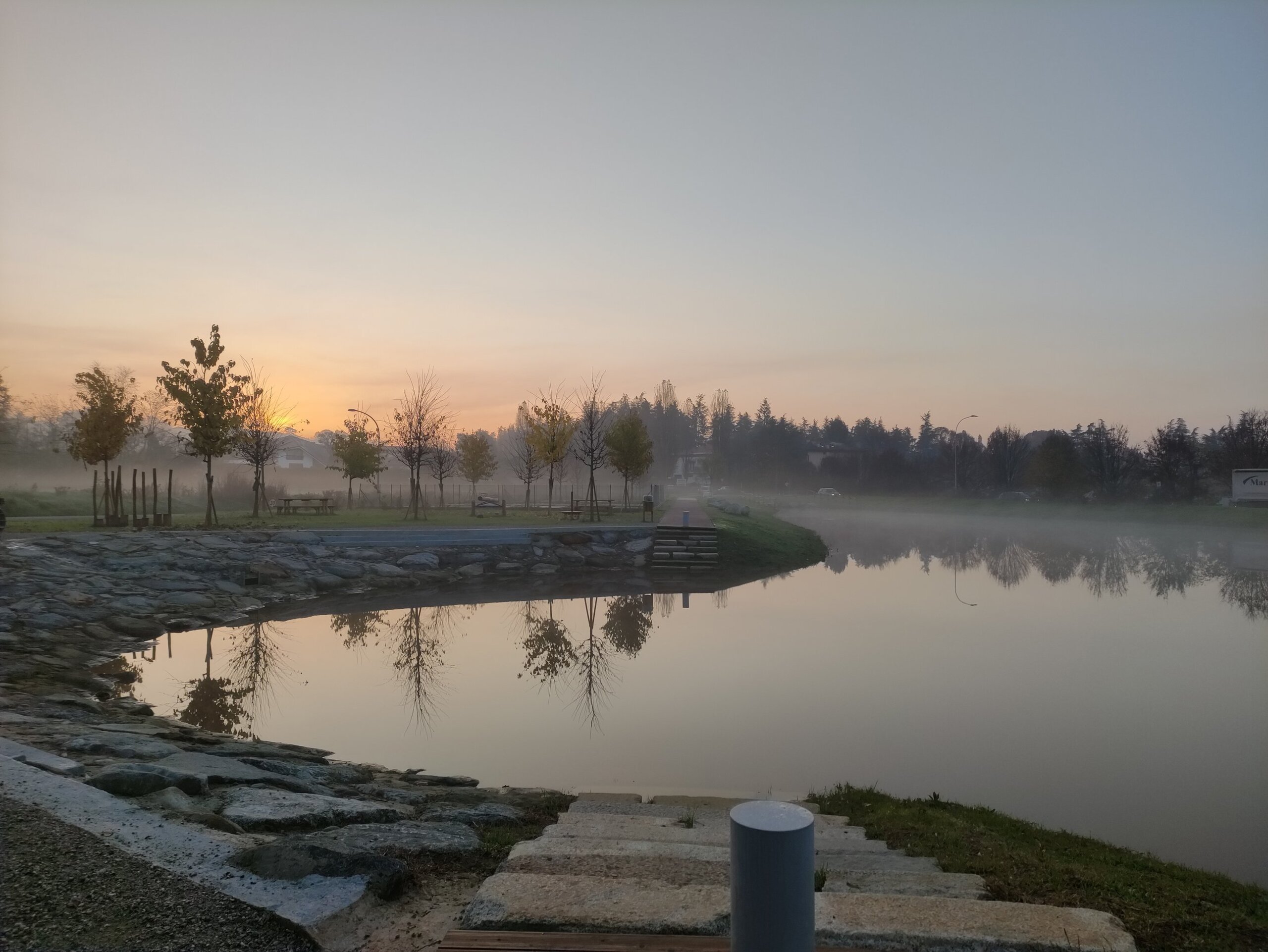
Arcore Water Park (Provincia di Monza e della Brianza, Lombardy) protects the area from flooding and allows people to enjoy a natural environment also designed for social and aggregation purposes.
Strengthening ecosystems and biodiversity
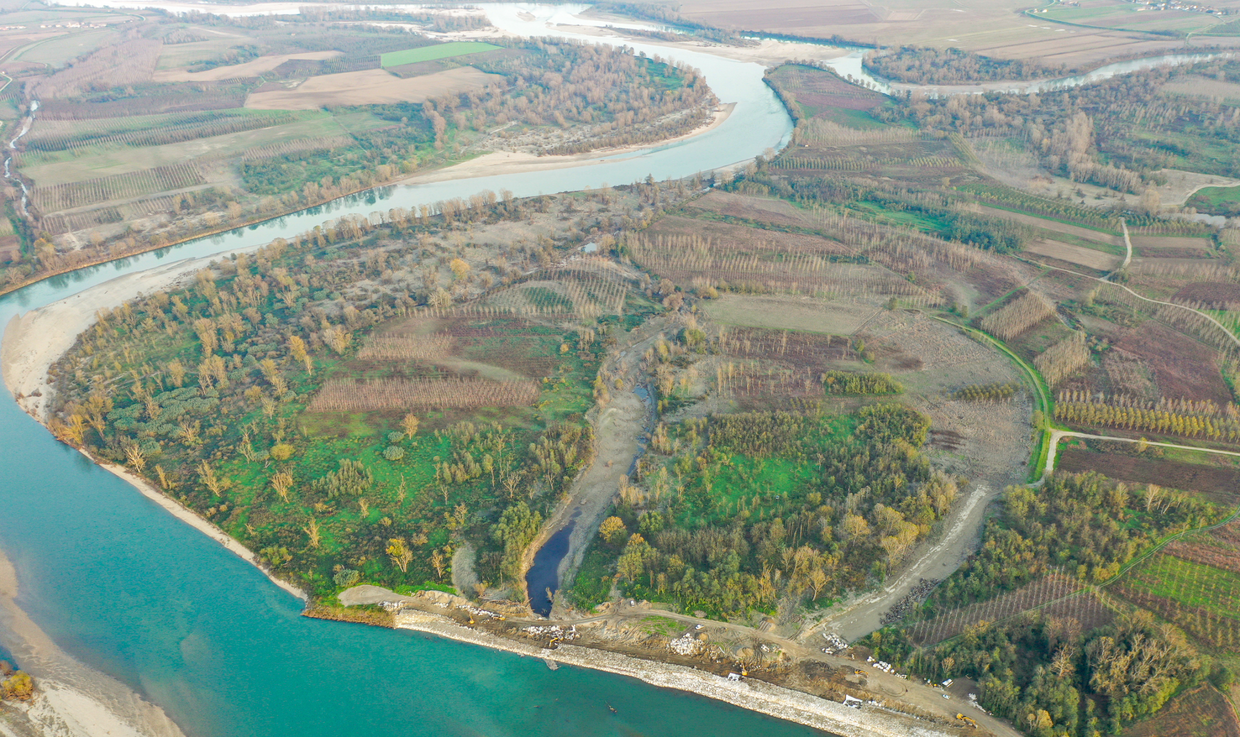
The European Parliament has just passed the Nature Restoration Law, which stipulates that 25,000 km of river courses will be renatured and converted into free-flowing rivers by 2030. This means that barriers will be removed, ecosystems and biodiversity will be strengthened, and the relationship between river and land will be redefined (and not infrequently come into conflict with existing structures). Several major LAND projects, for example, along the Po, address this new relationship. They are also reflected in the cultivation work in the Parco del Valentino in Turin, which runs parallel to the Po, and on the banks of the Tiber in Rome. The new role of rivers in resilient urban development is also evident in the master plans for Lecco and Verbania. „Rivers,“ says Matteo, „are increasingly becoming a symbol of the re-establishment of a lost relationship between humankind and nature.“
On the other hand, heavy rainfall with explosive water bombs is occurring more and more frequently and can no longer be controlled by traditional means. Recent catastrophes in Central and Southern Europe have underlined this in a frightening way. The water is repelled by sealed surfaces, overburdens drainage systems and sewage treatment plants and is transferred unfiltered to rivers and canals, quickly bursting their banks with destructive force. The consequences are enormous material damage. People lose their homes and some even their lives.
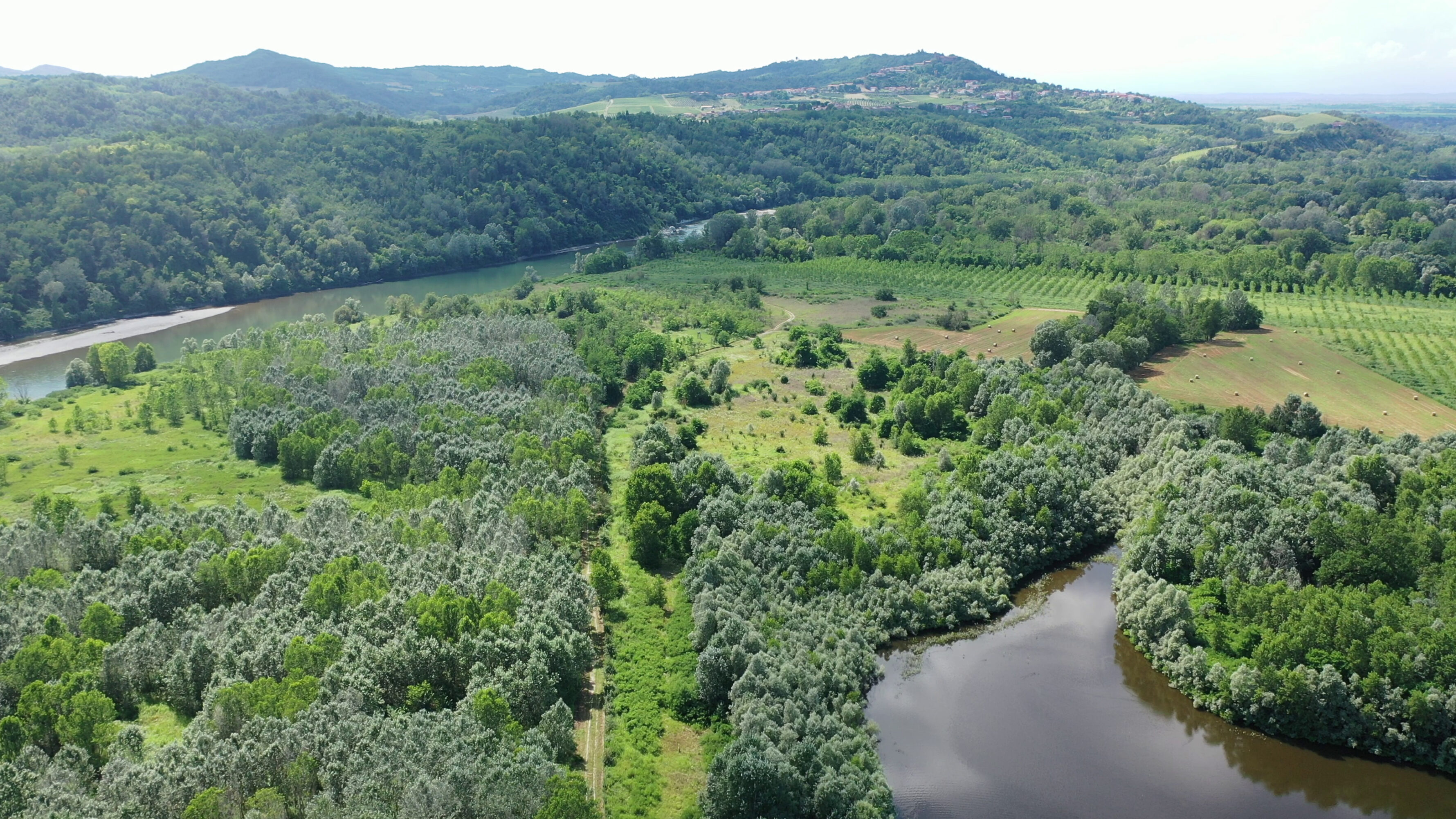
Wetland of Ghiaia Grande, located on the left bank of the Po River in an area between a river oxbow and the main riverbed. Situated within the municipalities of Camino, Morano sul Po, Pontestura, and Coniolo, in the Province of Alessandria, Piedmont Region, it is one of the areas included in the PNRR project “Renaturation of the Po River Area”, which is currently under implementation.
Rain gardens and floodplains
How can we control the water masses? The future will be characterised by the issue of sponge cities and floodplains. This includes using SuDS (Sustainable Urban Drainage Systems) such as rain gardens, overflow areas, soil seepage and biofiltration to regulate the water balance. In the hinterland of Milan, for example, landscape areas have been created in Arcore (Parco dell‘Acqua di Arcore) or in the municipalities of Bregnano and Lomazzo (between the cities of Milan and Como) with the floodplain areas of the Lura riverthat can generally be used by the population as parkland, and then act as retention basins in the event of heavy rainfall. Here, like in Vercelli, the aim is to limit traffic areas and open up new areas for people to use.
As Andreas Kipar emphasised in an interview: „There are numerous examples of cities reacting well and quickly: from Paris to Vienna, parking spaces are being converted into flowerbeds and gardens, watercourses uncovered, soils and trees planted.“
New and high-quality living spaces
These green infrastructures, which strengthen biodiversity according to the approaches of Nature Positive Cities, not only mitigate damage but also create new and high-quality living spaces. How we deal with water and shape it is now a central planning task in cultivating public spaces in urban and rural areas. The goal of a green transformation is not only to protect against the effects of the climate crisis but also to create a better quality of life and to grow into a better future.
In this context, economic thinking is also becoming a driver of change. According to the latest „Adaptation Gap Report“ by the UN Environment Programme (UNEP), every dollar invested to better deal with coastal flooding in the face of rising sea levels can prevent $14 in damages that would otherwise occur.
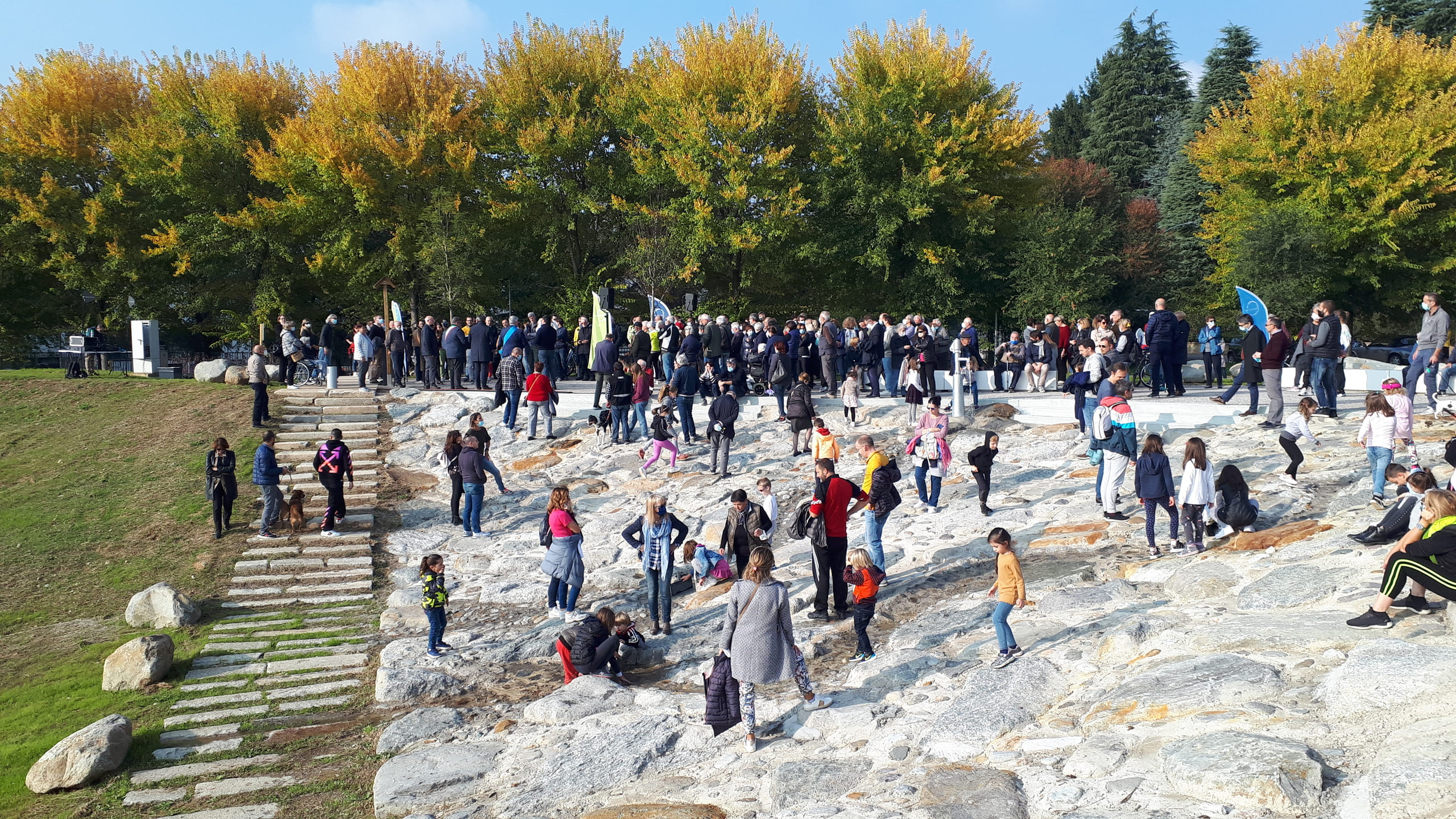
Inauguration of the Arcore Water Park: In line with the objectives of the United Nations 2030 Agenda and sustainable development promoted by the New Green Deal, the park presents a system of integrated solutions for water regulation, the redevelopment of the environmental system and the enhancement of the social fabric.
Sources:
EU Nature Restoration Law:
https://environment.ec.europa.eu/topics/nature-and-biodiversity/nature-restoration-law_en
The river Po and renaturation projects:
https://www.italiadomani.gov.it/it/Interventi/investimenti/rinaturazione-dell-area-del-Po.html
https://www.agenziapo.it/content/rinaturazione-dell%E2%80%99area-po-misura-m2c43-%E2%80%93-i-33
https://www.agenziapo.it/content/aipo-pnrr-progetto
SudS: Sustainable drainage system
https://en.wikipedia.org/wiki/Sustainable_drainage_system
Arcore: Waterpark Arcore
https://www.landsrl.com/en/work/water-park-arcore/
Bregnano-Lomazzo: Parco del Lura
https://www.landsrl.com/en/work/lura-river-retention-basins/
Lecco: Masterplan
https://www.landsrl.com/en/work/lecco-2030-a-360-sustainable-city/
Adaption Gap Report 2024
https://www.unep.org/resources/adaptation-gap-report-2024
https://www.landsrl.com/en/parco-del-valentino-undergoing-a-significant-renovation/