Newsletter #32: Enhancing the Force of Nature
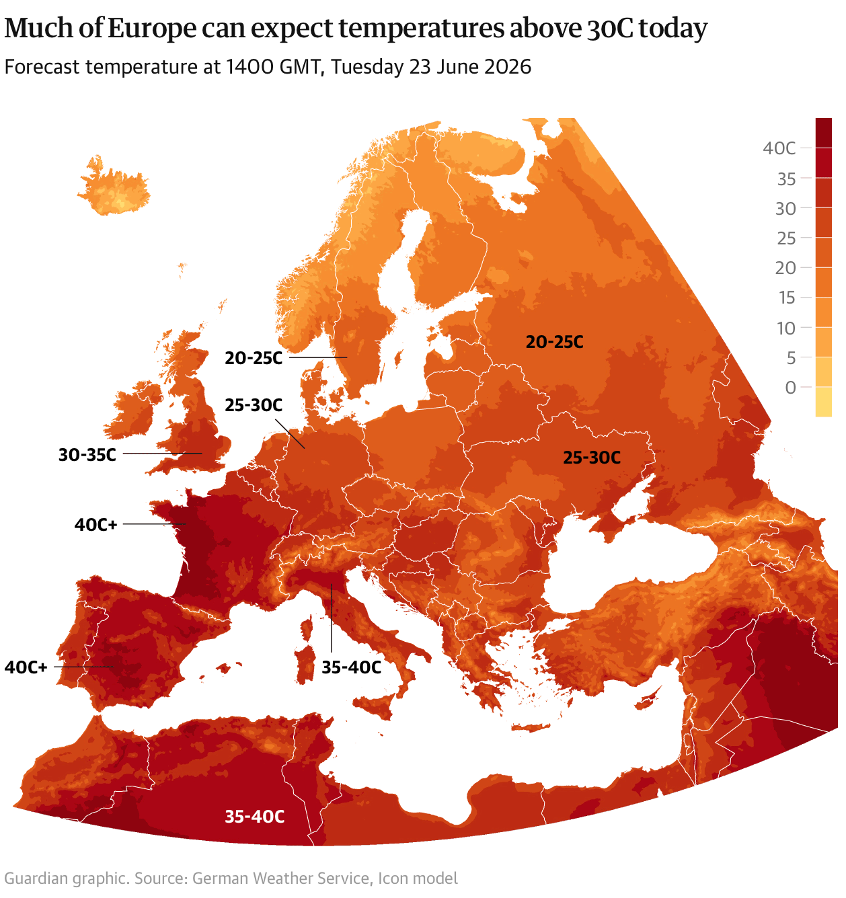
This summer, Europe is once again learning the language of heat.
From Italy to Germany, from Austria to Spain, temperatures are breaking records, cities are struggling to cool down, rivers are running low. What only a few years ago was considered exceptional is rapidly becoming the new normal. We often describe these events as emergencies. But perhaps the real emergency lies elsewhere: in the persistence of a mindset that still believes balance holds the answer to Climate Change.
For more than a decade, sustainability has been the dominant word in our professional vocabulary. It has guided policies, investments and projects across Europe, inspired by the 2030 Agenda for Sustainable Development adopted by the United Nations in 2015. The Sustainable Development Goals (SDGs) represented an extraordinary milestone. They gave us a common language and reminded us that economic prosperity, environmental protection and social equity cannot be separated. But today we find ourselves in a different situation. Sustainability assumes equilibrium. Yet the reality is that equilibrium has already been lost and the pendulum will not swing back simply because our intentions are virtuous. The question is therefore no longer how to sustain the existing condition. The question is: how do we regenerate it?
This is where I believe the Nature-Positive agenda becomes more than a new policy framework. It represents a strong impulse beyond balance and towards structural change, a profound cultural shift. Nature-Positive does not ask us to reduce damage; it asks us to generate ecological value. It invites us to design places that leave ecosystems stronger than before, that increase biodiversity instead of merely protecting what remains, that improve water cycles instead of simply managing runoff, that transform urban landscapes into living infrastructures capable of cooling, filtering, absorbing and reconnecting.
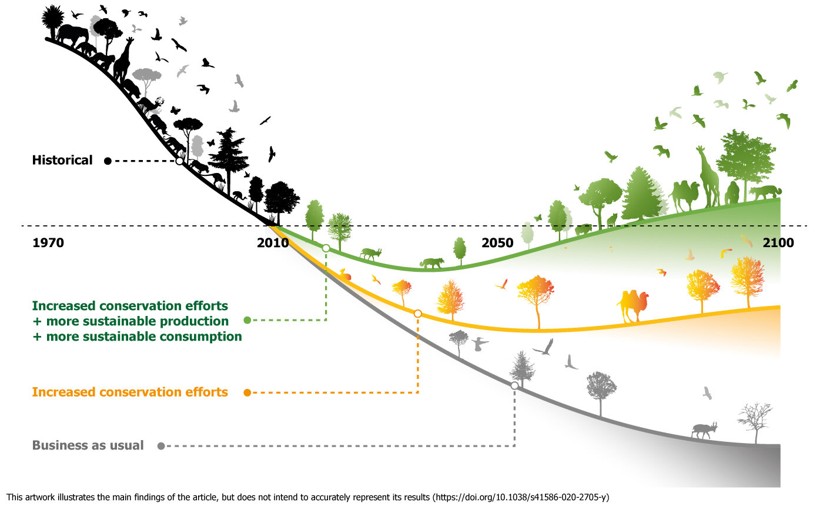
Leclère, D., Obersteiner, M., Barrett, M. et al. Bending the curve of terrestrial biodiversity needs an integrated strategy. Nature 585, 551–556 (2020).
The ambition is no longer neutrality. It is regeneration. And Europe is beginning to translate this ambition into policy. The EU Nature Restoration Law entered into force in 2024 is perhaps the most important environmental legislation adopted in decades. For the first time, restoring ecosystems becomes not simply an environmental aspiration, but a shared responsibility across Member States.
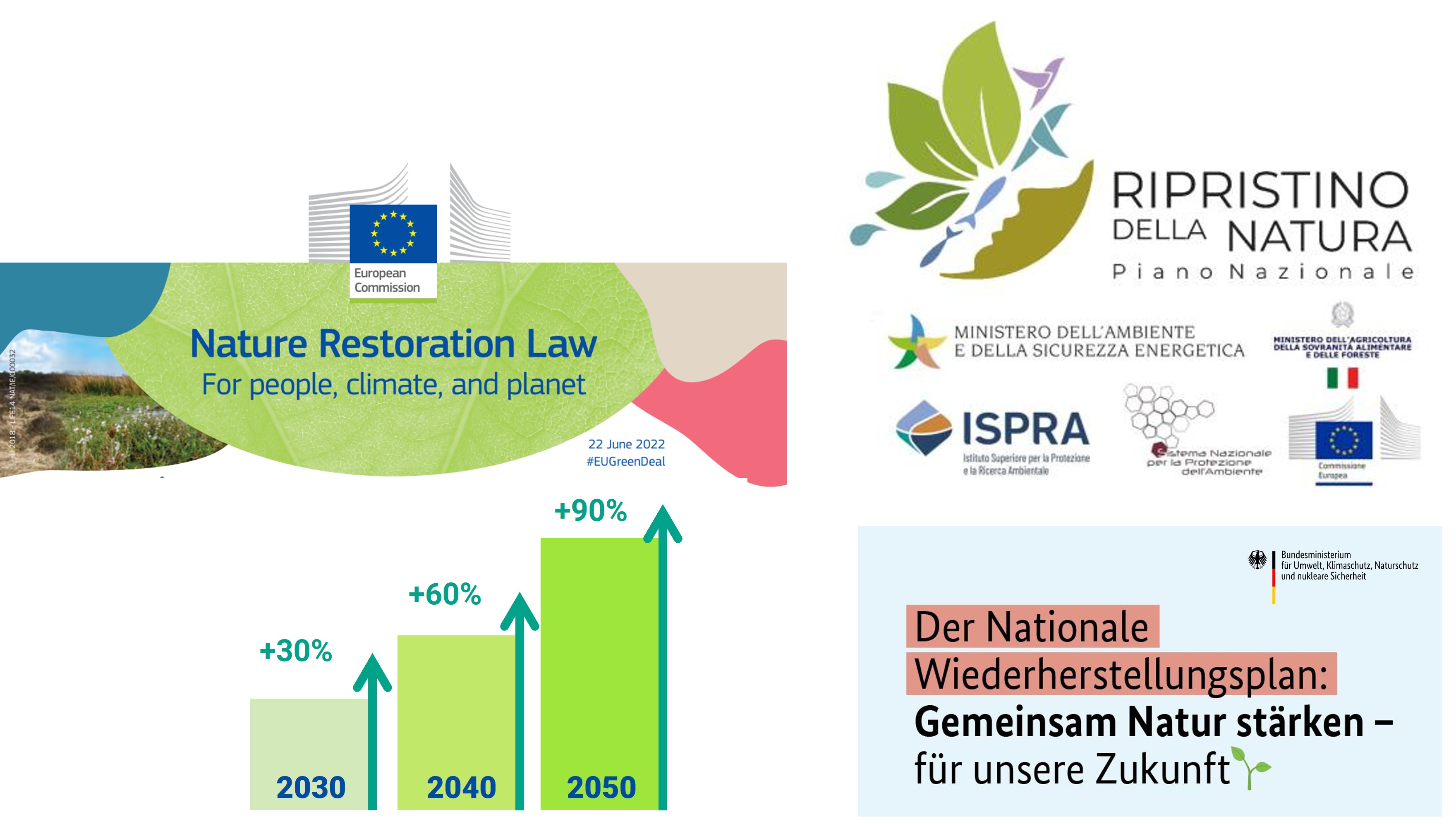
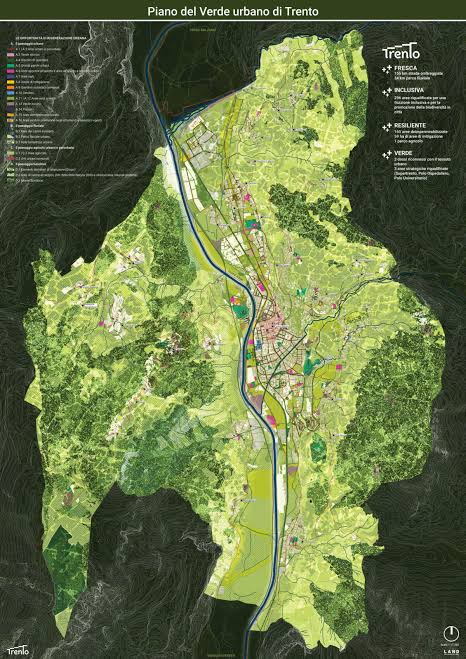
The real challenge now lies in implementation, and this is where different national interpretations are beginning to emerge. Italy has responded proactively through its Piano Nazionale di Ripristino (PNR), framing restoration as a cross-sectoral strategy that strongly integrates urban ecosystems, ecological connectivity and Nature Plans developed together with municipalities. It is encouraging to see several of LAND ‘s experiences, including our work in Bolzano and Trento, contributing to this national reflection.
Germany is currently developing its Nationaler Wiederherstellungsplan für die Natur, NWP through a broad participatory process, with particular attention to forests, peatlands, rivers, agricultural landscapes and ecosystem connectivity. While urban ecosystems are included under the European framework, the German debate still tends to address cities and landscapes through separate planning lenses, leaving significant potential for stronger integration. Austria, meanwhile, is positioning ecosystem restoration as a strategic opportunity to connect biodiversity conservation, climate adaptation and spatial planning, recognizing that resilient territories can only emerge when environmental, social and economic systems are planned together rather than in isolation.
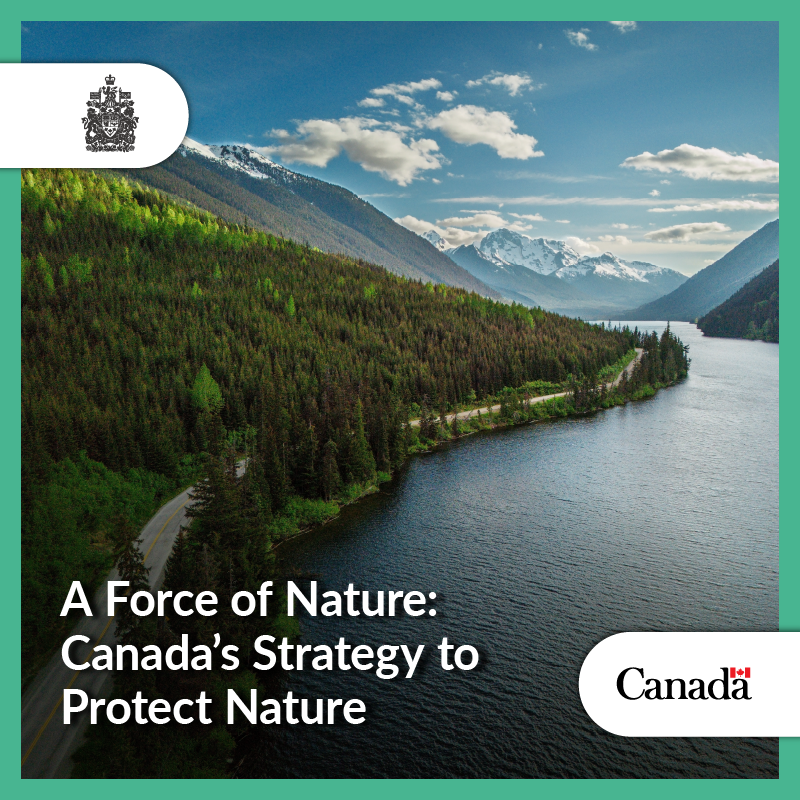
And this transformation is by no means limited to Europe. Canada‘s recently launched Nature Strategy, A Force of Nature, offers a remarkably complementary vision: protecting and reconnecting ecosystems, designing infrastructure that works with Nature rather than against it, and recognizing Natural Capital as a long-term economic asset capable of mobilizing investment for future generations.
Different paths, the same destination. What matters now is not who writes the best strategy, but rather who succeeds in turning ecological knowledge into everyday planning practice. This is where landscape becomes more than a design discipline. Landscape becomes governance. Because climate adaptation, biodiversity, public health, water management and economic resilience all happen in the same physical space: landscape.
While this understanding has guided LAND for more than three decades, increasingly, our work is not simply about designing parks or masterplans. It is about helping cities, regions and organizations navigate this transition through measurable, science-based and operational tools. Sometimes this means assessing Natural Capital and making ecosystem services visible. Sometimes it means developing Nature-Positive urban strategies, integrating climate adaptation into planning processes, monitoring ecological performance through digital tools, or accompanying institutions through research, training and collaborative learning.
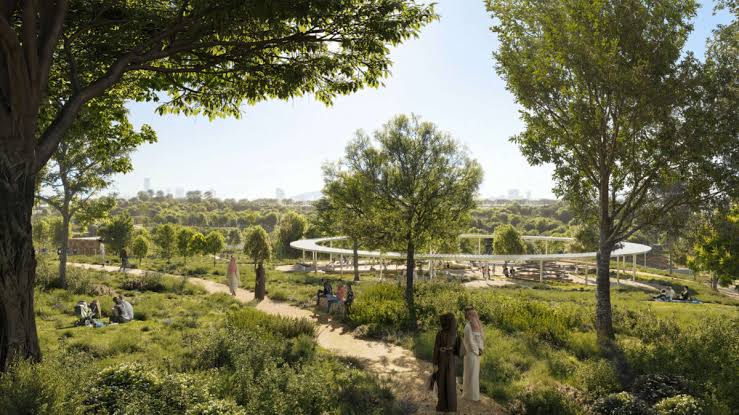
The common objective is helping territories move from awareness to action. There is something profoundly optimistic about this moment. For many years, we have spoken about what we should protect. Today, we can finally begin to speak about what we are capable of restoring. Nature has never stopped working. Perhaps it is time that we start working a little more like Nature. Not by trying to control every process. But by creating the conditions through which life can regenerate itself.
Our responsibility is not to overpower Nature, but to enhance its force, to create landscapes where ecological, social and economic life can flourish together. Because the future will not be built by sustaining yesterday. It will be built by restoring tomorrow.