“Il tempo della natura” selected for the landscape reconstruction of Val Bavona
The Municipality of Cevio has entrusted the preliminary design for Fontana–Bosco–Mondada to Consorzio Baloi, led by LAND Suisse with Oikos and IM Maggia Engineering.
Nearly two years after the flood that struck Valle Maggia in June 2024, the landscape reconstruction of Fontana–Bosco–Mondada in Val Bavona has entered a new phase. The Municipality of Cevio has selected the proposal “Il tempo della natura”, presented by Consorzio Baloi, among three finalist teams, and has entrusted the preliminary design phase to the consortium led by LAND Suisse in Lugano, in collaboration with Oikos (Bellinzona), IM Maggia Engineering (Locarno), GeoAlps, Studi Associati, Lucchini & Canepa, MW Architettura, Sonia Fornera.
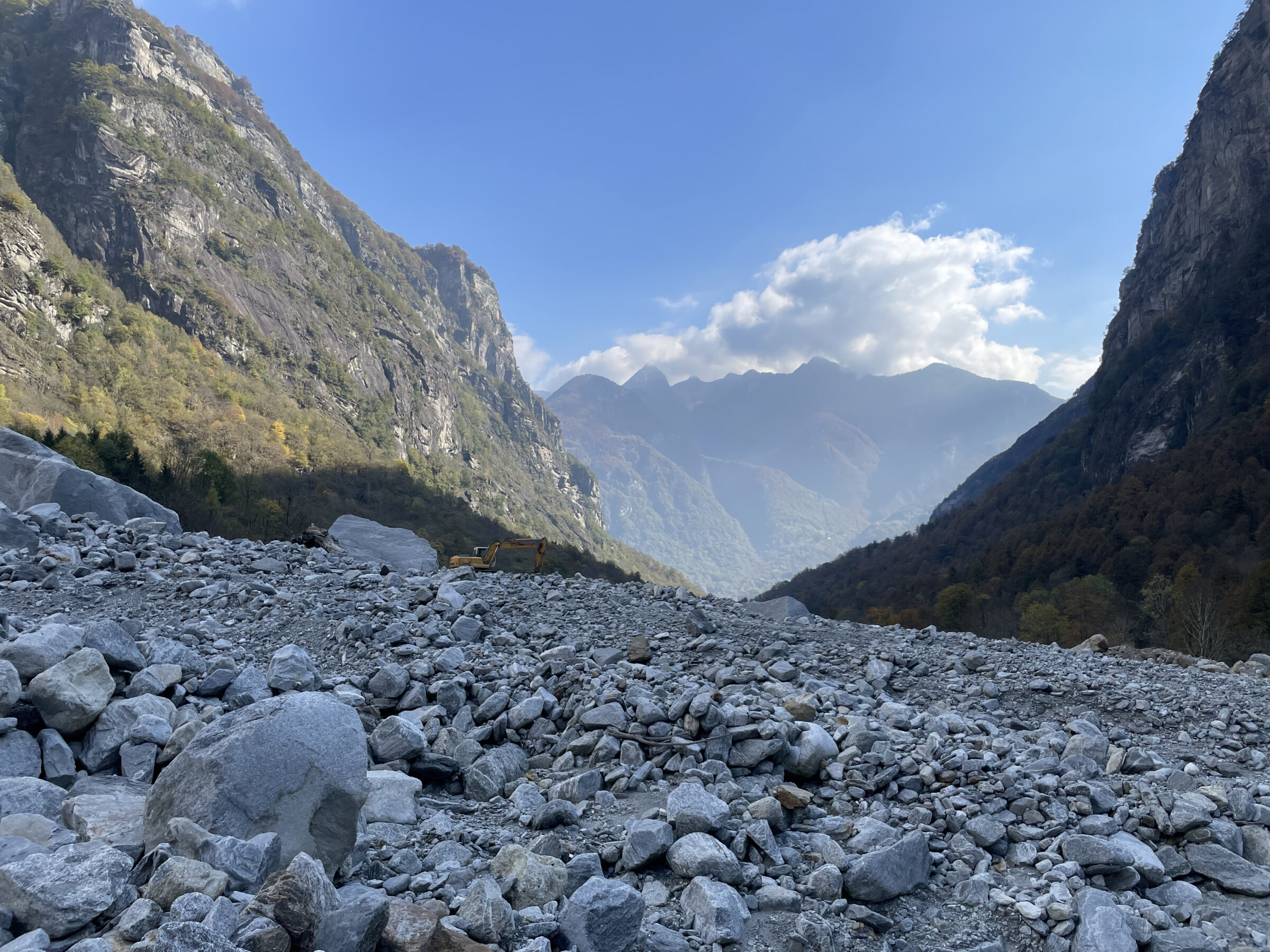
The area was deeply affected by the debris flow of late June 2024, which involved around 300,000 cubic metres of material and transformed the landscape of Fontana–Bosco–Mondada. According to the media reports, the selected team convinced the Municipality through the way it interpreted the intentions and working direction requested, as well as through the organisation of the group and the way the team presented its proposal.
The project was recognised for offering a coherent landscape approach, firmly rooted in the natural and evolutionary logic of Val Bavona. It is conceived as an initial intervention and as an activator of long-term dynamics, rather than as a single, definitive gesture. The Fondazione Valle Bavona also underlines that the proposal defines differentiated protection objectives for the settlements of Fontana and Bosco and integrates the necessary protective structures into the landscape.
The overall purpose is to increase safety for those who live in and visit the area, especially along the Larecchia stream, one of the many watercourses of the valley. The broader aim is to reduce the risk connected to natural hazards, so that tragic events such as those of June 2024 may be less likely to occur again. At the same time, the reconstruction is placed within a wider landscape vision, supporting the reconstitution of the territory while taking agriculture into account in a contemporary sense. The proposal also seeks to strengthen the presence of nature by recovering typical elements of the local landscape, including chestnut trees and other species connected to the history and identity of the place. Another key aspect concerns the space to be given back to the river and the protection, as far as possible, of the surrounding inhabited settlements.
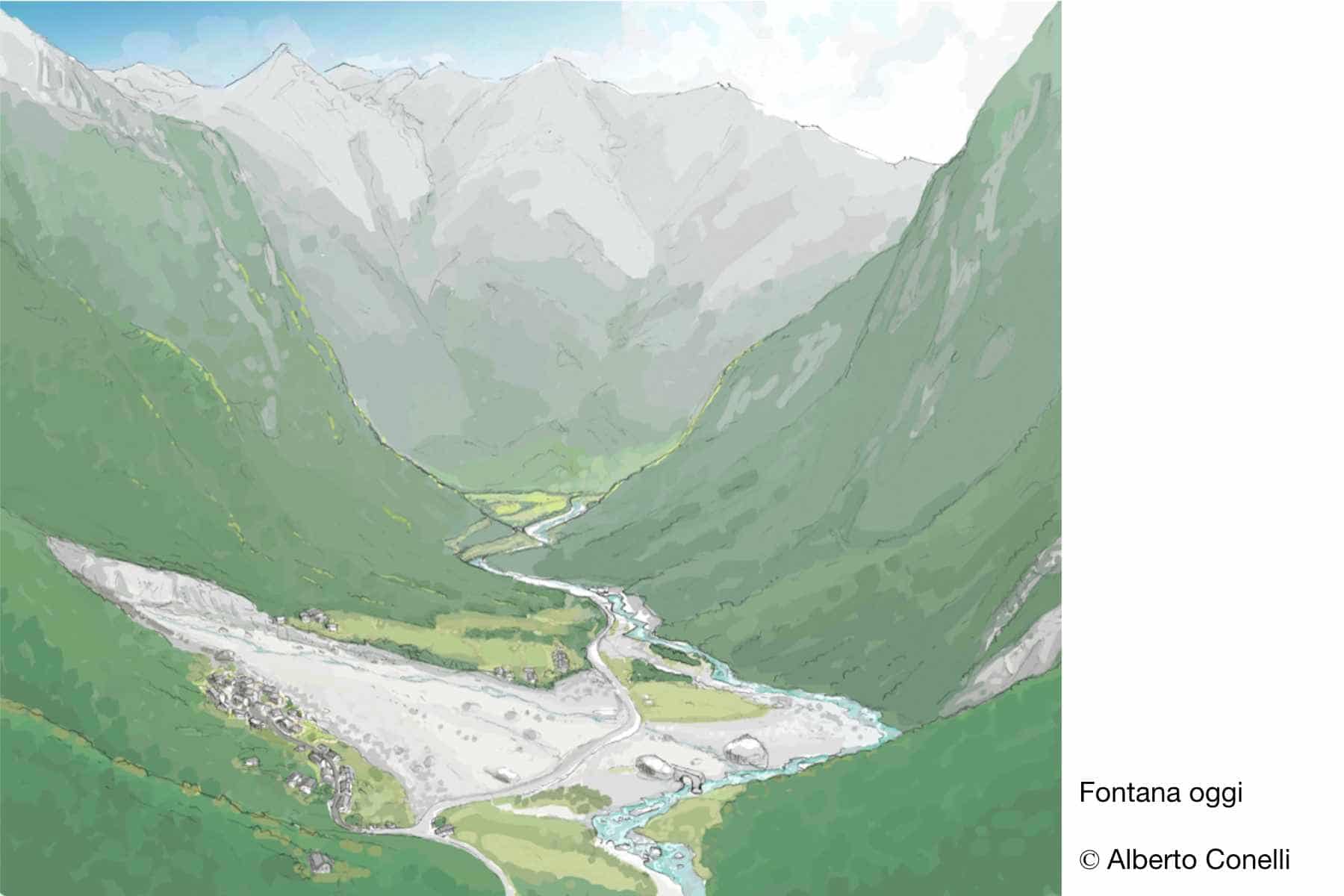
Each intervention will need to be carefully assessed within a framework that requires environmental, social, and economic sustainability. Within this set of constraints, the new landscape structure will gradually take shape. In addition to safety and landscape reconstruction, the process will also address the restoration of the road, the rebuilding of a network of paths, and the memory of what happened.
The next steps will unfold in two phases. First, the proposal presented during the selection process will be further developed and examined in greater detail. The second phase will focus on the preparation of the preliminary design. A further essential aspect will be the continued involvement of those connected to this part of the territory. The participatory process, already initiated from the beginning, is expected to continue. Farmers and other stakeholders will be consulted, as the plan will only be able to function if it is genuinely considered appropriate by those who live, work, and care for the area.
Date
9 May 2026
People
Andreas KiparFederico ScopinichMartina ContiCarlotta OlivariAlain Vimercati
Office