Wendersplatz, Neuss
Germany
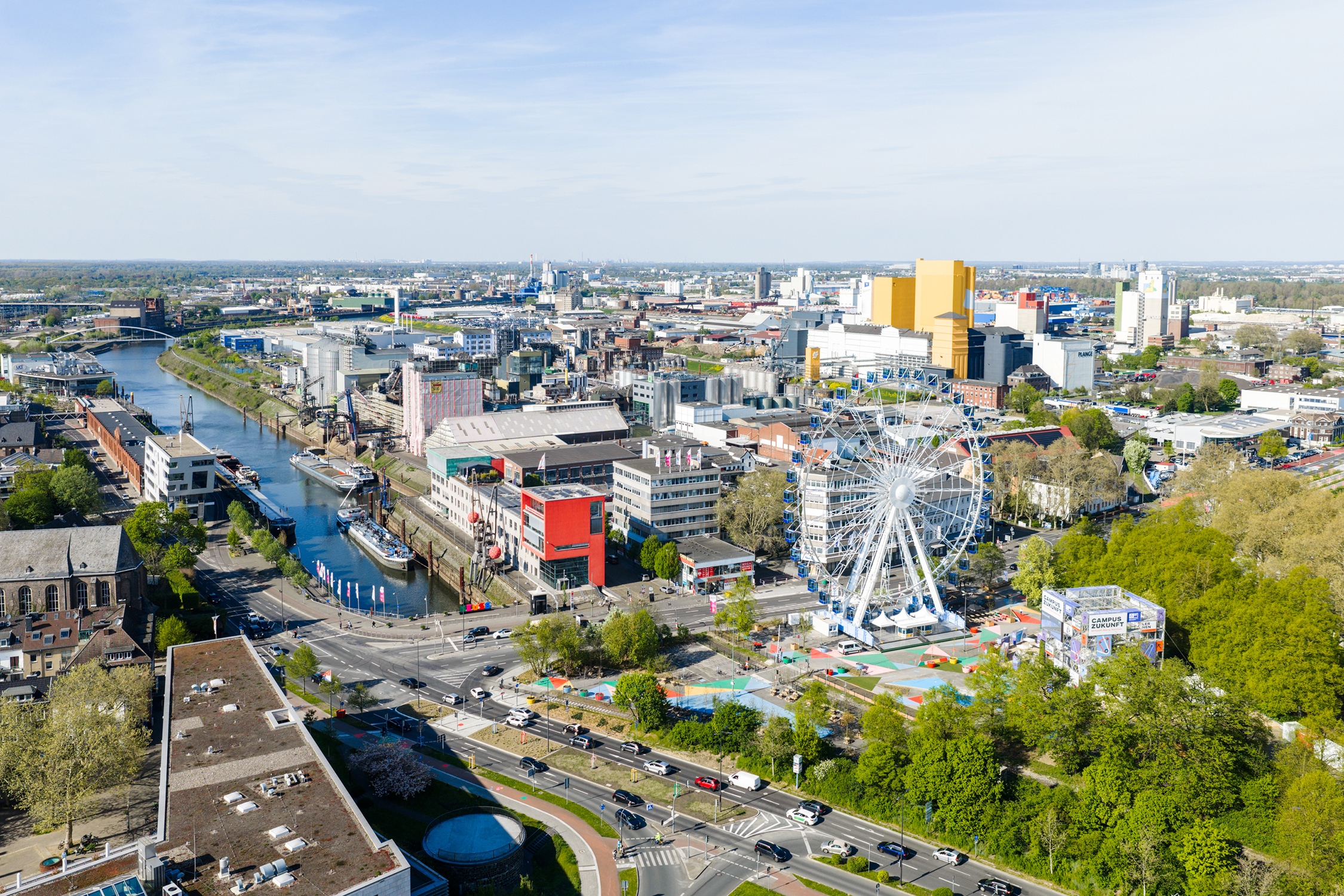
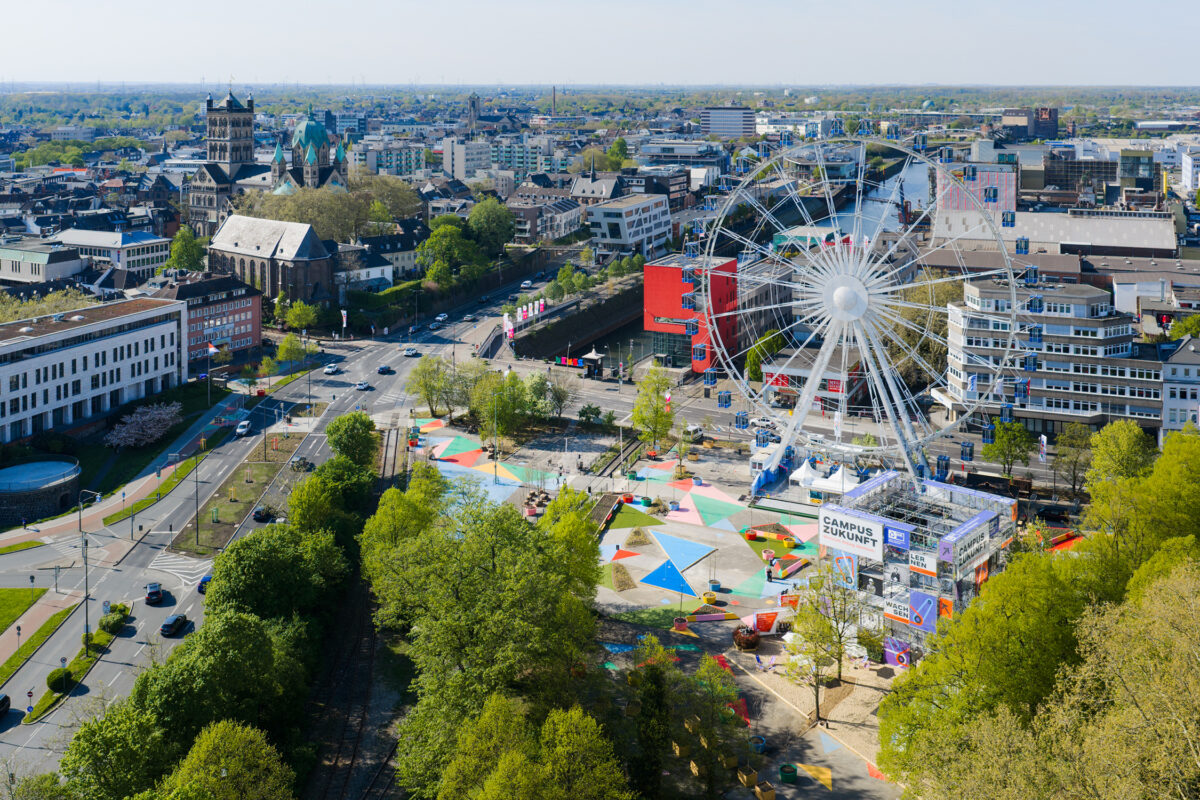
In occasion of the Landesgartenschau Neuss 2026 (LAGA), the large parking area on Wendersplatz was temporarily transformed into the central entrance area of the exhibition grounds.
The temporary design features a colourful layout, large varieties of plants and flowers, as well as versatile facilities for cultural events and activities held throughout the Garden Show.
In occasion of the Landesgartenschau Neuss 2026 (LAGA), the large parking area on Wendersplatz was temporarily transformed into the central entrance area of the exhibition grounds.
The temporary design features a colourful layout, large varieties of plants and flowers, as well as versatile facilities for cultural events and activities held throughout the Garden Show.
©Franco Casaccia, JSWD
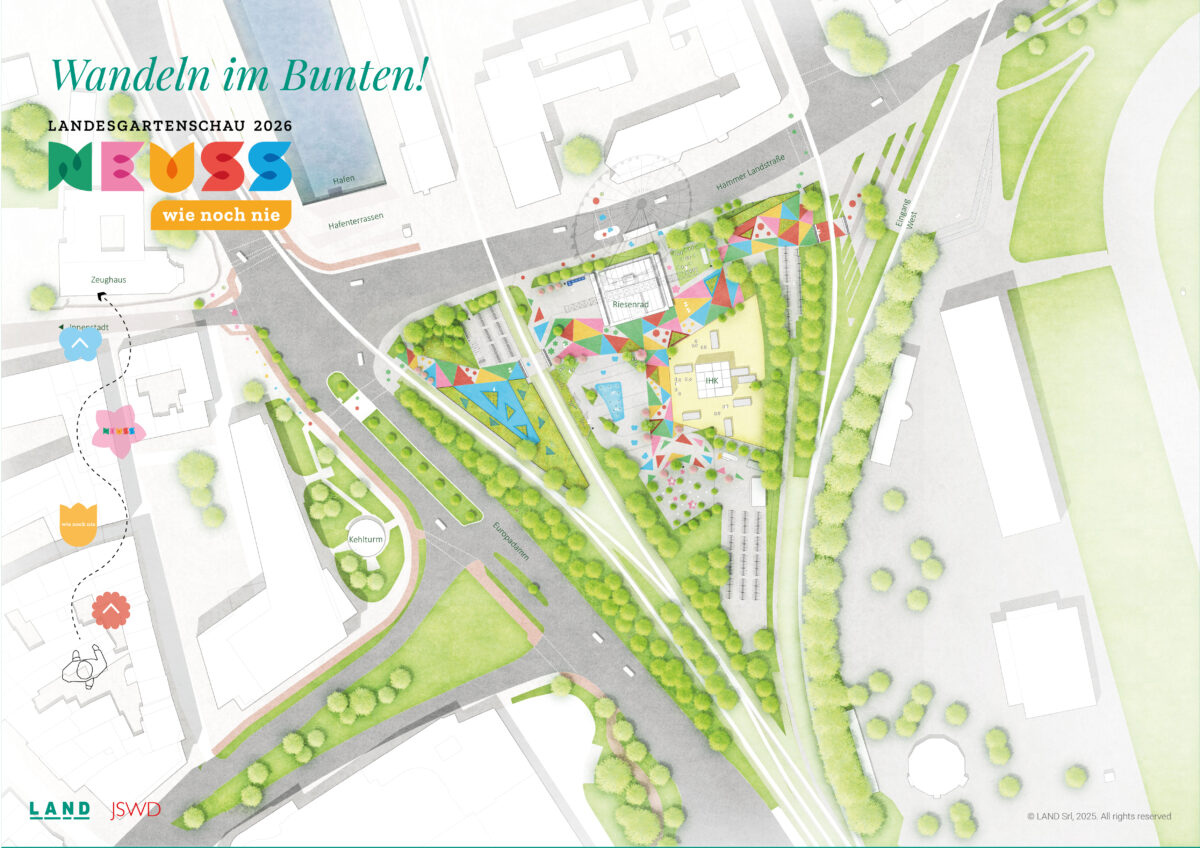
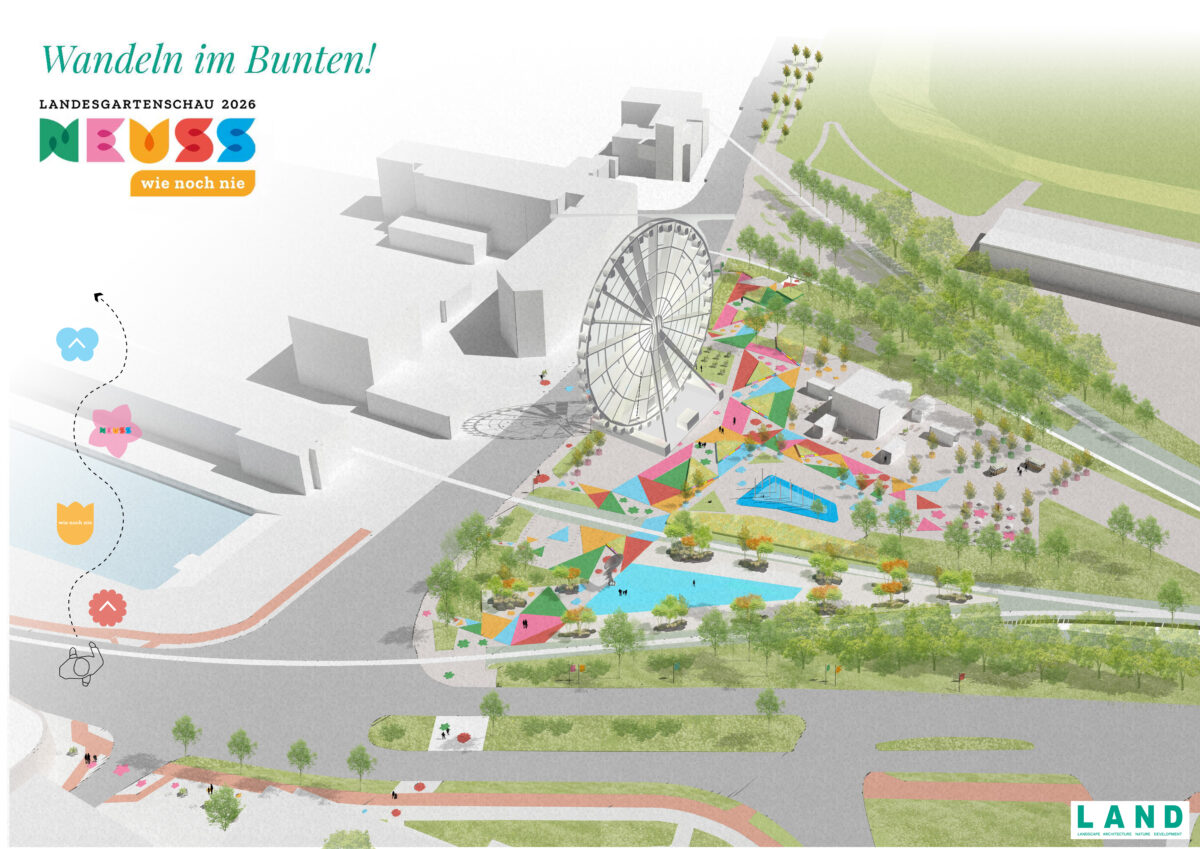
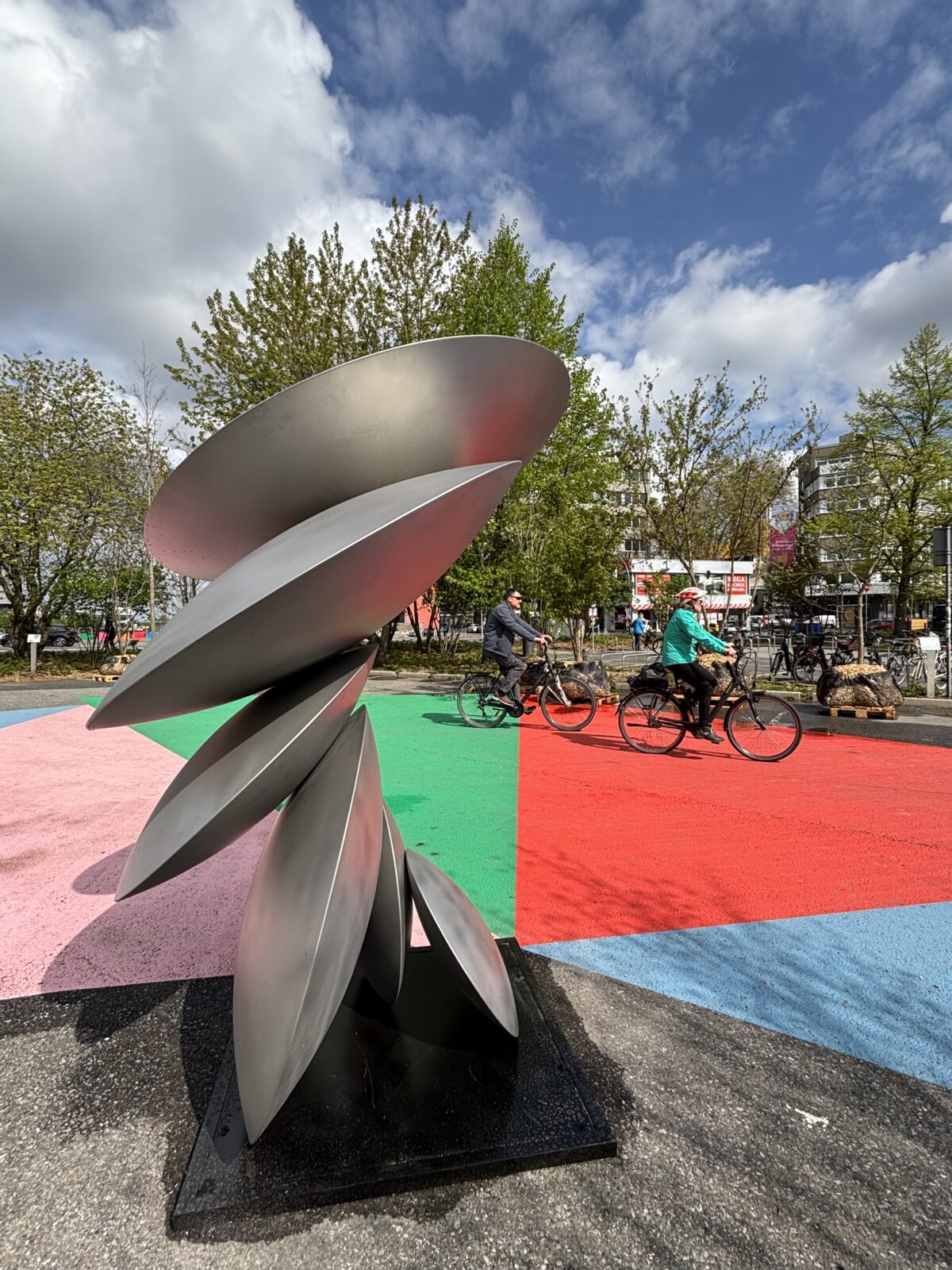
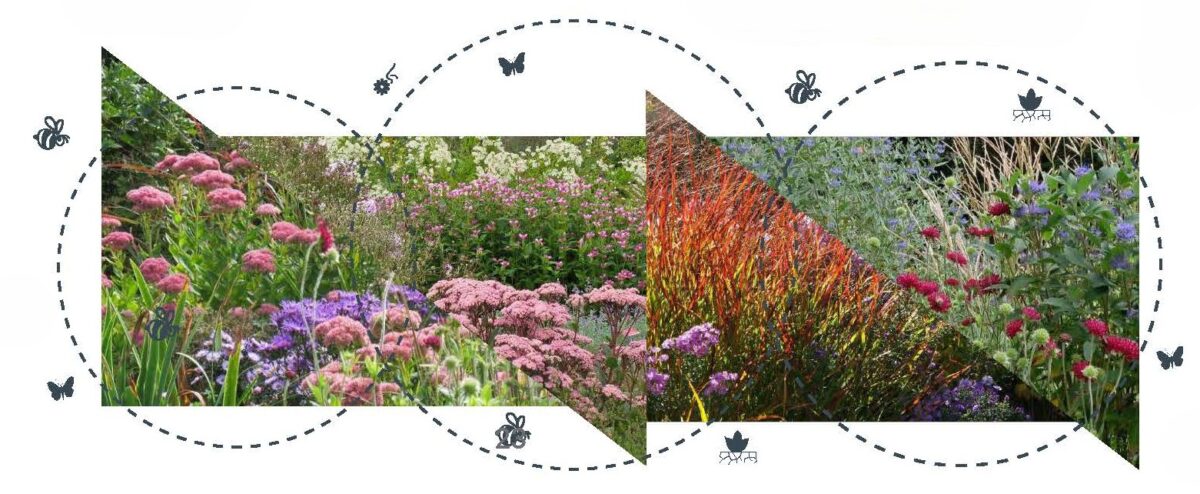
Until the permanent redesign after the Landesgartenschau 2026, the interim design of Wendersplatz provides key functions for citizens, visitors and local businesses alike, all under the guiding theme “Traces of the Future”, which has been translated in spatial and visual form.
The concept proposed by LAND Germany and JSWD, “Chromatic Grounds,” turns the square into a vibrant experiential space that acts as a connecting element between the city, the forecourt, and the Federal Garden Show. Wendersplatz is conceived as a welcoming prelude to the event, a “red carpet” made of color that leads visitors toward the exhibition while continually surprising them visually and drawing them into the space. Color fields and graphic markings on the ground, realised by Stadtgrün Ruhr GmbH, adopt the official color system and visual identity of the LAGA, creating orientation, identity, and atmosphere at the same time.
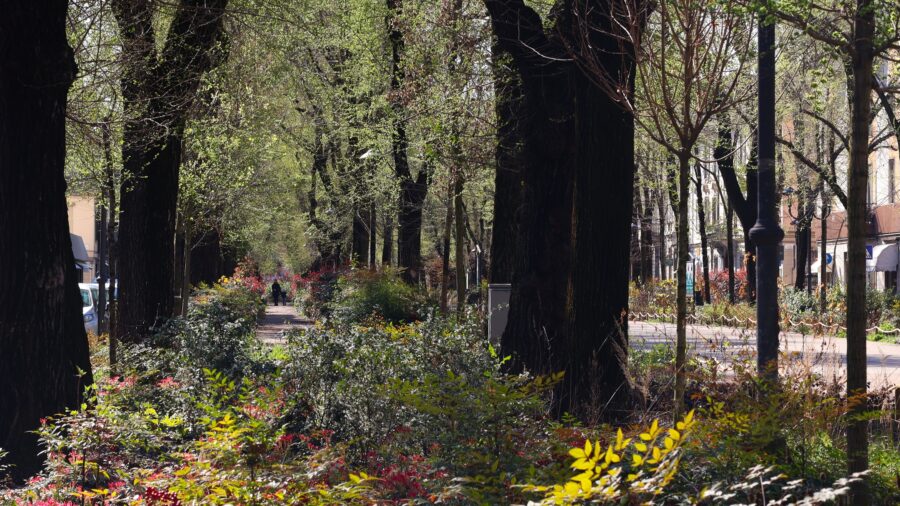
Raised flowerbeds with a variety of plantings, custom-made by BRUNS Manufaktur, bring vegetation and seasonal dynamism into the urban space. Wide, unsealed recreation areas and plantings create a pleasant microclimate for rest and relaxation.
Artistic contributions, including a sculpture by renowned Düsseldorf artist Thomas Schönauer and works by local graffiti artist Alessandro Althaus (Oldhaus), add cultural levels to the space and reinforce its identity as a public place of experience.
Wendersplatz thus becomes a temporary urban ecosystem and experimental field: a place where nature is not mere decoration but rather acts as a formative infrastructure, showing how landscape can initiate urban transformation.
Office
People
Nadine Calaminus-TölleLaurent GroßklausSeverin HeinrichsAndreas Kipar Arianna Senatore, Julian Altmann
Typology
Urban regeneration & developmentEducational & leisure spaces
Related projects