LAND at Biennale di Architettura di Pisa 2025
Conceiving Nature as Infrastructure and Landscape as Life, LAND presents the Urban Green Plan of the City of Trento, the Semmering 2030+ Masterplan, and the “Agriculture meets Manufacturing” project in Fellbach, part of the IBA’27 (Internationale Bauausstellung 2027) program.
In a world marked by climate instability and growing social inequalities, Nature can no longer be seen as a mere backdrop, but rather as a living infrastructure, capable of guiding urban transformation towards a more equitable, inclusive, and resilient future.
Embracing this crucial theme, at the heart of this year’s Pisa Architecture Biennale (October 10th – November 16 2025), LAND proposes an approach aimed at profoundly redefining traditional models by promoting a new relationship between humans, Nature, and the city.
Hence, the three emblematic projects presented at the fair embody a holistic vision of a Nature-Positive Landscape as a driver of urban and territorial regeneration—capable of combining well-being, social inclusion, and new forms of productivity.
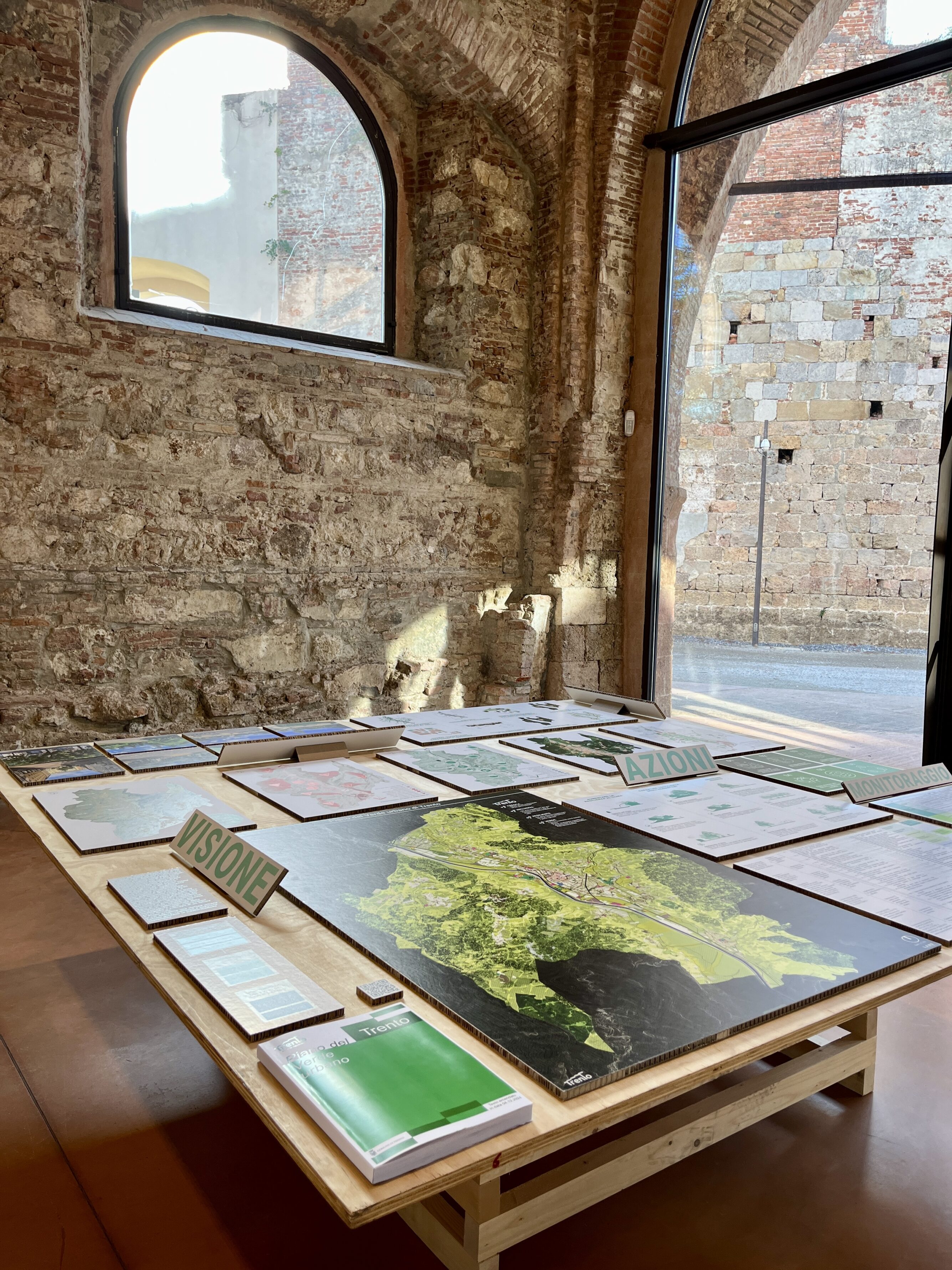
Urban Green Plan of the City of Trento at Biennale di Architettura di Pisa 2025
From the inner areas of Trentino to the alpine valleys of Lower Austria, and the city of Fellbach in the heart of the Stuttgart metropolitan region, these case studies operate at different scales and in diverse geographical contexts, yet are united by a concept of Nature that, integrated into the urban fabric, becomes a catalyst for sustainable development.
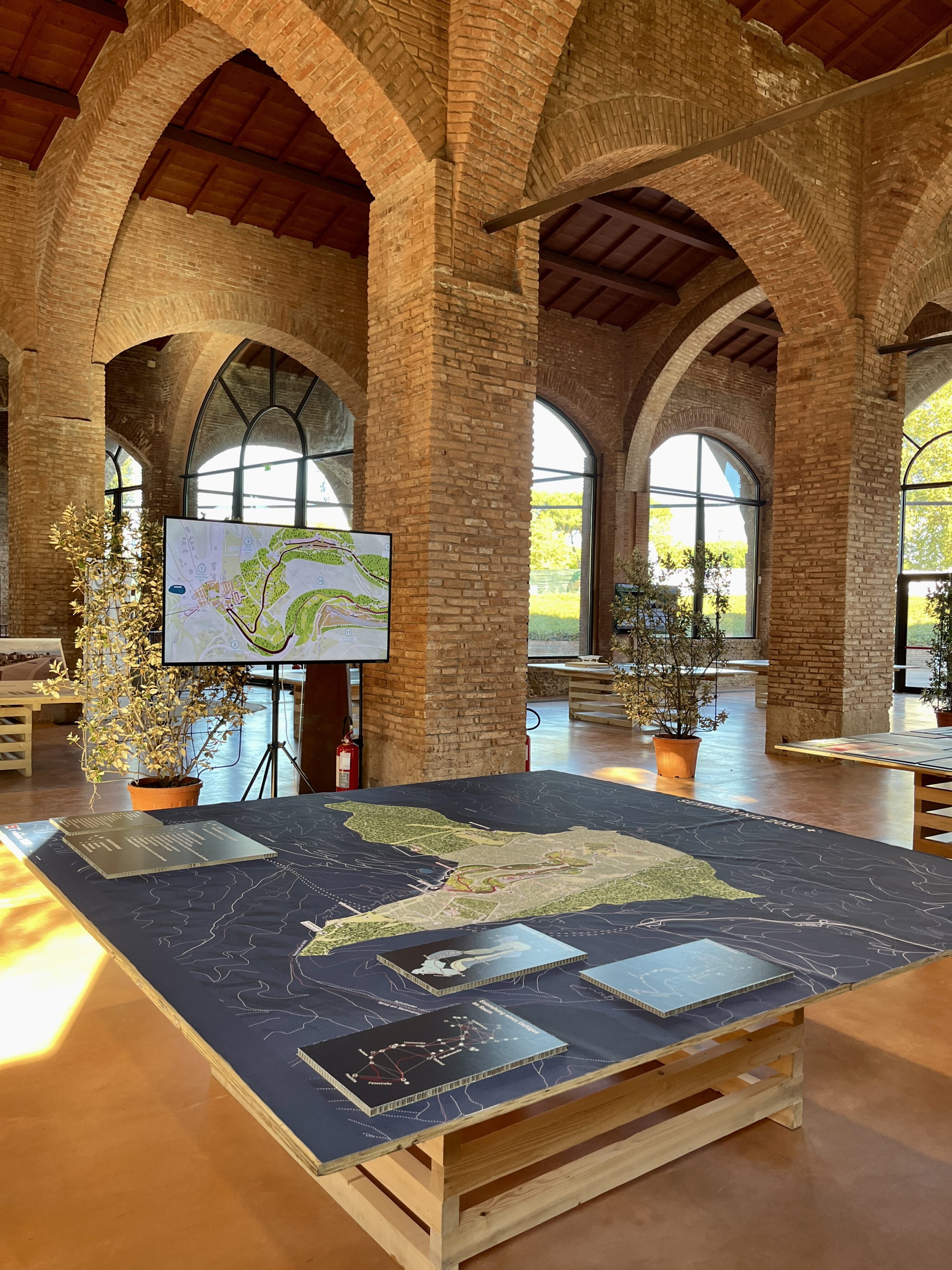
Semmering 2030+ Masterplan at Biennale di Architettura di Pisa 2025
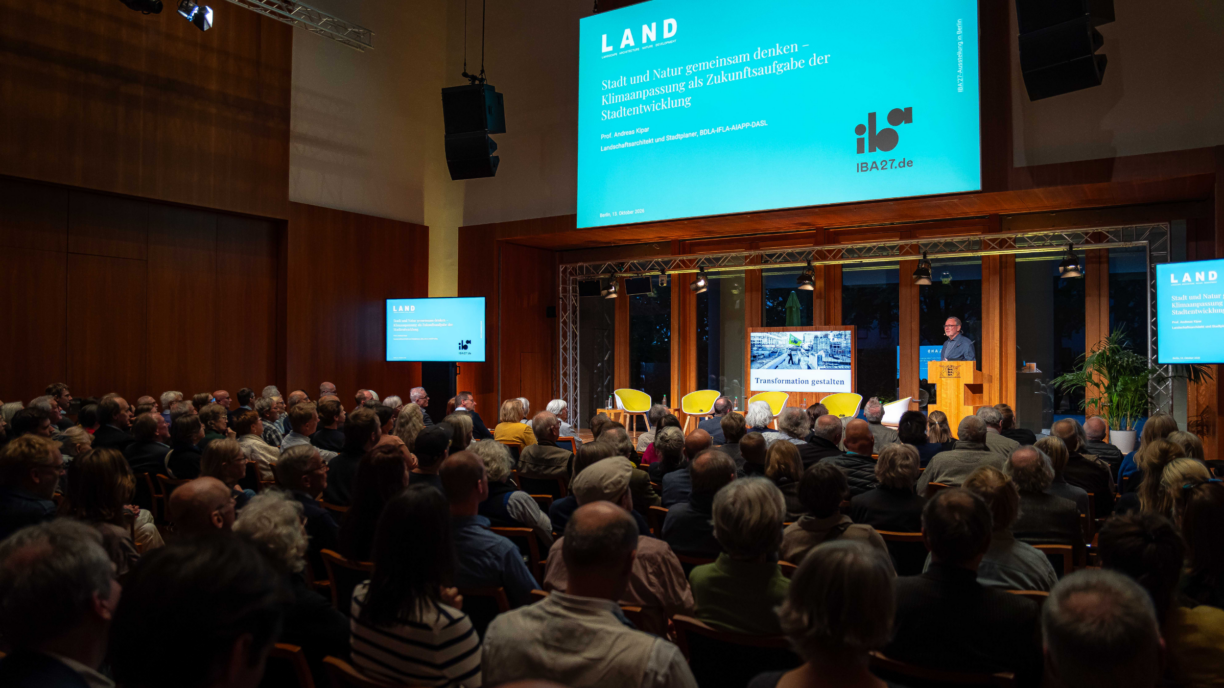
Three core principles connect the Urban Green Plan of the City of Trento (download here), the Semmering 2030+ Masterplan, and the “Agriculture meets Manufacturing” project in Fellbach, part of the IBA’27 (Internationale Bauausstellung 2027) program. First, an integrated vision of masterplanning that overcomes urban fragmentation and restores cohesion and identity to territories by linking landscape, mobility, green infrastructure, and public space. Second, an open and participatory design process, where communities, administrations, and stakeholders become co-authors of transformation, strengthening the sense of belonging to places.
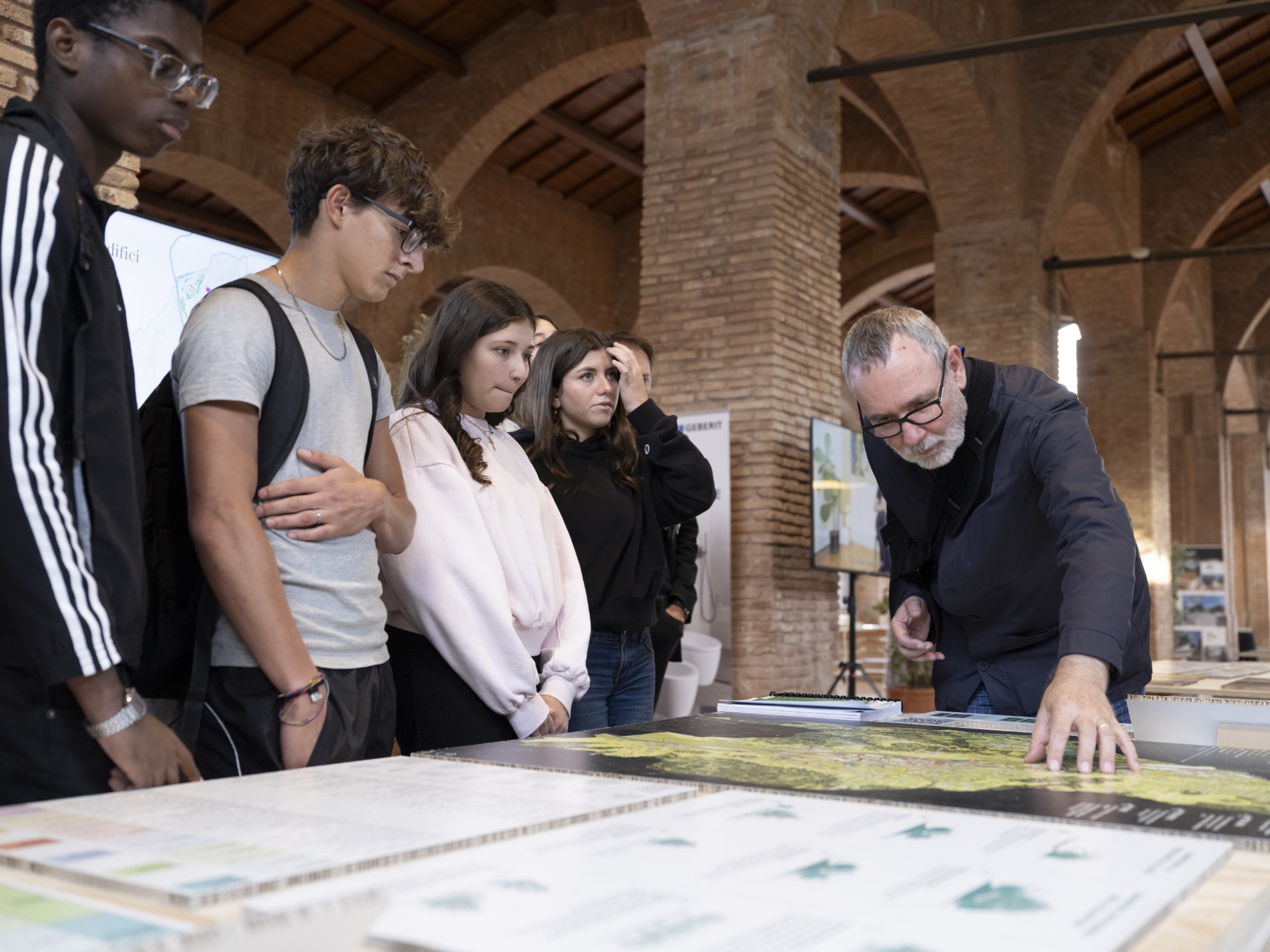
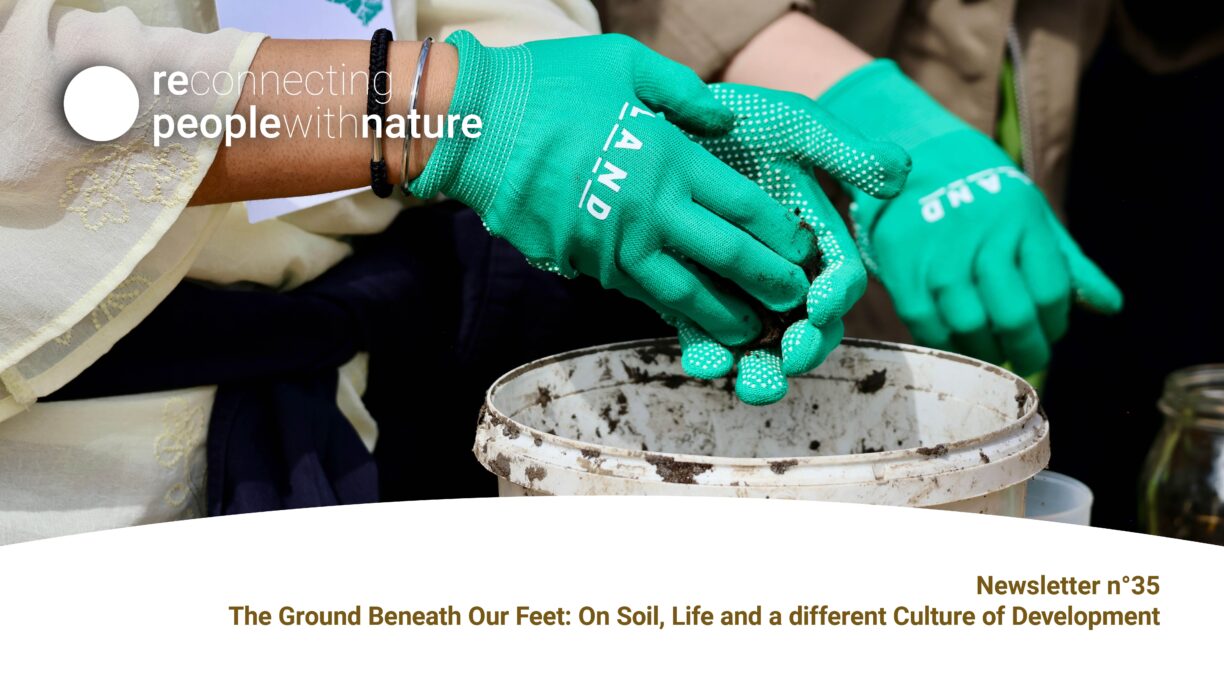
Andreas Kipar with a group of students. © Nicola Ughi
Finally, the strategic implementation of Nature-based Solutions for visible and measurable sustainability. The use of green and blue infrastructure for climate resilience is thus paired with the creation of multifunctional areas capable of producing more liveable spaces and generating ecological, economic, and social value.
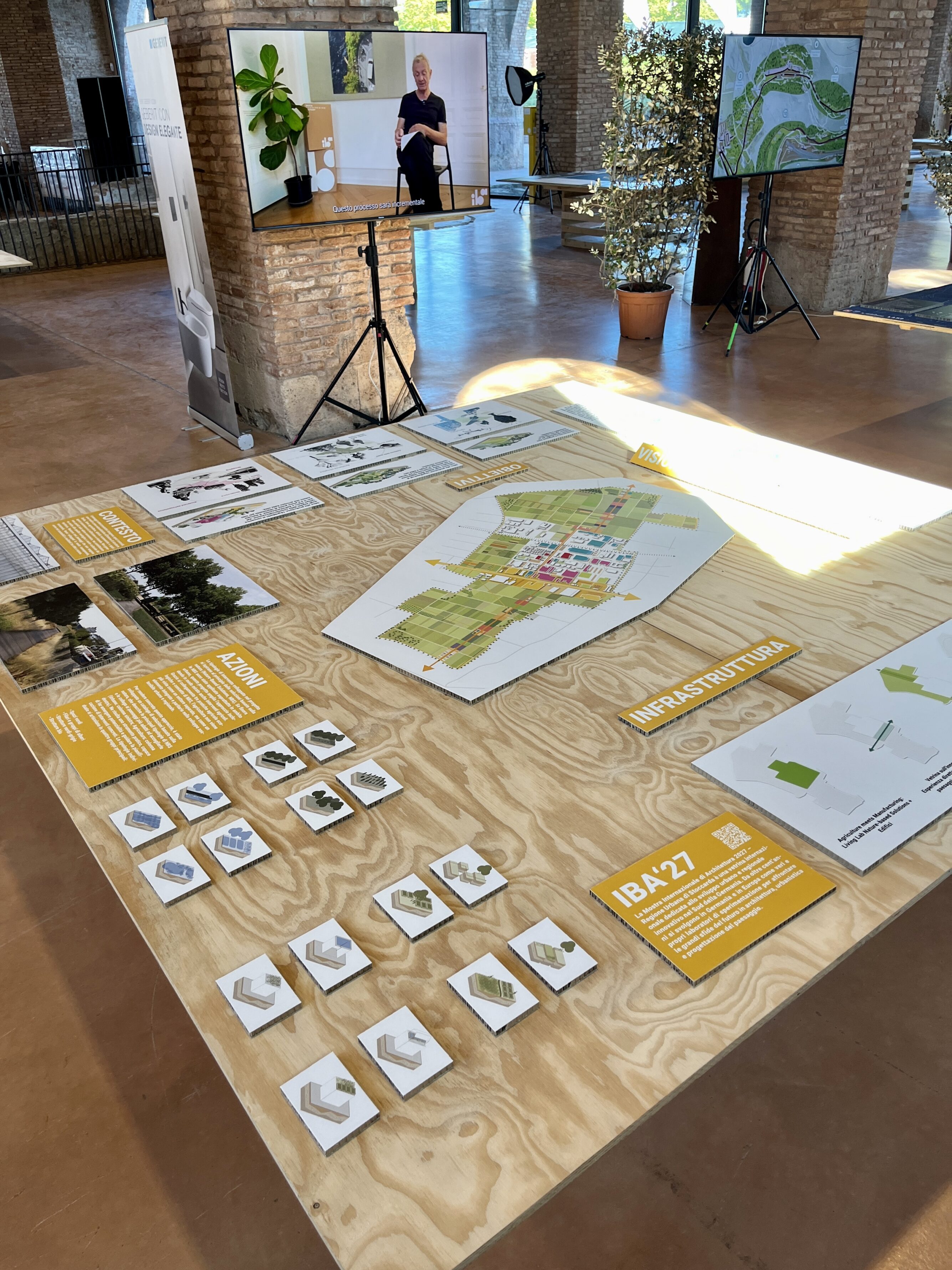
“Agriculture meets Manufacturing” project in Fellbach at Biennale di Architettura di Pisa 2025
Together, these three projects demonstrate how it is possible to envision—and create—productive and inclusive landscapes that reconnect people with Nature and address the major challenges of our time. Because regenerating territories based on the intrinsic vocation of places means creating new connections and promoting productive landscapes for a future that is increasingly shared and sustainable in all its complexity.
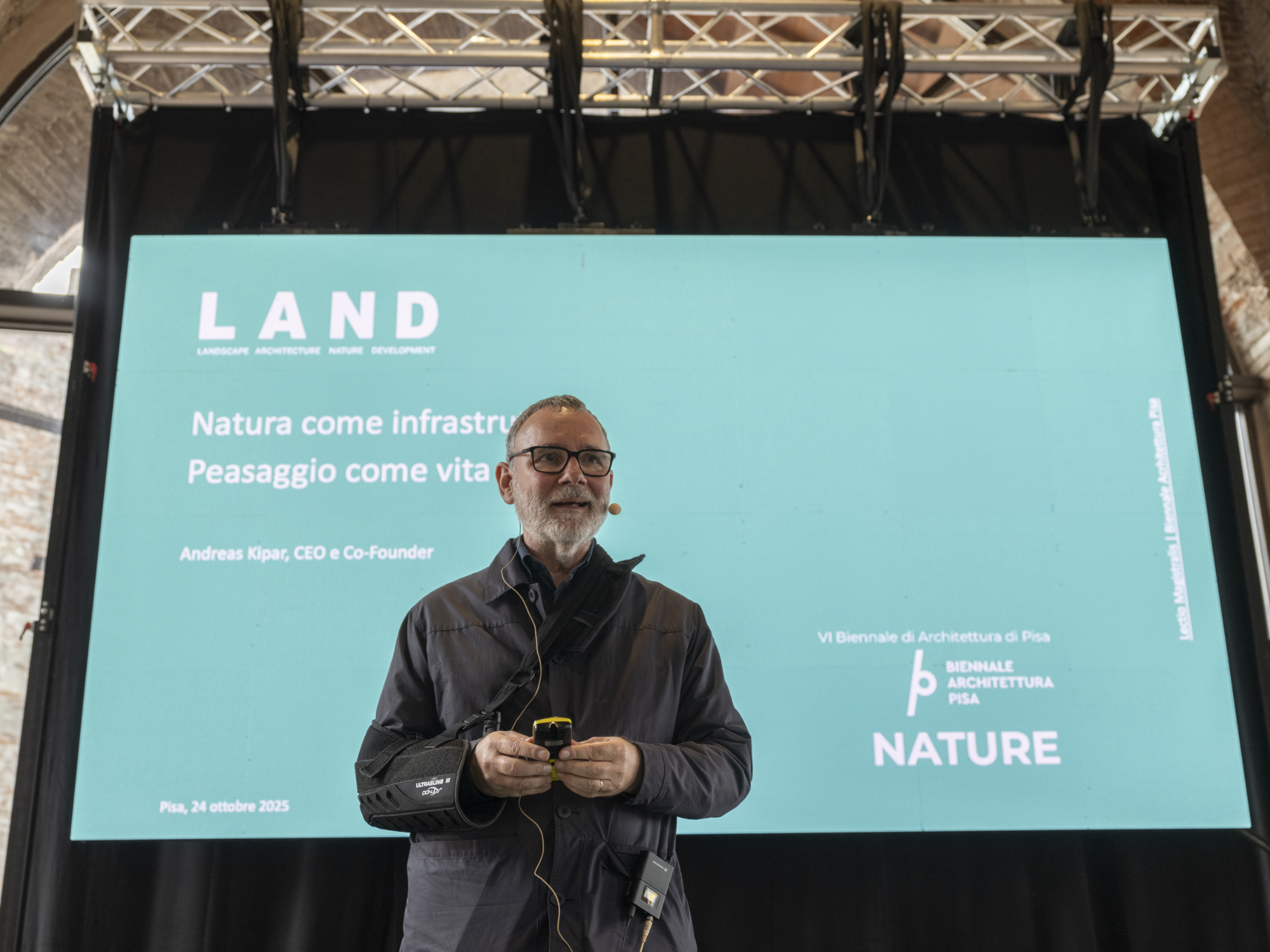
This integrated approach was then further explored by Andreas Kipar, holder of the Città di Pisa Award for Urban Quality at the 2019 Biennale, in his Lectio magistralis on Friday, October 24.
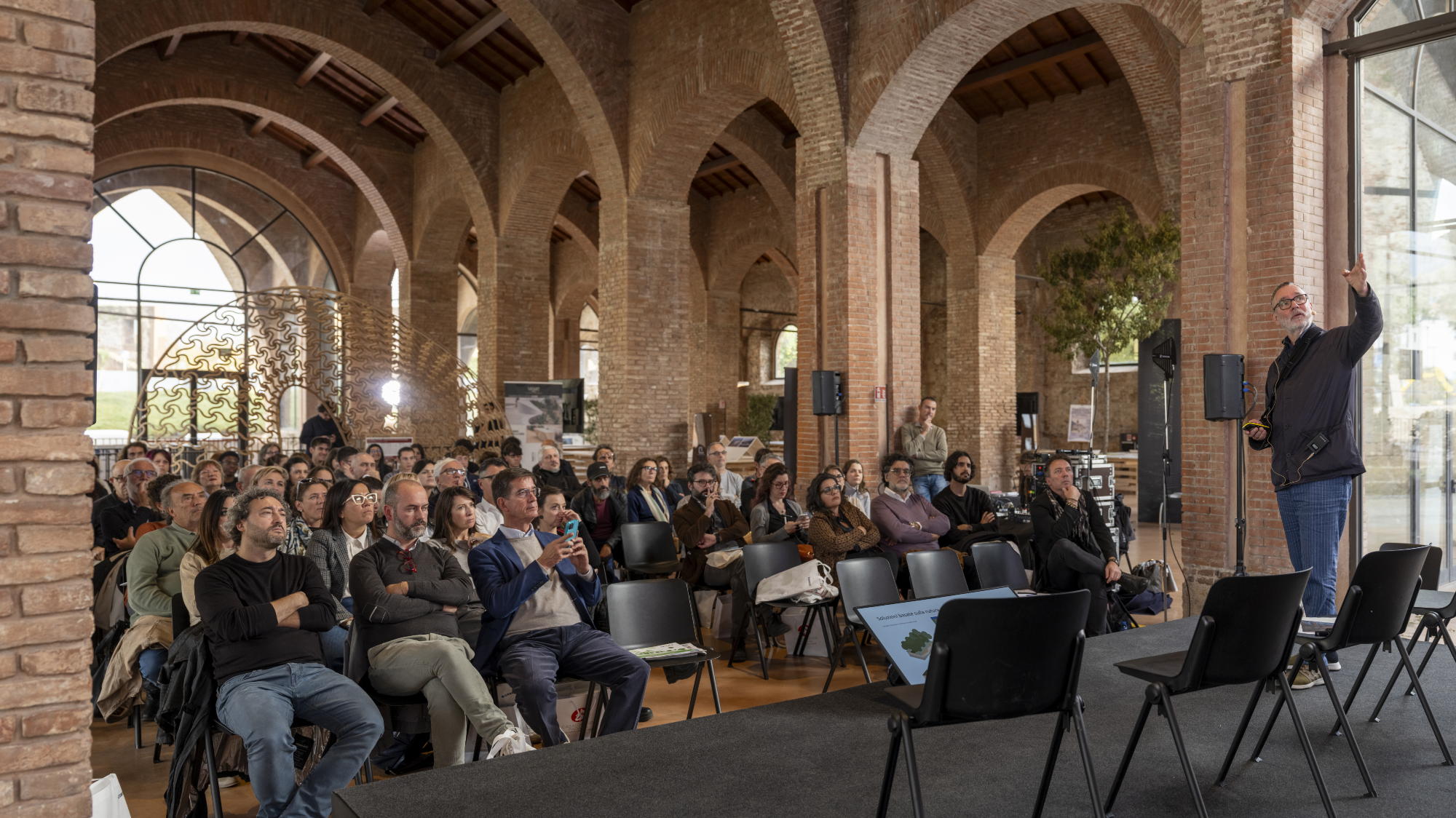
Andreas Kipar during his Lectio Magistralis. © Nicola Ughi
Date
10 October 2025
People
Stefanie OstermannIlaria CongiaAndrea AtzeniChiara GalimbertiAndrea BalestriniMichael GräfAmélie MeißnerIris PayerAndreas Kipar
Office