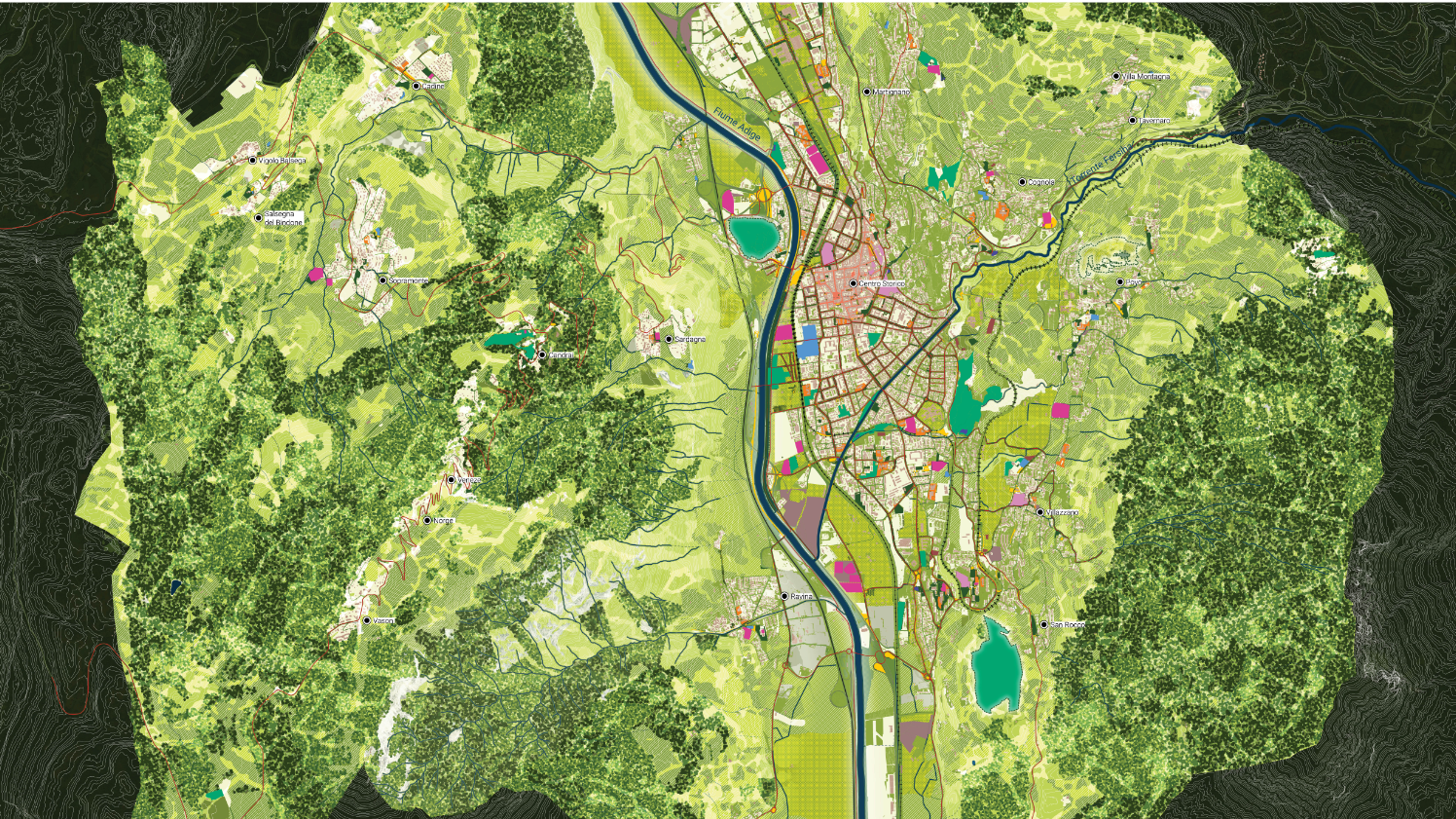
Trento, officially approved the Urban Green Plan developed by the Municipality of Trento in collaboration with LAND Italia and the University of Trento
The approval process for the strategic document resulting from the collaboration between LAND Italia - the firm led by Andreas Kipar, the Parks and Gardens Office of the Municipality of Trento, and the University of Trento, concluded on 4th December, after a process of engagement with the local community. As outlined in the guidelines of the Manifesto, its goal is to improve the quality of life for the residents of Trento by promoting environmental sustainability through the integration and enhancement of green spaces in the city.
A dynamic vision of urban greenery, based on a rethinking of urban nature through the lens of its ecosystem services. This is the approach outlined in Trento’s Urban Green Plan, approved yesterday by the City Council following weeks of discussions with local districts. The Urban Green Plan aims to support future urban planning, management, and development of the city’s public spaces.
Realized with a co-creation perspective, the Urban Green Plan involves the entire local community to ensure a holistic and collaborative approach to protecting and enhancing urban nature, seen as a common good. Through adaptive planning, green and blue infrastructure becomes a central pillar of a strategy aimed at countering and mitigating the effects of climate change with a resilience perspective, thanks to the fundamental contribution of nature-based solutions.
“European cities are rediscovering their vocation, and Trento cannot be an exception,” states Andreas Kipar. “Our mission is to promote the rediscovery of territorial identity, creating urban landscapes that harmonize sustainability and climate resilience with people’s well-being. In the transition from Nature-Positive City to Nature-Positive Landscape, the landscape emerges as infrastructure and a driver of development, capable of transforming public spaces into beautiful, sustainable, and inclusive places for everyone.” LAND Italia’s contribution is enriched by the scientific consultancy of LAND Research Lab, which managed the monitoring program for the Plan.

Manifesto for Urban Green Plan of Trento. Image by LAND
The Plan’s guidelines are outlined in a manifesto created by LAND for a cooler Trento, proposing 155 km of shaded streets and 34 km of riverside parks; a more inclusive Trento, with plans to enrich 296 urban green areas with biodiversity and accessibility; a more resilient Trento, identifying 165 areas for potential de-paving interventions, 59 hectares of green mitigation areas, and an agricultural park; and a greener Trento, with strategic future areas redeveloped and three hills reconnected to the urban fabric.
The Green Plan aligns with major international environmental policies, from the UN’s 2030 Agenda for Sustainable Development to the European Green Deal, the EU Biodiversity Strategy, and the EU Nature Restoration Law. It is also part of SELINA (Science for Evidence-based and Sustainable Decisions about Natural Capital), a European project aimed at enhancing ecosystem services and natural capital, in which the Municipality of Trento is a partner.
The document is based on an analysis of urban greenery conducted by LAND’s multidisciplinary team, identifying four distinct landscape areas within the municipal territory: the urban landscape, the riverine landscape, the urban and peri-urban agricultural landscape, and the forested landscape.
From this analysis, the Urban Green Plan outlines eight key objectives: protecting the existing landscape and natural heritage; improving land management; collaborating with the urban community and partners; ensuring inclusivity and accessibility of urban green spaces; fostering climate change adaptation; enhancing greenery as a structuring element of urban design; increasing green-blue connections; and creating a riverside park as an opportunity for territorial integration.
Based on climate, ecological, hydro-geological, and demographic analyses, the Plan identifies the main territorial challenges and opportunities, shaping a program for urban regeneration that leverages public-private synergies to promote inclusivity and accessibility of spaces while ensuring ecosystem conservation. This enhancement goes hand in hand with management based on careful monitoring of activity and transformation indicators, enabling interventions to remain continuously updated over time.
Date
5 December 2024
People
Ilaria CongiaChiara GalimbertiClaudia TimarchiGiulia CastellazziDavide PallottaAndreas KiparAndrea Balestrini
Office