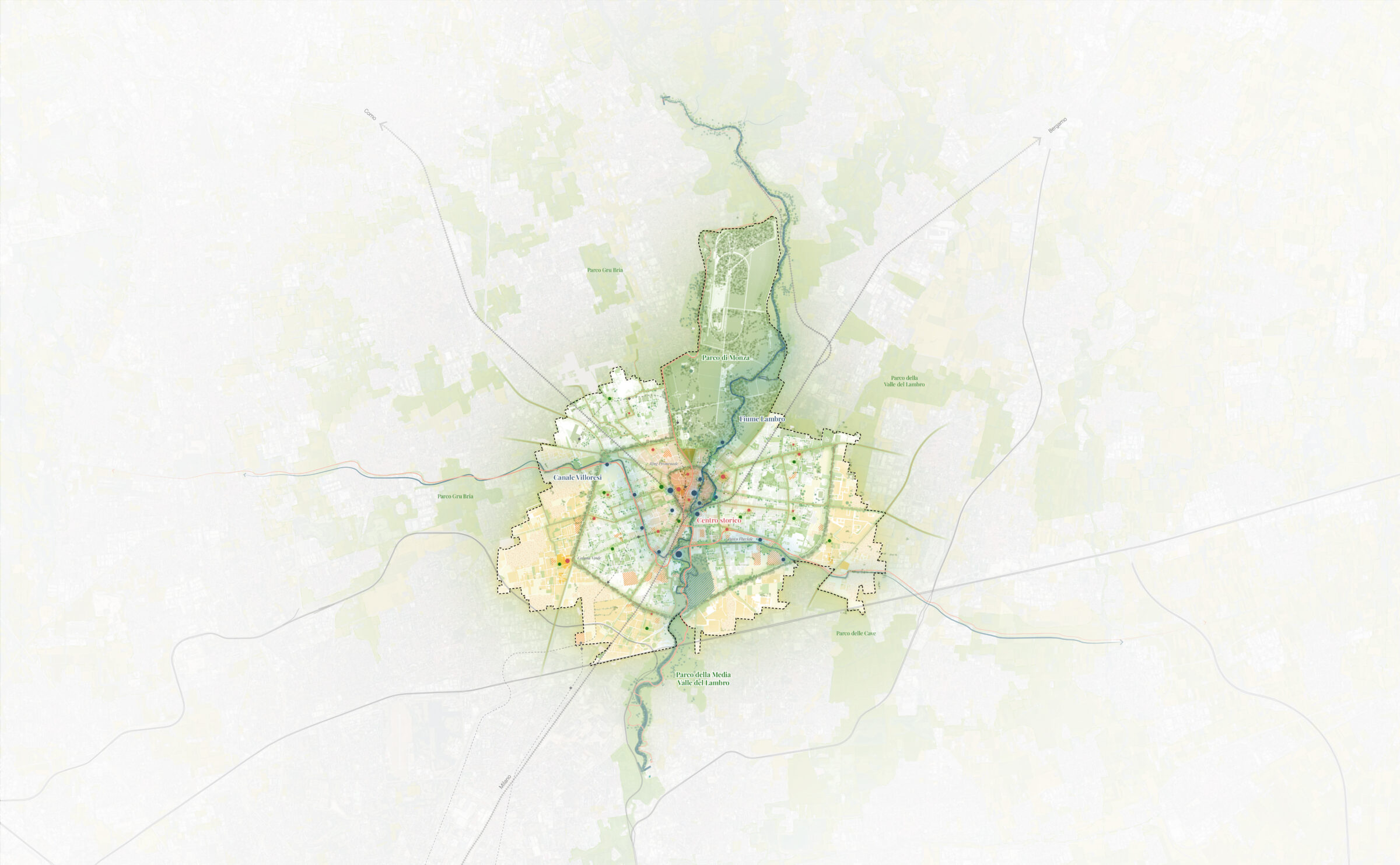
Piano del Verde, Monza
Italy
Il Piano del Verde developed by LAND Italia for the Municipality of Monza sets out an integrated strategic vision for the protection, enhancement and expansion of the city’s green infrastructure, recognising nature as an essential asset for quality of life, biodiversity and climate change adaptation.
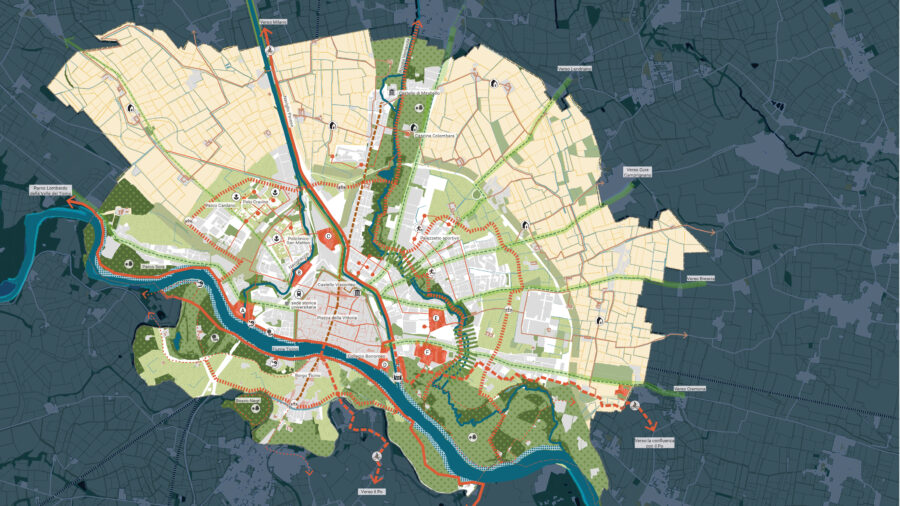
Building on an in-depth analysis of the urban and territorial context, the natural heritage and the main environmental and climate vulnerabilities, the Plan identifies three complementary identities – City of Water, City of Nature and City of Culture – as a framework for interpreting Monza’s distinctive characteristics and guiding its future transformation. Together, these three dimensions define a vision that aims to evolve Monza from a city characterised by its parks into a City-Park, where nature, water and public space become integral elements of urban development.
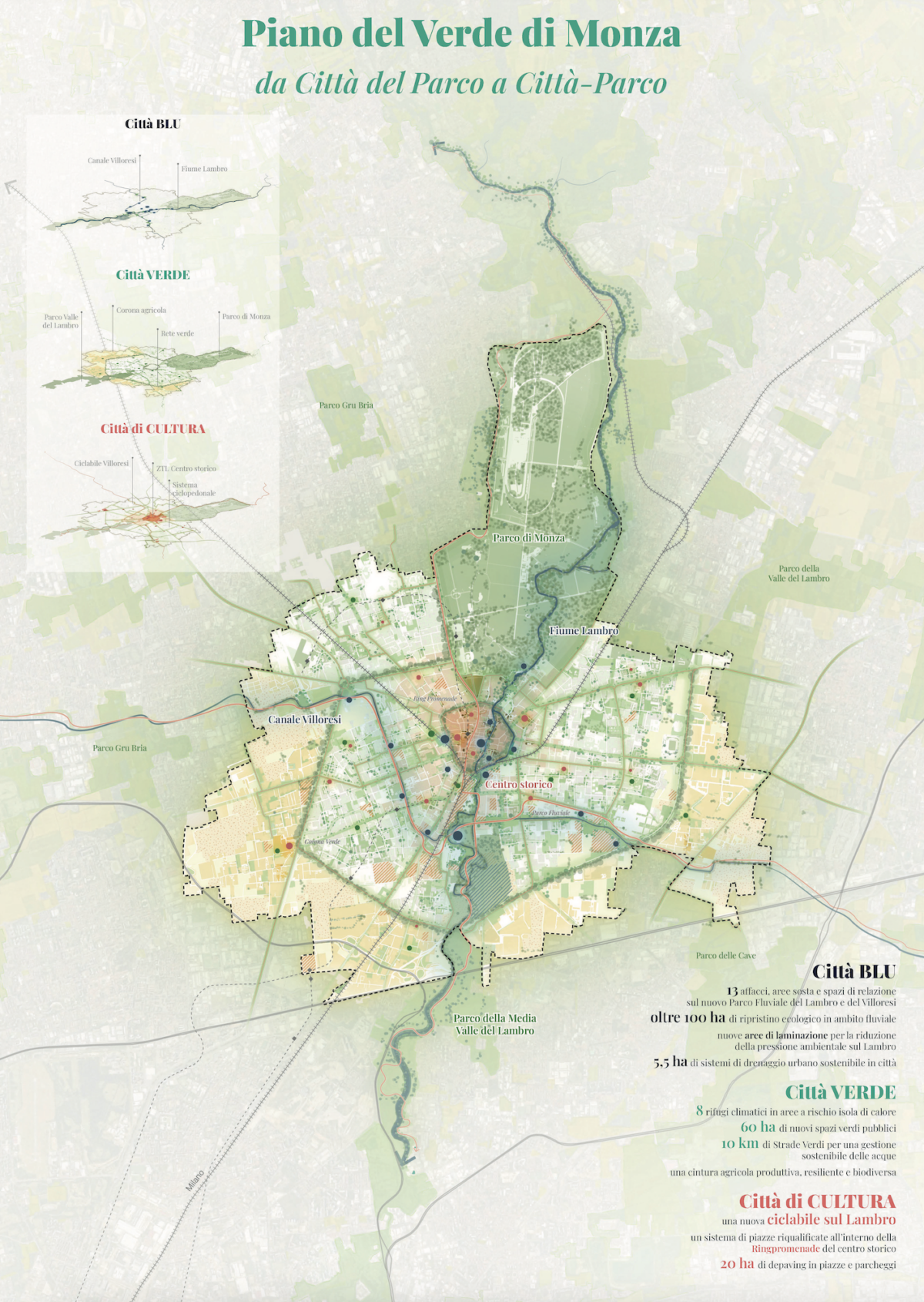
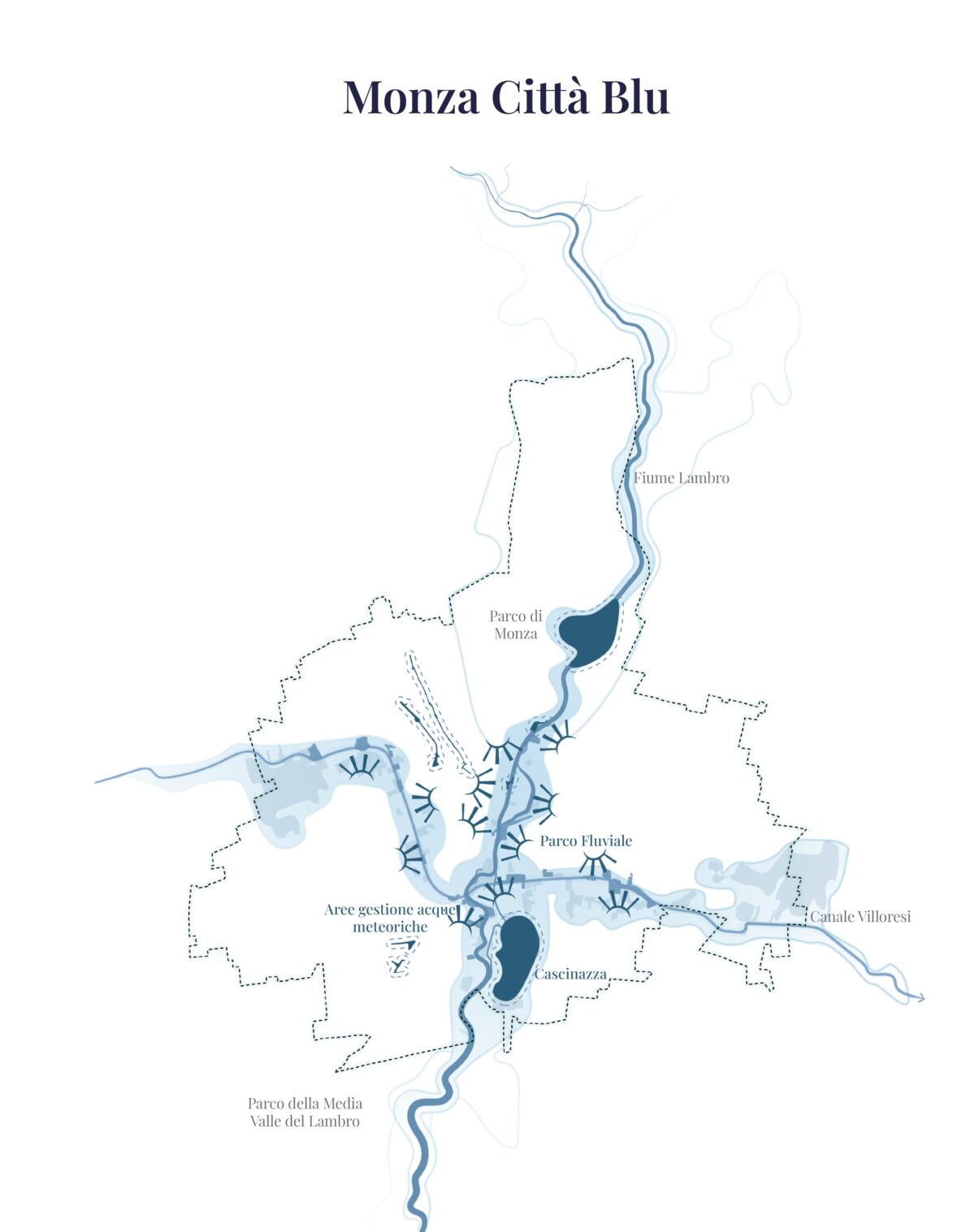
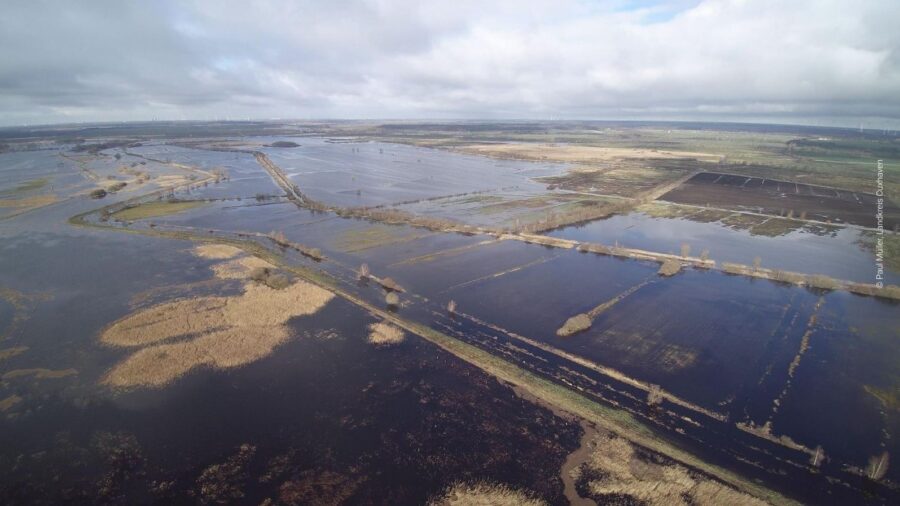
Monza, City of Water, focuses on strengthening the relationship between the city and its waterways, enhancing the ecological and landscape value of the Lambro River and Villoresi Canal. The strategy includes the development of a new Lambro and Villoresi River Park, with 13 new viewpoints, resting areas and social spaces, as well as over 100 hectares of ecological restoration along the river corridors. New flood retention areas will help reduce environmental pressure on the Lambro, while 5.5 hectares of Sustainable Urban Drainage Systems (SuDS) will contribute to more effective and sustainable rainwater management across the city.
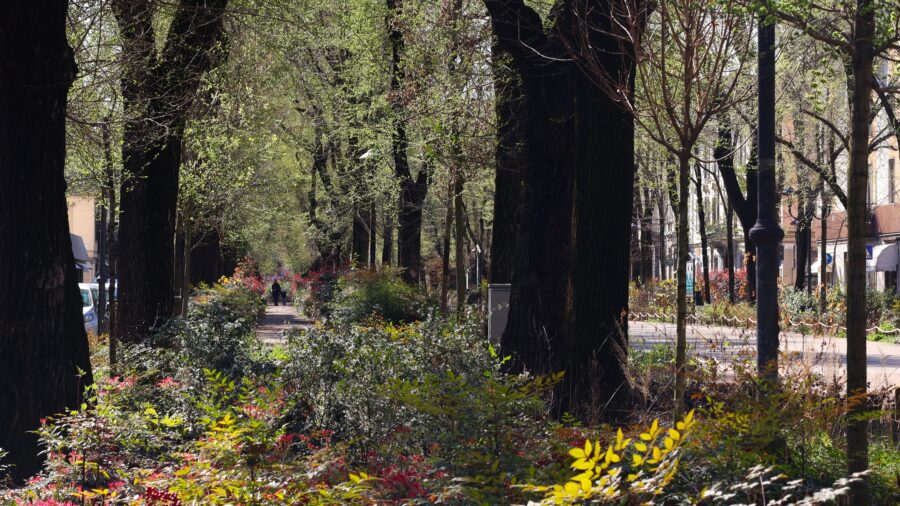
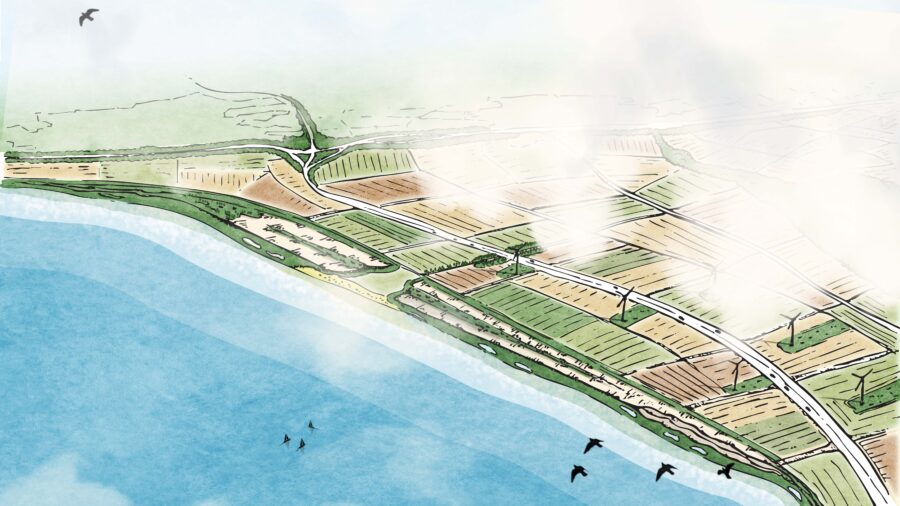
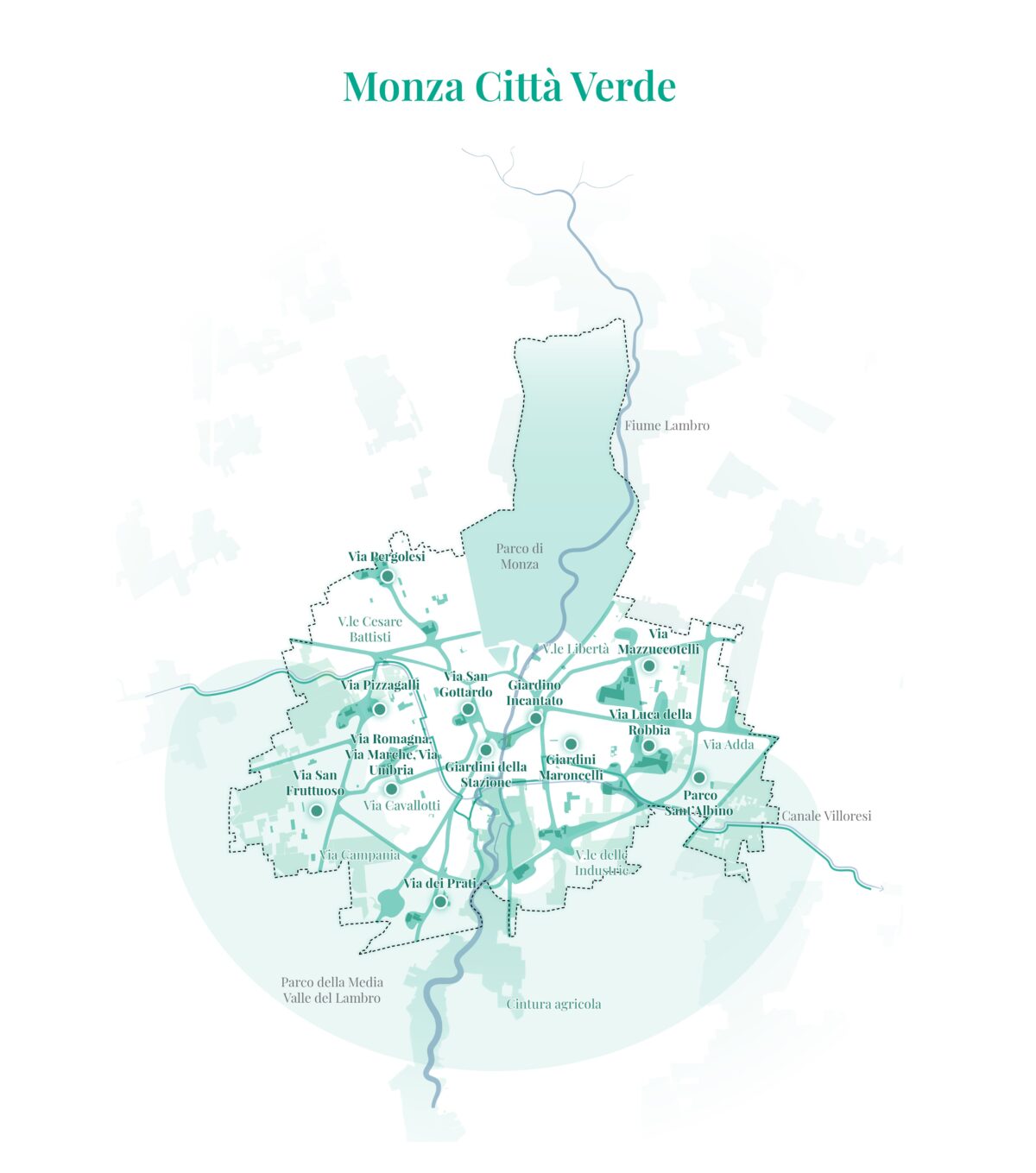
Monza, City of Nature, aims to reinforce the urban green network and improve the city’s capacity to respond to climate change. The Plan proposes 60 hectares of new public green spaces, 12 climate shelters in areas particularly exposed to urban heat island effects, and 10 kilometres of Green Streets designed to support sustainable water management and improve environmental quality. It also envisions a productive, resilient and biodiverse agricultural belt, strengthening the relationship between the urban environment and the surrounding landscape.
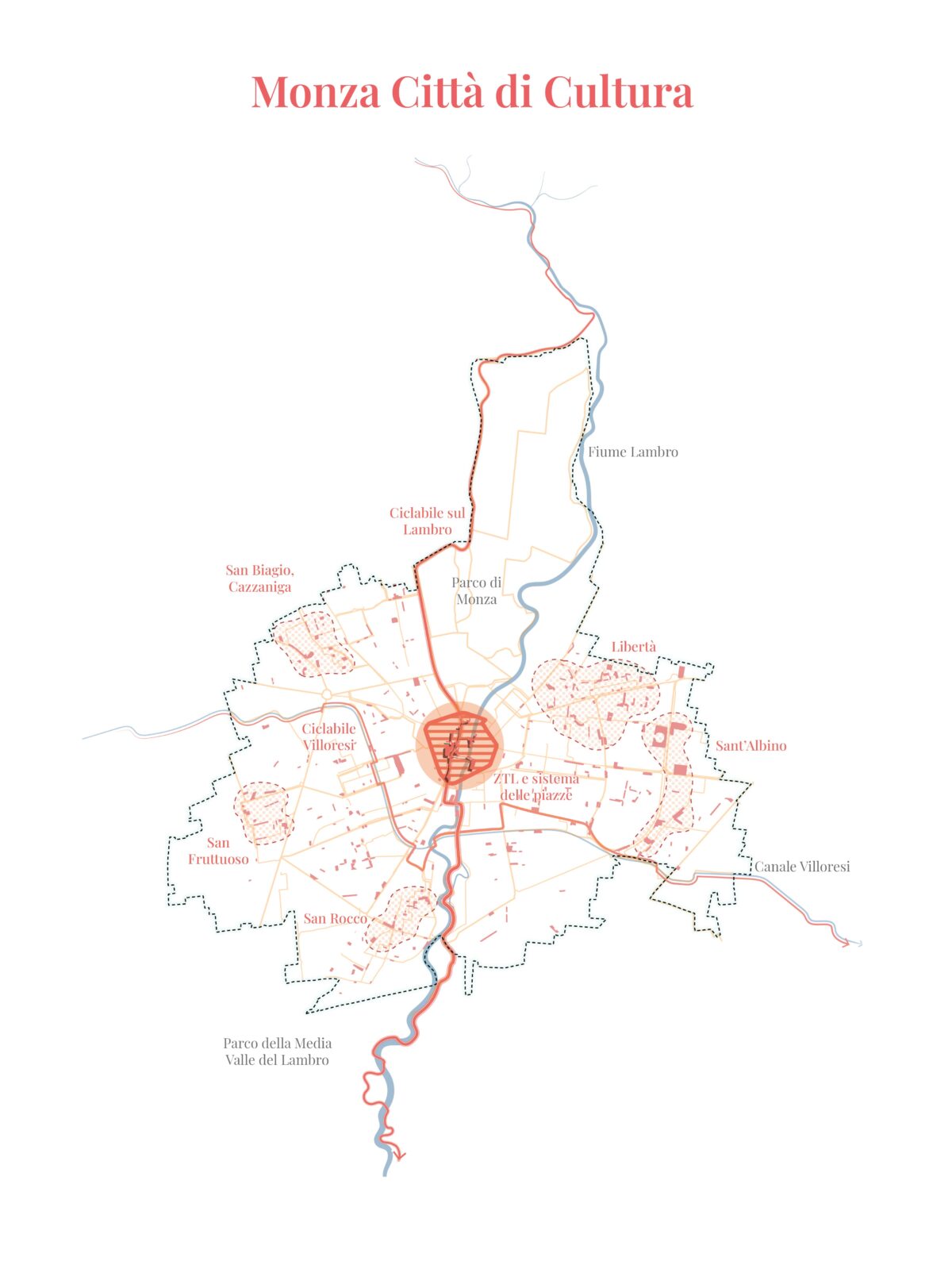
Monza, City of Culture, places public space, accessibility and sustainable mobility at the centre of urban regeneration. Its main actions include a new cycle route along the Lambro River, a network of regenerated squares within the Ring Promenade surrounding the historic city centre, and 20 hectares of depaving across squares and car parks. These interventions aim to improve the quality and usability of public spaces, encourage active mobility and create new opportunities for social interaction.
The three strategies are supported by a coordinated system of actions aimed at strengthening ecological connections, enhancing the urban tree heritage and water landscapes, increasing permeable and green surfaces, and improving the accessibility, quality and liveability of public spaces. Particular emphasis is placed on the integration of Nature-Based Solutions to manage rainwater sustainably, mitigate urban heat island effects and build a more resilient, accessible and inclusive urban environment.
28,000 trees and 10 km of Green Streets
to strengthen the urban green network and improve environmental quality.
60 hectares of new public green spaces
to bring Nature closer to residents over a 30-year planning horizon.
20 hectares of depaving
to restore permeable surfaces and improve rainwater management across squares and car parks.
Related projects