Salina Grande – Parco del Sole, Taranto
Italy
Salina Grande – Parco del Sole in Taranto proposes a new territorial model in which renewable energy, regenerative agriculture, ecosystem restoration, and public accessibility are integrated into a cohesive landscape strategy. Located within the extensive Taranto Site of National Interest (SIN), on a former saline wetland progressively transformed for agricultural use over the past century, the project interprets the energy transition as a key implementation driver of the ecological transition, turning energy infrastructure into a catalyst for landscape regeneration.
Salina Grande – Parco del Sole in Taranto proposes a new territorial model in which renewable energy, regenerative agriculture, ecosystem restoration, and public accessibility are integrated into a cohesive landscape strategy. Located within the extensive Taranto Site of National Interest (SIN), on a former saline wetland progressively transformed for agricultural use over the past century, the project interprets the energy transition as a key implementation driver of the ecological transition, turning energy infrastructure into a catalyst for landscape regeneration.
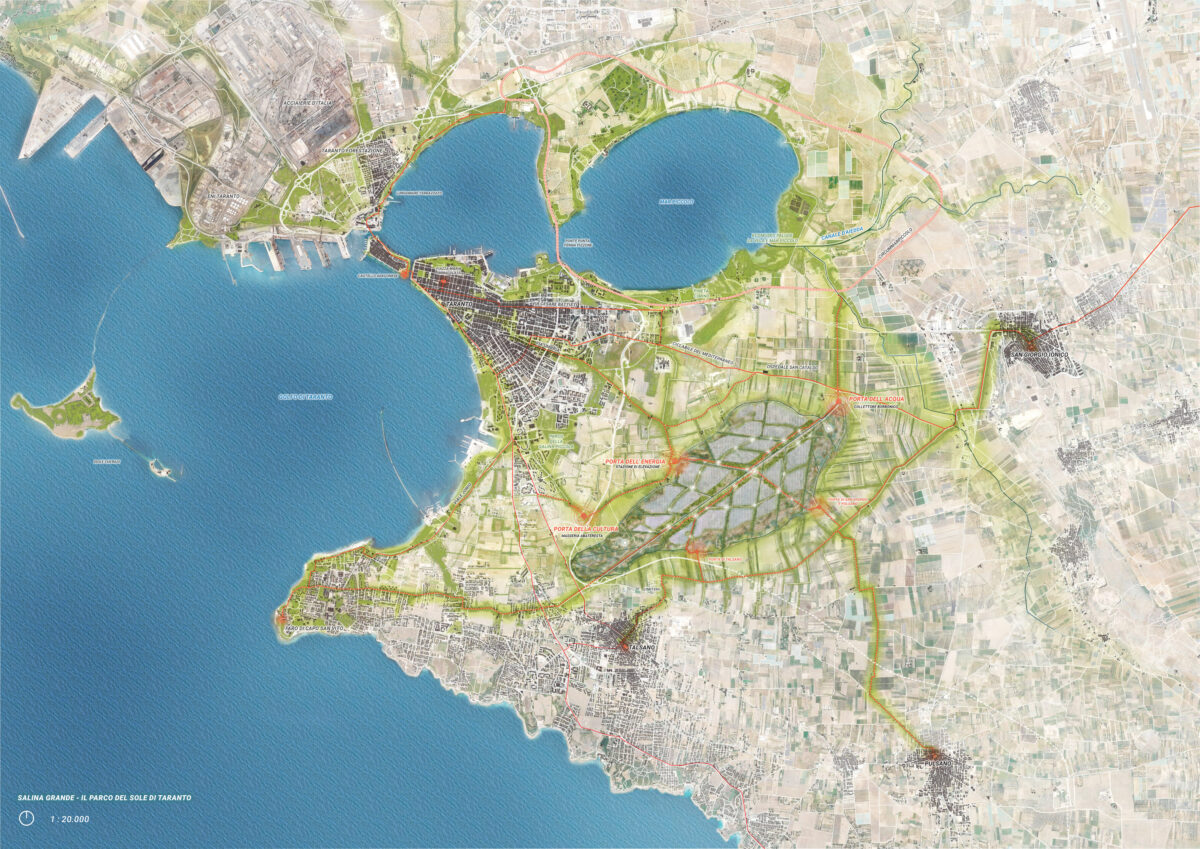
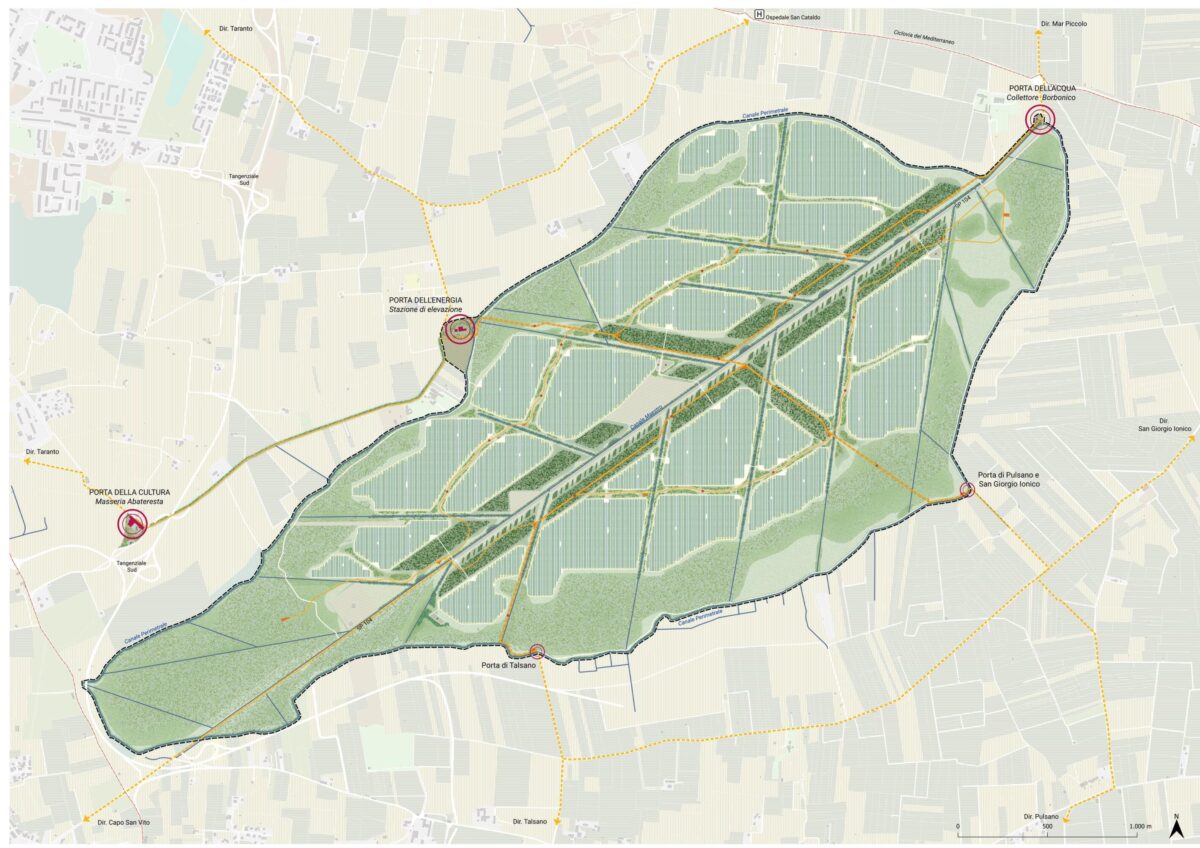
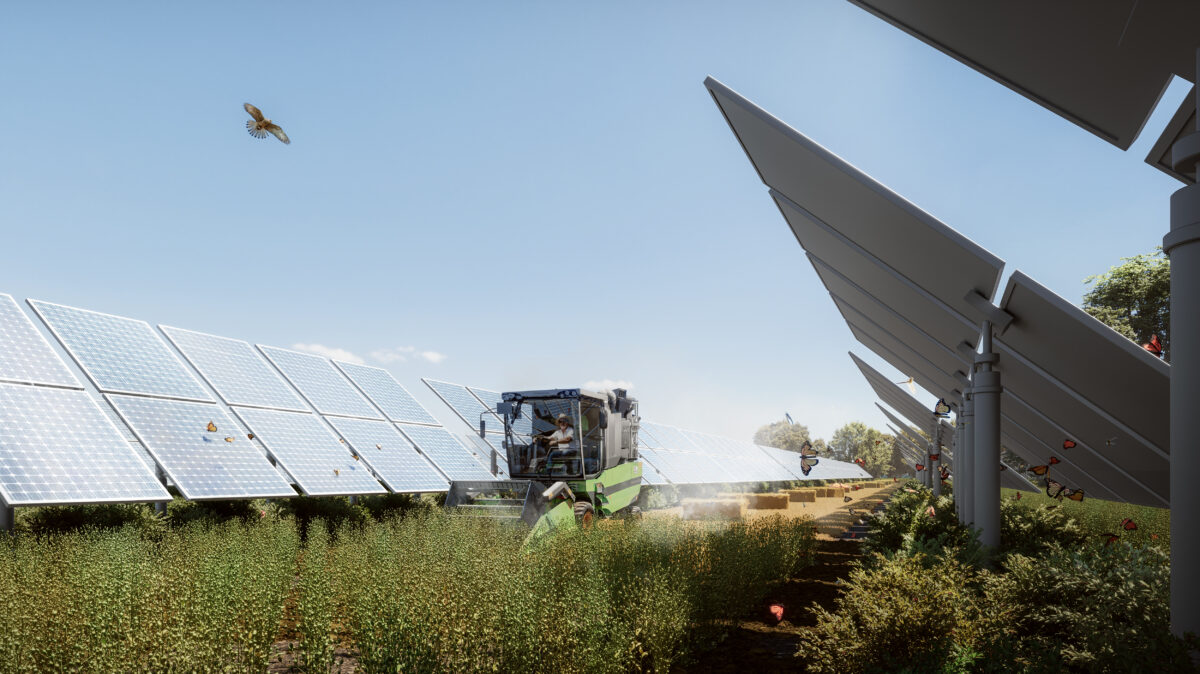
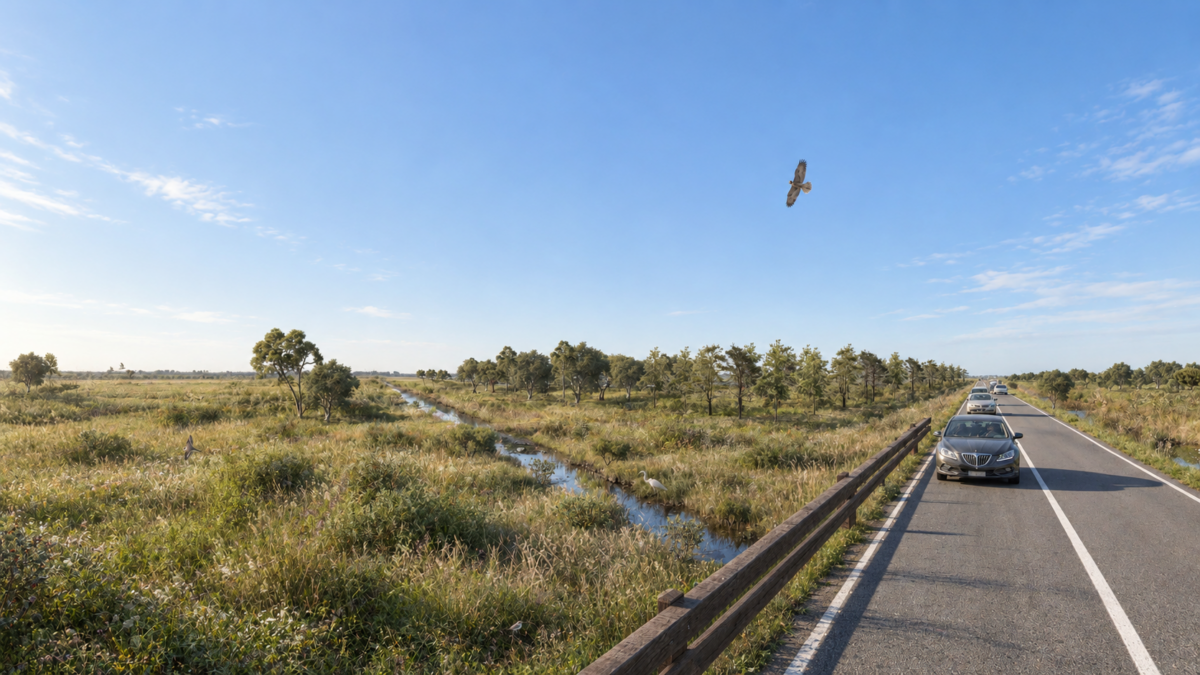
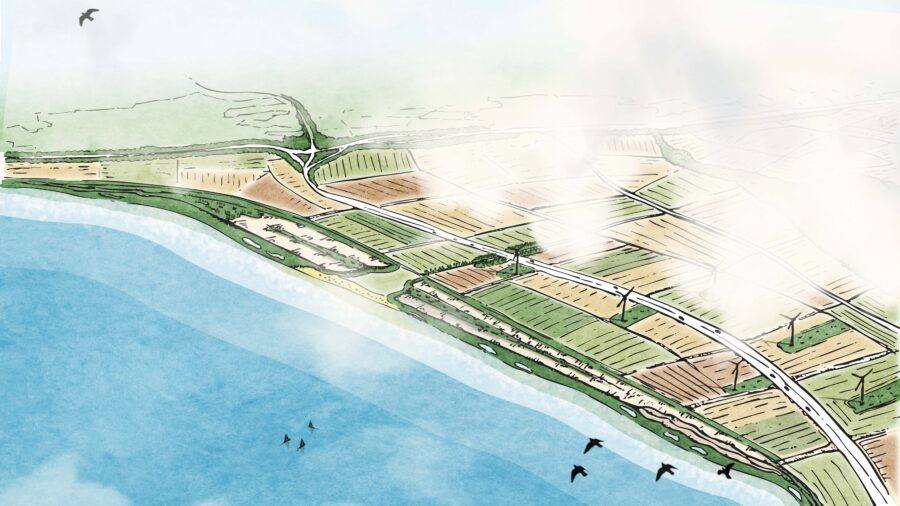
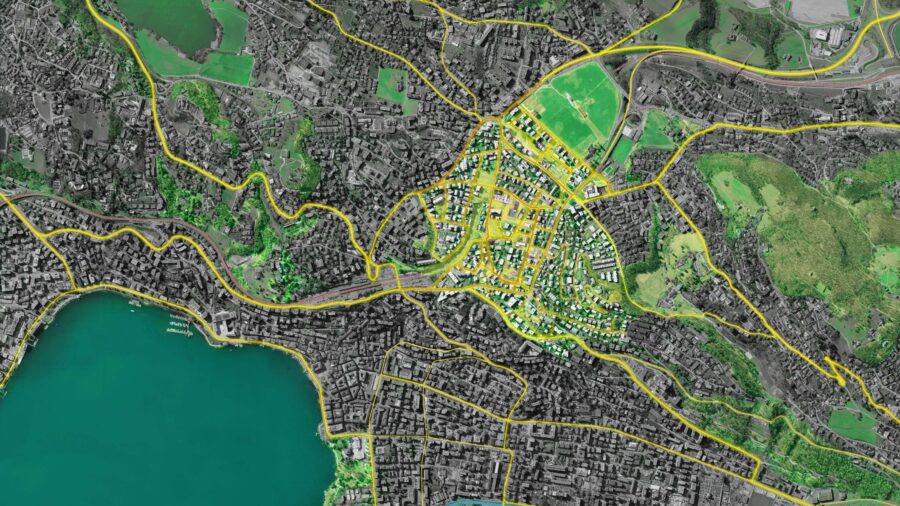
The project is located in the agricultural plain of Taranto, within an area of high environmental value that is today marked by marginality, ecological degradation and the fragmentation of ecosystems. Salina Grande extends across 878 hectares and represents a complex and vulnerable natural system: originally a natural saline wetland, it was partly transformed through reclamation works aimed at making it cultivable. This transformation compromised part of its ecological integrity, yet the area continues to hold a strategic position for territorial regeneration. In this context, Parco del Sole di Taranto is conceived as an integrated green infrastructure for the energy and ecological transition. The project brings together renewable energy production, regenerative agriculture, ecosystem renaturation, slow mobility, and cultural and social enhancement. It is based on a circular economy model applied at territorial scale, where energy becomes a lever to activate new synergies between communities, environment and agriculture.
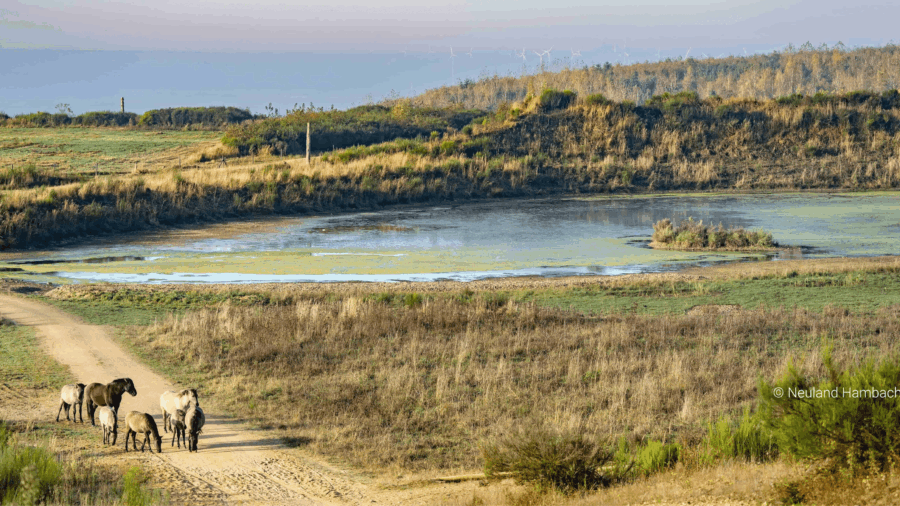
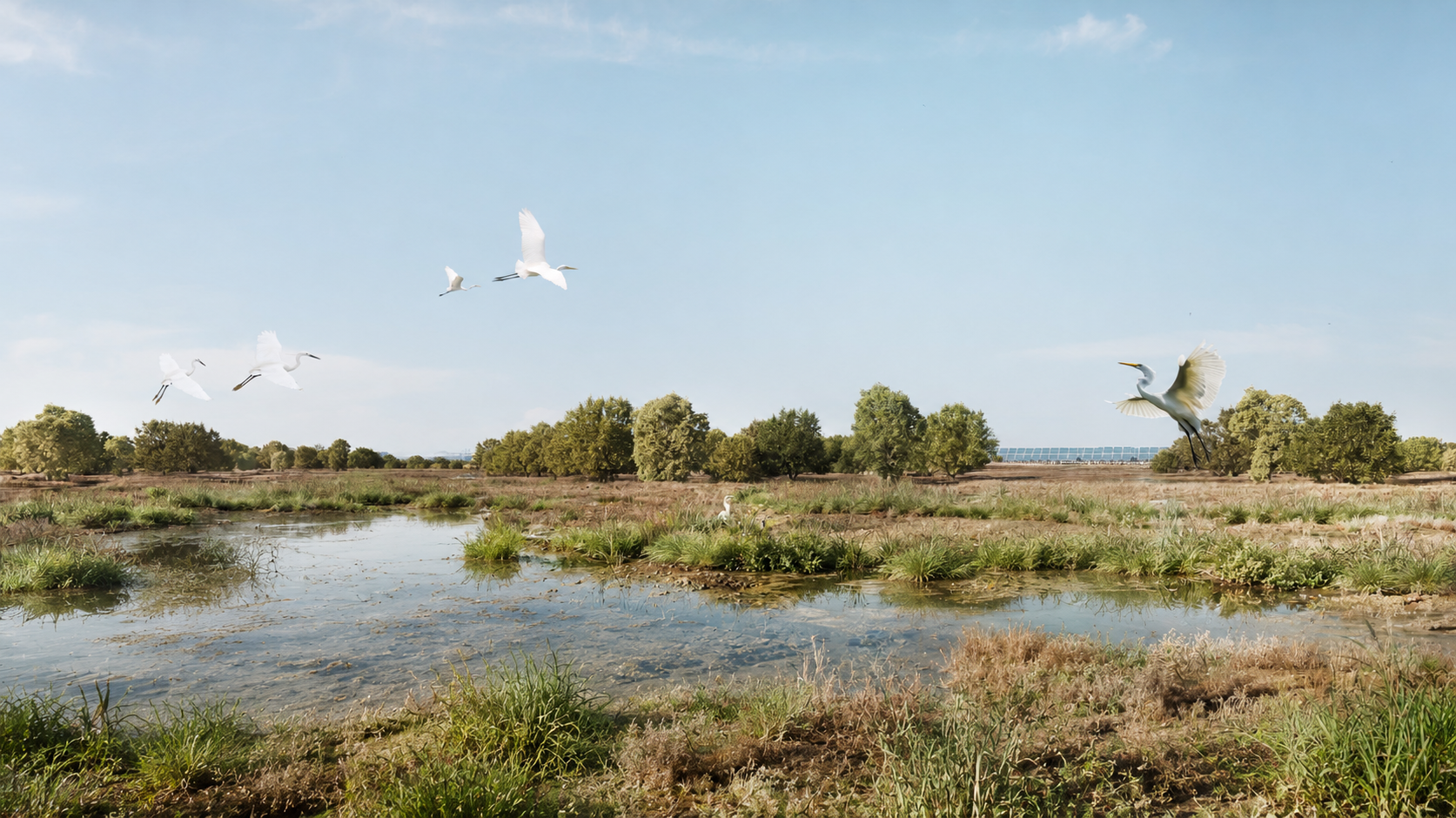
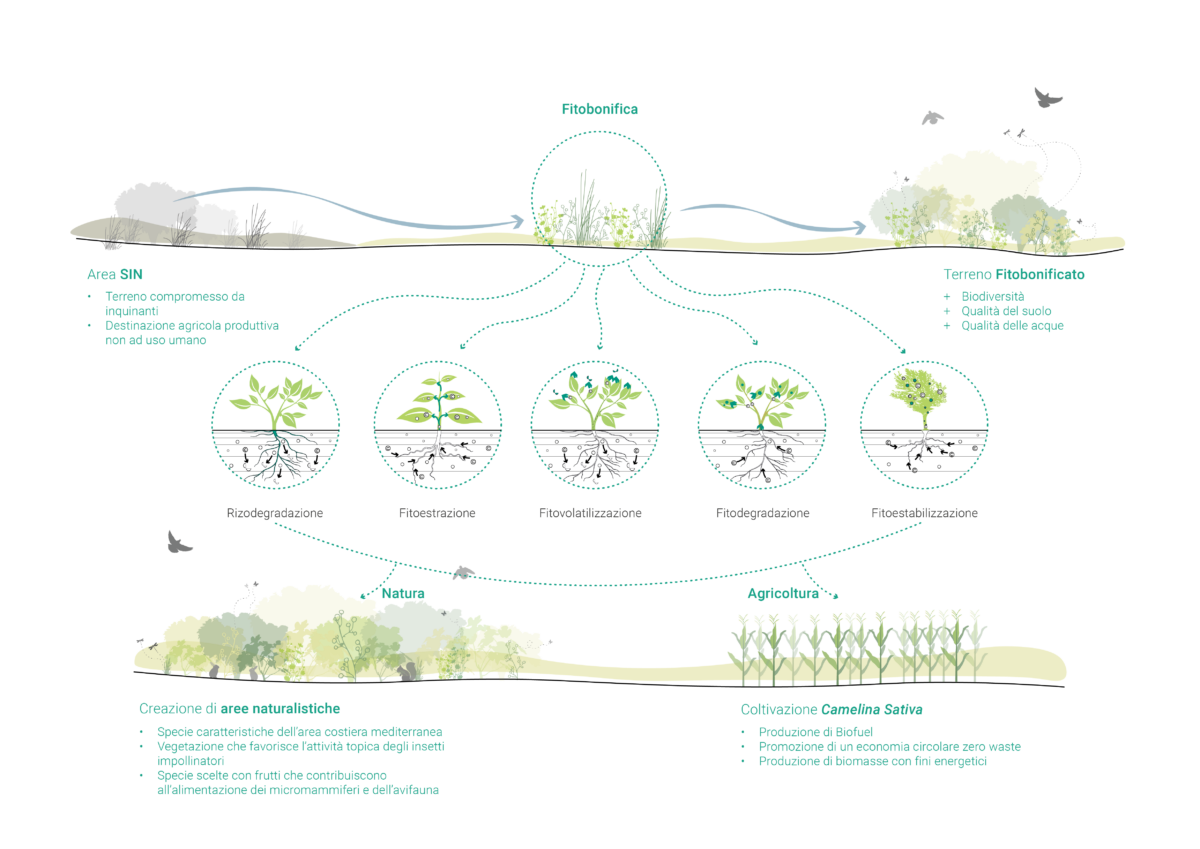
Agricultural areas, cultivated with resilient oilseed crops, are alternated with multifunctional shrub belts that support biodiversity, ecological continuity and soil phytoremediation. The production of green hydrogen, biofuels and biomass completes the energy cycle. The areas not occupied by agrivoltaic panels are dedicated to the renaturation and protection of habitats, with more than 500 hectares recovered through wetlands, Mediterranean scrub, riparian woodlands and permanent grasslands. Along the perimeter of the Salina, new habitats support the reconstruction of the ecological network.
Renewable Energy
330 ha of agrivoltaic systems
320 MW of clean energy installed
Ecological Regeneration
360 ha of restored wetlands
125 ha of new woodland areas
Landscape & Community
29 km of cycle-pedestrian routes
20 territorial activation areas
Related projects