MENA Logbook #4: Notes Between Coastlines and Deserts
Ahmed Salem, Director at LAND MENA, shares reflections from his latest MENA Logbook between Muscat, Riyadh, and the Gulf’s evolving urban landscape.
Logbook #4 should perhaps already have been #5.
The past two months moved too quickly to be documented in real time. Between Riyadh, project reviews, competitions, flights across the region, and the accelerating pace surrounding Expo 2030 Riyadh, some experiences needed distance before they could be written about.
#Oman was one of them.
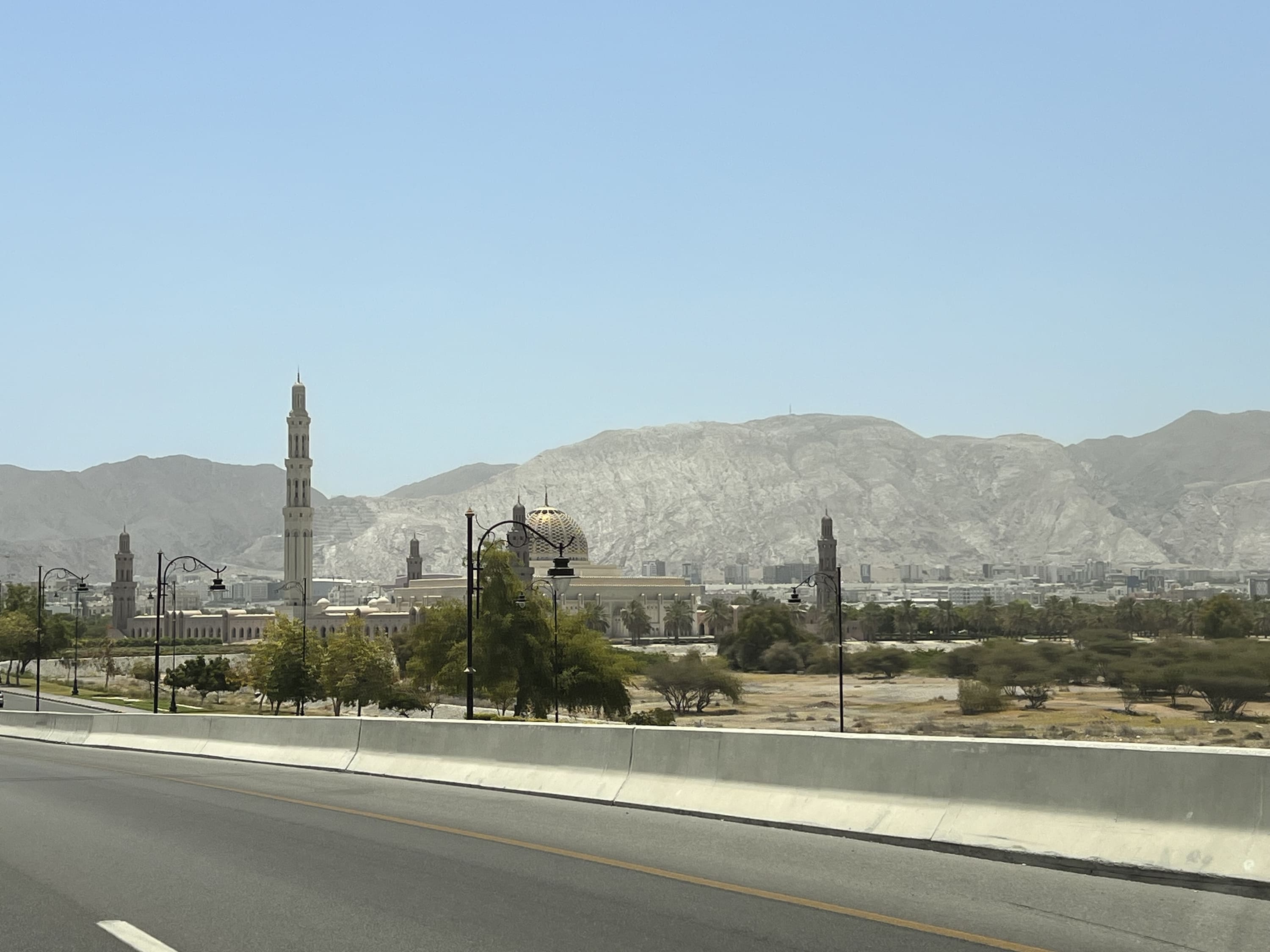
Sultan Taboos Grand Mosque in Muscat
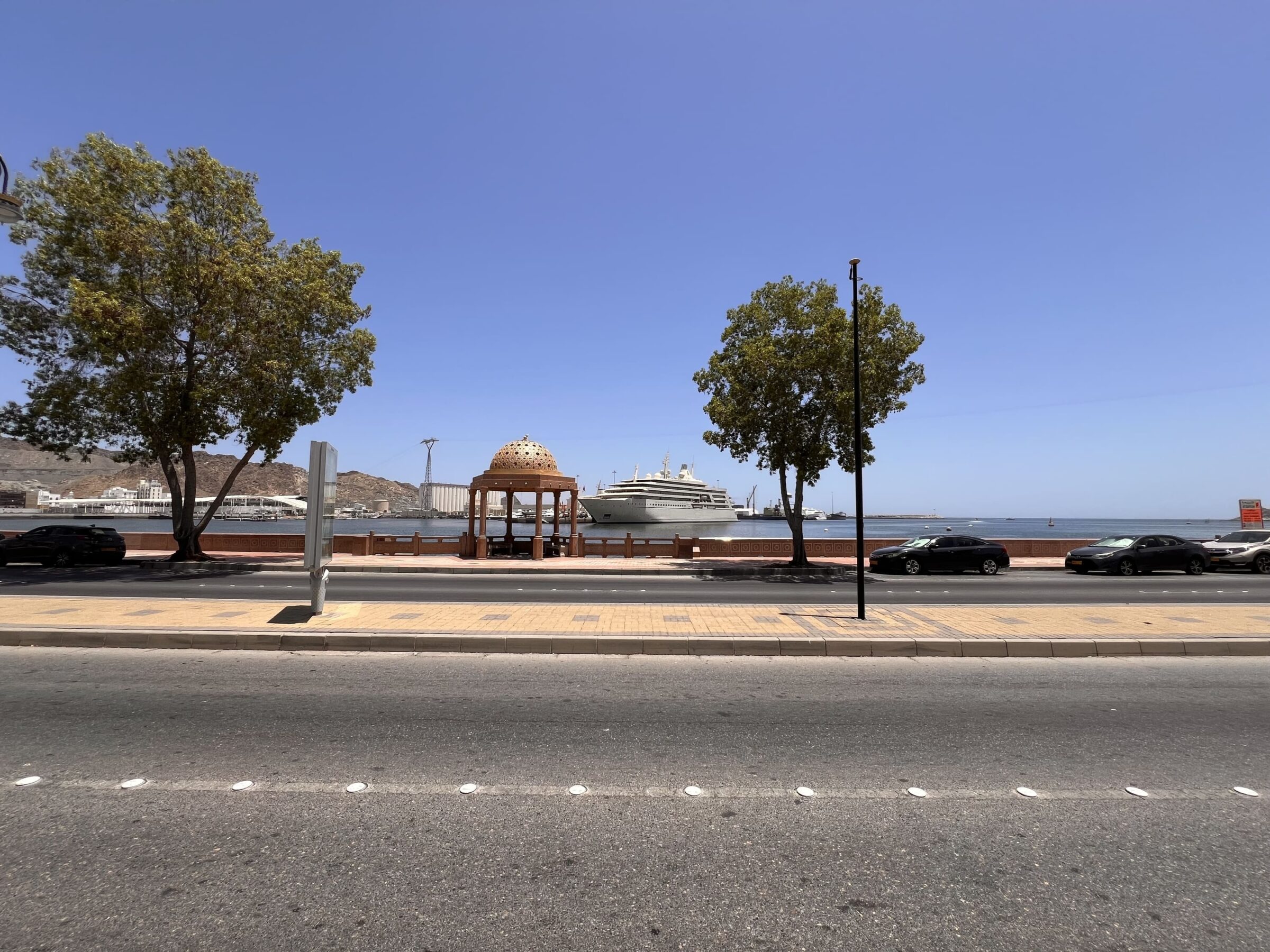
Arriving in #Muscat after Riyadh felt almost disorienting in its calmness. The city moved differently. Even before understanding it, you could smell it: the scent of Omani Luban lingering across hotel lobbies and public interiors. The humidity, familiar to most Gulf waterfront cities, recalled moments of Jeddah, yet framed by mountains and a quieter urban rhythm entirely its own.
The contrast was immediate. Riyadh continues to operate with extraordinary acceleration, while Muscat reveals itself gradually, through terrain, coastline, and conversation.
Together with Susan Isawi from LAND Italia, we arrived in Oman early May to present the Thuraya Phase 3 competition proposal to the Ministry of Housing & Urban Planning alongside our partners from ENTROPIC and NJP Oman. We had the privilege of presenting among practices including Zaha Hadid Architects, BIG – Bjarke Ingels Group, Herzog & de Meuron, and MVRDV each bringing different visions for the future of Omani urbanism.
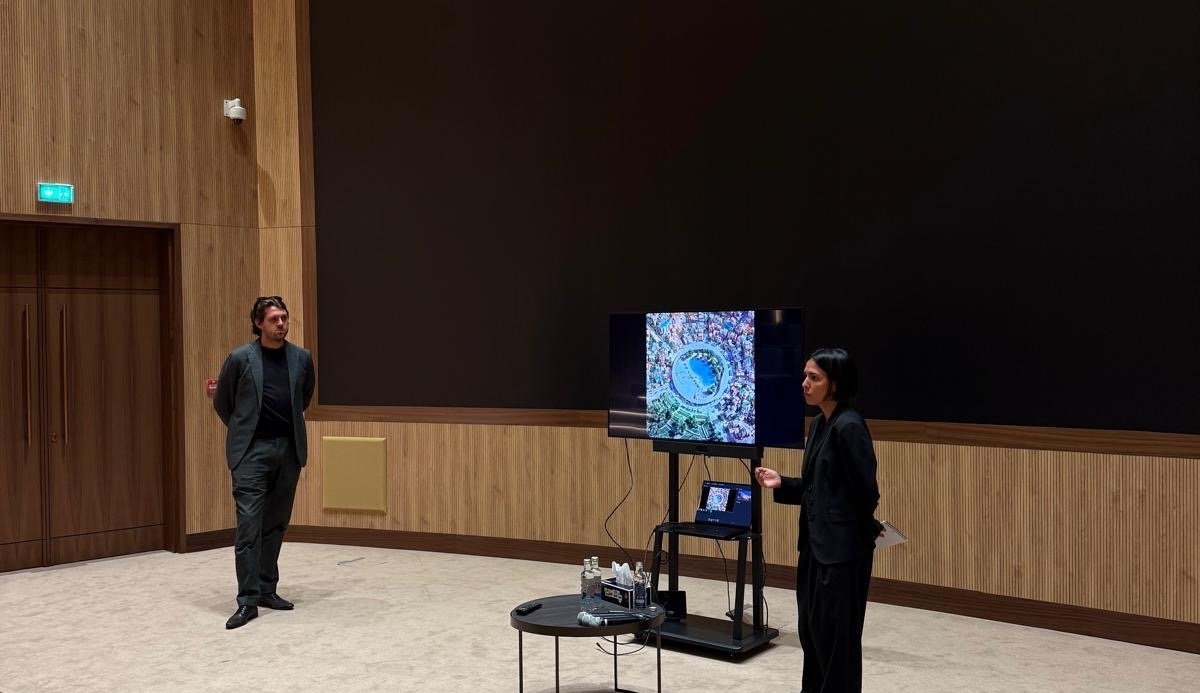
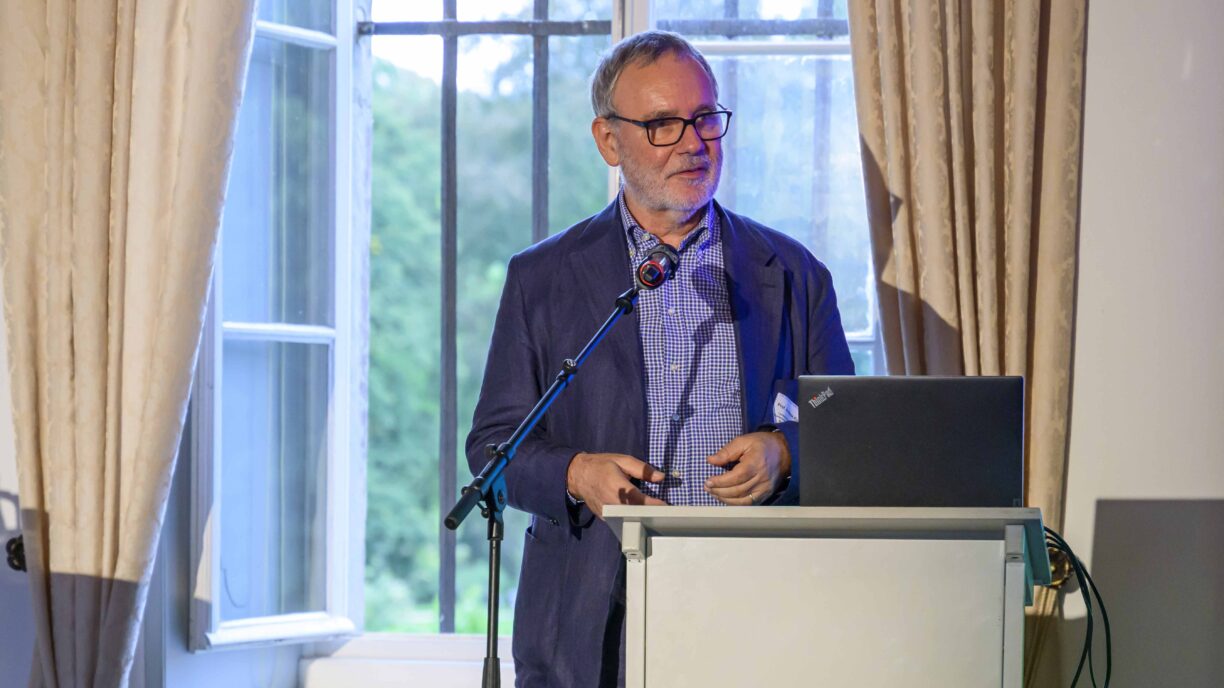
Geoffrey James Eberle and Susan Isawi presenting Thuraya Phase 3 to the 2nd jury of MoHUP
It was also an opportunity to reconnect with Paolo Zilli from Zaha Hadid Architects, with whom we continue collaborating on Al-Khuwair Downtown, while exchanging with teams from MVRDV, BIG, and Herzog & de Meuron. Yet beyond the competition itself, what remained most meaningful were the conversations around landscape, public realm, and the civic future of Gulf cities.
We were warmly welcomed by His Excellency Dr. Khalfan Al-Shoaili, Minister of Housing and Urban Planning, alongside the exceptional MoHUP team.
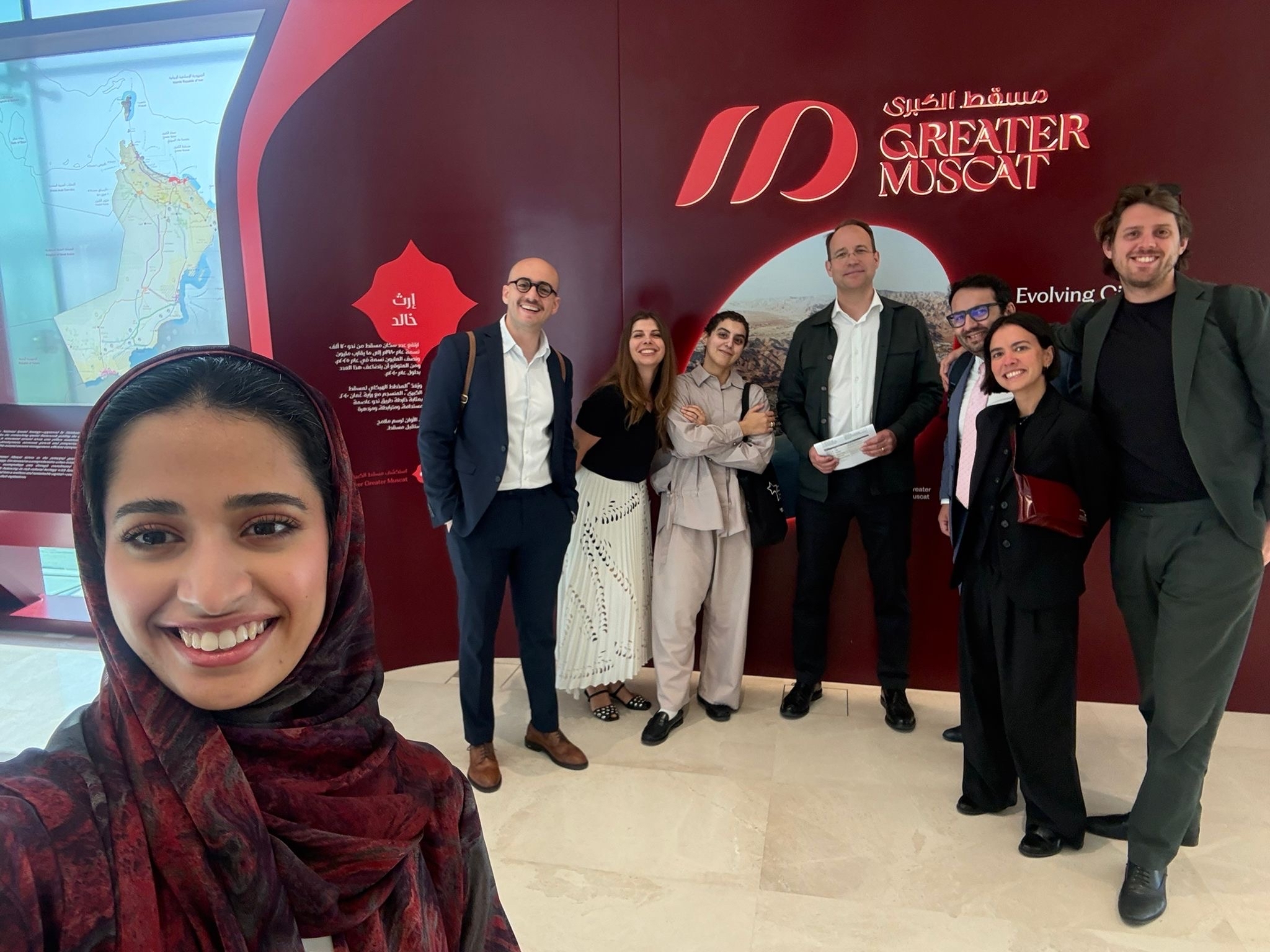
Post Presentation Picture – from Left Rayyan Al Hinai, myself, Olha M., Areej Al-Musalhi, Prof. Nikolaus Knebel, Jose Amorim, Susan Isawi, Geoffrey James Eberle
A recurring discussion throughout those days with Prof. Nikolaus Knebel and Areej Al-Musalhi was the idea of the Volkspark, a public park as civic infrastructure. Perhaps every major city in the MENA region now needs its own version of it.
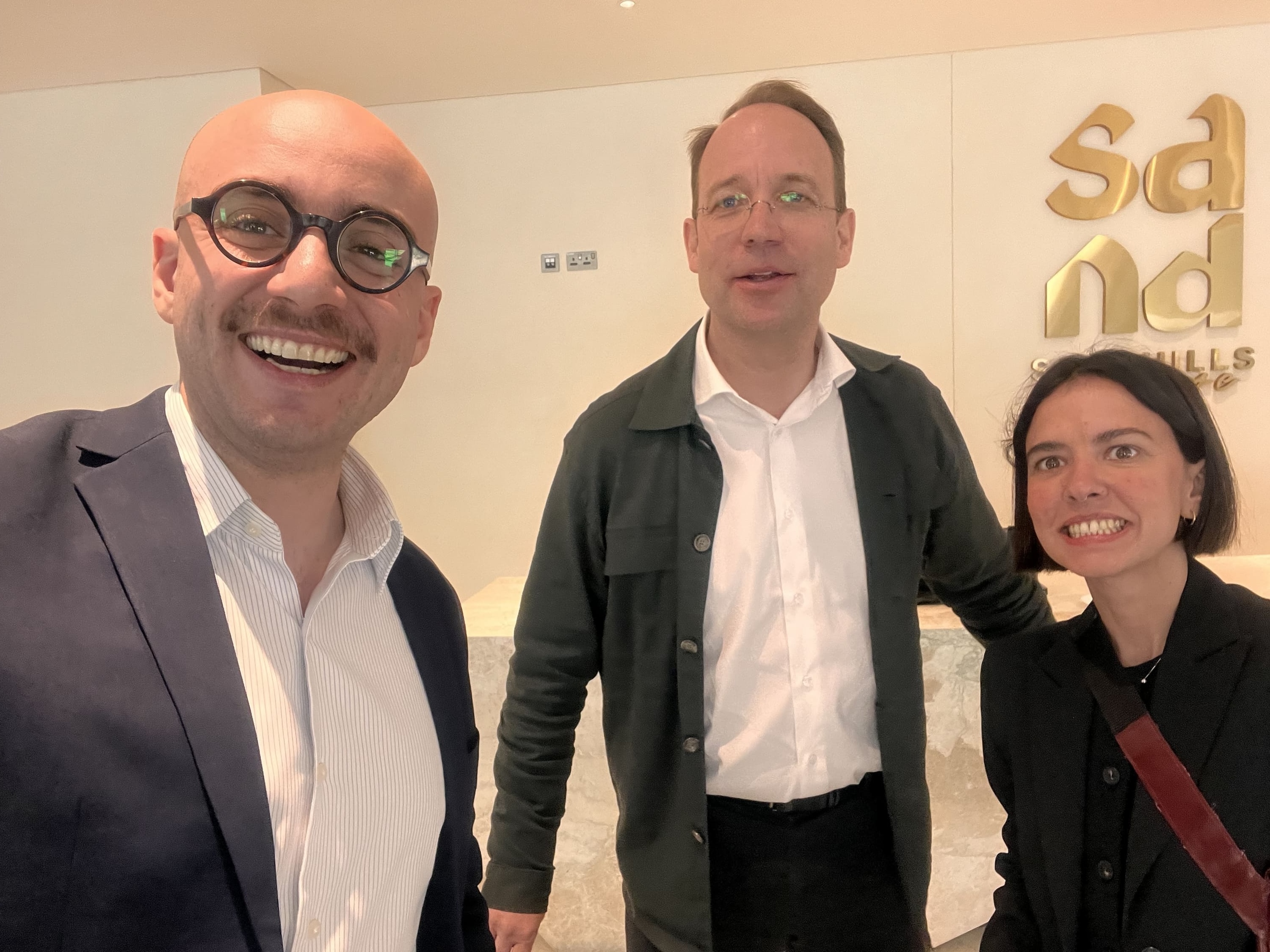
At Experience Center Sultan Haitham City with Susan Isawi and Prof. Nikolaus Knebel
In Riyadh, Al Urubah Park has already begun embodying this ambition. Slowly, similar ideas may also begin finding new forms within Oman’s evolving urban landscape.
One of the most surreal moments of the trip came during a visit to the newly inaugurated Sultan Haitham City Experience Center. Standing before the territorial model of Greater Muscat, and later seeing Al-Khuwair Downtown represented publicly at such scale, was difficult to fully process. Projects that for years existed through drawings and workshops were beginning to enter public imagination.
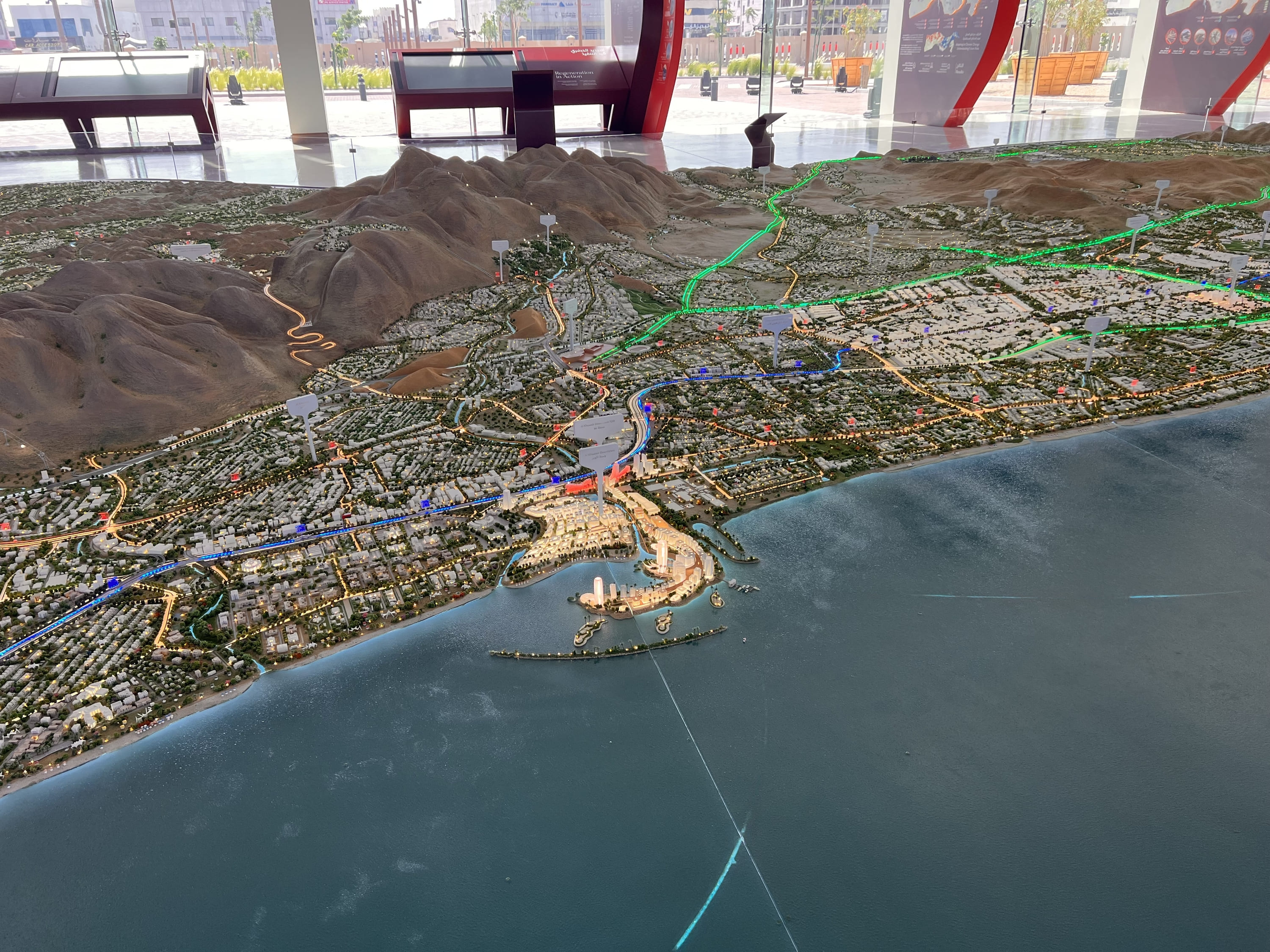
Only days later, during Oman Design & Build Week, Al-Khuwair Downtown appeared once again on the main screen as part of Oman’s national development narrative. It was difficult not to feel grateful to contribute, even in part, to a transformation of this scale.
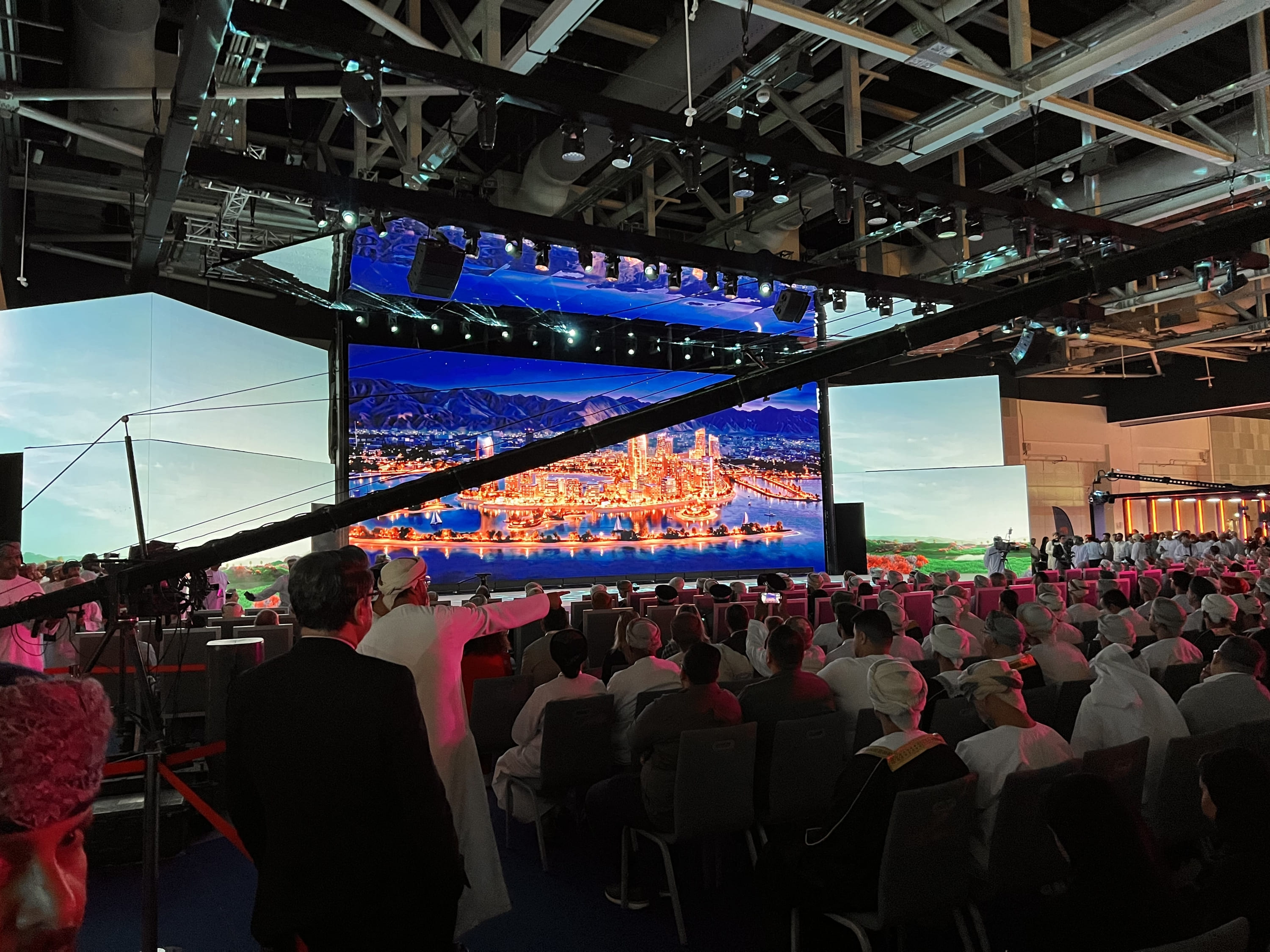
Opening Ceremony of the Oman Design & Build Week
Transformation is visible across Oman today.
The pace remains calm, measured, and at the same time highly intentional.
Oman does not feel static. It feels careful.
Perhaps this is what makes the country particularly compelling today: a willingness to transform without disconnecting entirely from geography, memory, and scale.
Before leaving Muscat, I had the chance to reconnect with Said Salim Al Shanfari , CEO of Oman Convention & Exhibition Centre, and one of the very first familiar faces I encountered in Oman.
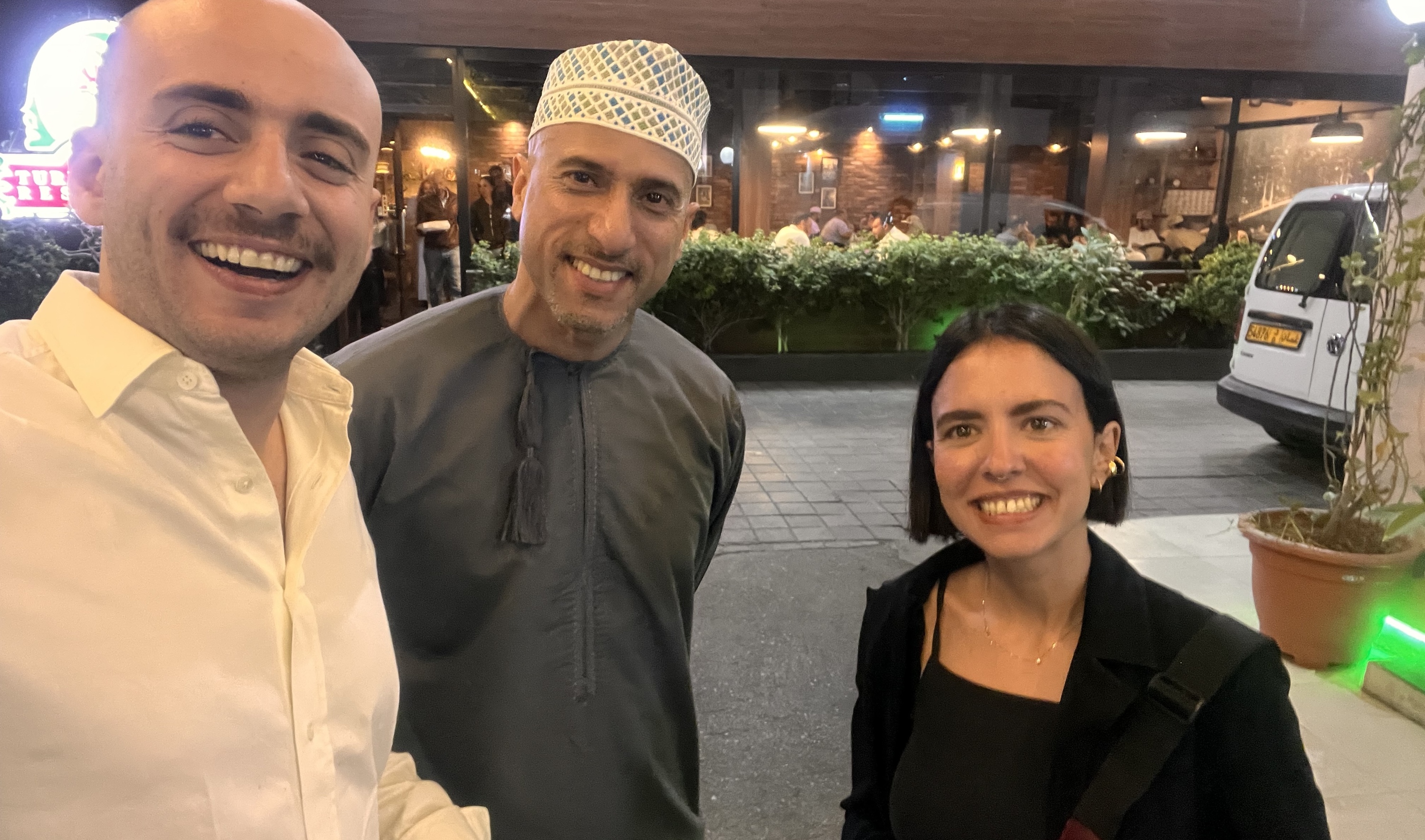
He generously hosted us for dinner at one of Muscat’s renowned seafood restaurants, another reminder that hospitality in Oman carries a quiet generosity entirely its own.
Speaking of familiar faces, we also had the pleasure of seeing our partners from SCHIATTARELLA ASSOCIATI whose work in Thuraya Phase 1 is beginning to take shape.
Leaving Muscat, the contrast with Riyadh became even clearer.
From the airplane window, the #Expo2030Riyadh site slowly emerged from the desert below. The scale of the ongoing transformation was already visible from above, even before fully stepping back into the rhythm of Riyadh.
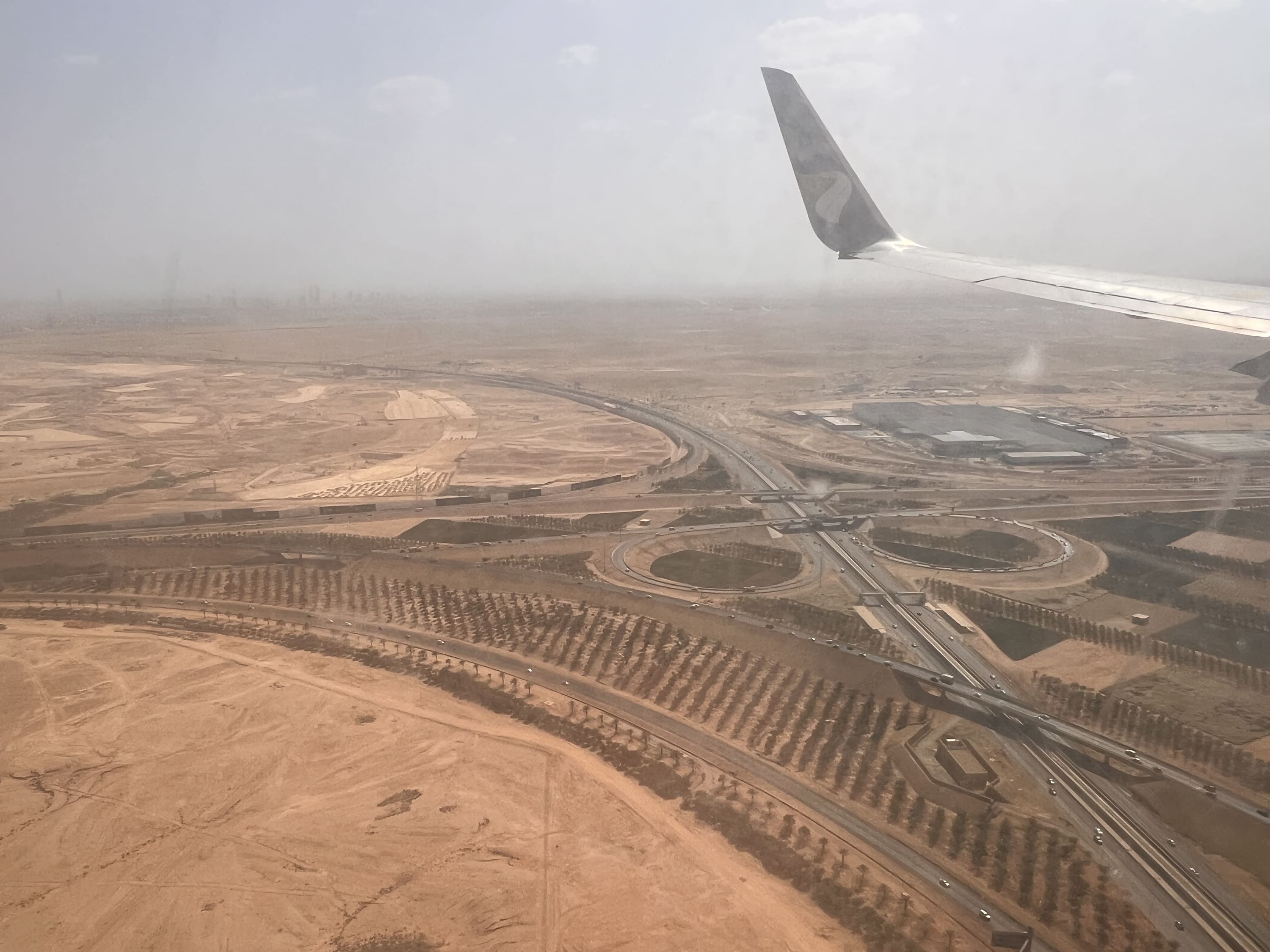
Top left corner showing parts of the Expo Site
In Muscat, transformation unfolds through terrain, continuity, and civic intimacy. In Riyadh, it moves through infrastructure, projection, and extraordinary acceleration.
Yet both are increasingly connected by the same questions:
How should public life evolve? What role should landscape play? How do cities grow without losing identity?
Somewhere between Muscat’s mountains and Riyadh’s megaprojects, a new civic landscape culture for the region is already emerging.
Don't miss out on our inspiring project stories, the latest research, and more.
All mandatory fields are marked with a *