Towards new multifunctional landscapes
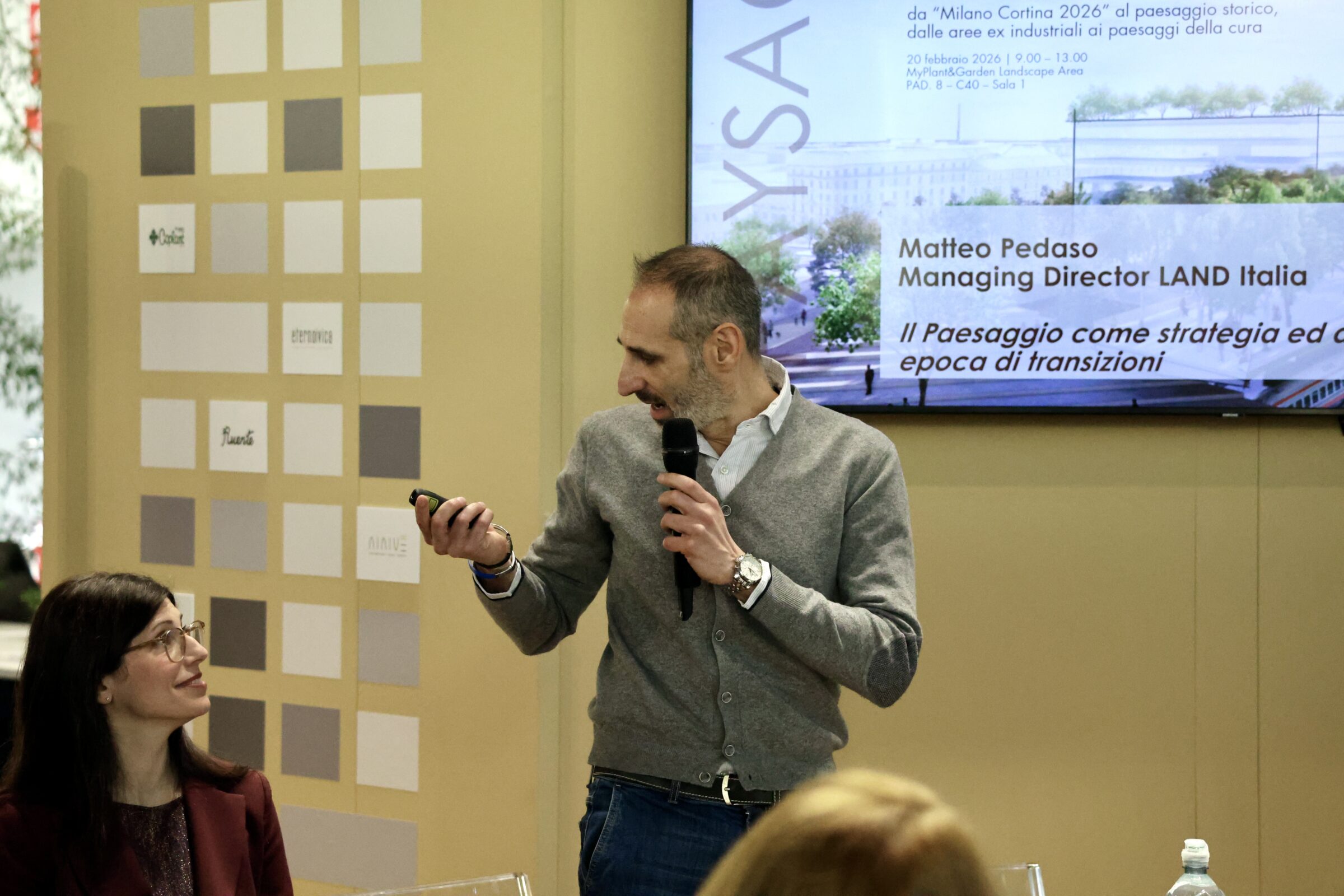
Our second day at Myplant & Garden featured Matteo Pedaso and Shirly Mantin, who spoke at the conference “Landscape as Infrastructure”, promoted by TOPSCAPE Paysage.
The morning opened with institutional greetings from the attending authorities, including Councillor for Green Spaces and the Environment Elena Grandi, who emphasized the City of Milan’s commitment to positioning urban biodiversity as a key driver of urban transformation.
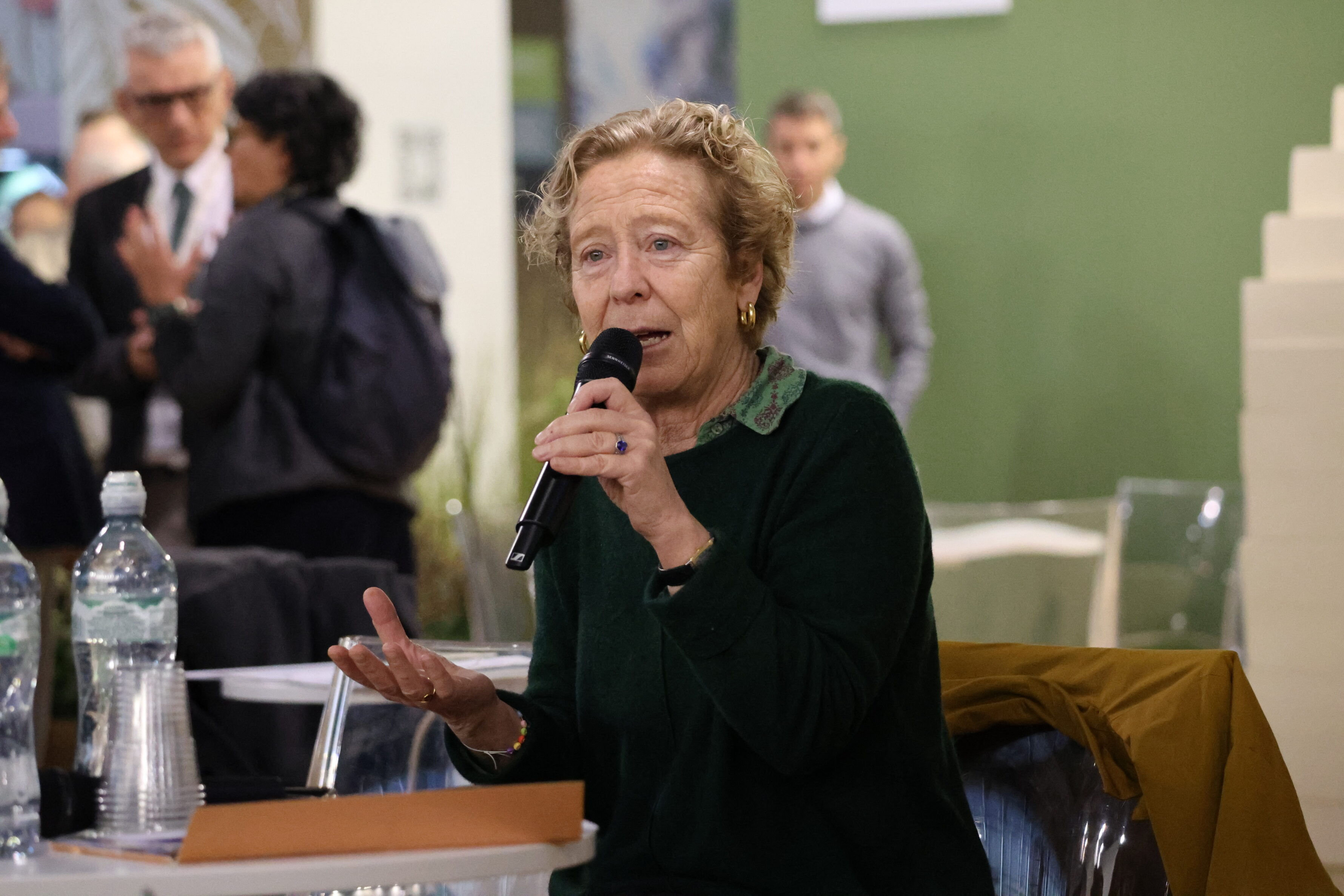
Councillor Elena Grandi highlighting the green initiatives by Milan Municipality
Among her highlights was the Green Plan for the City of Milan, an ambitious framework combining mapping, long-term vision, and concrete actions capable of guiding other regulatory instruments at the municipal level.
The city is increasingly emerging as a continuous network of ecological connections, able to transform its fabric from within, socially as well as environmentally. The mapping of urban heat islands in the most vulnerable areas, for instance, is already generating tangible improvements in everyday life across neighborhoods.
After a series of presentations exploring the main projects for the Milan Cortina Winter Olympic Games, TOPSCAPE Paysage Director Novella Cappelletti invited our speakers to reflect on the importance of multifunctional landscapes that integrate environmental care with economic and social development.
“For us, landscape is life infrastructure,” began Matteo Pedaso. “It is a cultural theme that engages us every day, closely tied to people. Everything is landscape: a mirror of society. Landscape means conservation, an opportunity for development, and a chance to think on a broader scale.”
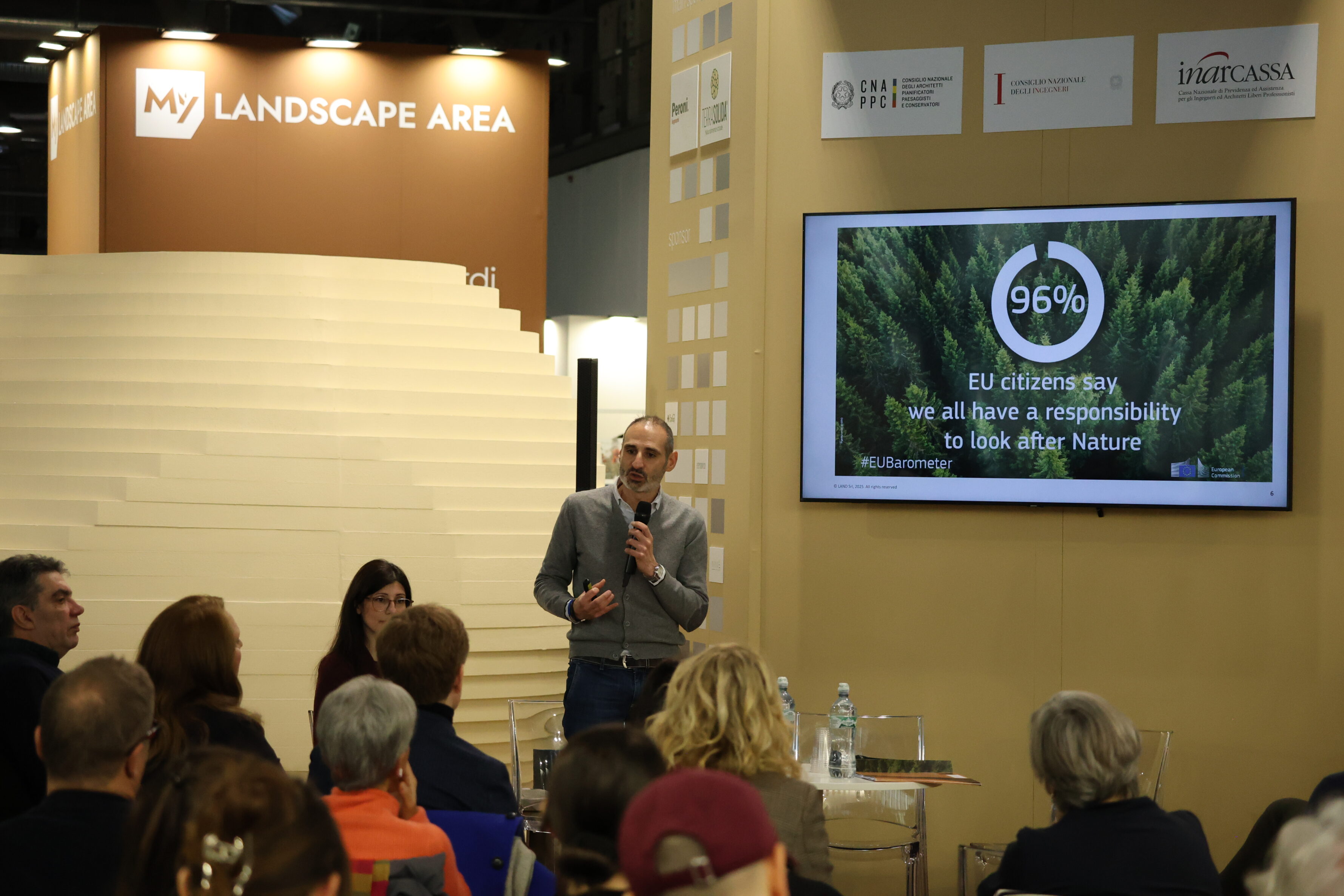
Matteo Pedaso introducing the debate on multifunctional landscapes
According to international reports such as the Global Risks Report by the World Economic Forum, Nature-related risks rank among the most pressing challenges facing today’s economic system. Our economies now depend on Nature, and on our ability to restore ecosystems and counter biodiversity loss.
The issue is therefore strategic: being Nature-Positive means bringing Nature back into cities and degraded environments.
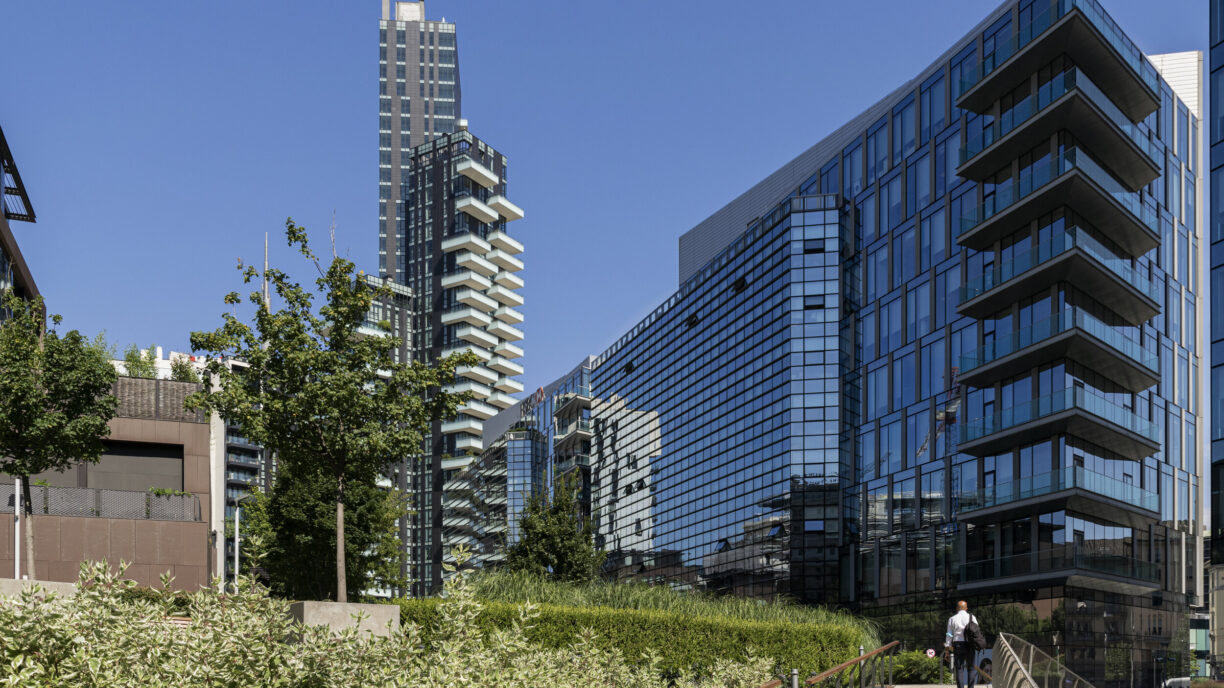
“We must design no longer starting from the built environment, but from open space, which becomes a vital element: landscape becomes ecological-environmental infrastructure, but above all social and economic infrastructure that supports productive activities,” Pedaso continued.
Drawing inspiration from Parco Nord — one of Europe’s leading examples of urban forestry, providing clean air to the metropolitan area while mitigating heat islands — or Parco del Lura, which creates wetlands, biodiversity, and spaces for leisure, new parks are conceived as instruments of circular economy, and landscape must become increasingly multifunctional.
“Along streets, on university campuses, and within new biodiversity corridors, landscape as social and ecological infrastructure provides ecosystem services that we can understand, measure, and make visible through technology,” the architect concluded, handing the floor to colleague Shirly Mantin.
“Infrastructure is born to solve a problem – she began – and it is designed to function more than to be loved. When the solution becomes part of people’s lives, landscape is born. When we design relationships, at the territorial level and between people, technology and landscape tell the same story.”
One compelling example is the Water Park in Sulbiate and Aicurzio, developed in response to flooding issues caused by surrounding infrastructure. Conceived as a horizontal moderation system, the project has created a park for people: permanent ponds that allow public use during dry periods and become retention and flood-control basins during extreme weather events; phytoremediation systems that regenerate water; and a network of cycling and pedestrian paths with rest areas. The result is a truly Nature-based device.
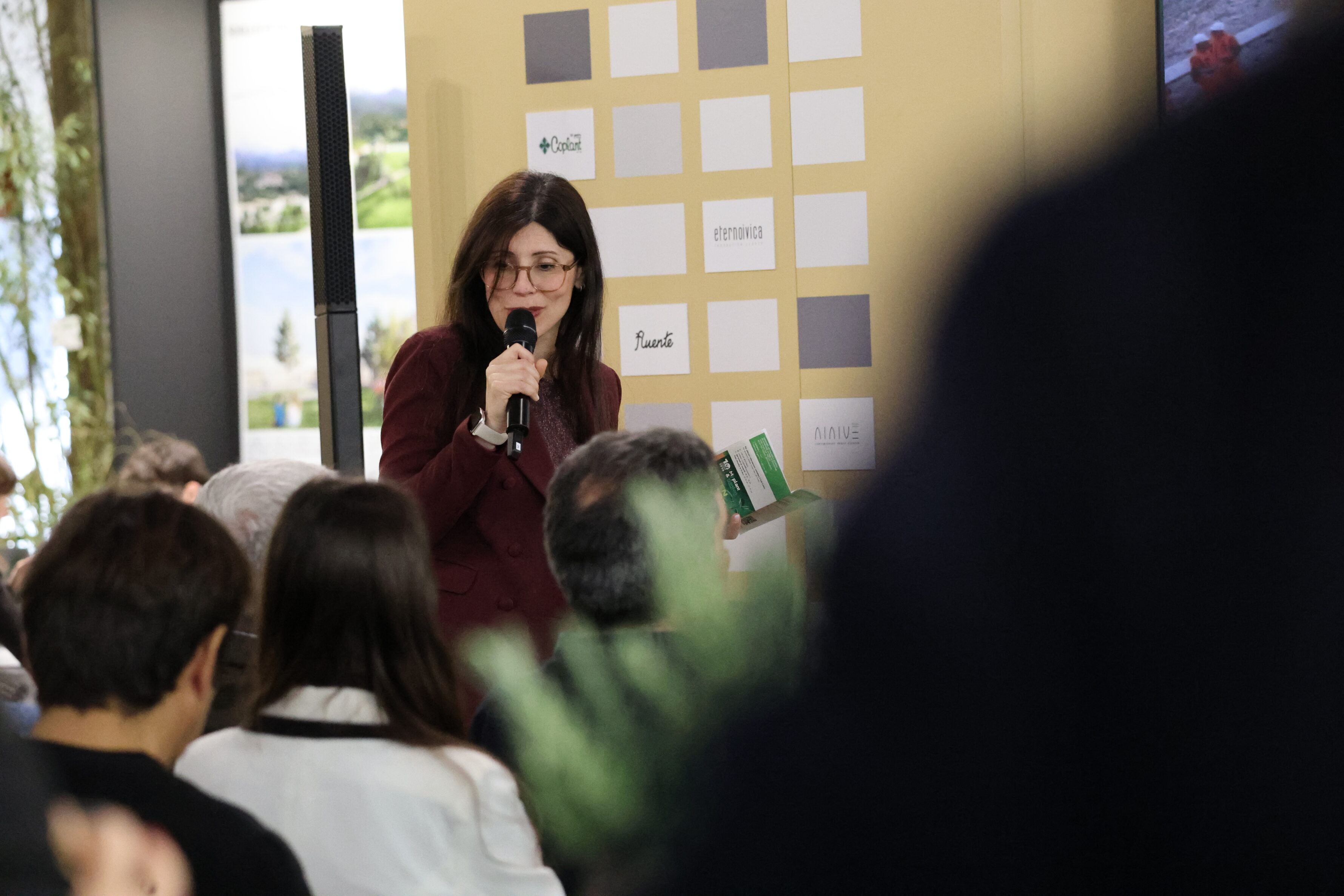
Shirly Mantin during a moment of her presentation
The Water Park in Paderno Dugnano forms part of the broader Seveso River Park initiative. Launched in 2020 through a participatory process that actively involved local communities, the project is now entering a new design phase in collaboration with the Lombardy Region, the Municipality, and the Metropolitan City.
On a larger territorial scale, the project of Lake Campolattaro offers another significant example. Developed for Acqua Campania in the province of Benevento, the project began in the 1960s as part of a national water management strategy. It partially came into operation in 2006 with the creation of a reservoir that today represents a multifunctional landscape for the local population. Over six decades, a remarkable landscape heritage has taken shape. Thanks to Italy’s National Recovery and Resilience Plan (PNRR), the lake is now partially emptied during certain periods of the year. The focus of the recent intervention has been on ensuring coexistence between this infrastructure and the ecosystem shaped by the Tammaro River. More than 12,000 trees were planned and works resumed last September.
“Infrastructure solves a problem. Landscape builds trust. When technology becomes relationship, a work ceases to be a boundary and becomes a place. This is the challenge of our time: to design works that function but are also recognized, crossed, and lived. When a solution enters people’s lives, it is no longer just infrastructure: it is landscape. And landscape, in the end, is the only infrastructure worth leaving as a legacy.” architect Mantin concluded.
The theme of Landscape as Infrastructure will also take center stage at the next edition of Cityscape, scheduled for September 18 and 19, 2026.