Collaborating with a Wide Network of EU Partners
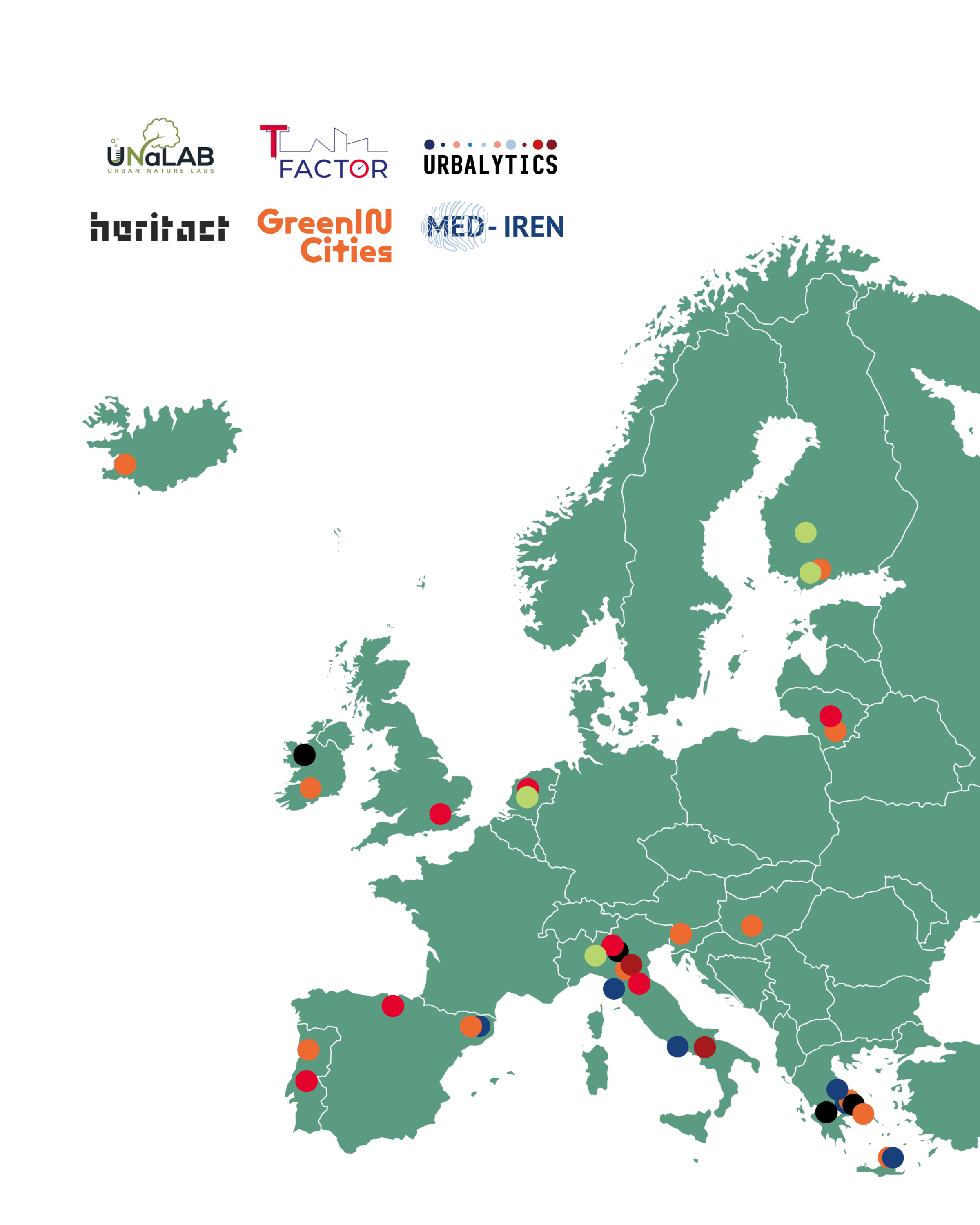
Since 2016, we have been building a network of European research and cooperation partners that combines multidisciplinary expertise, diverse cultures and innovative approaches to develop sustainable and impactful solutions.
Collaborating with European partners means creating synergies with universities, companies and institutions to jointly address major environmental and urban challenges such as climate change, sustainable soil handling, urban resilience and ecological transition and develop sustainable projects, turning innovative ideas into concrete actions, promoting integrated and internationally scalable solutions for tangible impact on territories.
Collaborating on a European scale means innovating, sharing knowledge and growing through confrontation with different realities, strengthening the capacity to address environmental challenges with effective and sustainable strategies promoting a more resilient and inclusive future.
What are we learning?
UNaLAb (2017 – 2022) led us to design, apply on real contexts and implement NBS on Gavoglio Park, redeveloping former industrial areas. The City of Genoa has identified it as a flagship project for nature-based solutions, contrasting the effects of climate change in Mediterranean cities, where the climate transition will have a significant impact, while promoting environmental, social and economic resilience.
T-Factor (2020 – 2024), enabled us to activate new public spaces strategies, valorising temporary uses as catalysts for change, helping to develop knowledge, tools and skills to transform spaces through inclusive and sustainable interventions in urban regeneration areas.
The experimental sub-project UrbAlytics (2022 – 2023), part of the AI4Copernicus project, allowed us to investigate the effect of the heat island phenomenon by assessing its impacts on cities, evaluating the ecosystem services provided by see and blue infrastructure and proposing a catalogue of Nature-Based Solutions for climate adaptation and extreme heat mitigation.
HeritAct (2023 – 2026) promotes social cohesion, resilience and well-being through access to cultural heritage, addresses cultural changes that drive sustainability and promotes collaboration between stakeholders in line with the spirit of the New European Bauhaus
GreenInCities (2024 – 2027), aims to create a co-creative and integrated approach for urban regeneration in disadvantaged areas. The project develops innovative tools and a holistic approach to address climate adaptation and mitigation for more sustainable urban planning.
The focus of the Med-IREN (2024 – 2028) project is to transform critical infrastructure in the Mediterranean by integrating nature-based solutions (NBS), with a holistic approach that benefits local communities and critical sectors in areas vulnerable to climate change.