Learning from Riyadh
With its rich cultural heritage, diverse ecosystems, and the ambitious strategy outlined in Saudi Vision 2030, the Kingdom led by Mohammed Bin Salman represents the new frontier of landscape architecture. As of this year, we are operating in the Middle East with a dedicated office spreading LAND’s holistic approach and landscape consultancy across the MENA region.
The sand crackles under the wheels of the white car taking us to Al Urubah Park. Leaning out the window, we observe the bustling construction site. Workers in yellow helmets move slowly alongside massive machinery that, like busy giants, continuously turn over the soil. The ground is warm, almost the same ochre yellow as the May sun that casts light over the pale, arid sky. On the horizon, Riyadh’s skyline reminds that Saudi Arabia’s rapid expansion is centered right here, in its vibrant capital with nearly 8 million residents.
The “Excavation Zone” sign introduces the sight of excavators lined up and ready for action. Upon stepping out, we are surrounded by the bilingual Arabic and English signs and slogans of “Green Riyadh,” one of the world’s most ambitious urban greening projects to which we’ve chosen to adhere in 2019. Their bright colors remind of our longstanding commitment to create a green area in the city center where people can gather and socialize.
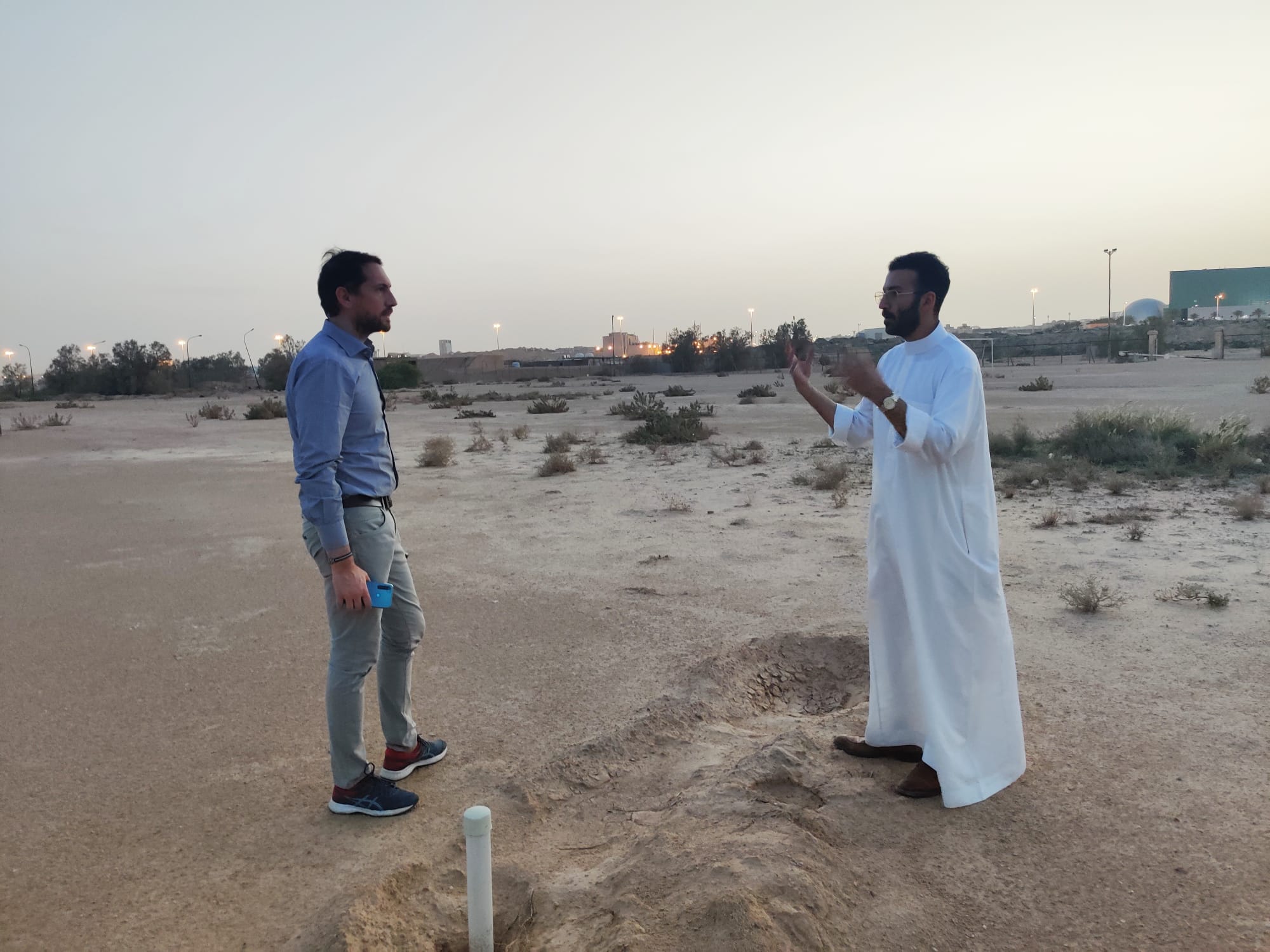
Stefano Roman and landscape architect Hamad al-Bat’hi speaking about landscape resilience and the spontaneous greenery blossomed after the winter season at Al Urubah Park, 2020 (LAND)
We have been working in the Middle East and Saudi Arabia for several years, but it is in the past year that our activities and presence on the ground have intensified. This is thanks to the on-site contributions of Hans Gunter Klein, Associate Director for Strategic Partnerships at LAND, who joined our team exactly a year ago in the role of cultural attaché. Reflecting on the main milestones of 2024, we can proudly say we have achieved many goals.
Our memories take us back to last February, when we visited Riyadh for the Human Capability Initiative, a global cooperative platform aimed at unifying international efforts and enhancing dialogue on the challenges and opportunities for human capability development. As social moderators advocating participatory collaboration with the communities and stakeholders in the areas where we operate, we are acutely aware of how essential human capabilities are for driving future productivity and economic growth, especially in the context of current social and climatic changes that demand new paradigms of resilience and adaptability in a rapidly evolving market.
Walking through the ornate halls of the King Abdulaziz International Convention Center, we reflect on the transformative scope of our 75-hectare park, soon to rise nearby, close to an isolated minaret that silently observes people coming and going under the scorching sun. As the event’s official hashtag proclaims, #FutureReadiness: we are ready for the future. Our meeting with Austrian Ambassador Oskar Wüstinger, followed by discussions with the Fenaa Alawwal cultural center staff, underscores the importance of fostering relationships and encouraging intercultural dialogue.
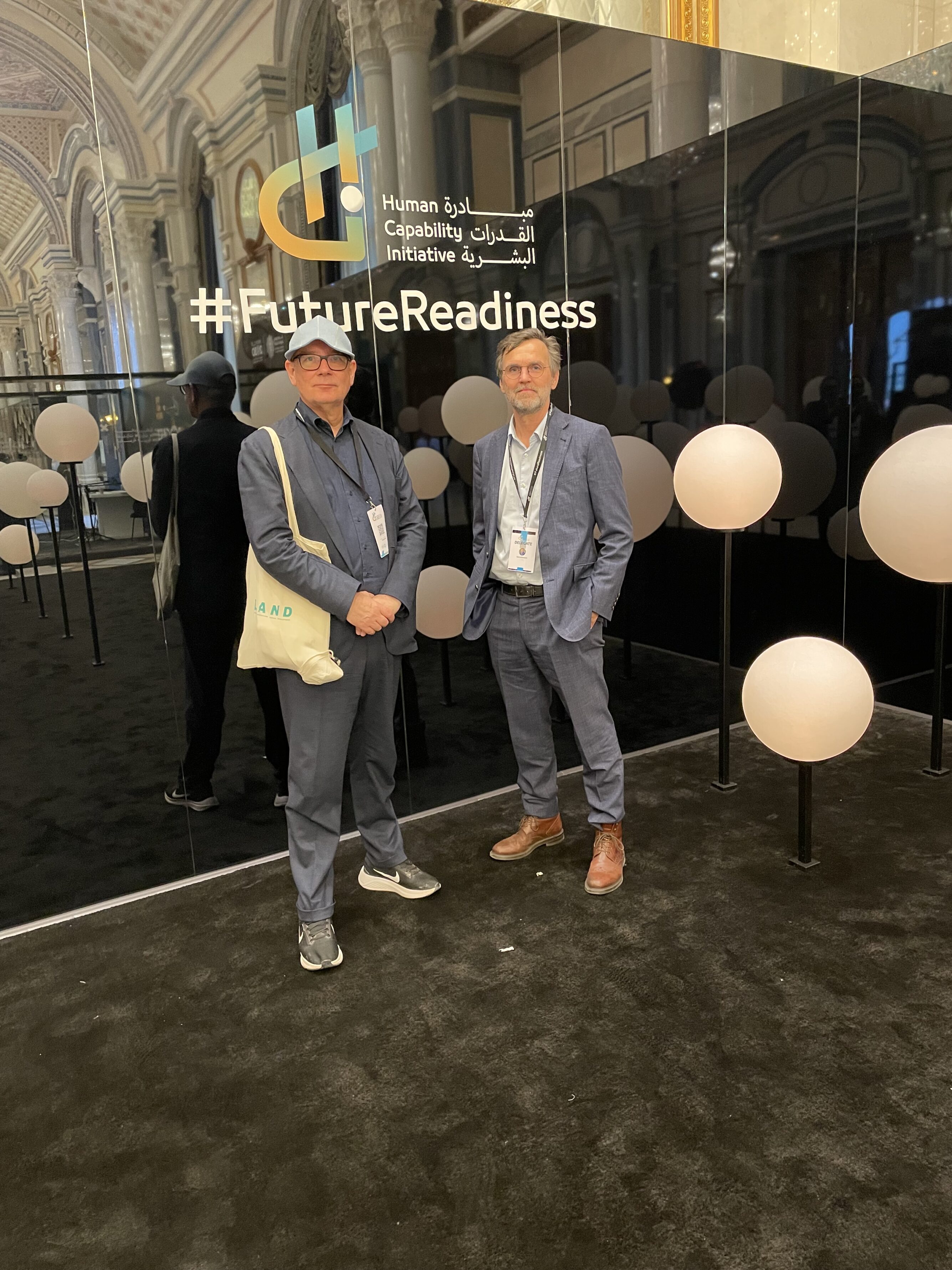
Andreas Kipar and Jens Hoffmann at Human Capability Initiative, February 2024 (LAND)
Spring brings news we’ve long awaited: work has finally begun on the Al Urubah Park site! The Kingdom’s much-anticipated sustainable revolution, mapped out by the government of His Royal Highness Prince Mohammed bin Salman bin Abdulaziz Al Saud in Saudi Vision 2030 and the Saudi Green Initiative, takes a big step forward. Years have passed since the Royal Commission for Riyadh City, the entity responsible for the comprehensive development of Riyadh, commissioned us to create this green-blue infrastructure. Al Urubah Park represents a paradigm shift in urban planning in extreme environments: our goal is to enhance the well-being of citizens and foster climate resilience in the Saudi capital.
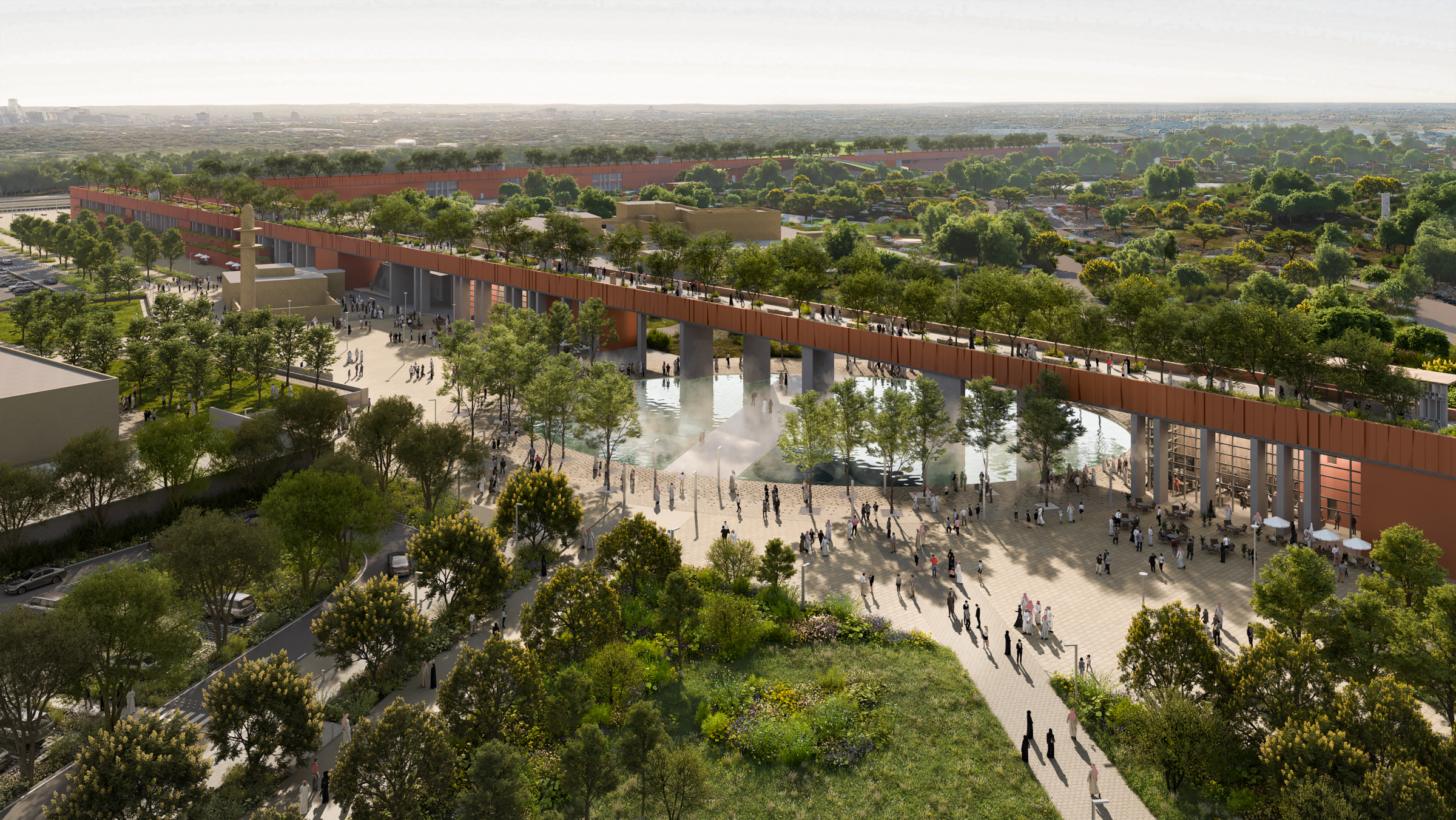
We envision countless residents and visitors strolling, moving, and socializing along the Garden Boulevard with panoramic park views. Our imagination conjures up more than 10,000 trees rising between winding paths made of local soil and contemporary urban furniture crafted from Riyadh stone and granite. In this unique setting, the experience will be made even more memorable by digital landscape, a multimedia extension of the natural environment that, through augmented reality, can raise greater awareness of the environmental challenges ahead.
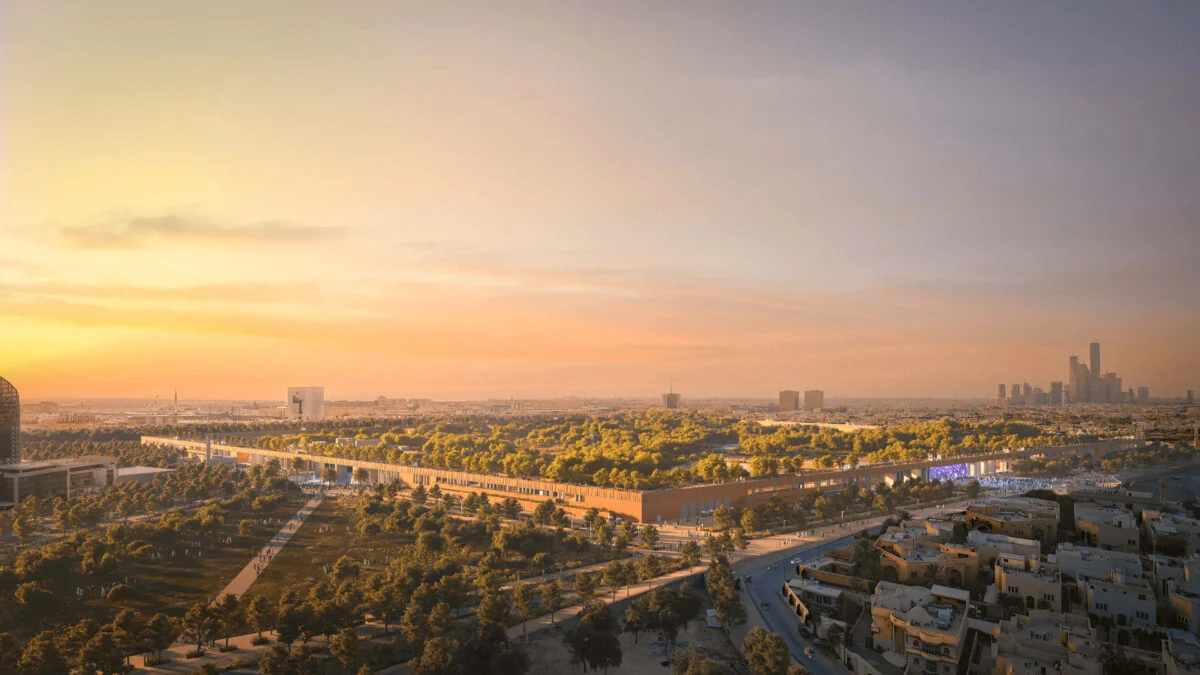
Rendering of Al Urubah Park aerial view (LAND)
It’s March, yet the heat is already intense. Despite this being the month with the most rainfall, daily life here is a matter of climate adaptation. Al Urubah Park will provide essential support to the community, thanks to an advanced water management system that will allow the park to retain 475,000 cubic meters of water, with a 24-hour drainage time. This park will help mitigate flooding by focusing on the catchment area of Wadi Al-Aysen: the expertise of our partner Montana SpA in developing precise hydraulic calculations and models has ensured the effectiveness of the intervention in an area of Riyadh particularly vulnerable to extreme weather events.
June. In Italy, summer is finally on the horizon, but summer in Saudi Arabia doesn’t mean vacations. Activity is in full swing, and our institutional meetings continue apace. At the Real Estate Supply Chain Forum, we visit Al Yamama’s stand—the park contractor, led by the knowledgeable and kind Ahmed Gouda. Ahmed updates us on the past three months, during which excavators have dug up a vast area. From one familiar face to another, our visit proceeds to Prince Sultan University, where Monica Moscatelli welcomes us with insights on the latest developments in environmental technology and innovation. Her extensive experience in sustainable architecture and her academic background at the Politecnico di Milano are invaluable to our work in the Kingdom.
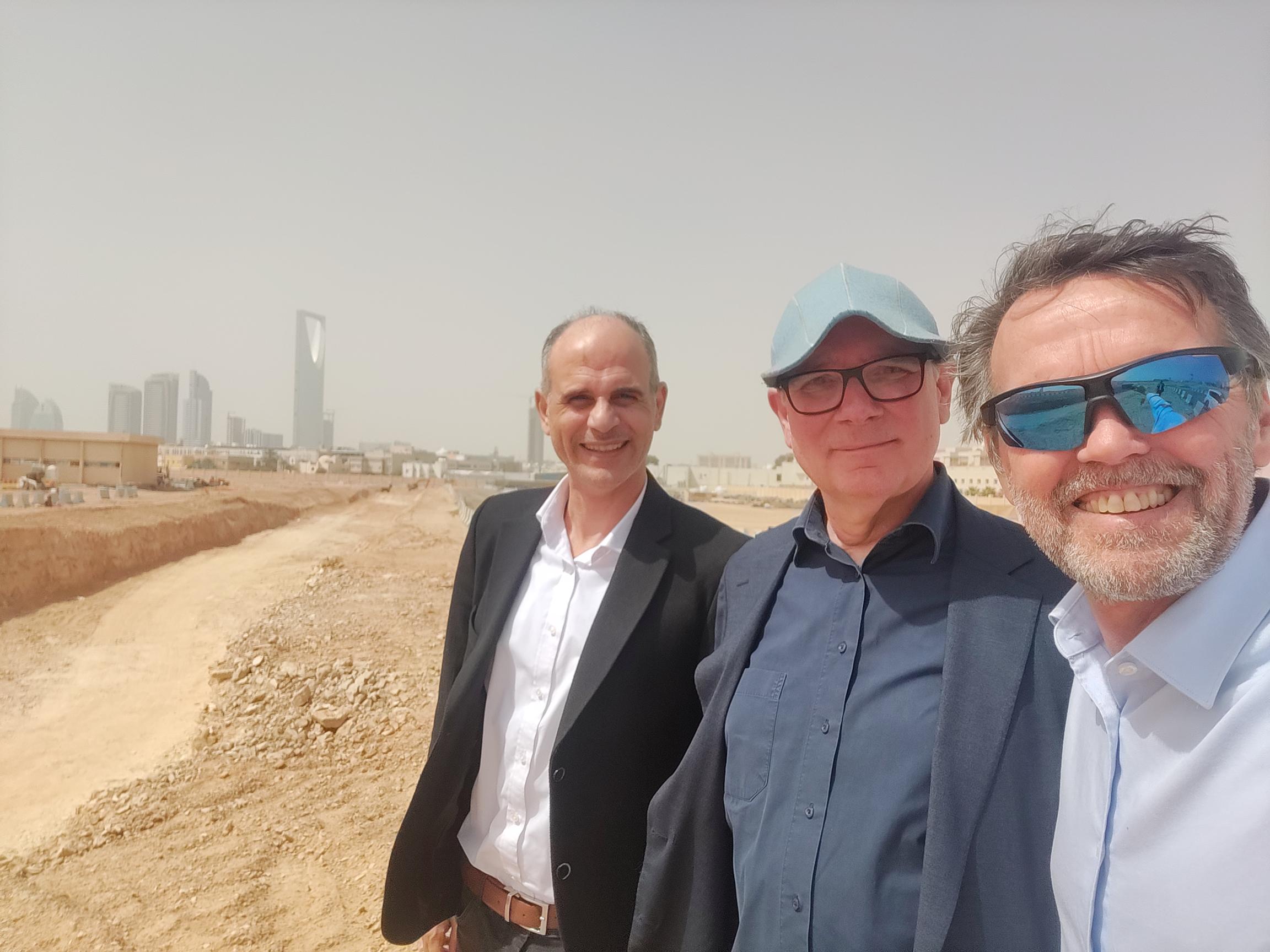
Ahmed Gouda, Andreas Kipar and Jens Hoffmann at the construction site, February 2024 (LAND)
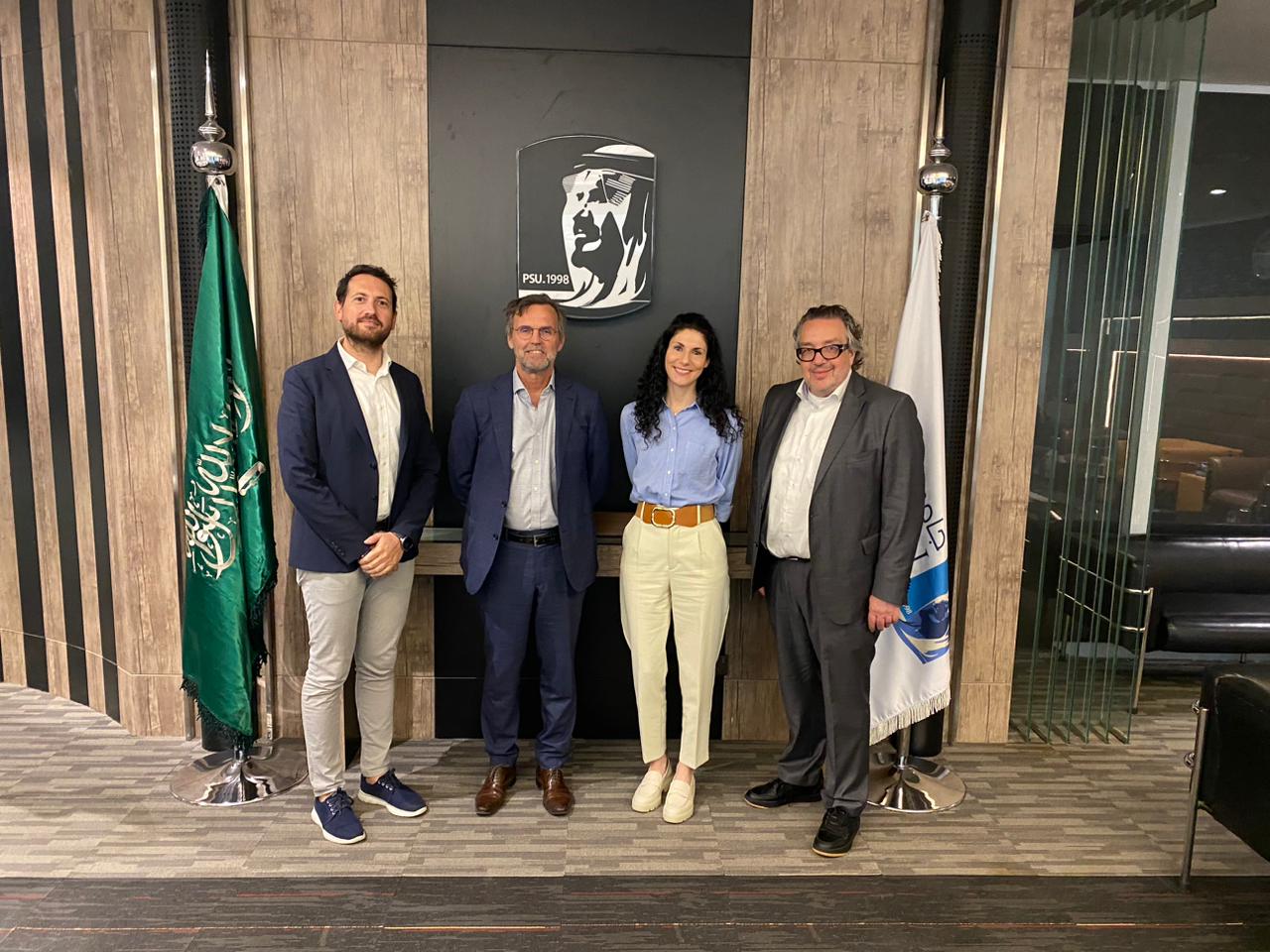
Stefano Roman, Jens Hoffmann, Monica Moscatelli and Hans Gunter Klein at Prince Sultan University, March 2024 (LAND)
September, as every year, marks a fresh start. The premature end of summer in Italy is yet to be felt in the sunny construction site of Al Urubah Park. Here, together with the delegation of companies led by Regione Lombardia and Assolombarda, we witness the impressive progress made since March. We accompany President Attilio Fontana, donning a helmet and reflective vest, to meet our partners, along with Italian Ambassador Carlo Baldocci and the dedicated team that has been working tirelessly for months to make this area the Middle East’s first digitally driven park. For the first time, we’re joined by LAND co-founder Giovanni Sala, artist Thomas Schoenauer, and CIO Nikolas Neubert—a tangible sign of how the expertise of the LAND Research Lab on Natural Capital can help us forge strong cultural connections, making sustainability tangible, visible, and measurable.
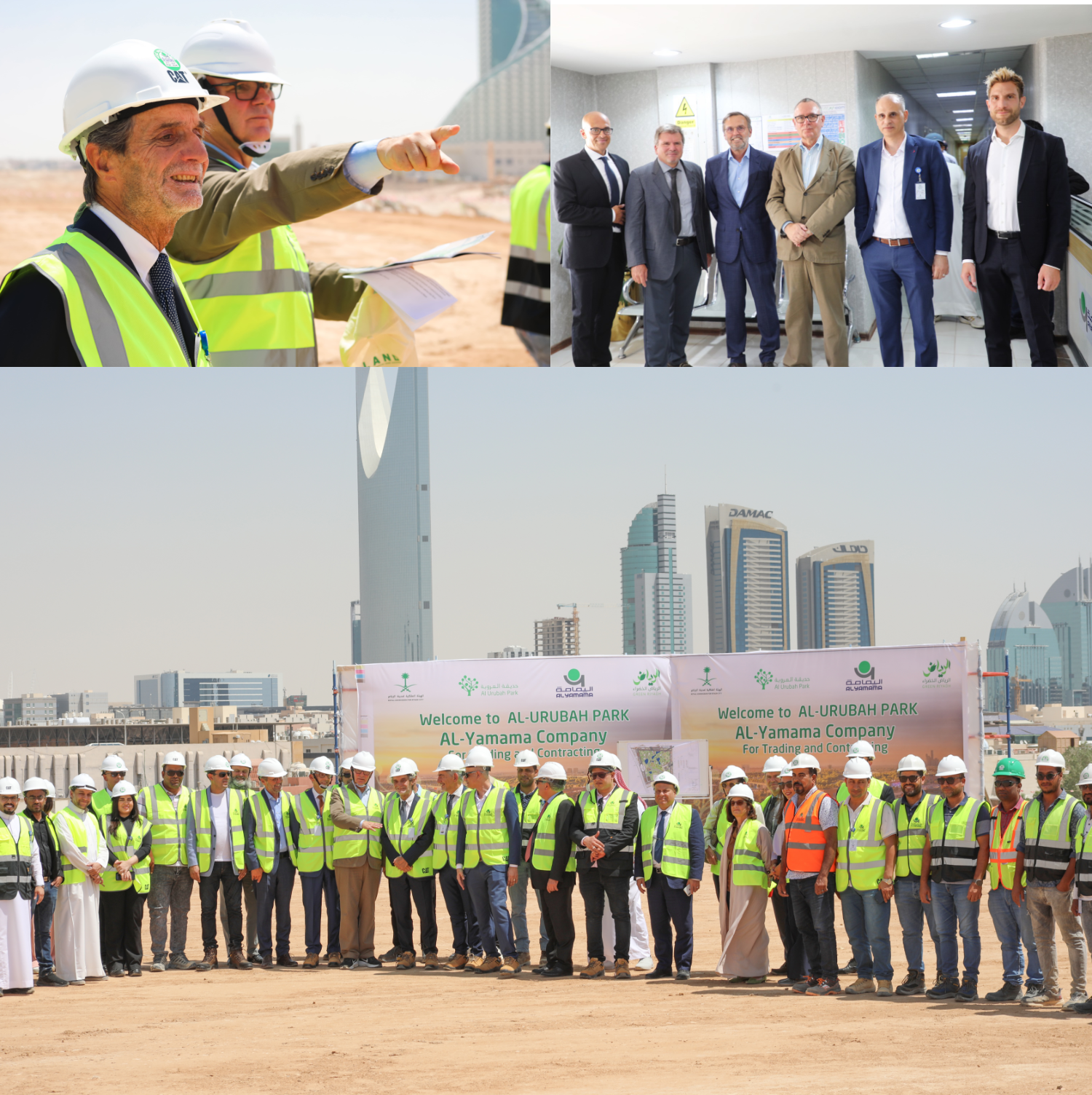
Pictures of Andreas Kipar with President Attilio Fontana, the delegation of Regione Lombardia and Assolombarda, the partners (Schiattarella, Manens, Al Yamama) and the working staff at Al Urubah Park, September 2024 (photo courtesy of Al Yamama)
With this unforgettable day, we symbolically inaugurate the journey of LAND MENA, our new office in Riyadh’s vibrant “Diplomatic Quarter,” the bustling hub of the city’s expansion. Our on-the-ground presence we’ll also let us oversee all the projects we are advancing in the region, starting with Al Khuzam: a residential development for the National Housing Company that includes 70,000 housing units connected by an 8.5 km park, creating a landmark for citizens in the northern part of the capital.
But LAND MENA will bring more than projects: from here, we will promote our specific approach to landscape under extreme conditions, helping cities become more resilient through innovative urban development. The green transition in Saudi Arabia is only beginning, but the opportunity to create open spaces where people can gather, socialize, and enjoy themselves drives us to look confidently toward the years ahead.
Thus, as the year draws to a close, learning from Riyadh is no longer just a catchphrase but a mindset we can apply daily in our work. With LAND MENA, we are ready to reshape the urban landscape of two continents, transforming climate challenges into opportunities for sustainable growth. Step by step, we are shaping greener, more resilient Nature-Positive cities, “ready for the future”.
Stay tuned, a big surprise is coming!