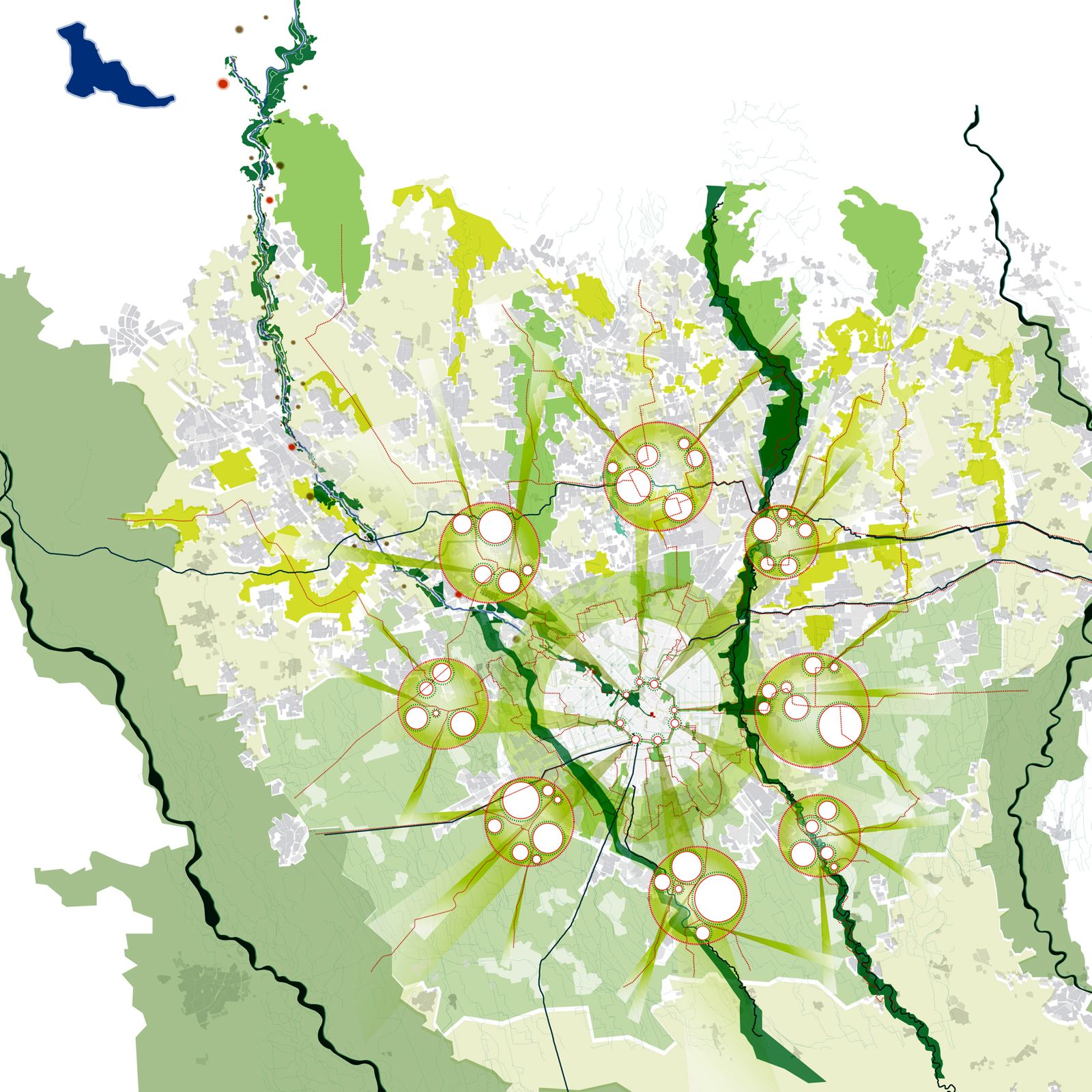
Twenty years of Green Rays
From Milan’s centre to a wider metropolitan and regional dimension, the Green Rays return as a timely vision for connecting landscape, biodiversity, climate and territorial regeneration beyond administrative boundaries.
The Green Rays are more relevant than ever. Twenty years after their first development, Milano Città Stato brings attention back to this landscape vision and to what remains of its original ambition: reconnecting the centre of Milan with the city’s outskirts and major green systems.
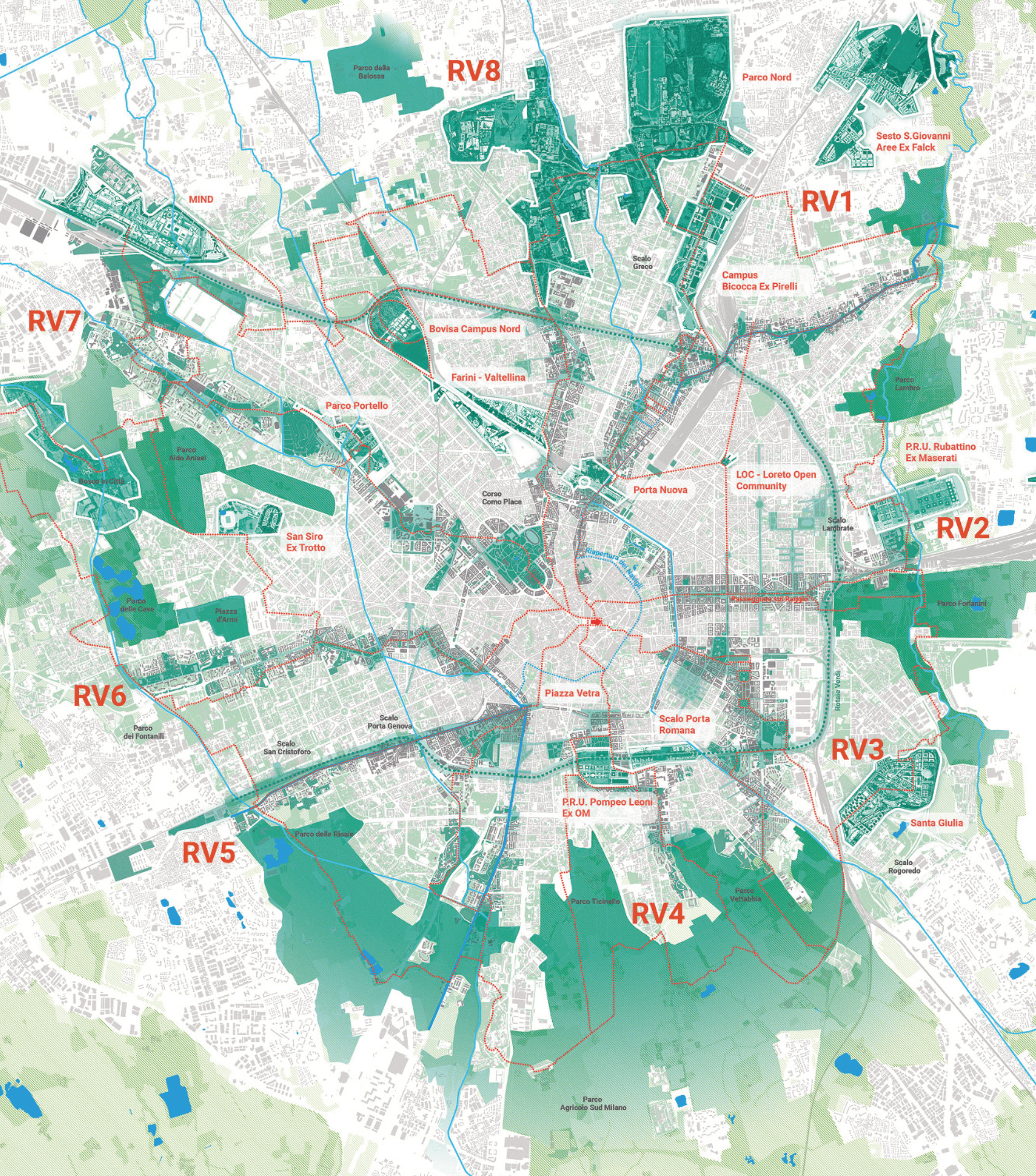
Raggi Verdi 2023
At the time, the Green Rays were conceived as axes of around 8 km, capable of creating new relationships between the urban fabric and the larger ecological structures around the city. Today, the reference scale is changing. From 8 km, the vision expands to 80 km, opening up a territorial and regional dimension that brings Milan closer to the scale of Europe’s great metropolitan regions.
Raggi Verdi regional scale
This shift makes the Green Rays even more current. The focus moves from the city to the territory, overcoming administrative boundaries; from the single project to a broader regional framework capable of connecting water, biodiversity, climate and landscape; from green space as a residual element to an ecologically active landscape, understood as a structure for future development.
Projects such as FILI, MI-LU and MIND, together with Regione Lombardia’s growing attention to green systems and urban regeneration, show that this direction has already begun. Within this perspective, the idea of Grande Milano starts from the relationships between Monza, Pavia, Varese, Como, Saronno and many other centres, extending towards Switzerland, from Chiasso to Lugano.
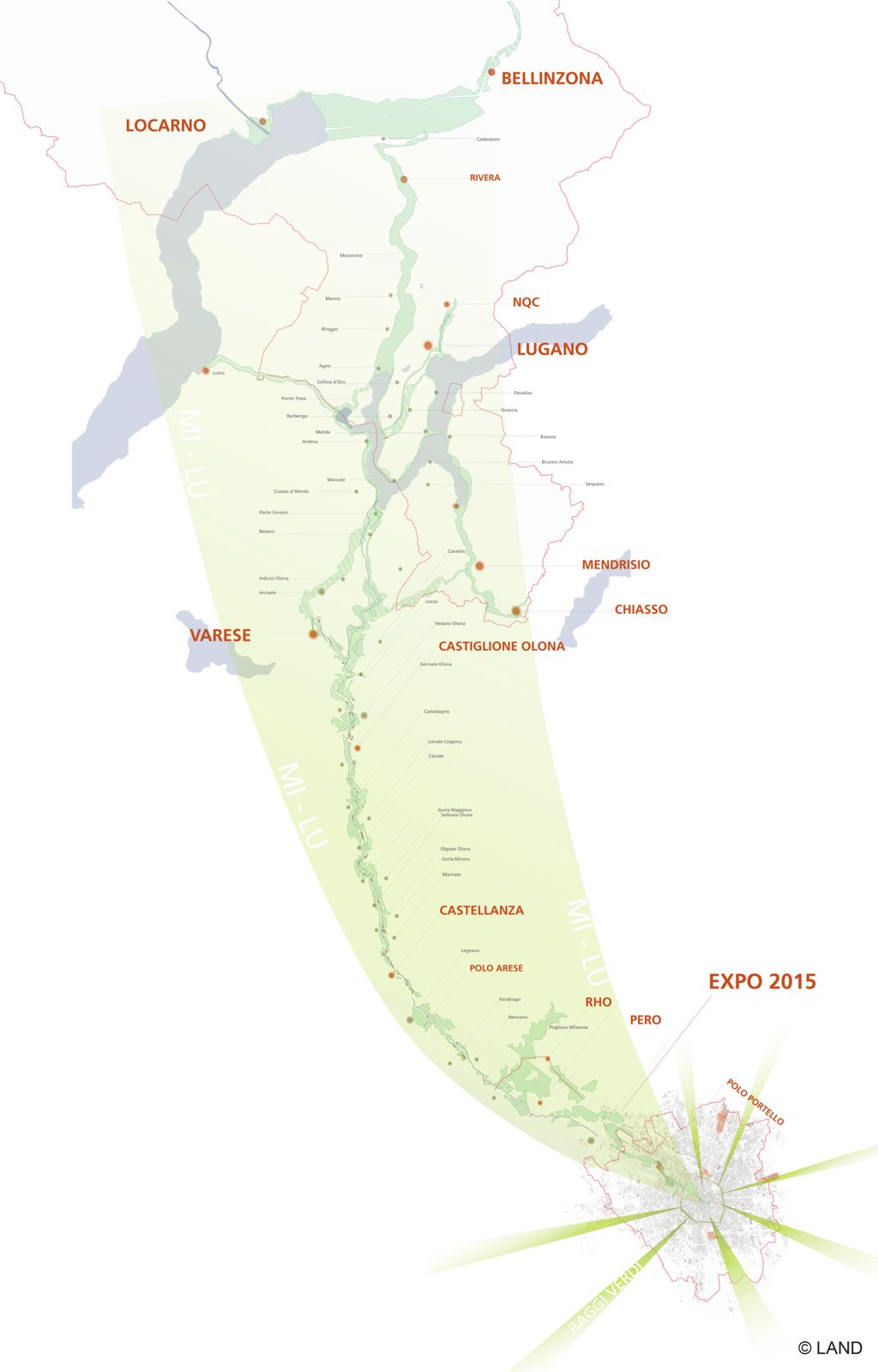
The MI-LU vision that extends the Raggi Verdi to Lugano and beyond
In this broader geography, the Green Rays become more than a historic vision for Milan. They become a way to rethink metropolitan landscapes as connected systems, where nature, infrastructure and urban development can work together across scales.
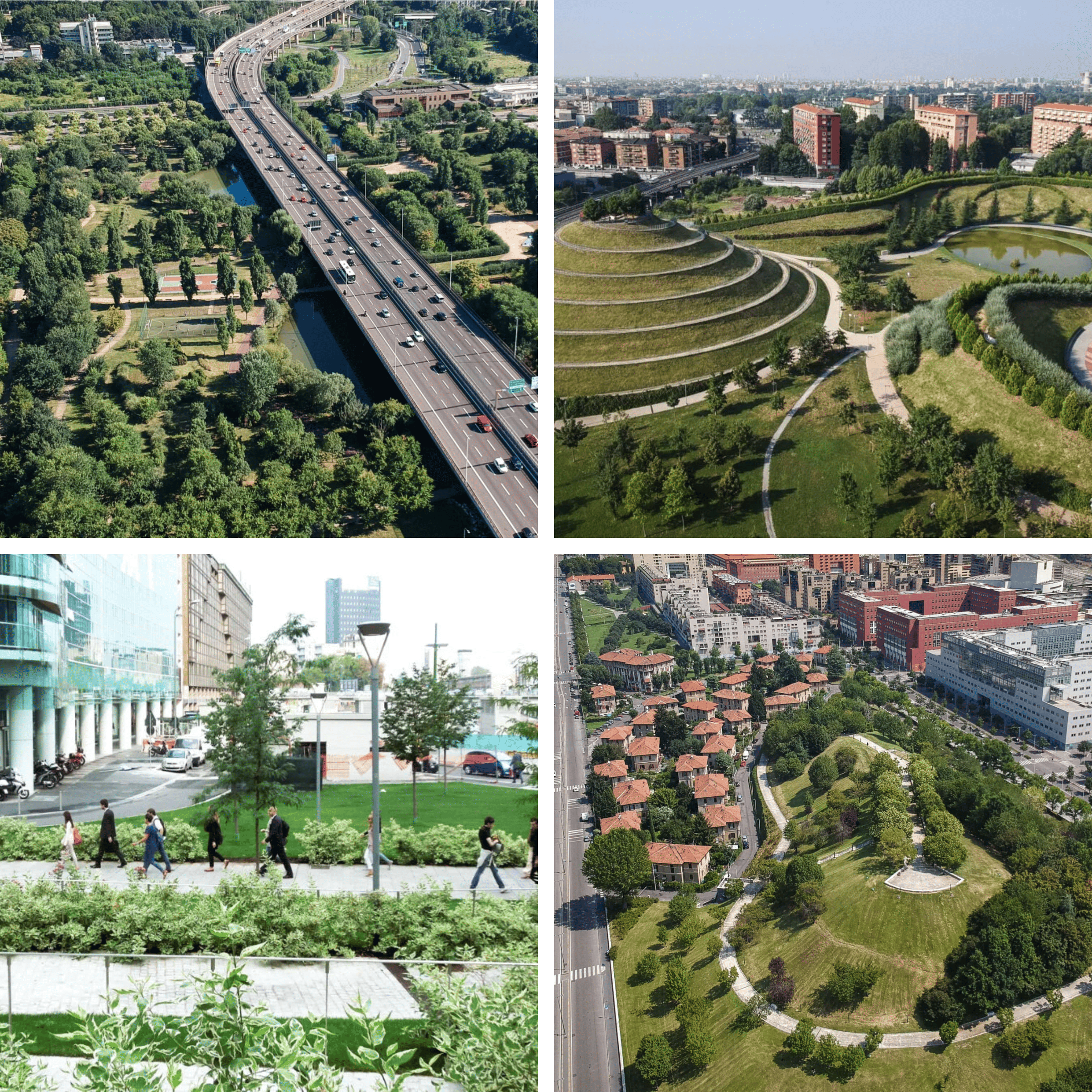
From top left to bottom right: Rubattino Urban Redevelopment Programme; Parco Portello; Porta Nuova; Bicocca – Collina dei Ciliegi
Don't miss out on our inspiring project stories, the latest research, and more.
All mandatory fields are marked with a *