More courage against heat: Andreas Kipar on green urban transformation
As rising temperatures reshape the way cities are planned and experienced, green infrastructure becomes a central tool for making urban spaces more liveable, resilient and economically valuable.
Rising temperatures are changing the way cities are experienced. In Essen, where recent summer days reached around 37°C, the question is no longer whether urban spaces need to adapt, but how quickly green transformation can become part of everyday planning.
In an interview by Marcus Schymiczek for WAZ (Westdeutsche Allgemeine Zeitung), Andreas Kipar reflects on Essen’s role as a former European Green Capital and on existing examples such as Niederfeldsee, Krupp-Park and the “Grüne Mitte” in the university district. These projects show how green infrastructure can support a broader transformation of public space, moving beyond isolated interventions towards a more liveable urban system.
Highlighting the value of Nature Capital in the city. Green space is not described as a cost factor, but as a source of long-term value: trees, shaded places, drinking fountains, green roofs and water-sensitive street design all contribute to climate adaptation and urban quality. The challenge now is to treat green urban transformation as a central priority, with more courage and ambition.
Read the full article here [in German]. (Download file)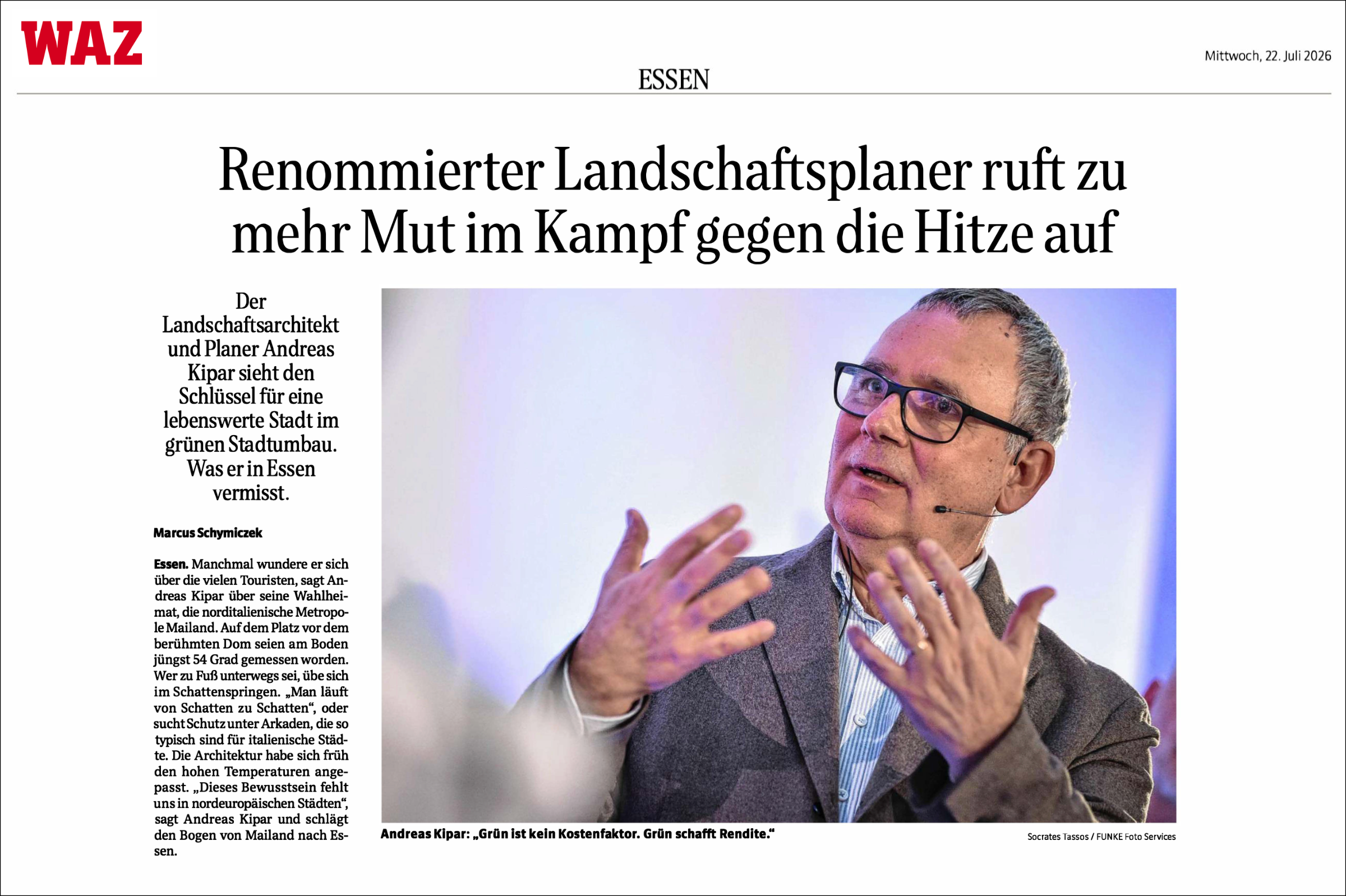
View other publications
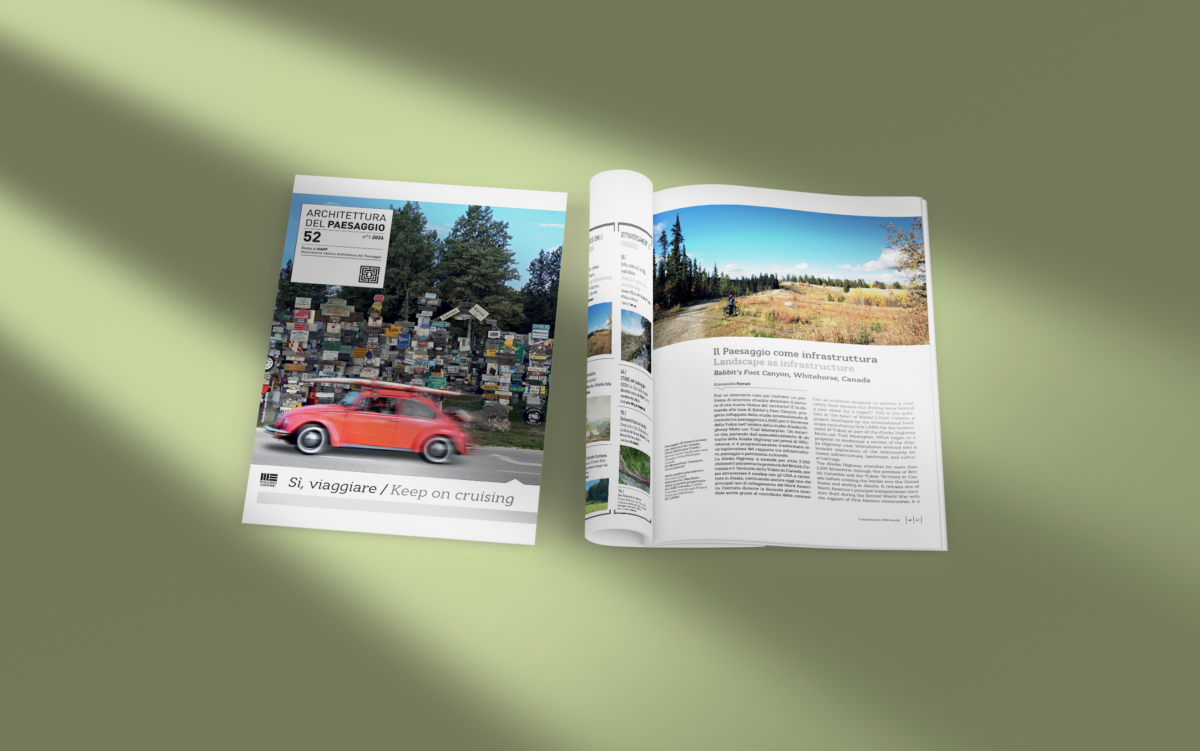
Lanscape as Infrastructure: Rabbit’s Foot Canyon, Whitehorse (CA) on AIAPP
As rising temperatures reshape the way cities are planned and experienced, green infrastructure becomes a central tool for making urban spaces more liveable, resilient and economically valuable.