Newsletter #36: Cultivating a shared landscape of ideas
What can landscapes teach us about alliances and resilience? From Montréal to Düsseldorf, from Berlin to Cologne, a journey through encounters, dialogues and projects showing how relationships, more than individual efforts, create the conditions for cities and communities to grow and thrive.
“A single tree will come down in it. A forest will not.”
This image from Canadian Prime Minister Mark Carney’s address to the European Parliament has stayed with me. A simple metaphor, yet one that speaks directly to the challenges of our time: in a world marked by geopolitical uncertainty, disrupted supply chains and growing strategic dependencies, resilience is not about standing alone. It is about strengthening the connections that allow us to grow together.
At the recent EU-Canada Summit, this conviction took on a political dimension. With the launch of the Alliance for the Future, Canada and Europe reaffirmed their ambition to deepen a partnership built on trust, shared values and complementary strengths. Mark Carney reminded us that the strongest alliances are those that create possibilities beyond what each partner could achieve individually.

In Montréal, the EU and Canada launched an Alliance for the Future.
For us at LAND, this image resonates on another level. A forest is not simply a collection of individual trees. It is a living system, connected through roots, resources, exchange and mutual support.
And perhaps this is precisely what landscapes teach us about resilience: the strength of a system lies not only in its individual components, but in the relationships between them.
Carney closed his speech with the story of the Vimy Oaks, trees whose roots literally connect Canada and Europe. His invitation to “deepen those roots, widen this canopy and grow a transatlantic forest” is a powerful reminder that what we cultivate together can outlast the circumstances in which it began.
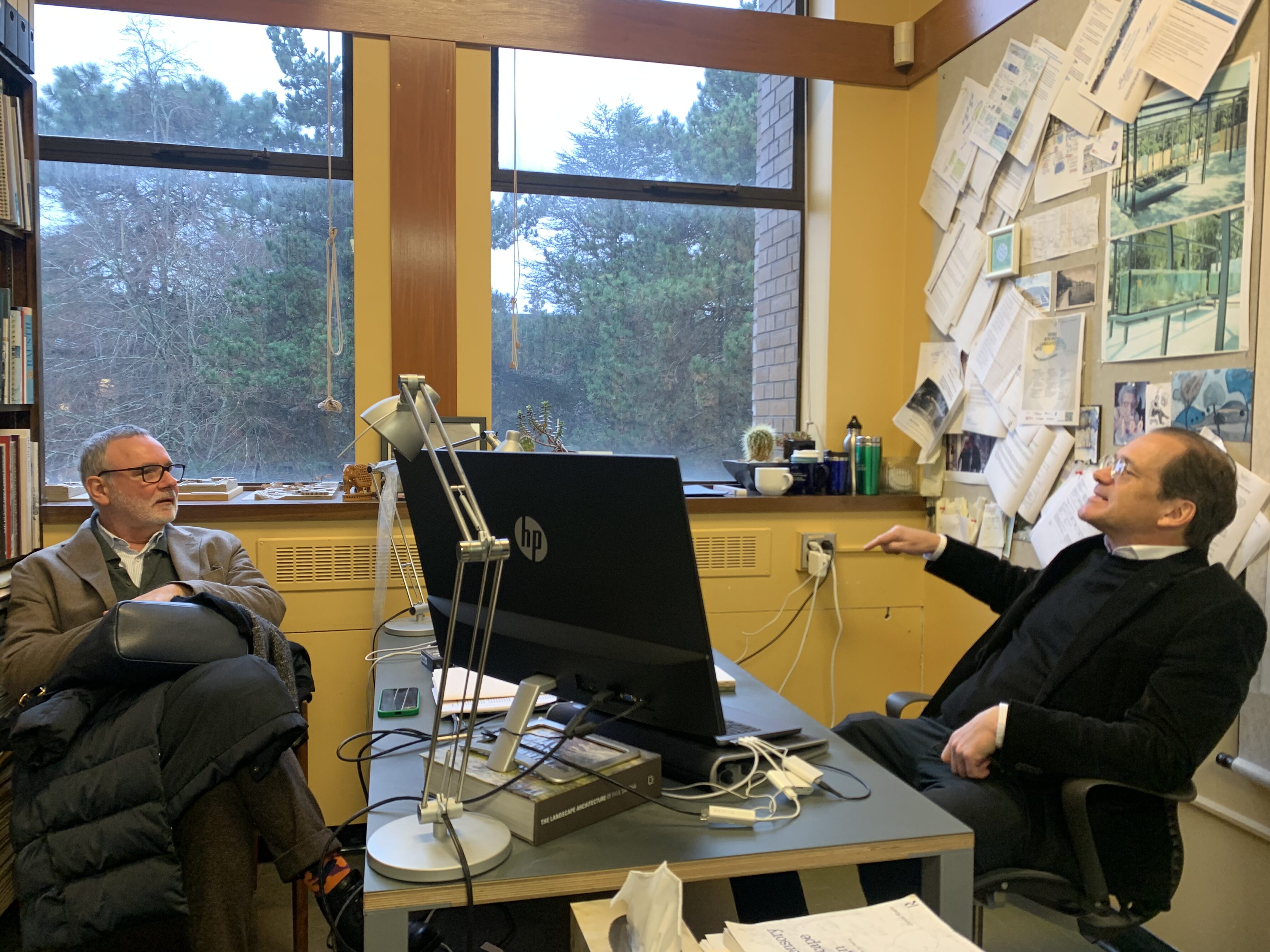
With Professor Daniel Roehr at University of British Columbia, December 2025.
Some connections grow over time, quietly, through conversationsthat continue long after the meeting itself. My longstanding Seelenverwandtschaft with Daniel Roehr, Chair of Landscape Architecture at The University of British Columbia, is one of those relationships.
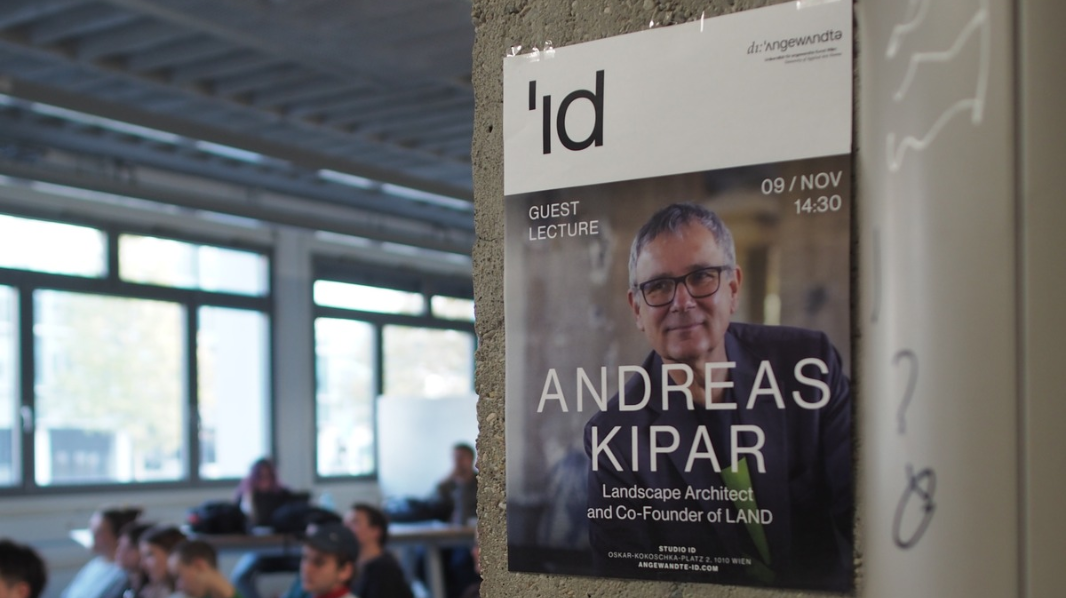
In the 2025 winter issue of Landscapes | Paysages, published by the Canadian Society of Landscape Architects, Daniel and I explored the evolving scenarios of our discipline and the ways in which we can prepare the next generation of landscape architects for the challenges ahead.
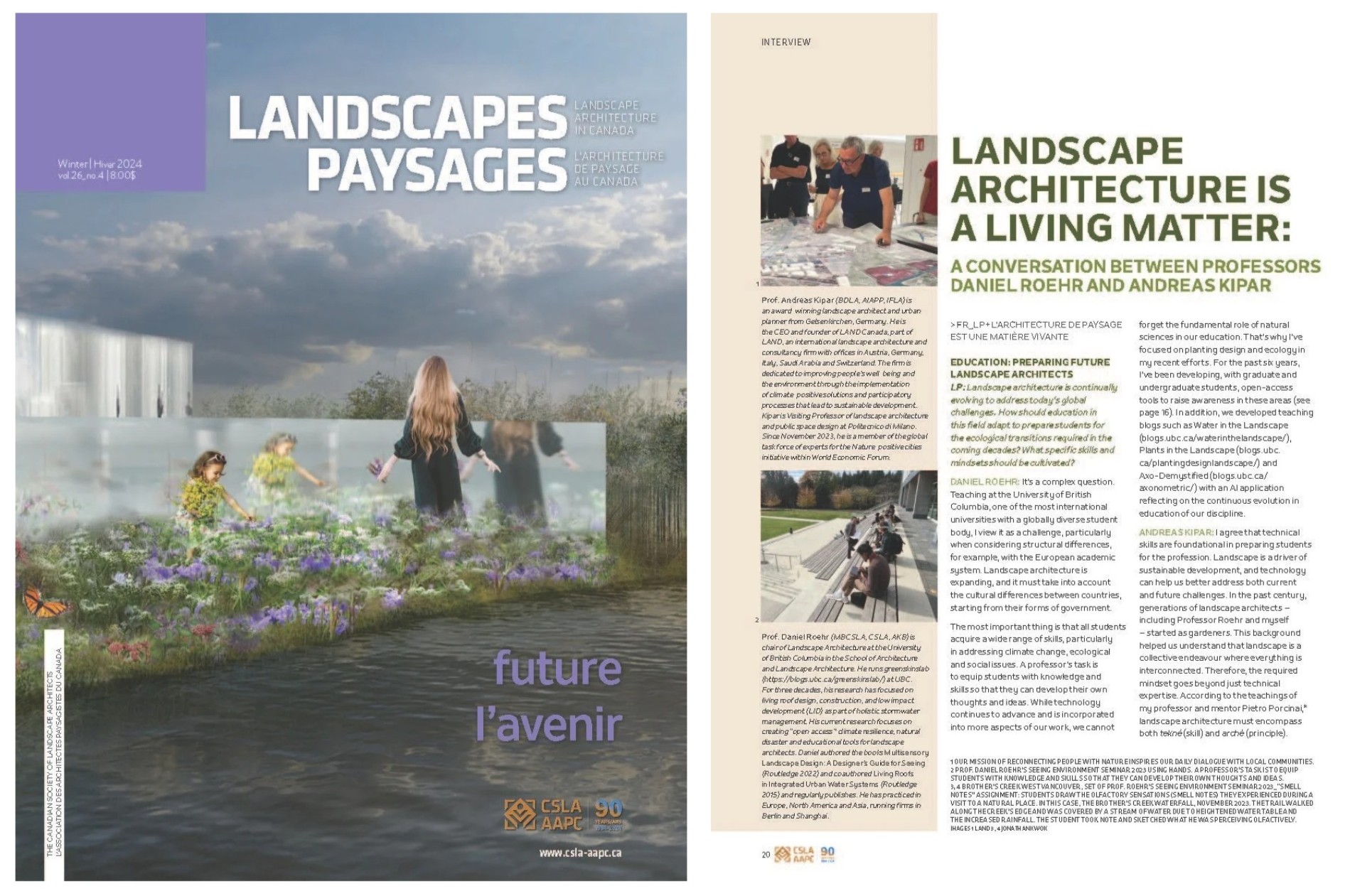
Landscape Architecture is a Living Matter, in conversation with Daniel Roehr (CSLA,
2025).
Our dialogue, also enriched by the perspective of Valeria Pagliaro, General Manager of LAND Canada, reflects a shared conviction: landscape architecture is a living matter. It requires us to move beyond traditional frameworks and embrace a more holistic understanding of the land, society and economy.
From inclusive design and community participation to interdisciplinarity and multisensory experiences, the future of our profession lies in its ability to respond to the social needs of our time. Ethics and aesthetics are not opposing forces; together, they can help us shape landscapes that are ecologically productive, socially meaningful and deeply connected to people’s everyday lives.
Daniel once described our contribution as environmental diplomats, whose work should have a global reach and bypass the borders of our discipline. I could not agree more. Friendship, professional exchange and intellectual affinity are not merely personal enrichments: they are fertile ground for new ideas and collective progress.
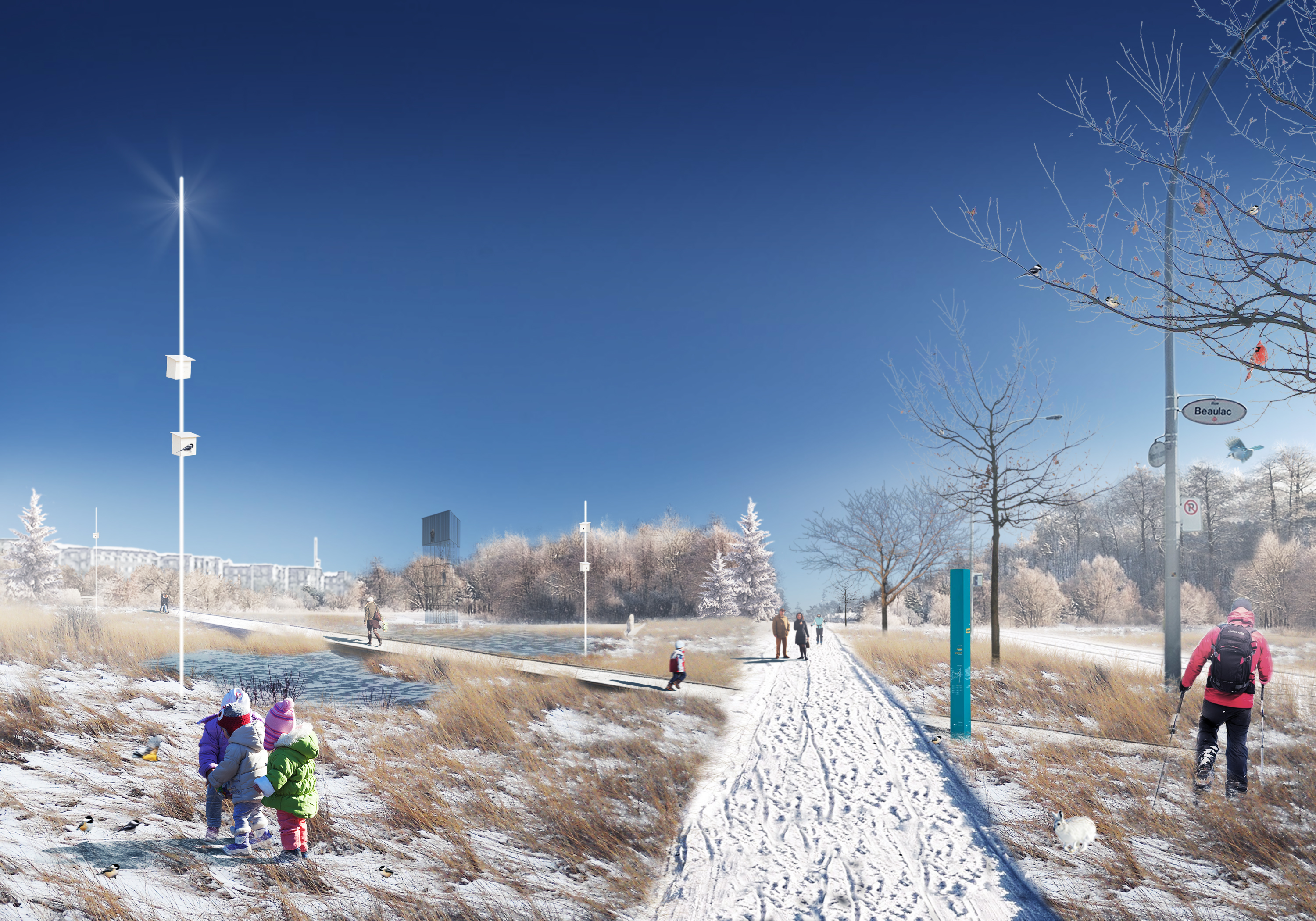
Biodiversity Corridor, Montréal.
This month, traveling across Germany offered another opportunity to explore how these connections can translate into concrete action.
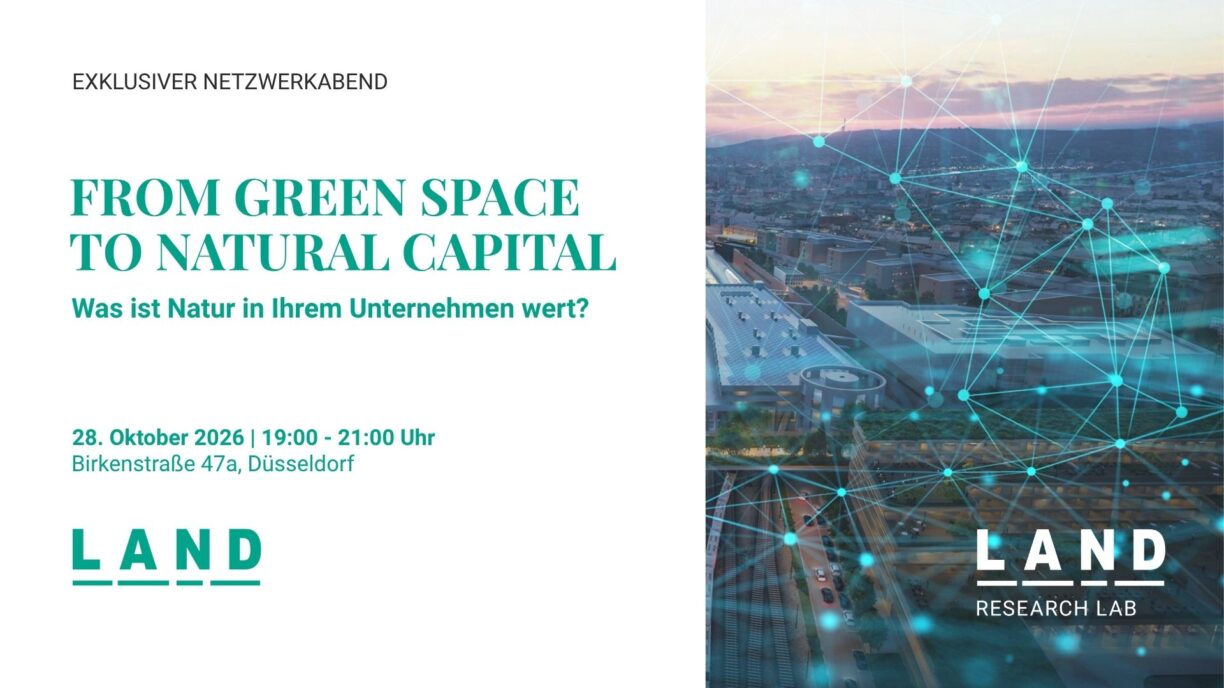
In Düsseldorf, our gathering From Green Space to Natural Capital brought together perspectives from business, landscape architecture, research and technology. The discussion moved beyond green spaces towards recognizing landscapes as systems that generate ecological, social and economic value — an important step towards integrating Natural Capital into investment, planning and decision-making.
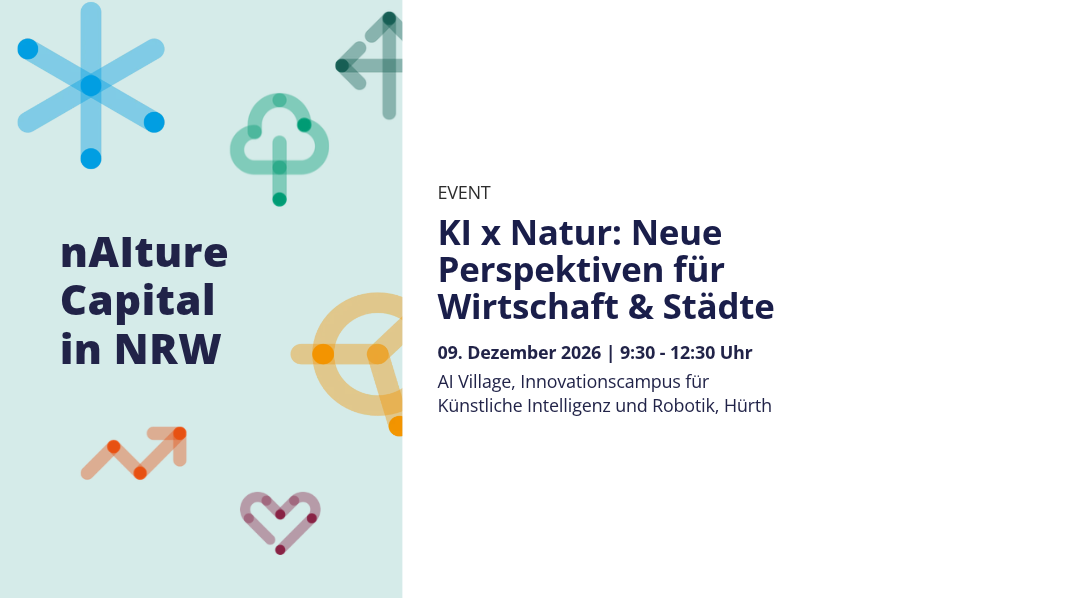
Building on this dialogue, our upcoming event AI × Nature: New Perspectives for Business and Cities at AI Village in Cologne will explore how Artificial Intelligence can help us better understand Nature, recognize its value and shape more informed decisions for cities and businesses.
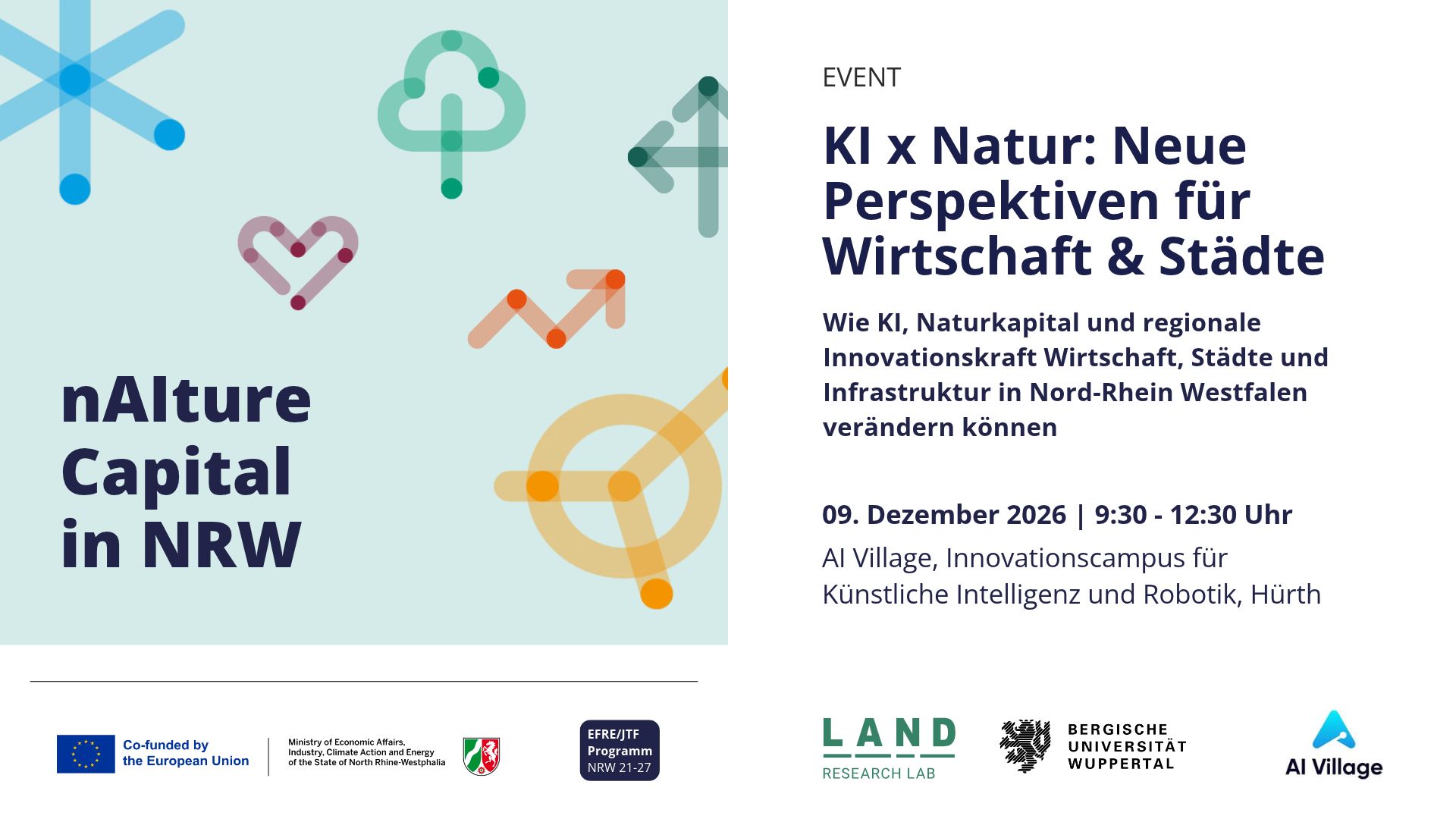
Join us for the LAND Research Lab event “KI x Natur: Neue Perspektiven für
Wirtschaft & Städte” on December 9th.
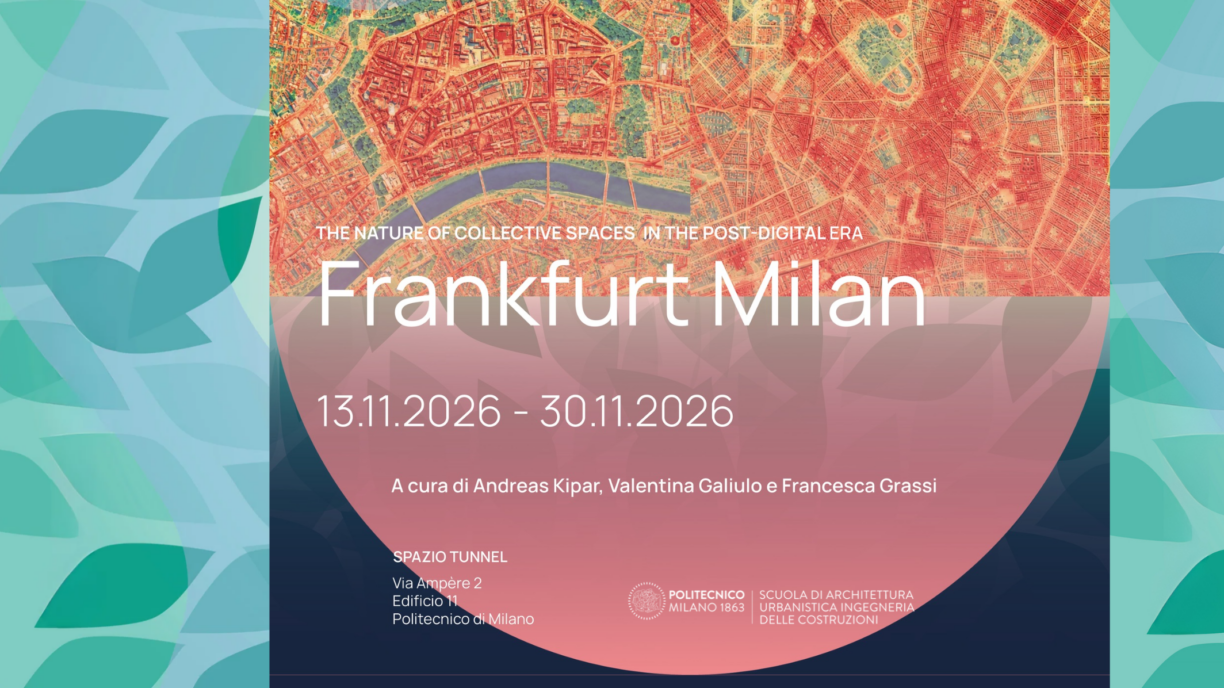
In Frankfurt, the conversation continued around Biodiversity and the role it can play in shaping more resilient places. Once again, the challenge is not simply to acknowledge the importance of Nature, but to translate that awareness into meaningful choices and tangible change.
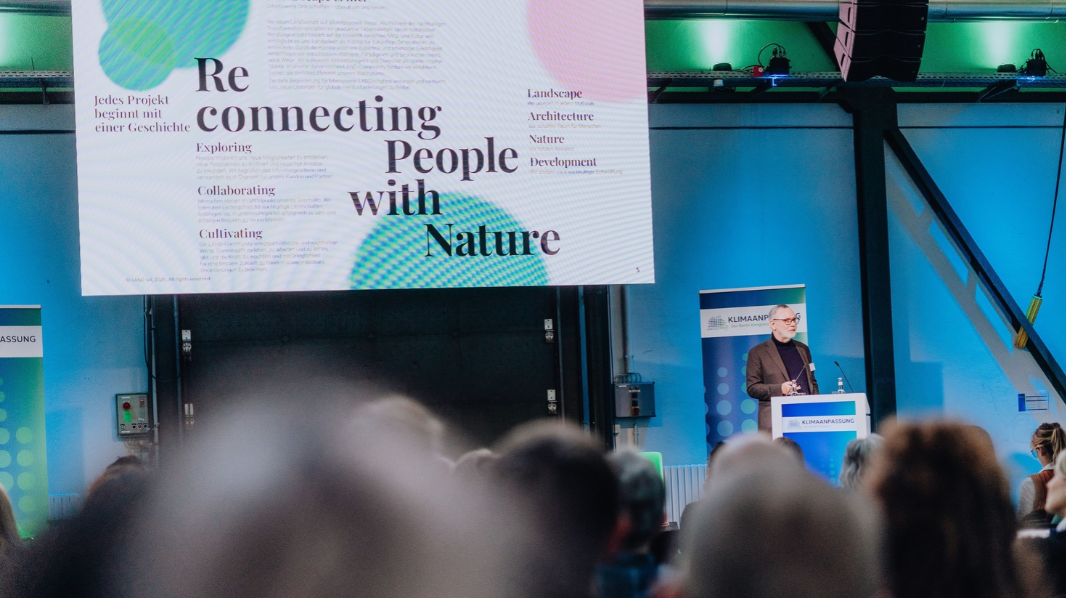
And in Berlin, at the Klimaanpassungskongress, we exchanged thoughts on climate adaptation as an opportunity to move towards the Nature-Positive City. At the congress, the shared energy from Berlin, Milan and Vilnius was particularly inspiring: three cities with different contexts, yet facing shared challenges and offering valuable opportunities to learn from one another.
We know where the challenges lie and which questions still need to be addressed. The knowledge is there; the urgency is clear. Now comes the moment for implementation, by cultivating connections and bridging to new communities.
Climate adaptation should not be understood merely as a technical response to rising temperatures or extreme weather. It is an opportunity to rethink our cities as living systems, reconnecting urban spaces with natural processes and creating healthier, more resilient environments for everyone.
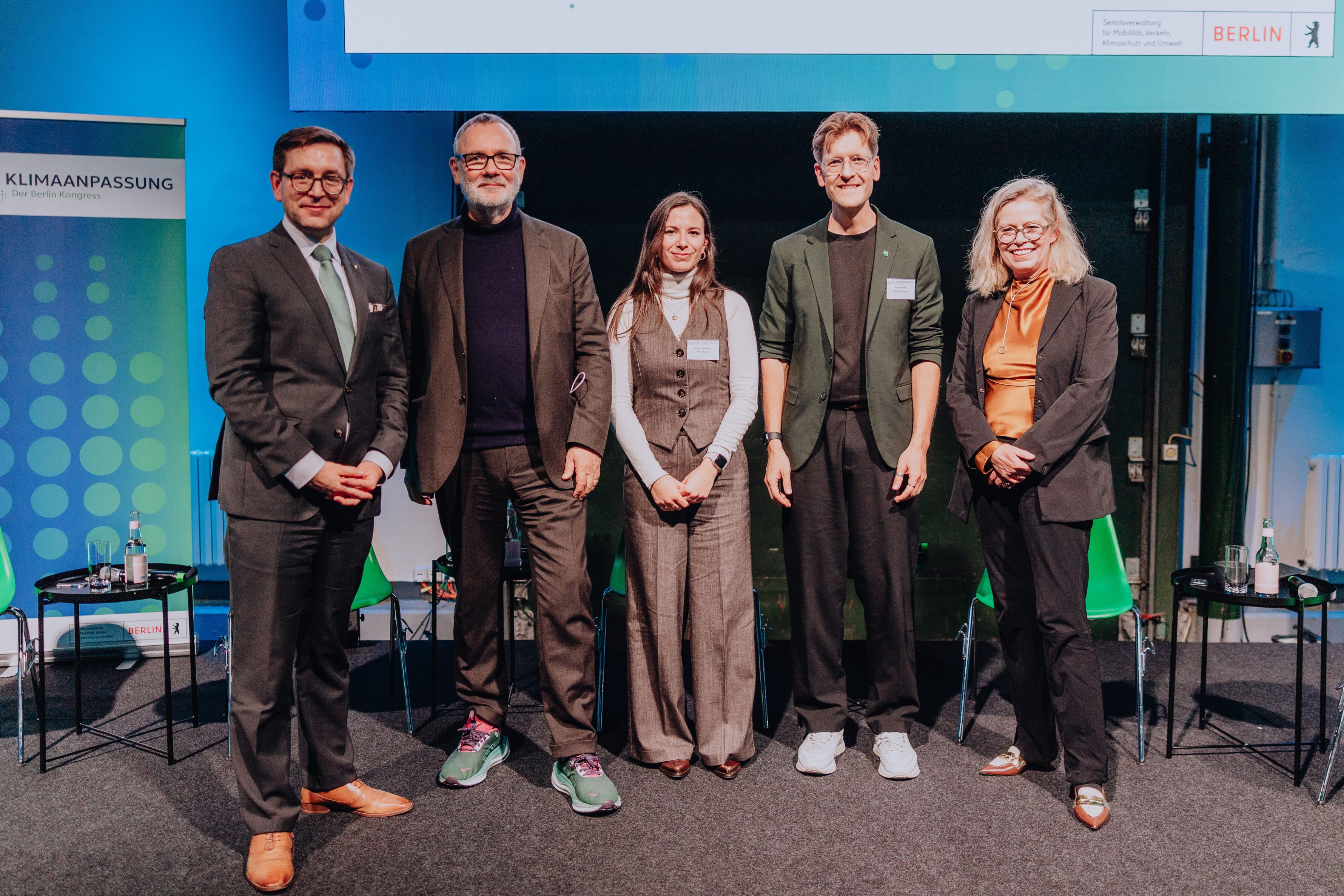
With Andreas Kraus (Berlin Senate), Giulia Castellazzi (AMAT Milano), Anton Nikitin
(Vilnius) and Ute Bonde (Berlin Senate).
Looking back on these weeks, one thought keeps returning to me.
Whether we are speaking about international partnerships, professional friendships or the transformation of our cities, resilience is never an isolated achievement. It grows through relationships: between people and disciplines, between knowledge and practice, between Nature and the places we inhabit.
A single tree may come down. But a forest, rooted in connection and sustained by mutual support, can continue to grow.
And perhaps this is also our task as landscape architects: to cultivate those connections, strengthen the roots beneath our shared ground and create the conditions for landscapes and communities to thrive.
Looking forward to deepening the roots between Canada and Europe, and to everything we can grow together.
Don't miss out on our inspiring project stories, the latest research, and more.
All mandatory fields are marked with a *