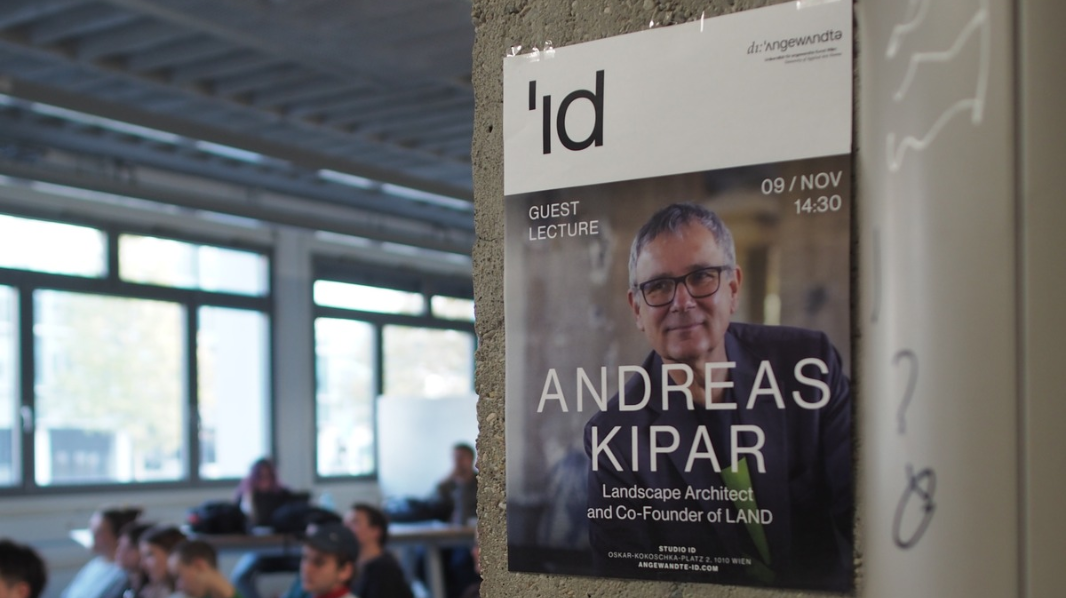
Thinking the city from the landscape at die Angewandte Vienna
On 9 November, Andreas Kipar met the Industrial Design students of the University of Applied Arts Vienna, within the MOBILITY project, to share a landscape perspective: green-blue infrastructure as the starting point of urban space and mobility as a question of space rather than traffic.
What if we thought of the city starting from space, rather than from traffic? It is the question at the heart of MOBILITY, the project of the Industrial Design class at the University of Applied Arts Vienna, led by Stefan Diez. Running over two semesters in winter 2026/27 together with Christian Gärtner of Urban Standards, who plans and operates neighbourhood mobility, it follows a guiding thought: better accessibility through less movement.
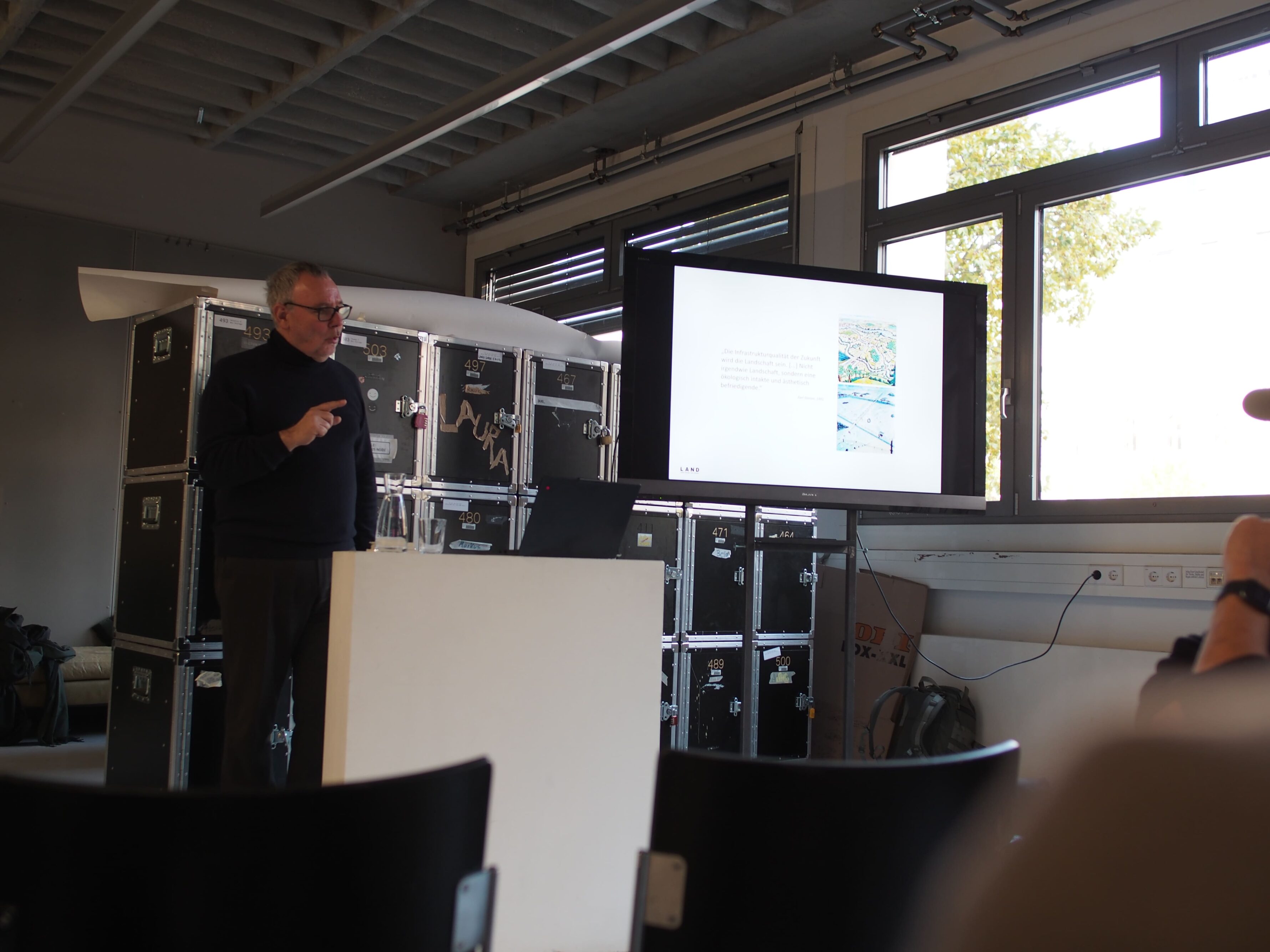
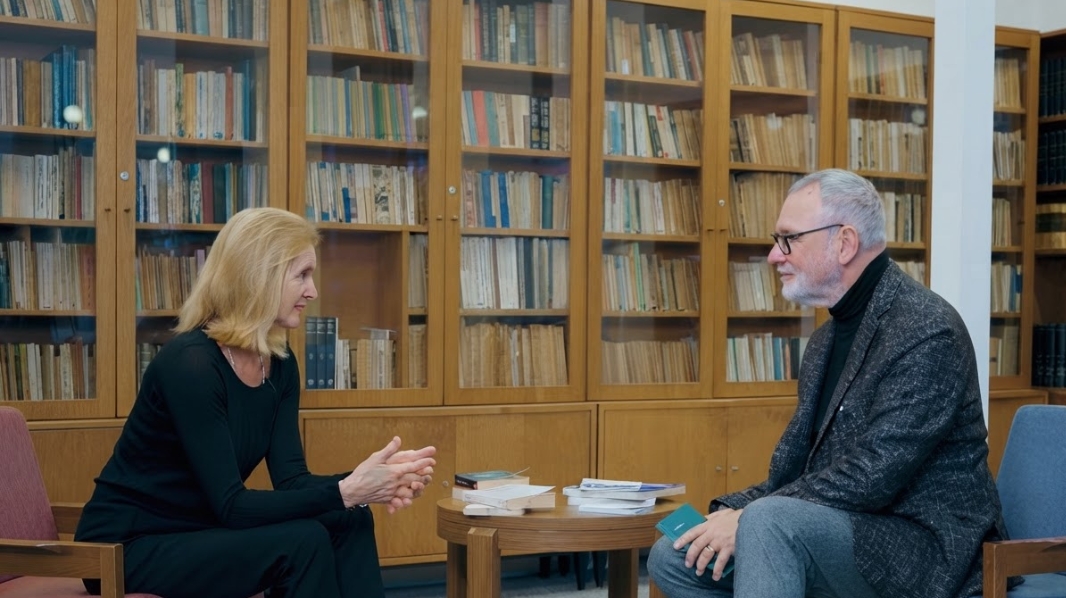
On 9 November 2026, Andreas Kipar was invited to bring the landscape perspective into this conversation, with a lecture of about 45 minutes followed by an exchange with the students. The challenge was clear: how do we plan green as infrastructure, and not as what remains once the roadways are drawn? And what happens to people’s paths when the landscape sets the structure?
Under the title “The City as Urban Landscape! Green-blue infrastructure and more…”, the lecture started from LAND’s vision of Reconnecting People with Nature, travelling through projects from Semmering in Austria to Milan and Riyadh. It then turned to the figures of the June 2026 Eurobarometer: 96% of EU citizens consider that we all have a responsibility to look after Nature and 95% say that their health and well-being depend on it. It is the ground on which Nature-Positive cities can grow, cities that, in the words of the World Economic Forum’s draft guidelines, place Nature at the centre and take responsibility for their collective impact on the health of the planet.
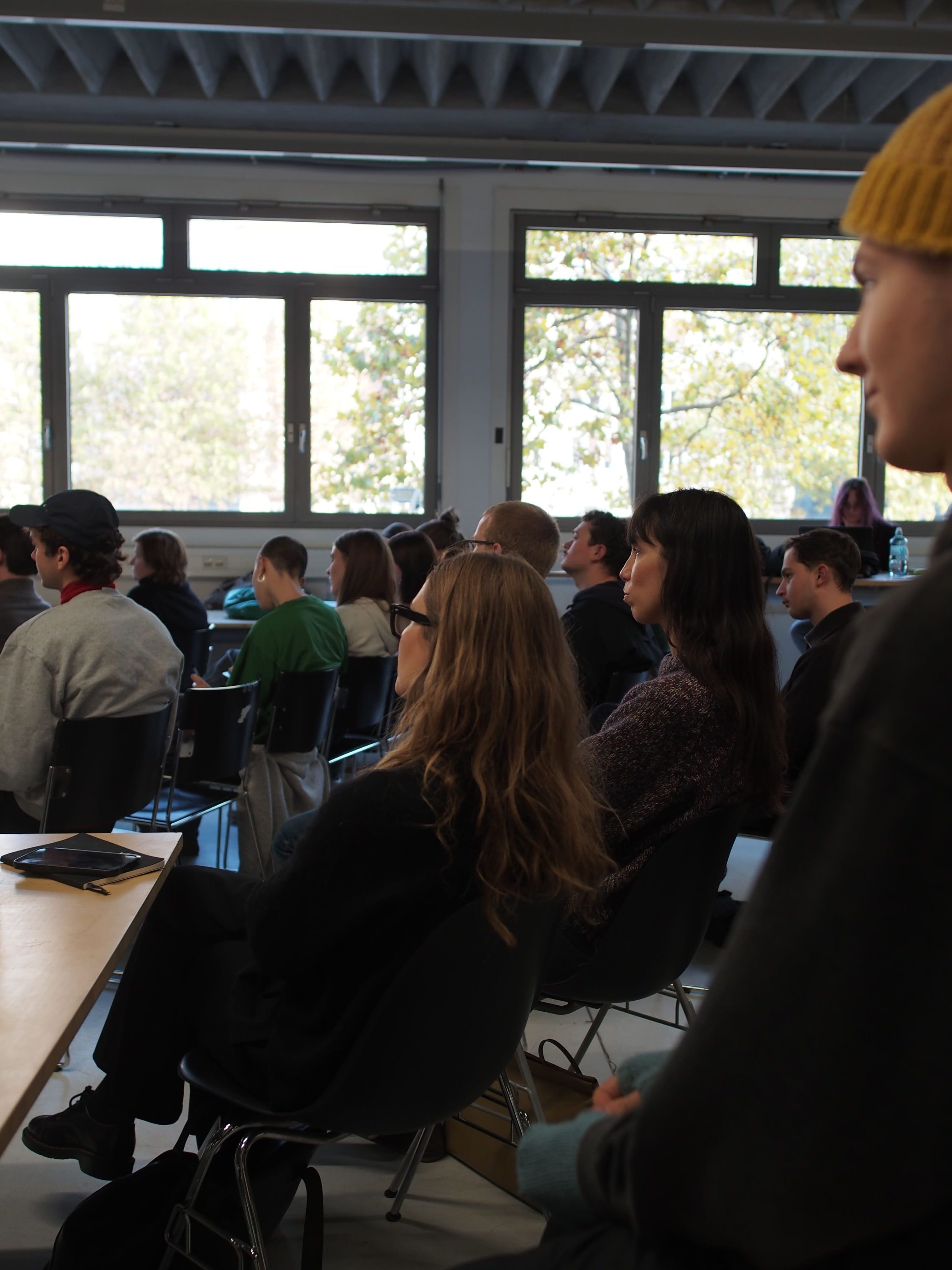
For the students, the lecture is one step in a longer path. In the first semester they learn to read the city, through excursions in Vienna, self-built observation methods and guests from other disciplines. The semester ends with a big idea of the city, explicitly a utopia and a briefing from which, in summer, a design for a real place will take shape.
Sharing the landscape perspective with the designers of tomorrow reflects LAND’s belief that cities can be thought of from Nature outwards and that the spaces we design today shape how we move and live for generations to come.
Don't miss out on our inspiring project stories, the latest research, and more.
All mandatory fields are marked with a *