When Europe Discovers What the Gulf Already Knows
In a contribution for Landscape Middle East, Andreas Kipar explores why Nature must become essential urban infrastructure if cities are to adapt to a hotter and more uncertain climate.
As Europe experiences increasingly frequent and intense heatwaves, the conversation around climate adaptation is becoming more urgent than ever. In his latest industry contribution for Landscape Middle East, Andreas Kipar, Founder and CEO of LAND, reflects on what European cities can learn from regions where designing for extreme heat has long been a necessity rather than an exception.
The article argues that climate resilience cannot rely on technology alone. Instead, it requires a fundamental shift in the way cities are planned and managed, recognising Nature not as an aesthetic addition, but as critical infrastructure. Through examples from LAND’s international portfolio, Andreas highlights how connected landscapes, green infrastructure and Natural Capital approaches can improve urban resilience, public health and long-term economic performance.
The contribution also reinforces LAND’s Nature-Positive vision: designing functioning ecosystems that generate measurable environmental, social and economic value while helping cities prepare for a changing climate.
Read the full article here [in English]. (Download file)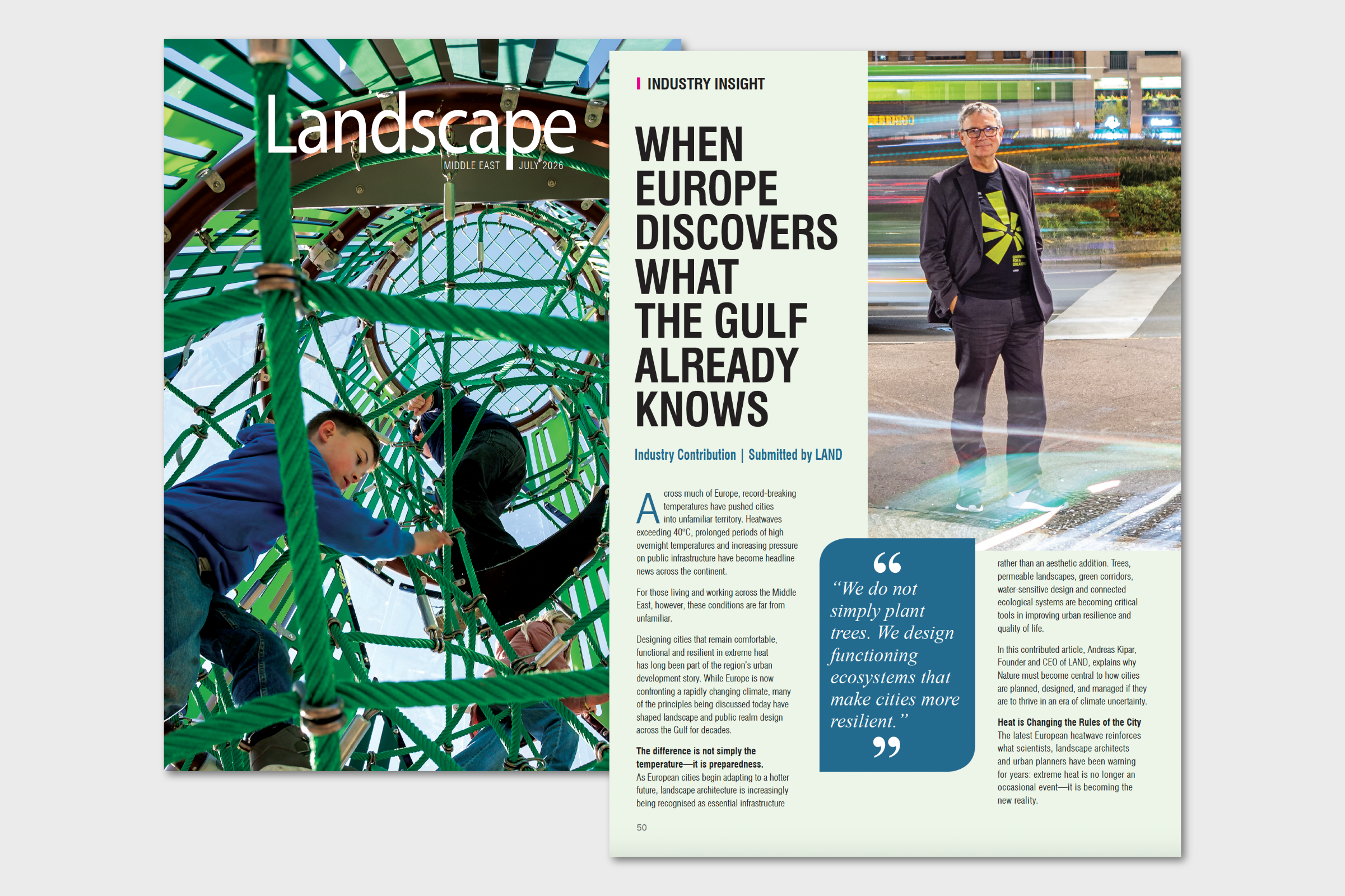
View other publications
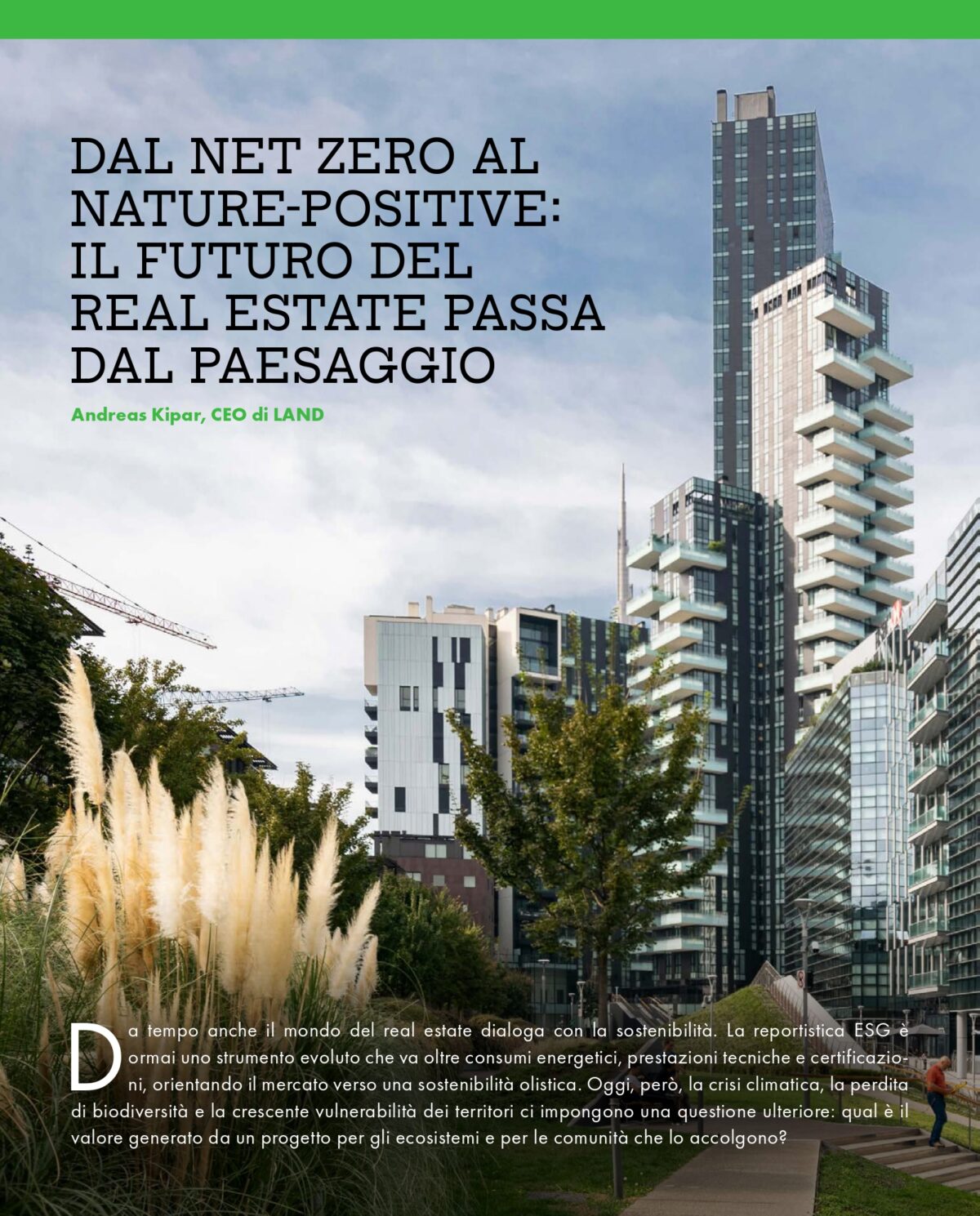
From Net Zero to Nature-Positive: The Future of Real Estate lies in Landscape
In a contribution for Landscape Middle East, Andreas Kipar explores why Nature must become essential urban infrastructure if cities are to adapt to a hotter and more uncertain climate.