Newsletter #27: Reconnecting with Nature through the Olympic Spirit
We are all absorbed in our everyday lives: moving fast, thinking small, rarely pausing to notice what is changing around us. And yet, something has just arrived.
As the Milano–Cortina 2026 Winter Olympics kick off, a transformative energy flows through the two cities and many towns across Northern Italy. From San Siro Stadium to the Arena di Verona, reaching the snowy alpine venues, it manifests in streets, squares, and neighbourhoods, turning ordinary places into spaces of encounter and community.
This is the Olympic spirit at work: an invisible energy reconnecting places and people who usually live side by side but rarely move together.
For a moment, the city becomes one. Residents and visitors, athletes and spectators share the same rhythm, the same anticipation. Milan and Cortina are no longer just destinations. For the first time in their history, they become part of a wider landscape stretching from urban districts to alpine villages, from public squares to mountain valleys. A landscape we can explore, discover, and describe with renewed curiosity.
This is the deeper meaning of the Olympic spirit: not just competition, but participation and connection. As President Sergio Mattarella reminded us from Milan’s Palazzo Marino, quoting Martin Luther King:
“We must be the peace we wish to see in the world.”
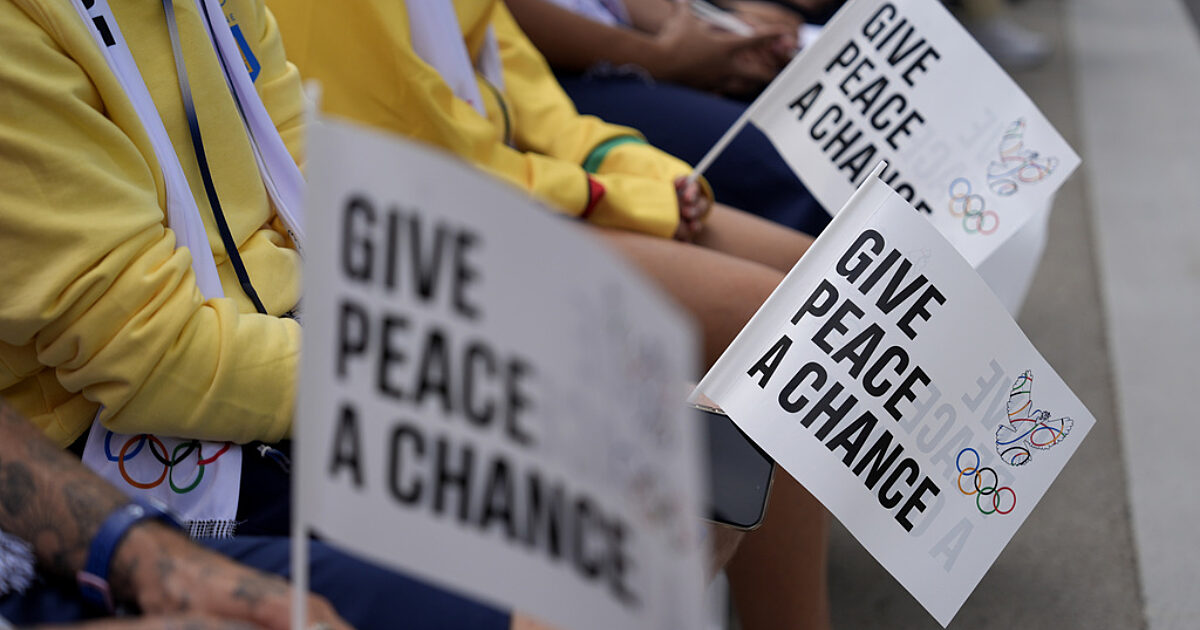
Peace rally at the 2024 Olympics
The Rhythm of the Games
In 400 BC, the Olympic quadrennium became the measure of time for ancient Greece. Time was marked by the Games. Today, they return repeatedly, including in their winter edition, giving the world a shared rhythm: a moment when individual noise fades and a collective horizon comes into focus.
The Olympic Spirit has always profoundly captured the collective imagination—both in classical Greece and during the modern Games, revived by Baron Pierre de Coubertin in 1896. This “spirit” embodies an ideal of harmony and supranational pacification.
And also, of identity. We recognise ourselves not in records, but in human stories—in fragility, in effort. This represents both an opportunity and a source of inspiration for everyday life, as demonstrated by underdogs whose personal histories have inspired successful films, such as the incredible adventure of British ski jumper Michael Edwards, told in the movie Eddie the Eagle.
This ideal of peace, dialogue, and shared rules among peoples can enrich our lives—not only for two weeks, but beyond. It can reshape our everyday mindset and invite us to experience something collective, meaningful, and transformative.
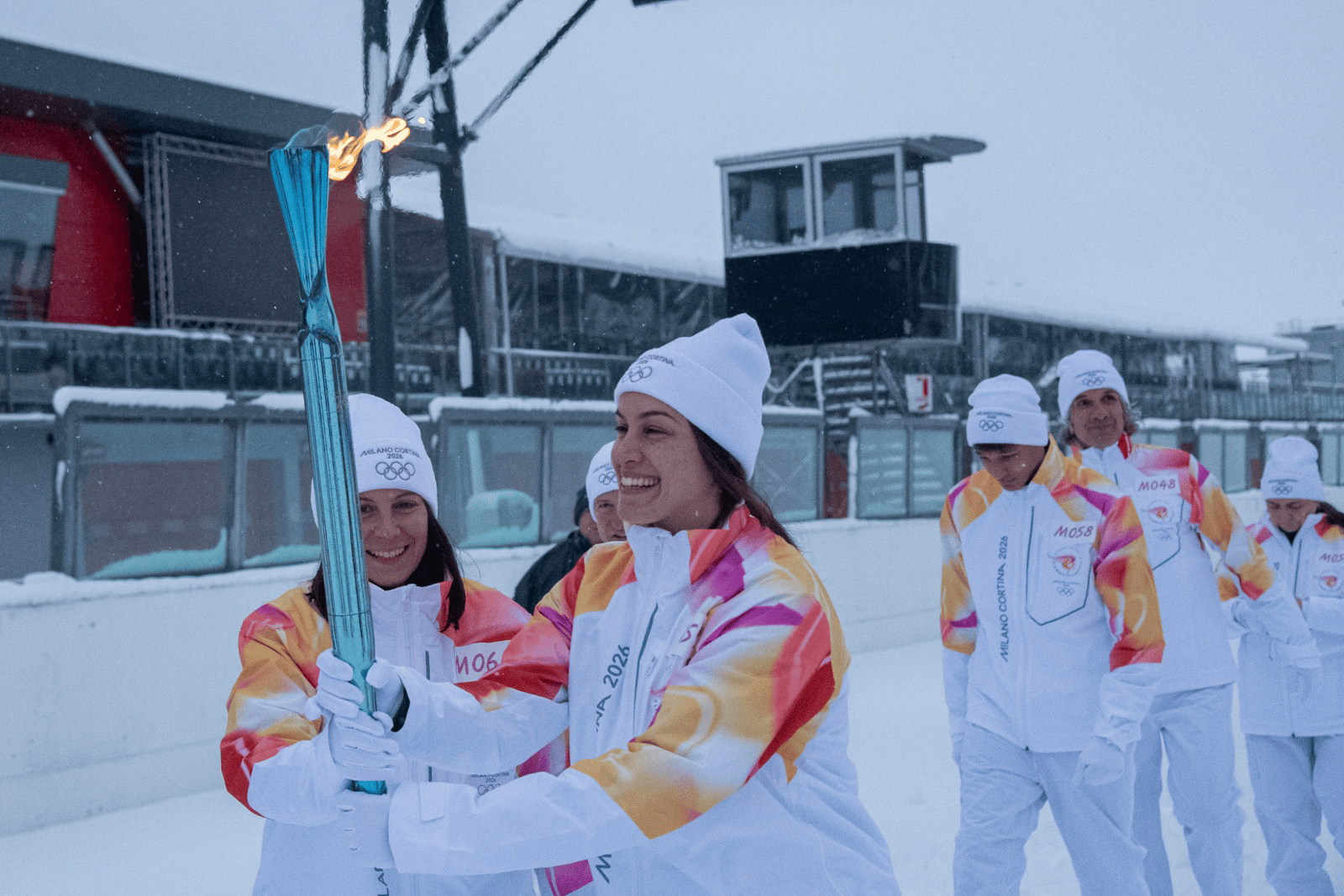
The Olympic torch making its way across Italy, carrying the spirit of Milano Cortina 2026 through cities, communities, and snow
Turning Spirit into Action
A question immediately comes to mind: how can we bring this Spirit into our everyday lives?
I am convinced that the best way to reconnect with the Olympic Spirit is to experience sports infrastructures during our own daily routines. This requires thinking in terms of networks: urban systems for sport, such as public fitness routes; sustainable mobility systems, like cycling paths; and infrastructures embedded in open landscapes, such as ski trails. Thanks to these networks, everybody can be an athlete at their own level.
The Olympic spirit is not confined to stadiums or extraordinary events. It lives in continuity, in accessibility, and in the renewed connection it fosters between us and Nature. This is evident in disciplines that rely directly on the forces of Nature, such as sailing, hiking, diving, and others.
The report “Sports for People and Planet”, recently released by the World Economic Forum, offers a particularly powerful insight: a thriving sports economy is inseparable from a thriving natural environment. The two are fundamentally intertwined. Yet the sector faces a double imperative: to safeguard the natural systems that make play possible and to reduce its own footprint.
To imagine the sport of the future, it becomes essential to turn back to the wisdom of Nature — to listening, knowledge, and understanding of certain mechanisms that lead us to internalise what lies beyond a single project.
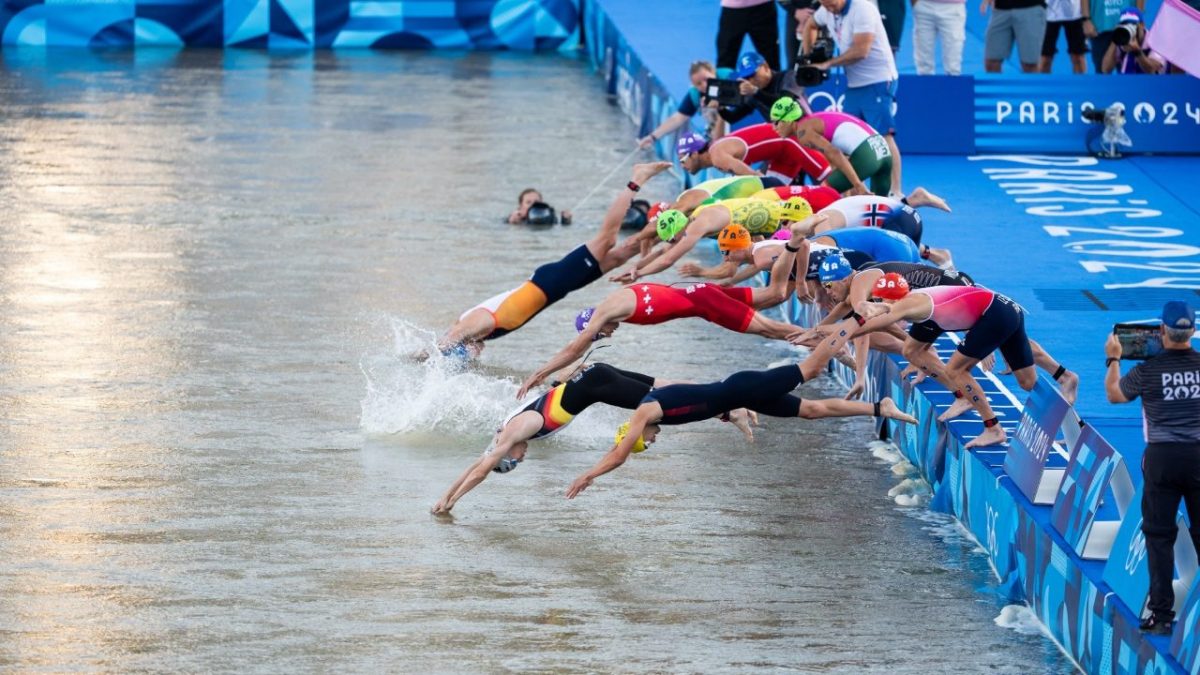
Paris Olympics 2024: athletes dive into the Seine River at the heart of the city
The Paris model: Nature at the core
In the summer of 2024, Paris surprised the entire world by achieving the great goal of making the Seine swimmable. Without stadiums or medals, the river flowing through the Ville Lumière became the true champion of the Paris Olympics. A lasting legacy in which Nature takes the stage.
What is the legacy of the Milano-Cortina Olympics?
By leveraging a network that links regions, cities, and neighbourhoods, the Milano–Cortina Olympics connect cities, villages, and communities that engage with Nature every day. The Alpine landscape — often associated with exclusivity — reconnects with Milan as a laboratory for change, creating a more balanced relationship between territory and communities.
At LAND, we are used to seeing all spaces dedicated to sport as more than “facilities”: they can act as urban living rooms, where recreation, biodiversity, and community life reinforce each other. Projects like Parco dello Sport Al Maglio in Lugano, Bolzano’s Ringpromenade, Vision Semmering in Austria and CariGOGREEN in Friuli Venezia Giulia reflect this approach: sport embedded in the landscape, connected to river corridors, paths, and everyday mobility — a park that works as both infrastructure and ecology.
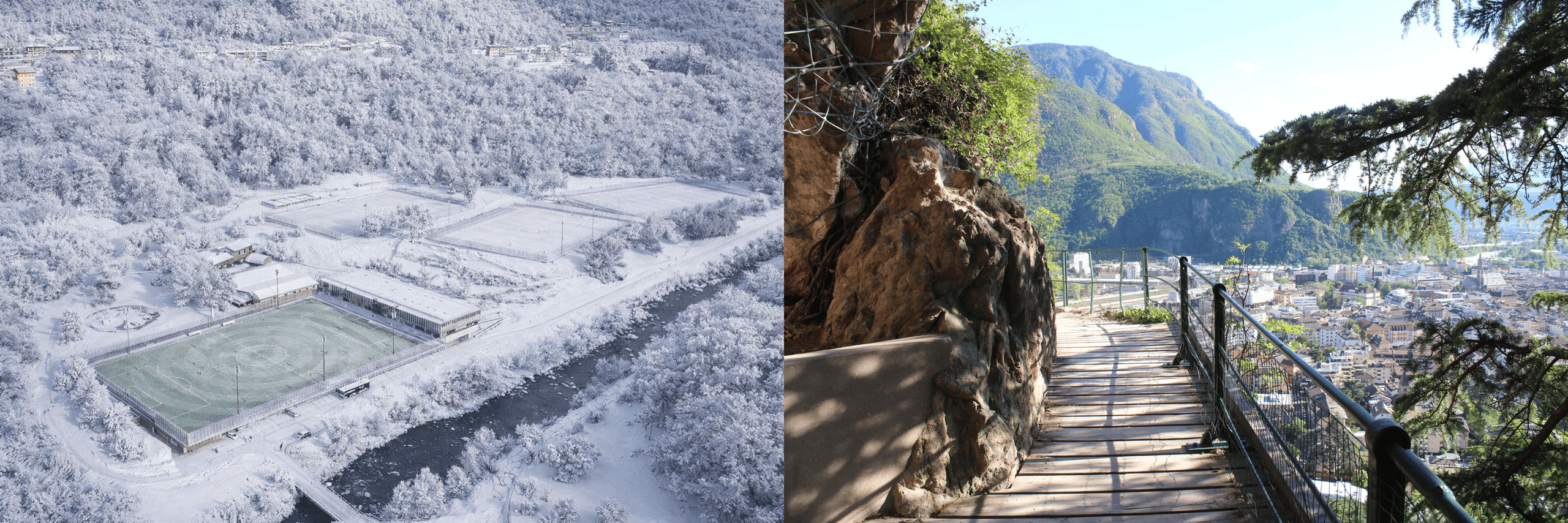
Parco dello Sport Al Maglio (left) | Ringpromenade (right)
The Bigger Picture
Therefore, the Olympics send a message that goes beyond Milan and expands the vision to its entire Region, conceived as a greater urban ecosystem. From Milano–Cortina, we should start thinking in terms of Milano–Monza, Milano–Pavia, Milano–Varese — reading the territory through its green and blue infrastructures.
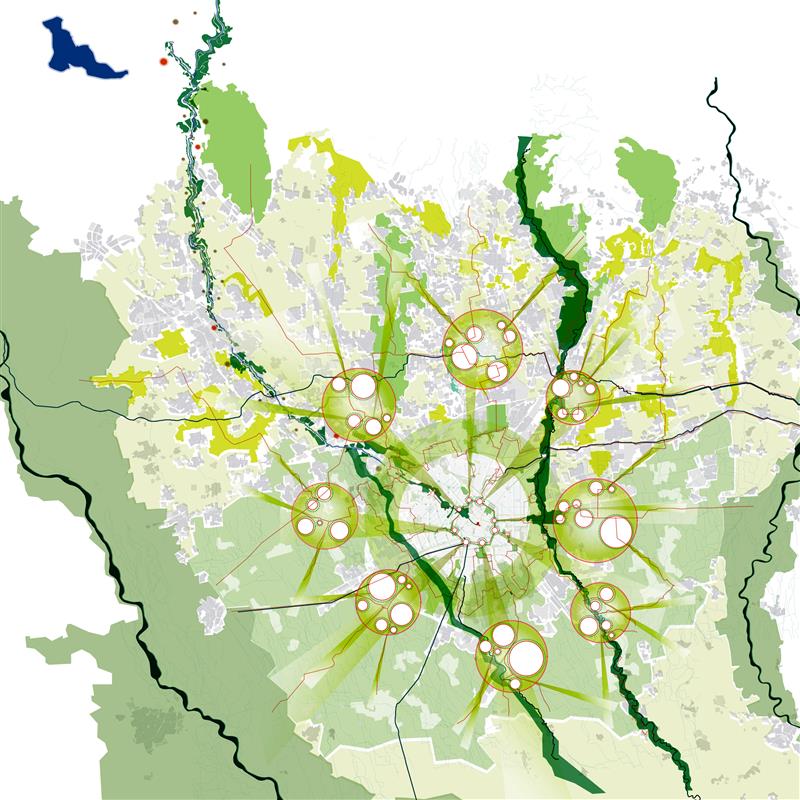
The Green Rays strategy going beyond the city into the region
It’s a matter of thinking of the city beyond its limits, rediscovering an authentic relationship with other urban centers. Greater Milan takes shape when it recognizes neighboring cities as partners in shaping its future, both in terms of the quality and quantity of infrastructure. Sport represents just one of many networks capable of connecting the urban system with its outskirts.
I have personally witnessed the benefits of this stronger interconnectedness in Milan during previous major global events, such as the 1990 Football World Cup and Expo 2015.
Now, the question is no longer merely “how do we host successful Games?”; it becomes: “how can we translate Olympic momentum into a long-term culture of wellness, sustainable and mindful of planetary limits?”
Wellness and Nature
What does wellbeing mean? It is more than sport. It is a behaviour that involves everyone, athletes and fans alike, regardless of age, nationality, or physical capabilities. An inclusive ecosystem in which athletes and supporters become one.
This is why I find the Milano Wellness City 2030 vision so relevant: it reframes the Olympics as a catalyst for prevention, community, and a more human-scale urban ecosystem — with Nature as a daily ally, not a weekend luxury.
In competition, as in the Olympic spirit, we overcome boundaries — administrative, mental, cultural. Because sport is not only movement, but also strategy, focus, endurance, willpower, and physical strength ready to be unleashed. This liberation is made possible by LANDSCAPE.
Because LANDscape has no borders.
Looking beyond the Games, Milano–Cortina can become a spotlight that changes habits. But only if we choose a broader vision — one that weaves together science, sport, tourism, art, business, food, health, and sustainability.
When practiced in Nature, sport becomes a transformative energy: a powerful reconnector and tool for growth, regeneration, and social cohesion. If we use it wisely, it can generate a tangible, shared, and lasting Olympic and Paralympic legacy.