Newsletter #24: From the Ground Up: From Local Remedies to Systemic Change
November is a month of transition. The light softens. Leaves change colour. The landscape pauses — not to end, but to prepare for renewal.
In this quiet shift I am reminded that true transformation — in nature as in cities — is not a sudden revolution. It is continuity. Care. A patient sequence of regeneration.
While our work is often concerned with the green and the blue, this season especially reminds us to focus on a third colour — brown, the colour of soil. Soil is the invisible infrastructure of every transformation. Without it, no green can grow, and no blue can flow.
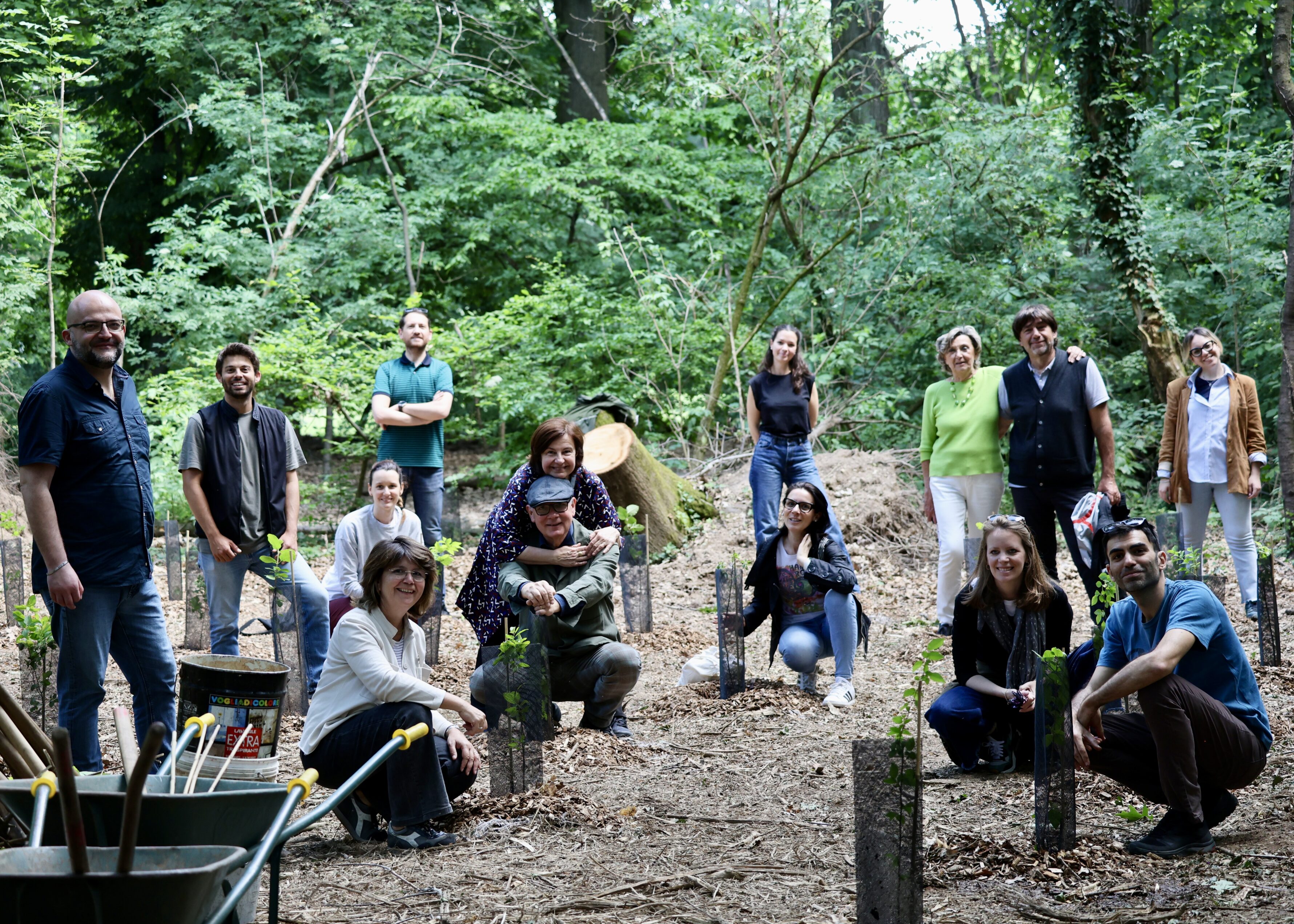
Planting 30 trees at Boscoincittà with LANDlers in May 2025
In his recent essay “Edaphischer Raum” (Lettre International 149, 2025) my friend and philosopher Volker Demuth shares a deeply moving meditation on soil — as matter, metaphor, and living ground. It resonated with me both as a landscape architect and as someone who has long believed that soil is not just a resource, but a carrier of life, memory, and connection.
As a trained gardener, I learned that soils support slow life-forms — teaching us that not all growth follows the pace of progress. The dialectic of soil and landscape, in which the human being is seen as a “terrestrial creature” who “produces landscapes,” leads to a holistic understanding of soil — as a unity of plants, animals, minerals, and microorganisms: a living organism in itself. Soil is more than just the ground we walk on. It reminds us to cultivate “integral landscapes”, grounded in an ethic of coexistence — landscapes in which humans see themselves as part of a greater web of life.
This reflection accompanied me to the Biennale of Architecture in Pisa, where I had the privilege to share my Lectio Magistralis on “Nature as Infrastructure and Engine of Urban Transformation.” Walking through the exhibition halls of the Arsenali Repubblicani, surrounded by models and drawings from around the world, I felt once again: Nature is not a backdrop — it is the very infrastructure of our future.
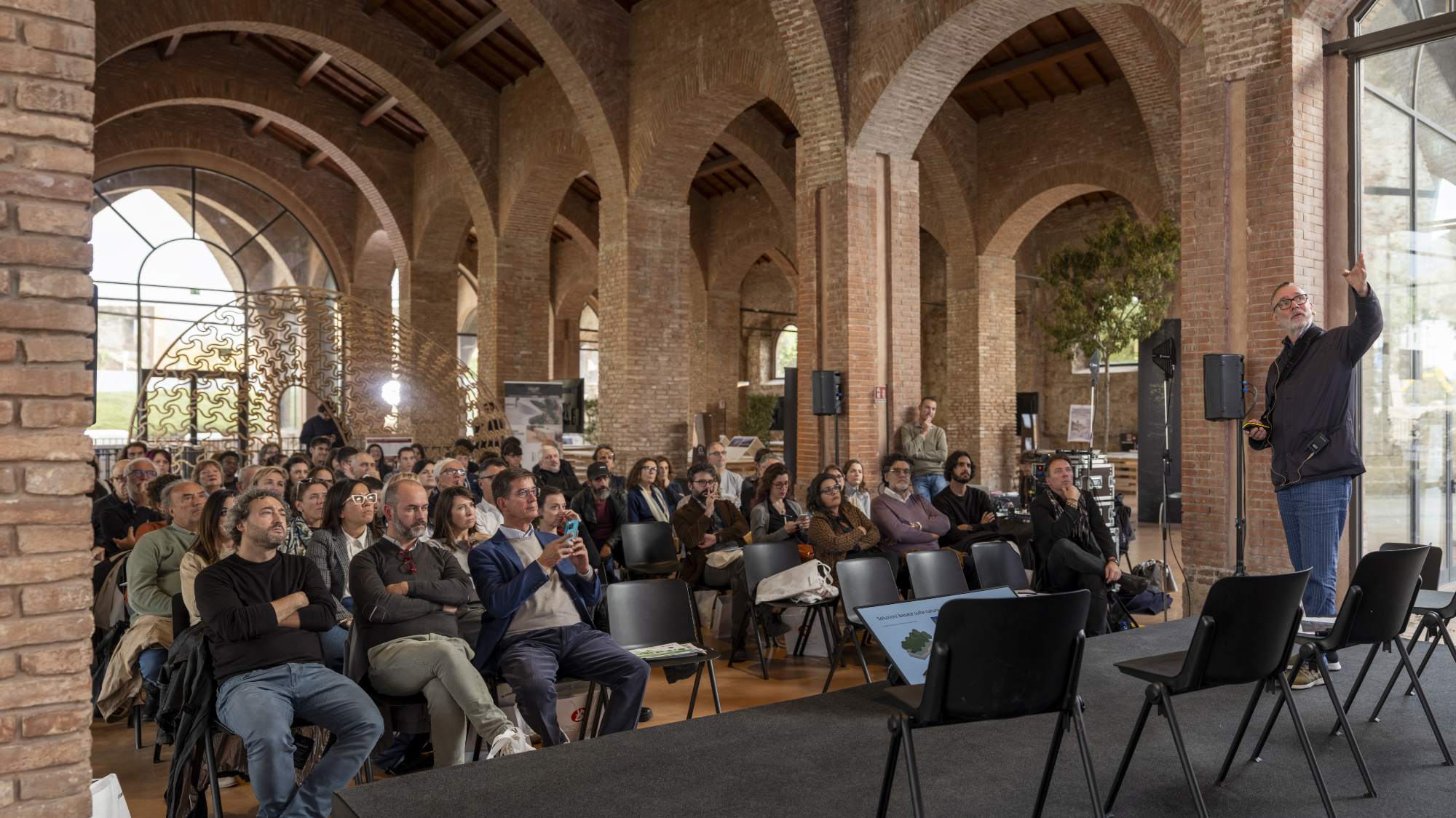
Lectio Magistralis at Biennale of Architecture in Pisa on October 24
Six years after the edition titled “Tempodacqua”, when our reflections centered on Water-based Cities, returning to these halls with Nature taking an even more prominent role in urban planning underscores the growing need for new formats that integrate climate resilience with social priorities.
A meaningful example comes from Piazza dei Miracoli, which I had the pleasure of visiting before my contribution. This masterpiece stands as a timeless demonstration of how the dialogue between Architecture and Culture continues to inspire innovative approaches, cultivating that vital “in-between” which connects and enriches our public spaces.
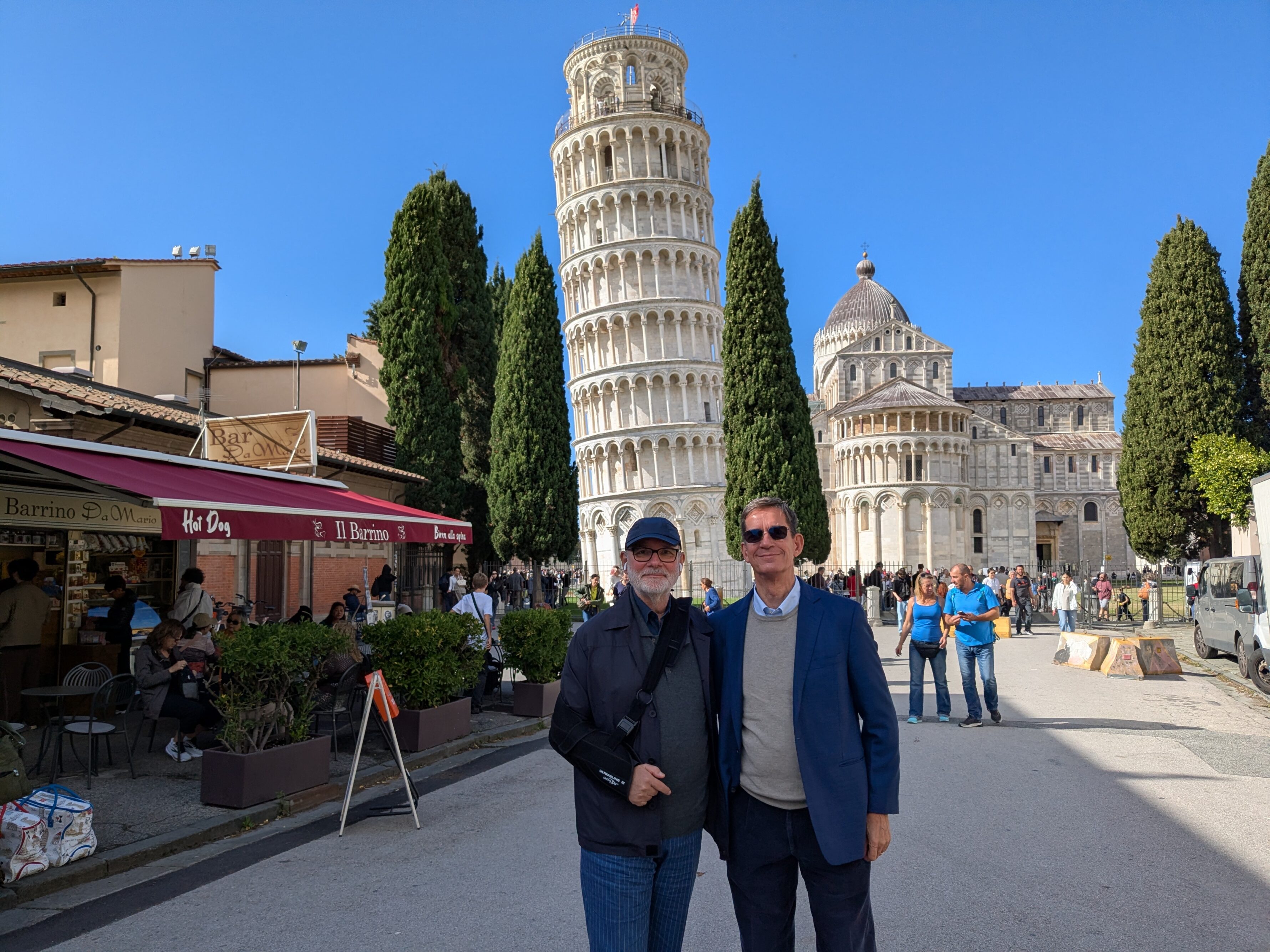
With Giovanni Sala at Piazza dei Miracoli in Pisa
From Compensation to Responsibility
To the audience in the room — including an entire class of future architects who inspired me with their questions and insights — I shared how our generation is living through a structural shift: from compensation to responsibility. For too long, we believed we could offset damage elsewhere. Now, every intervention — architectural, urban, or landscape — must generate a positive impact. This means valuing Natural Capital in municipal budgets, linking ecological health to social and economic wellbeing, and involving citizens not only as beneficiaries but as co-authors of transformation.
This is why we need Nature-Positive Cities: ones that give back more than they consume.
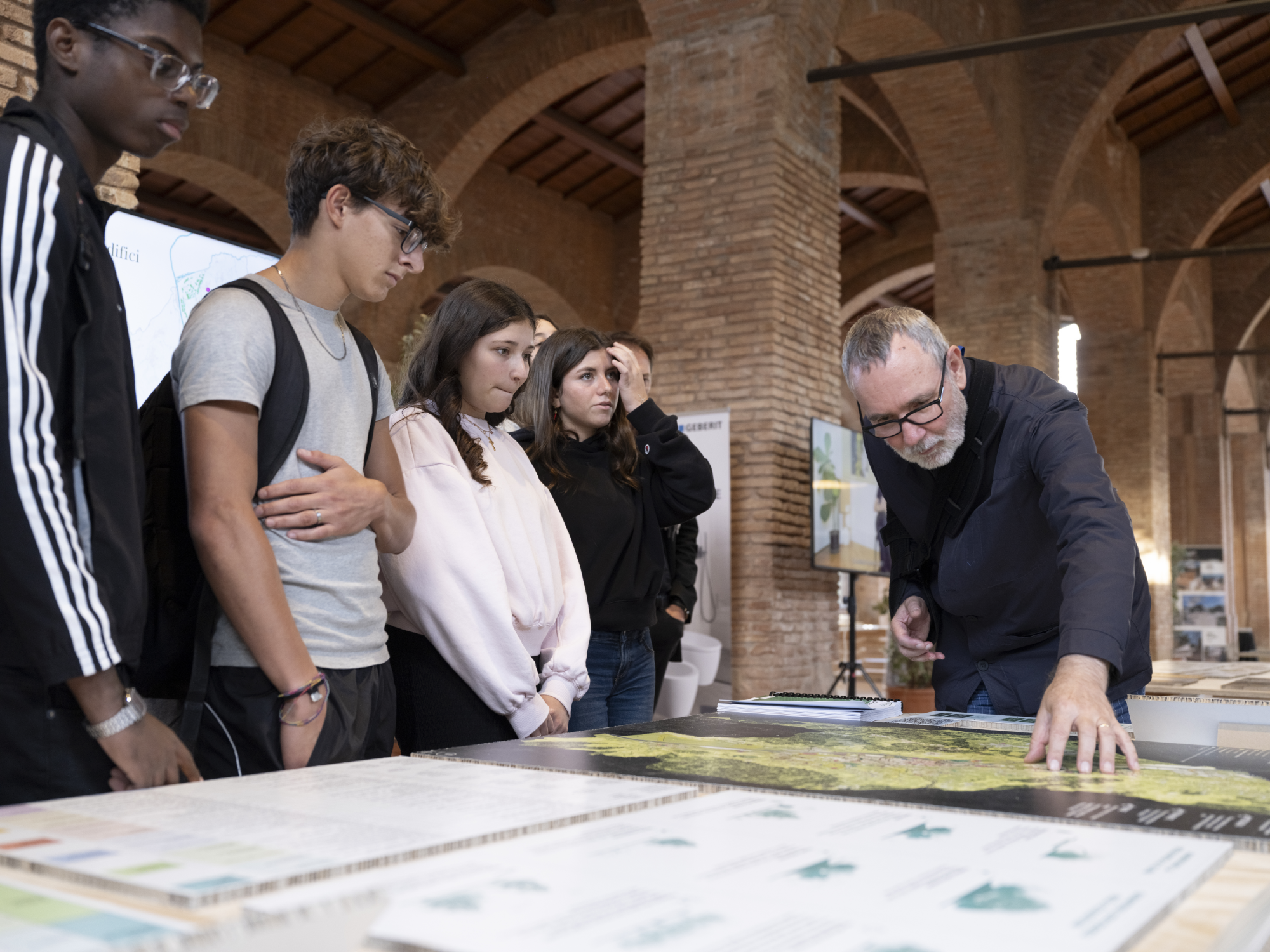
Sharing Vision Semmering 2030+ with a class of young architecture students
Nature-Based Solutions in Action
At the Biennale, LAND presented three projects that embody this principle — three different contexts, one shared vision.
1. Trento – Urban Green Plan for Comune di Trento (Italy), an adaptive and co-created Urban Green Plan with the local administration and university defines a forward-looking urban strategy where Nature, resilience, and social cohesion converge. Green and blue infrastructures become structural elements to counteract heat islands, expand biodiversity, and ensure inclusivity and accessibility. Eight strategic objectives guide the plan — from protecting landscape heritage to fostering cooperation with local communities and laying the foundation for a river park that reconnects the territory. Here, Nature-based Solutions are not decorative, but embedded in policy and design.
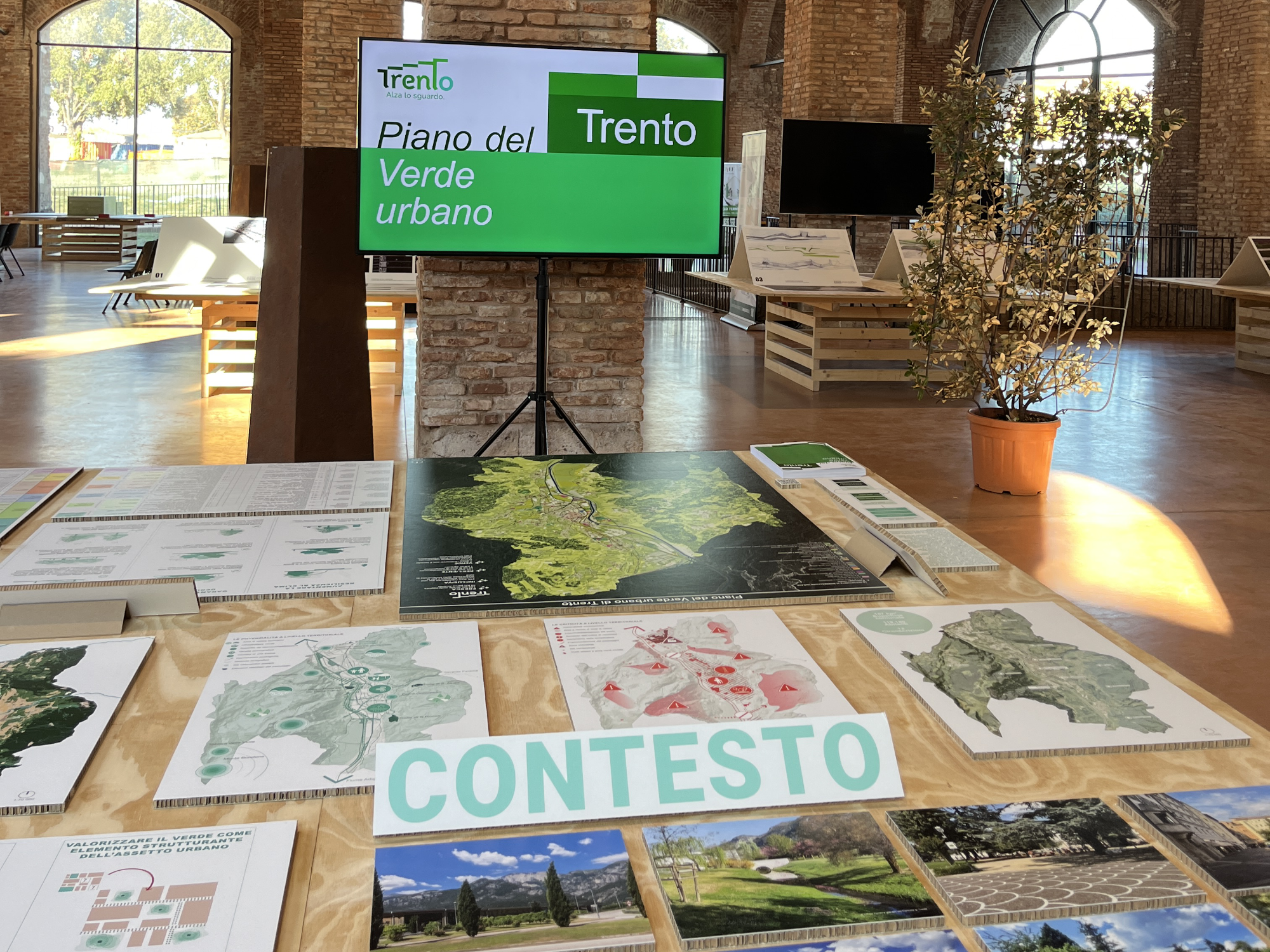
Exhibition table of the Urban Green Plan for Trento
2. Semmering 2030+ (Austria) In the alpine municipality of Semmering, once a jewel of leisure for Vienna’s society, LAND was invited to imagine a new future: Semmering 2030+, a masterplan that reconnects people and landscape through sustainable mobility, heritage restoration and recreation. Honouring the legacy of the UNESCO-listed railway, the project envisions a Naturpromenade that restores continuity and identity, integrating ecology, tourism, and culture. Here, landscape becomes the catalyst of regeneration, a living infrastructure linking natural beauty and memory.
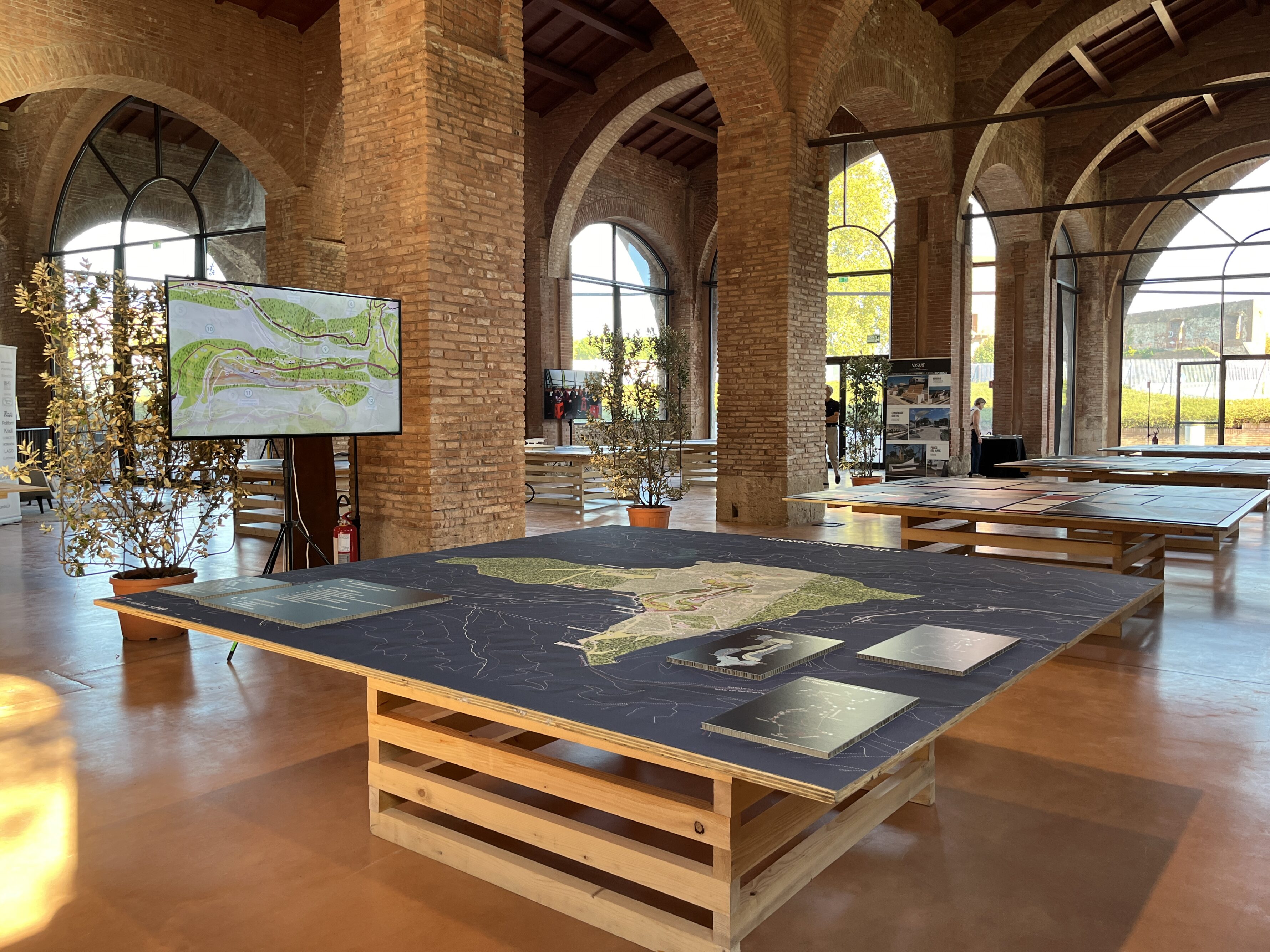
Exhibition table of the Vision Semmering 2030+
3. Fellbach – “Agriculture meets Manufacturing” (IBA’27) in Fellbach (Germany), within the Stuttgart Metropolitan Region, “Agriculture meets Manufacturing” — an official Internationale Bauausstellung 2027 StadtRegion Stuttgart (IBA’27) project — redefines the relationship between productive landscapes and urban life. Through participatory planning and research, an AgriPark connects farmland and industry, ecology and economy. Three spatial typologies — AgriMarkt, AgriLab, AgriReservat — express how Nature-based Solutions can make productivity visible, climate resilience tangible, and biodiversity measurable.
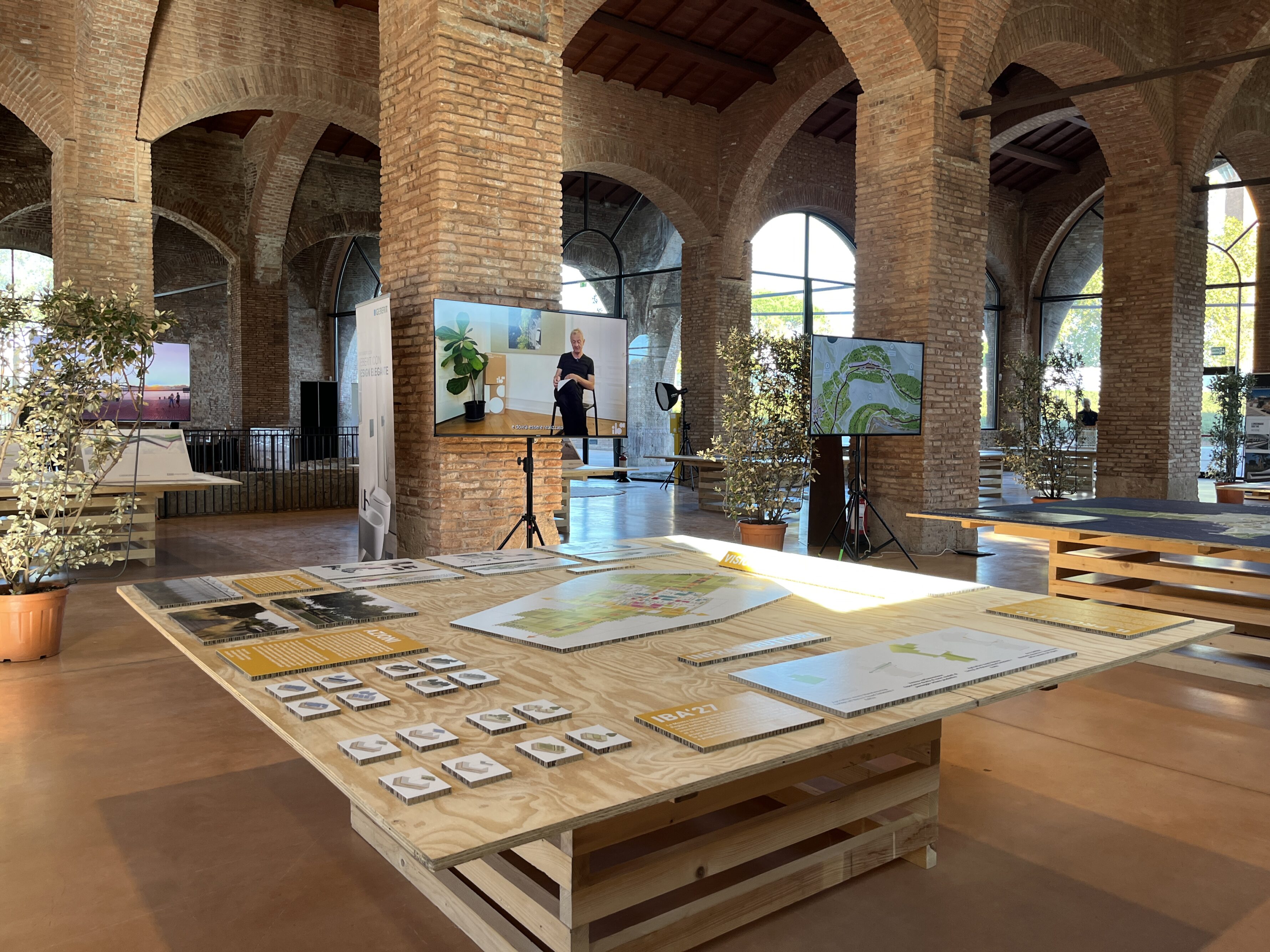
Exhibition table of “Agriculture meets Manufacturing”
Across all three, a common framework emerges:
- Integration, overcoming fragmentation by linking landscape, mobility, and public space;
- Participation, where communities and institutions become co-authors of change;
- Nature-based Solutions, where functionality and ecosystem value coexist to create visible, measurable sustainability.
Regions and Cities: The Real Frontline
The 2025 Annual Report of the European Committee of the Regions clearly echoes this idea.confirms what we see every day: Across Europe, cities and regions are leading the climate response: restoring wetlands, reforesting degraded land, managing water reuse, and redesigning urban areas for retention and resilience. Floods, droughts and contamination reveal that the crisis is systemic — and so must be the response.
Local leadership, the report says, “is not optional – it lays the foundation for Europe’s long-term resilience.” I could not agree more. Because it is precisely at the regional and municipal scale that transformation begins — where decisions are closest to the soil, to people, and to everyday life.
From Local Remedies to Systemic Change
Retention basins and parks – like our Parco dell’Acqua in Sulbiate-Aicurzio, designed for BrianzAcque – are necessary. But they are not enough. They treat the symptoms. We must address causes.
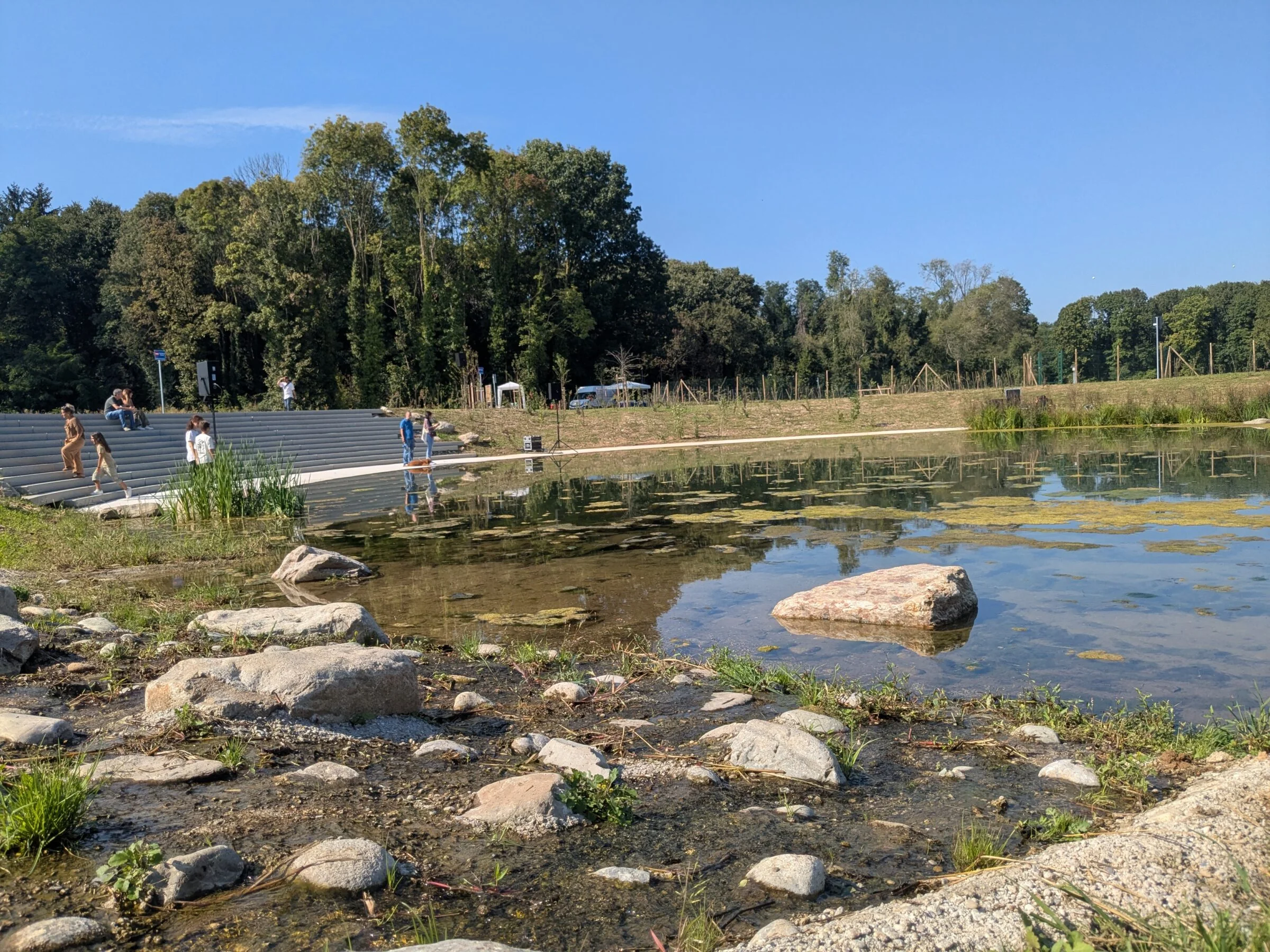
The inauguration of the Sulbiate-Aicurzio Water Park
We need to move:
- from isolated interventions → to connected ecosystems
- from emergency projects → to long-term design
- from local remedies → to systemic change
At LAND, we continue to believe that landscape is not the result of transformation — it is its starting point. If we recognise Nature as infrastructure, planning becomes an act of care — care for ecology, economy and culture.
The soil beneath us — that brown thread linking all living things — teaches us patience and responsibility. Nature doesn’t wait. But it rewards those who give back more than they take. If we truly recognise Nature as infrastructure, then planning becomes an act of care — one that reconnects us with our soils, our waters, and with each other.
The aim is not only to design better cities, but to cultivate a new culture.