Newsletter #20: Cities Under Heat Stress – Urban Nature Is Our Best Defense
Summer has barely begun, yet across Europe and beyond, the signs of heat stress are already unmistakable. What used to be “a few hot days” has turned into weeks-long spells of extreme heat, threatening the health, comfort, and livability of our cities.
As United Nations Secretary-General António Guterres stated, “Extreme heat is no longer a rare event — it has become the new normal.”
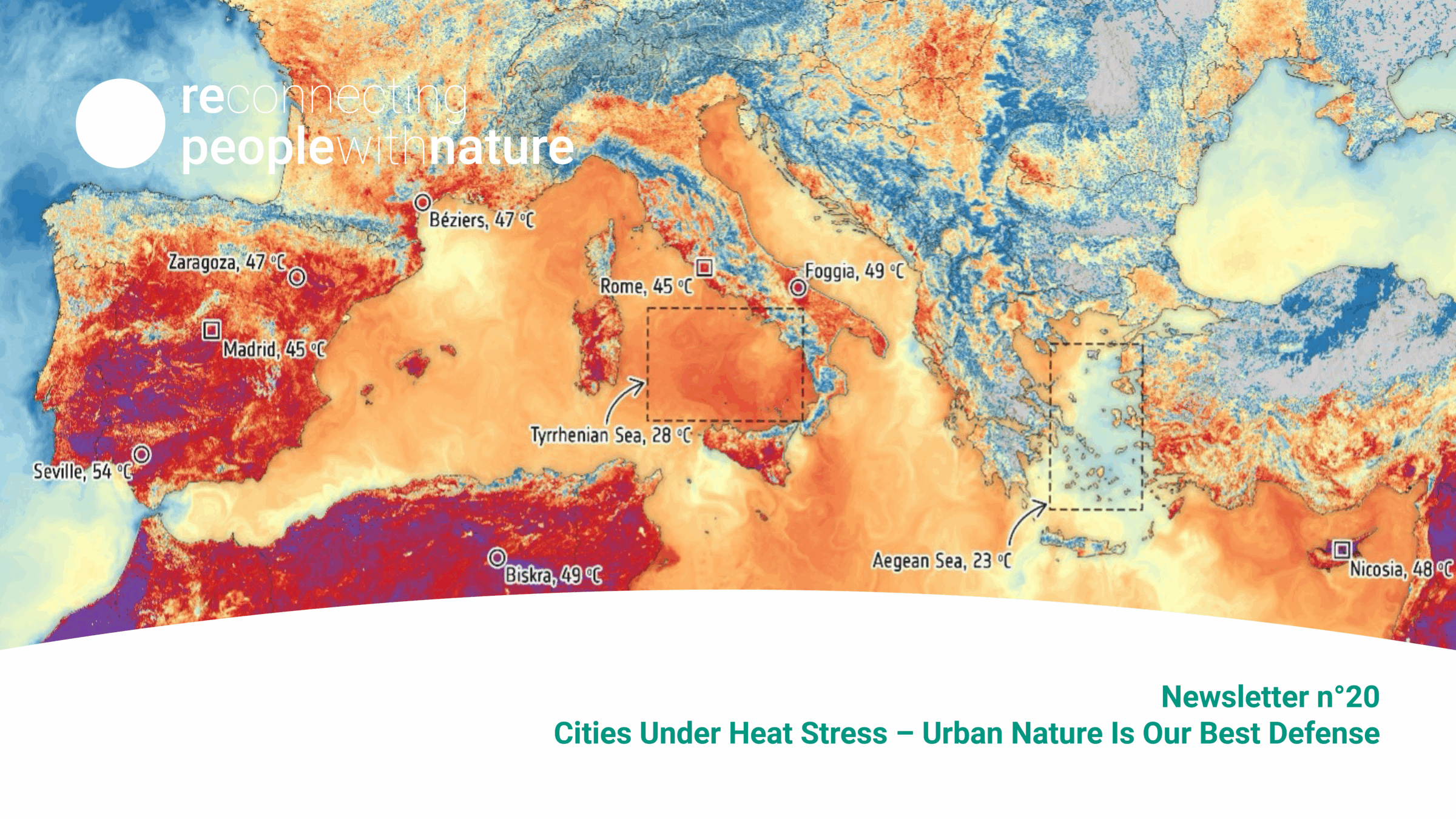
In recent weeks, a powerful heatwave has gripped large parts of Southern Europe and North Africa, pushing temperatures far above seasonal norms and triggering widespread health and wildfire alerts. On June 28, temperatures were so extreme that the freezing point rose above 5,000 meters. Glaciers across the continent are retreating rapidly, and the Mediterranean Sea is experiencing record-breaking temperature surges—up to 5°C above average in some areas.
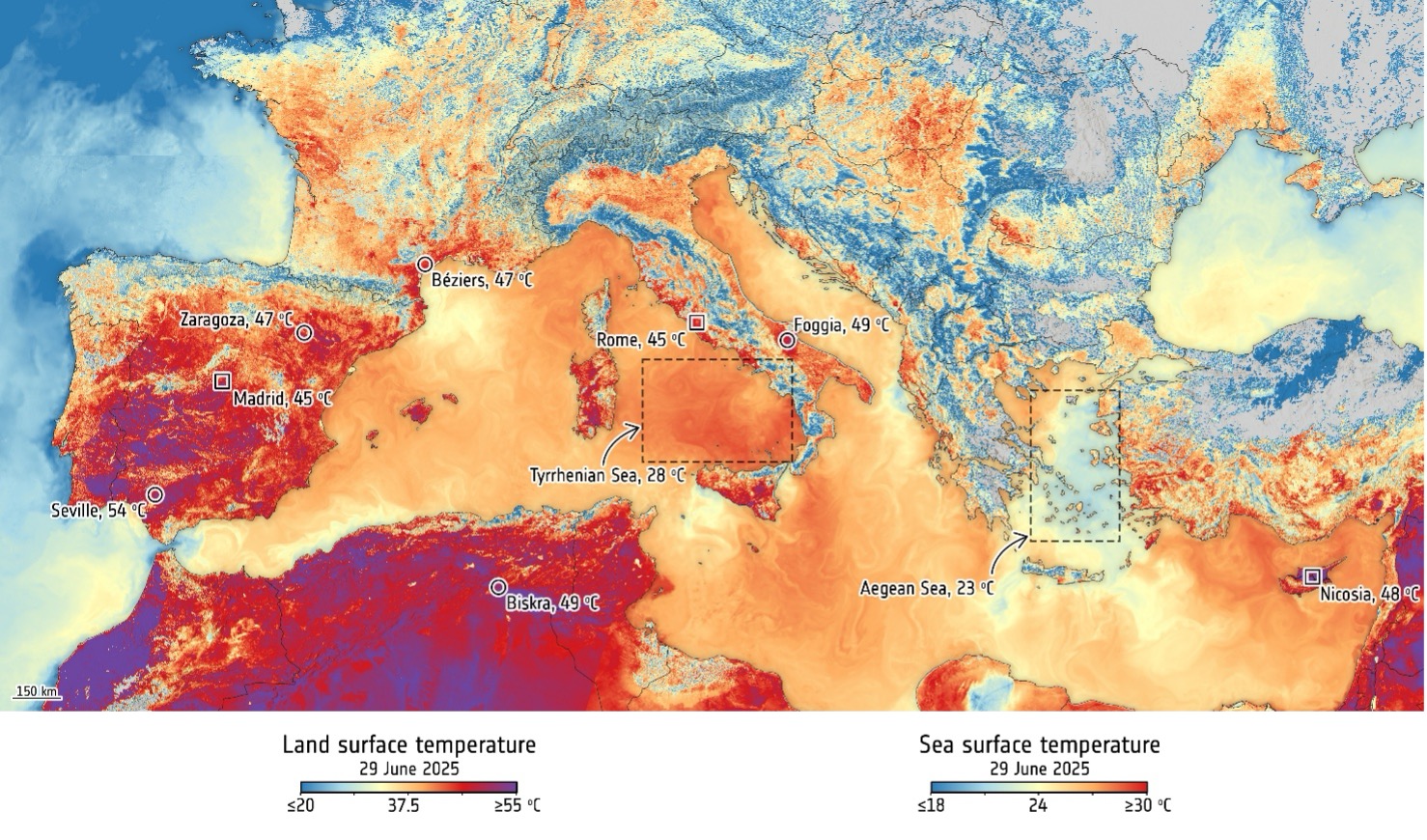
Copernicus Sentinel data (2025), processed by ESA
According to the latest Eurobarometer, 85% of Europeans consider climate change a “serious problem” and believe that fighting its effects must be a top priority to improve health and quality of life. Moreover, 81% support the EU’s target of achieving climate neutrality by 2050.
People are starting to realize that there is no more time to waste. On June 2, cities and communities worldwide came together for Heat Action Day under the hashtag #BeatTheHeat!, a global call to prepare for, adapt to, and protect ourselves from the growing threat of heatwaves. Initiated by the Red Cross Red Crescent network and supported by the European Commission, this coordinated day of action – featuring orange-lit landmarks, educational events, street performances, games, and public demonstrations – reminds us that while heat is a silent killer, many simple and life-saving measures already exist. But they must become a standard part of urban planning, not just emergency responses.
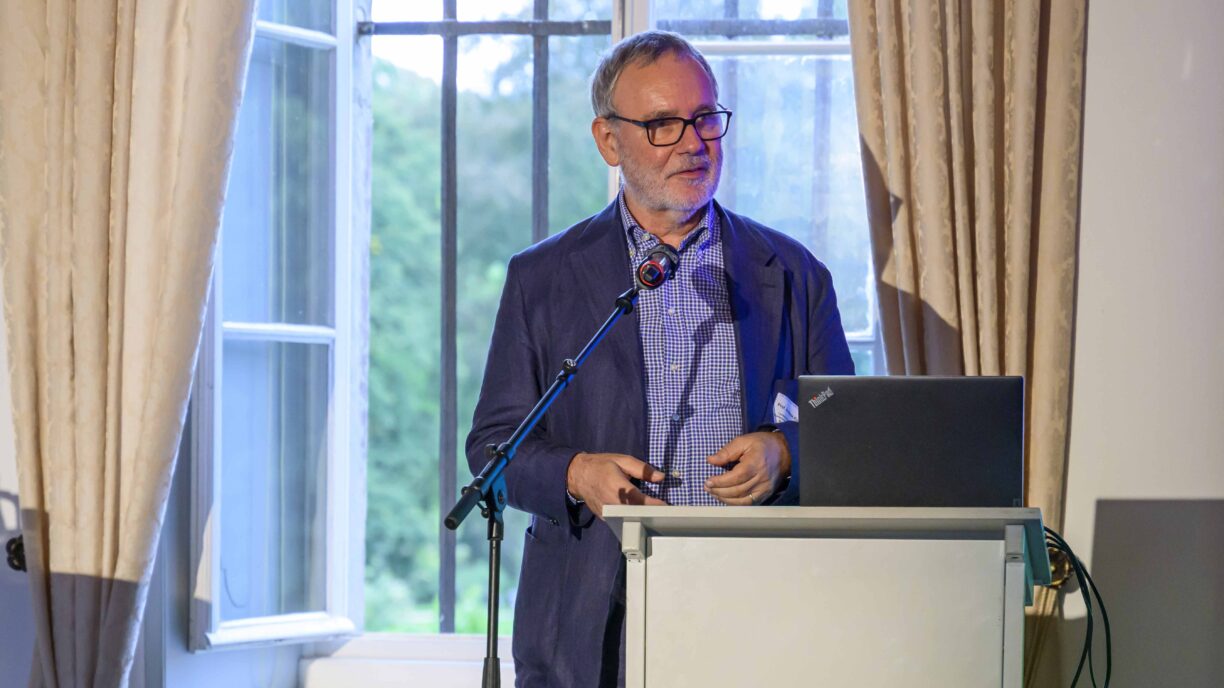
A recent heat-mapping study by German Environmental Aid revealed that over 12 million people in the cities of the federation already live in zones exposed to extreme heat. Many of these areas lack trees, shade, and water—turning everyday life into a serious health risk, particularly for vulnerable populations. I recently discussed this on RAI Südtirol, and I’d like to share some key reflections here because this is where landscape architecture comes in. More than any other discipline, it can turn grey into green, stress into resilience, and heat into habitability. It’s a matter of mindset.
This is a topic I’ve previously explored in the context of the future of ski resorts, emphasizing the need for both the tourism industry and travelers to rethink their approaches. The Alps, long-standing guardians of the “white gold,” are among the regions most exposed to change. Just look at Bolzano, a city nestled in a former volcanic basin that naturally traps heat. Yet the path toward climate resilience can be activated through strong community and municipal engagement – often the true vanguards of change. This transformation involves rediscovering the city’s “natural vocation” and improving climate conditions by removing asphalt, restoring air corridors, and embracing local geography—its rivers, slopes, and valleys.
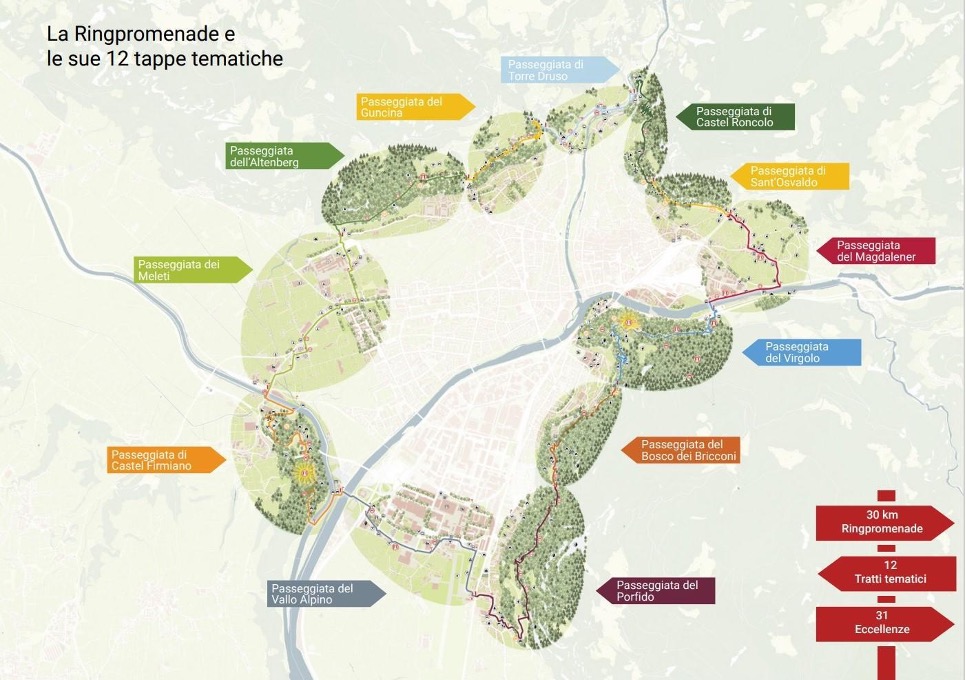
The Ringpromenade, the 30-kilometre soft mobility circuit encircling Bolzano
We’ve seen this with the Ringpromenade, a 12-stop route that brings people closer to nature just a few kilometers from the city center. And we’re seeing it in small but impactful projects like the renovated Piazza Schgraffer – once a heat island, now redesigned with trees, shaded seating, and permeable surfaces. These are the building blocks of climate-resilient cities.
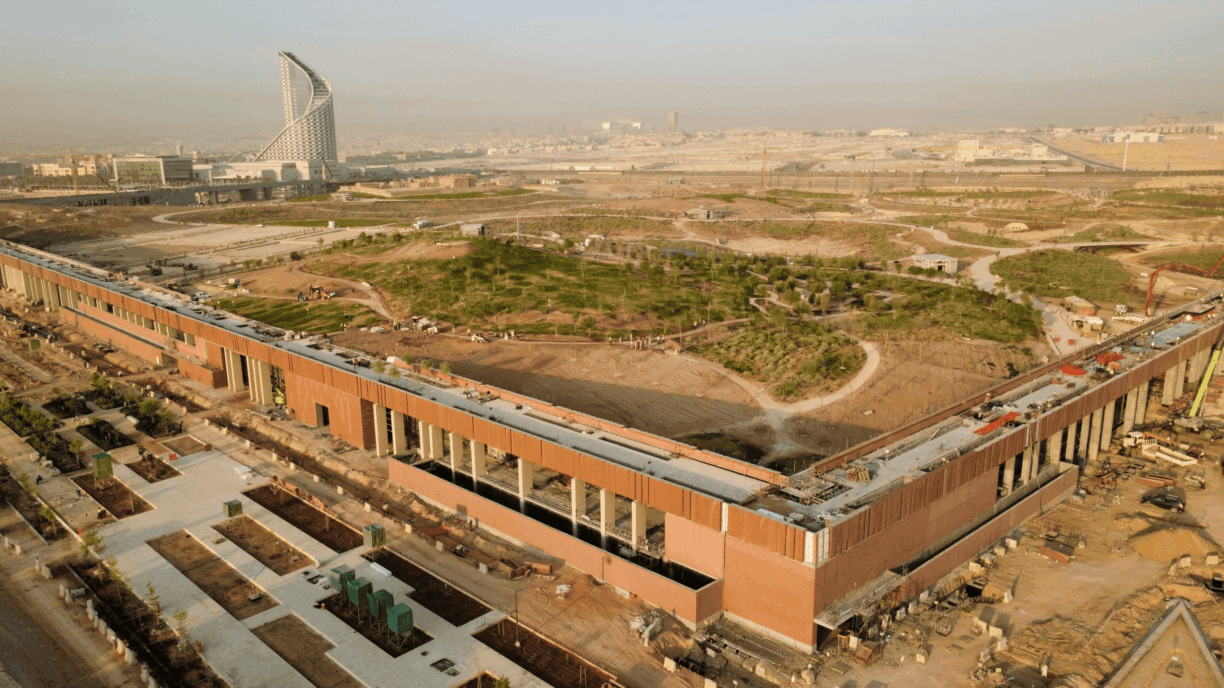
Shifting both scale and climate, the same principles apply. In Riyadh, Saudi Arabia, the under-construction Al-Urubah Park acts during extreme storms as a massive retention basin, holding 475,000 m³ of rainwater for 48 hours before gradually releasing it into the urban drainage system. This landscape-engineering marvel is not just technical infrastructure; it’s a digital, social, and environmental hub that can lower urban temperatures by several degrees. The tangible demonstration of how future-proof water management systems and specific Nature-based solutions not only foster climate adaptation and mitigation, but also spark social improvements within the urban fabric.
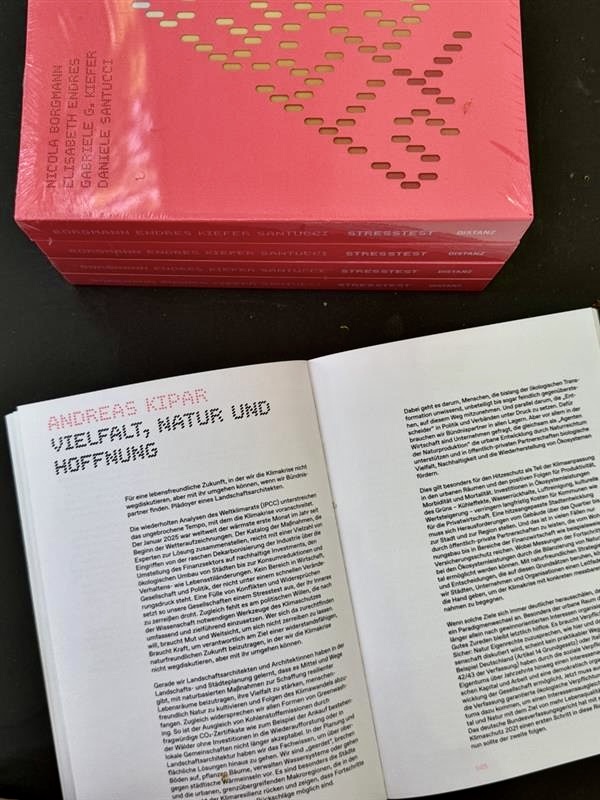
“Diversity, nature, and hope” on the Stresstest Catalogue at Venice Biennale
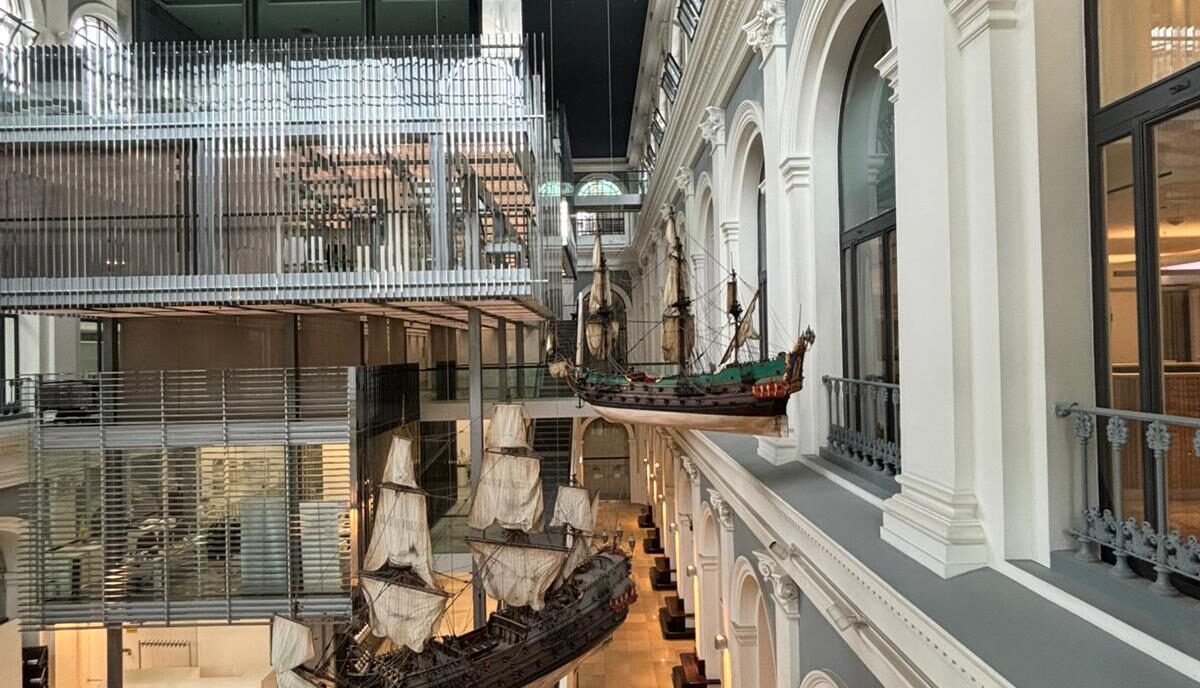
This is exactly the ethos behind STRESSTEST, the German Pavilion at this year’s Venice Architecture Biennale. The exhibition addresses urban climate crises head-on: extreme heat, heavy rainfall, pressure on health systems and infrastructure. Cities—once symbols of protection and progress—are becoming hotspots of vulnerability. But they can and must change.
As I noted in my contribution to the catalogue, the measures experts propose span a wide range—from rapid industrial decarbonization to the transformation of the financial system towards sustainable investment, from ecological urban restructuring to shifts in consumption habits and behaviors. There is no sector—economic, political, or social—that is not under intense pressure to change. Therefore, it is crucial that we also bring on board those who have so far remained unaware, indifferent, or even resistant to ecological transformation.
At the same time, we must increase political pressure on policymakers and associations. To achieve this, we need allies across sectors. But most importantly, businesses must step up—especially those that, as “agents of nature production,” can help drive urban transformation through nature-based strategies that promote biodiversity, sustainability, and ecosystem restoration in public-private partnerships. As Josef Nierling rightly stated a few days ago in Il Sole 24 Ore, the principles of the Nature-Factory Manifesto co-created by Porsche Consulting and LAND can spark the creation of a true “factory of nature” in our very cities and neighborhoods.
In this perspective, I see daily changes in Milan, the city where I live and mostly work that has made significant progress over the past 20 years: most recently with the Green Charta signed on June 6, 2025, and earlier with its commitment to Depaving. Still, the path hasn’t always been smooth. A recent article in Corriere della Sera criticized the renovations of public squares like Piazza Cordusio and San Babila, now described as “urban ovens” after losing their trees. And yet we have the tools and knowledge to avoid such missteps. Take, for example, the Urbalytics project, which uses data to map and understand urban heat islands. This type of collaboration is key to informed decision-making.
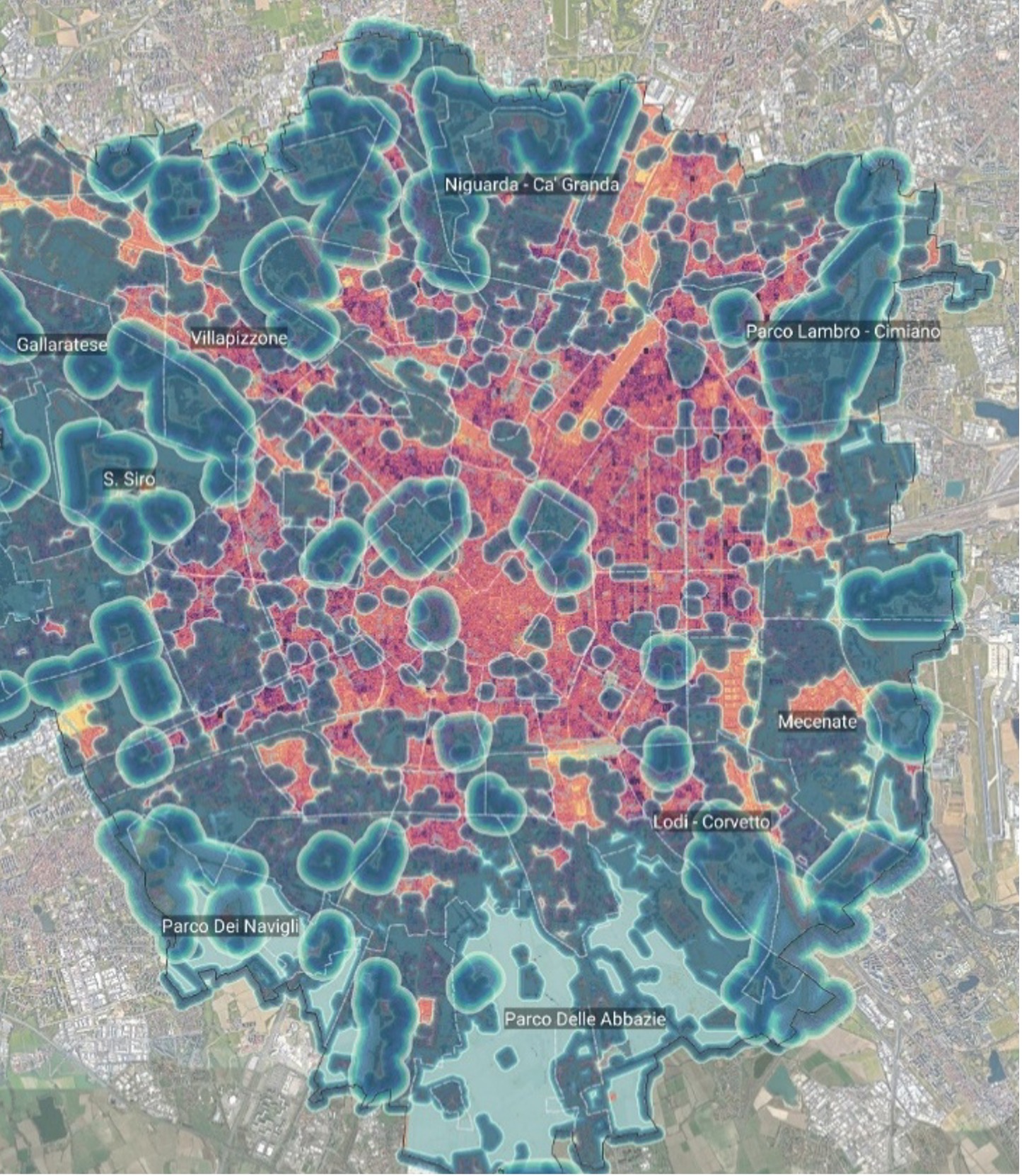
An exemplary Risk Assessment of Urbalytics mapping Urban Heat Islands in Milan
Ultimately, the solution is often surprisingly simple—and not even that costly: break open the asphalt and reintroduce nature in the urban fabric. But firstly, rethink our priorities.
It takes courage—but also communication. Not everyone immediately sees the value in green transformation.
If we want real climate justice, we must make urban nature the default, not the exception.