Connecting Milan and Montreal through Nature, Architecture, and Public Space
Though Milan and Montreal are more than 6,000 km apart, LAND’s borderless and collaborative vision has brought the two cities closer together, thanks to an ongoing academic dialogue centered on landscape, urban design, and education.
This past May, Valeria Pagliaro, General Manager of LAND Canada, was invited to give a lecture at the École d’Architecture of the Université de Montréal’s Faculté de l’Aménagement. The course is led by Alice Covatta, Head of the Master’s Program in Urban Design and a long-time friend of our community.
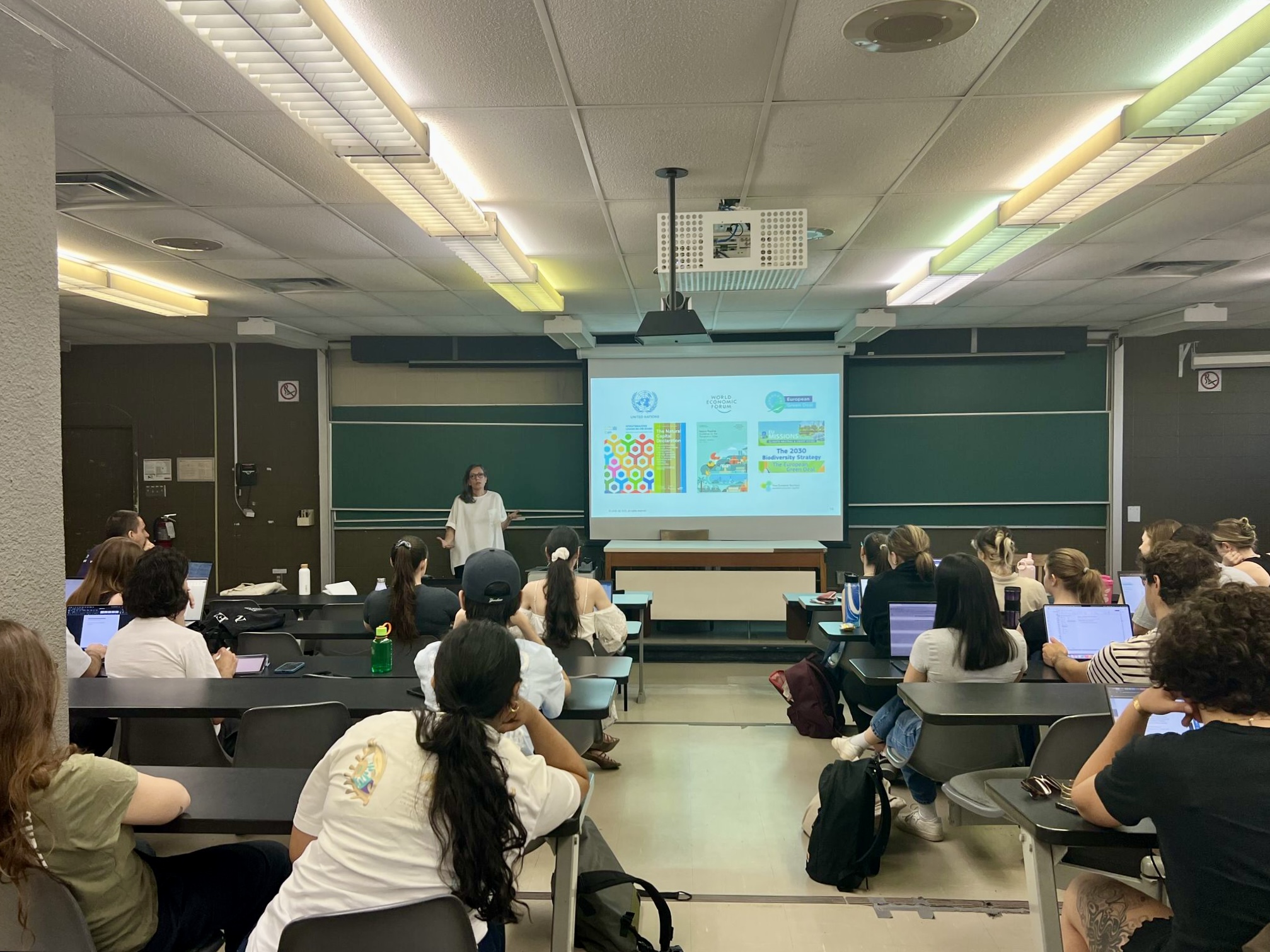
Valeria’s talk focused on Nature-Positive Landscapes at various scales, from individual sites to broader urban and regional systems. Drawing inspiration from the guidelines of our Nature-Factory Manifesto, she emphasized the far-reaching benefits of investing in a nature-driven economy and integrating ecological thinking into urban development processes.
- Do nature and architecture belong together?
- How can we ensure that public spaces are inclusive and safe for all?
- What role do digital tools play in amplifying our impact on biodiversity, climate resilience, and well-being?
These open-ended questions sparked lively discussion among Alice’s second-year students and laid the groundwork for a cross-continental exchange: a forthcoming visit to Milan to experience LAND’s holistic and collaborative approach to public space design.
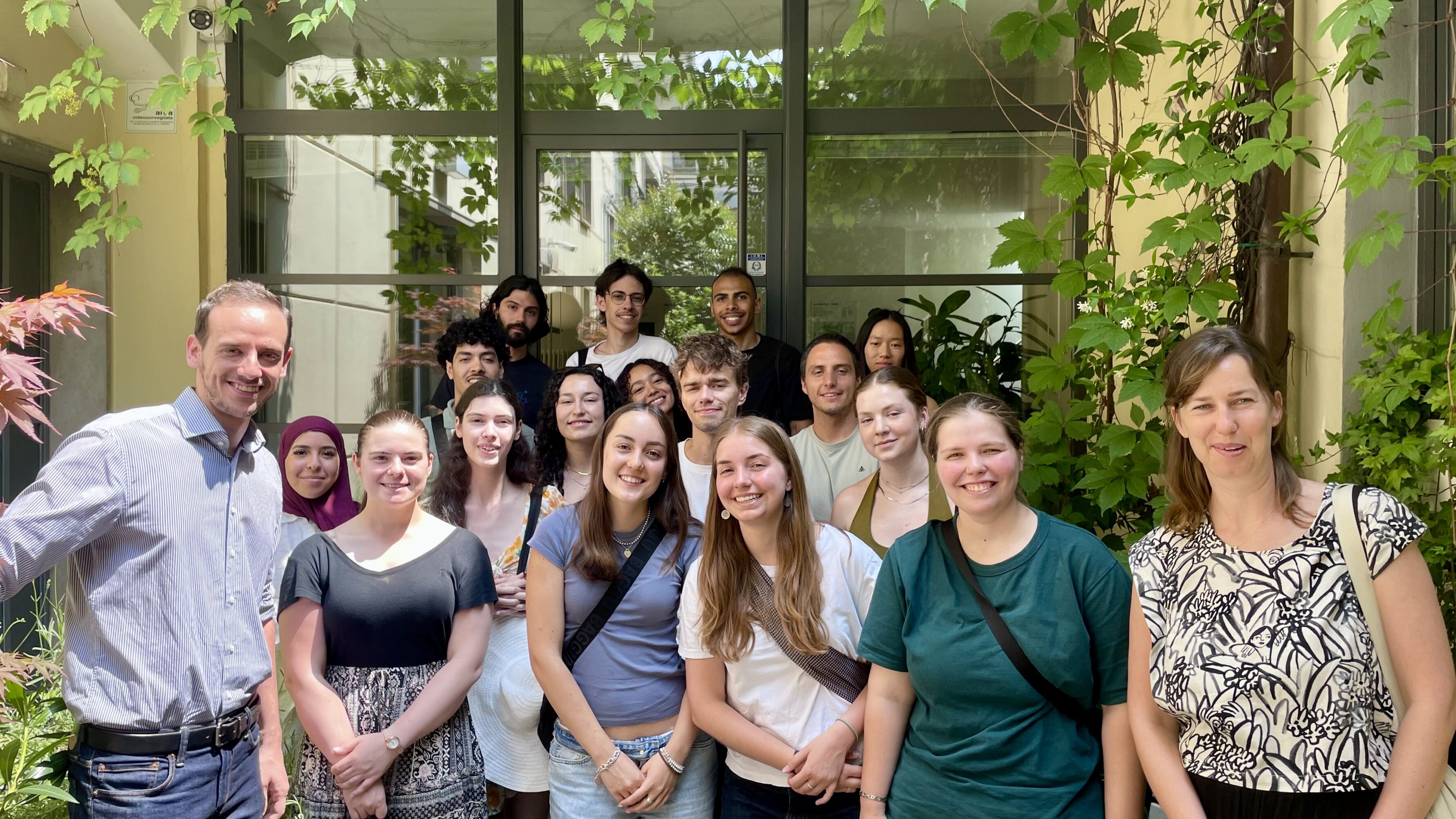
Just a few weeks later, Professor Covatta and her students traveled from Quebec to Milan for a study trip that was part of the academic Atelier international hors les murs. The program focused on providing an immersive experience of the relationship between architecture and public space in the context of one of today’s most pressing urban challenges: the intensification and densification of contemporary cities. The topic is particularly relevant for Montreal, which is poised to undergo one of the most significant densification efforts in North America in the coming years.
Welcomed by our communication team, the group explored analogies and key differences between the Italian model of dense, layered public infrastructure and the more horizontally structured Canadian approach, shaped by vast intact landscapes. A forward-looking, cross-country perspective was shared through reflections on how AI is reshaping our daily work by leveraging cutting-edge software, innovative tools, and the conceptual integration of Nature and Technology.
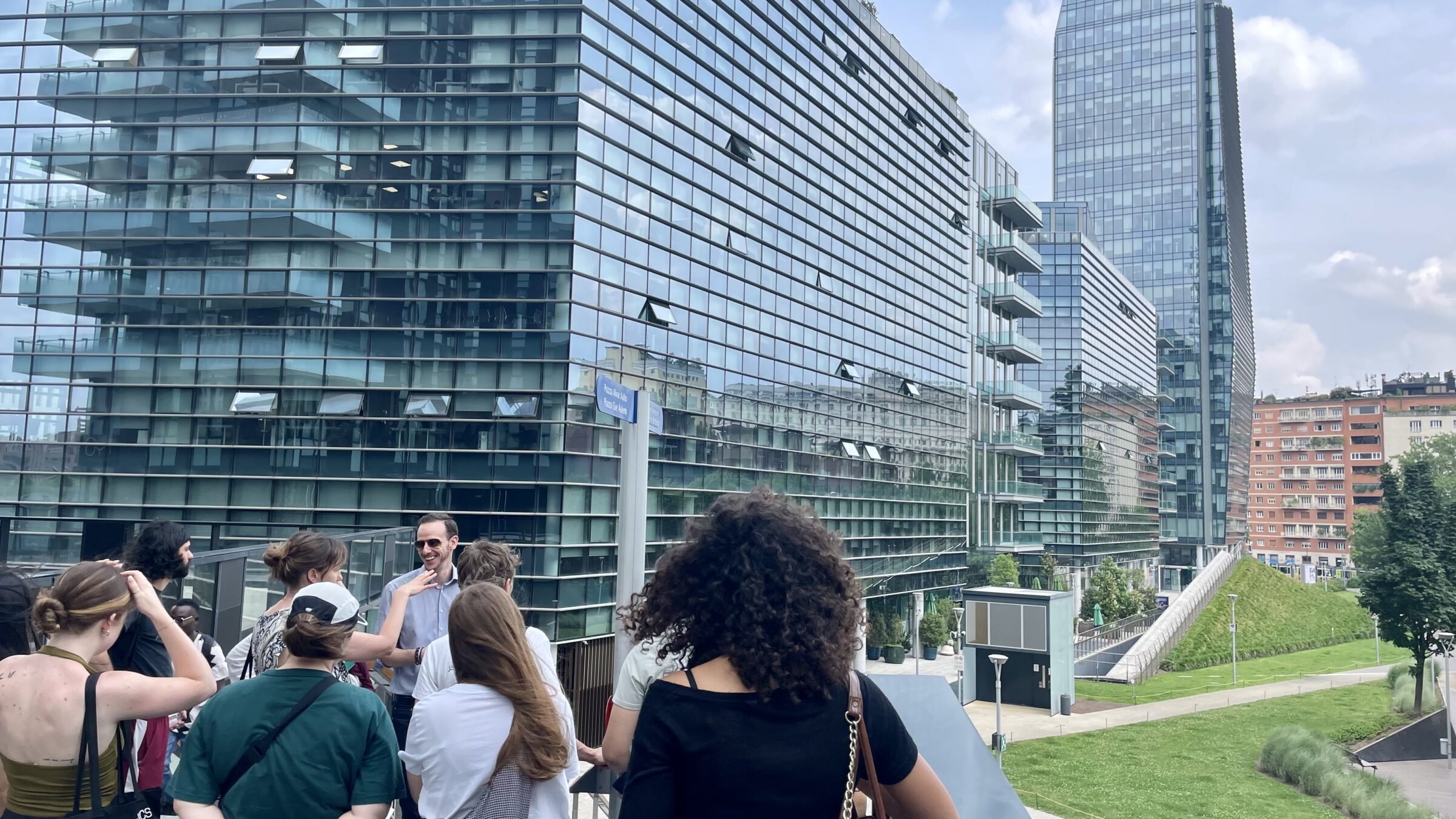
The visit offered a unique perspective on Milan’s urban transformation, which began in the 1980s with industrial decommissioning and culminated in the 2015 Expo, giving rise to a new concept of urbanity, more open and attentive to the needs of its citizens. Along this evolutionary path, in 2003 Andreas Kipar conceived the Green Rays strategy: eight ecological corridors designed to equip the city with a natural infrastructure synonymous with resilience, equity, and prosperity, connecting the center to the outskirts through slow mobility.
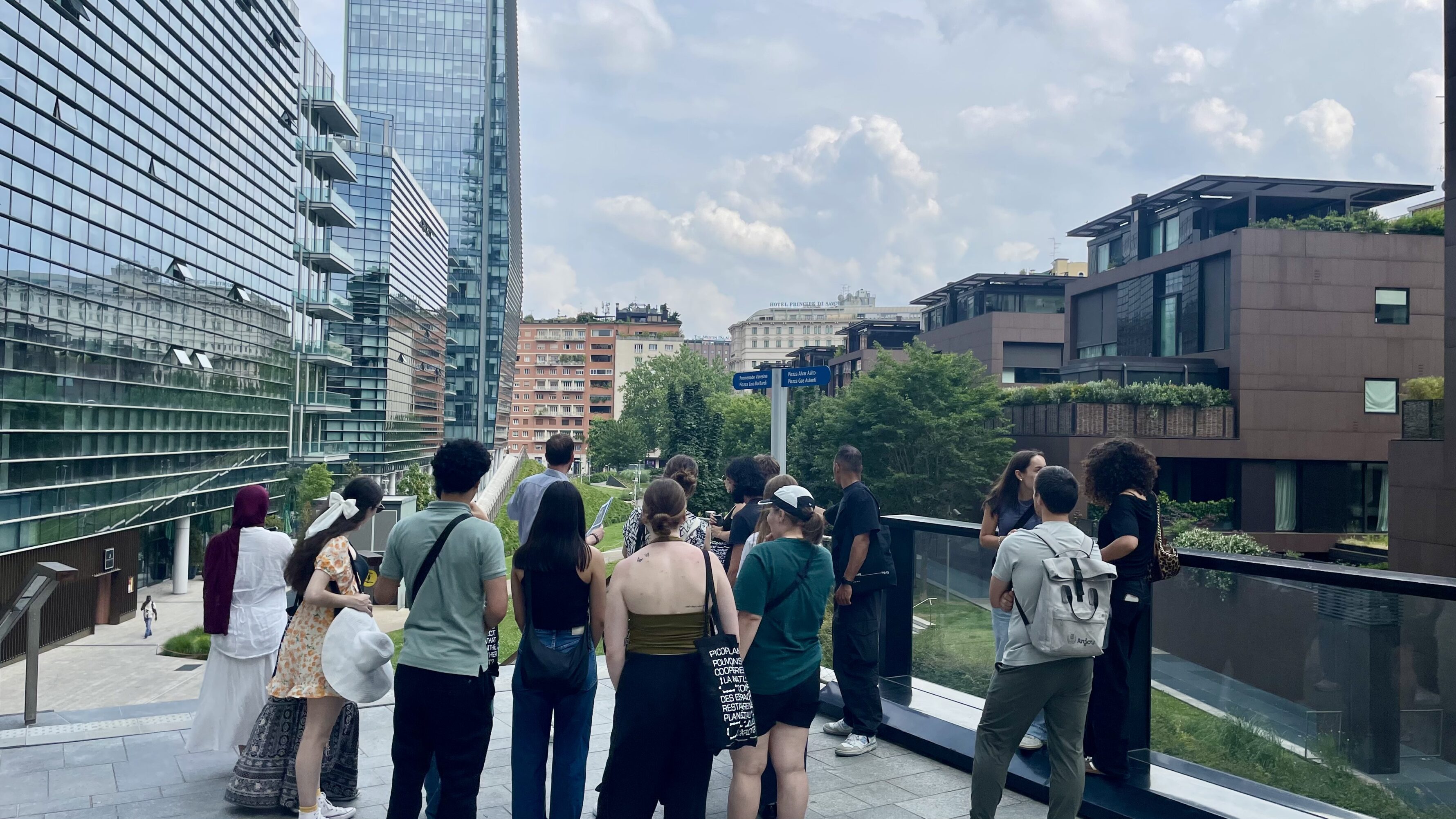
Among the many parks, green spaces, and projects along the eight rays, one that particularly impressed the students was the future redevelopment of Piazzale Loreto. Currently a vital traffic hub, the square is set to become a vibrant public space for gathering and relaxation, dedicated to social interaction in a green environment, with innovative spatial formats developed vertically across multiple levels.
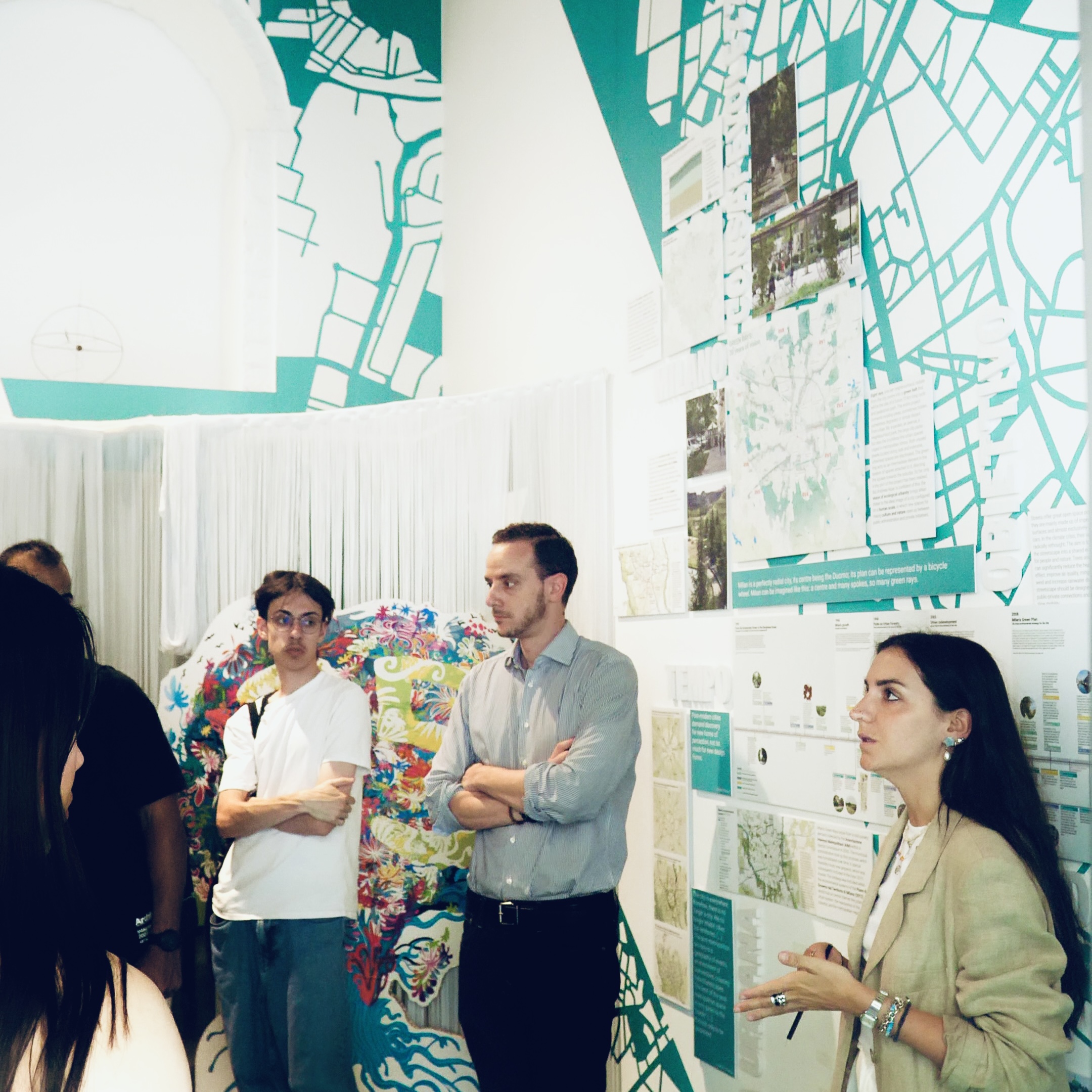
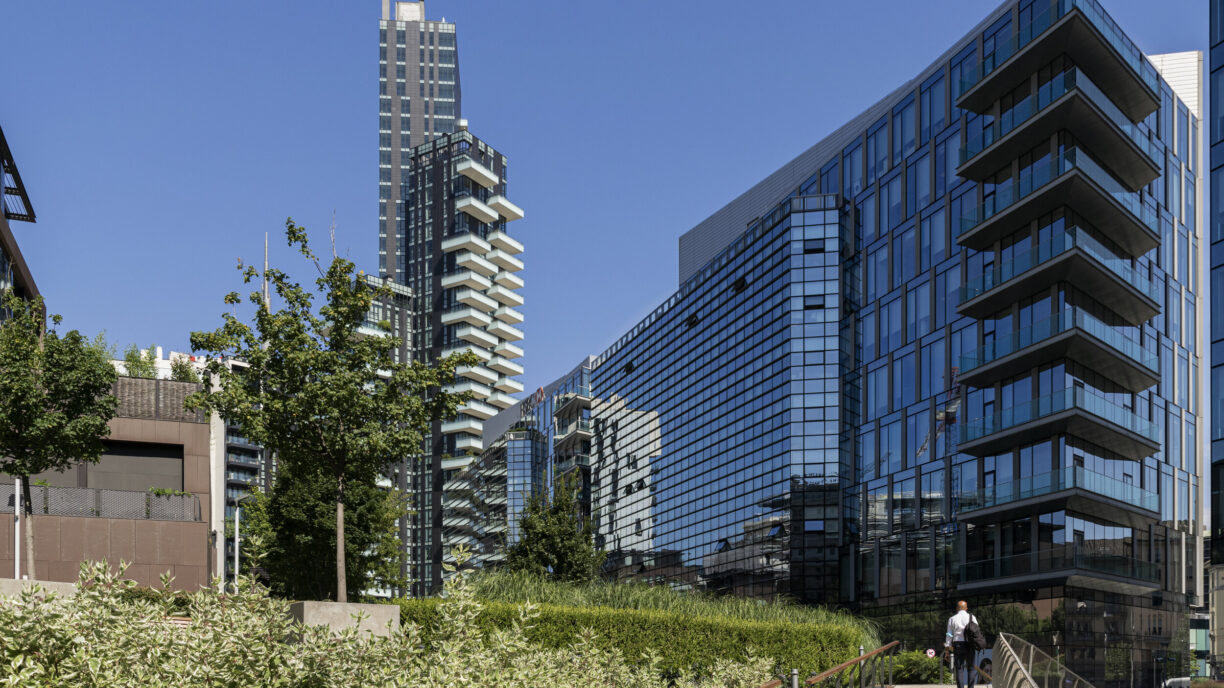
Under the warm late spring sun, the guided tour continued to Porta Nuova, Milan’s flagship urban regeneration district and the first in the world to achieve both LEED for Cities and Communities and WELL Community certifications. The district, to which Valeria Pagliaro personally contributed as part of the project management team for the open spaces, perfectly reflects LAND’s commitment to permeability and walkability: a vision of landscape as a passepartout, where Nature filters into the built environment and Alpine breezes provide cooling and comfort.
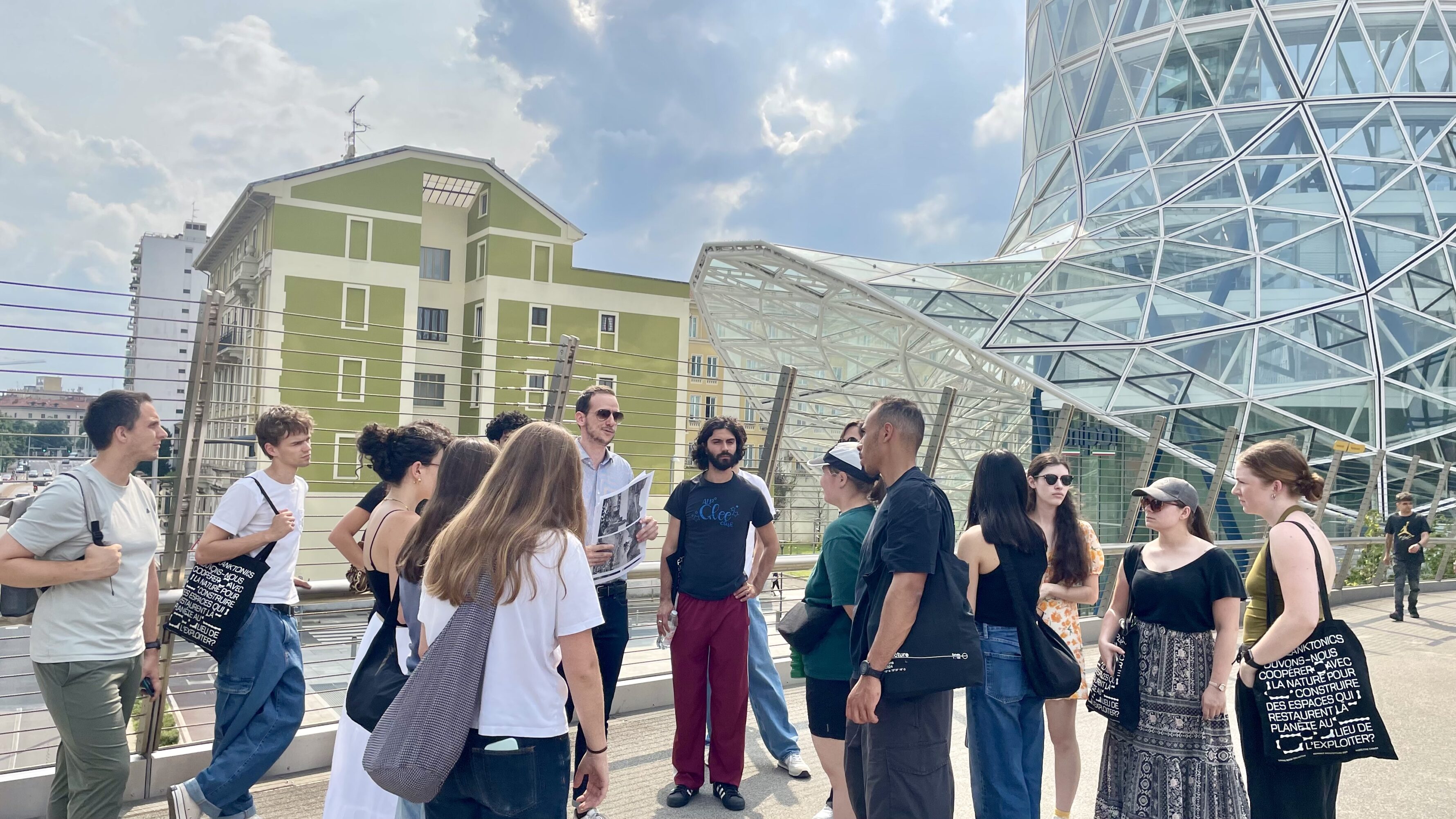
Struck by the verticality of Piazza Gae Aulenti, the first-ever podium square in Milan, and the diagonal lines blending into the green spaces of Varesine, the group experienced firsthand the three key elements of the Porta Nuova masterplan that have guaranteed a unique quality of public space worldwide.
The entire neighborhood is articulated on multiple levels and uses connections to create a “bypass” composed of a central park (BAM – Biblioteca degli Alberi), a main axis over one kilometer long that detaches itself from the rest of the city’s layering and traffic system, and a network of pedestrian connections that foster shared community spaces.
From a barren wasteland in the 1990s to a model for urban regeneration projects in Milan and beyond, Porta Nuova will undoubtedly inspire the academic journey of the sixteen future city-makers who traveled from Quebec.
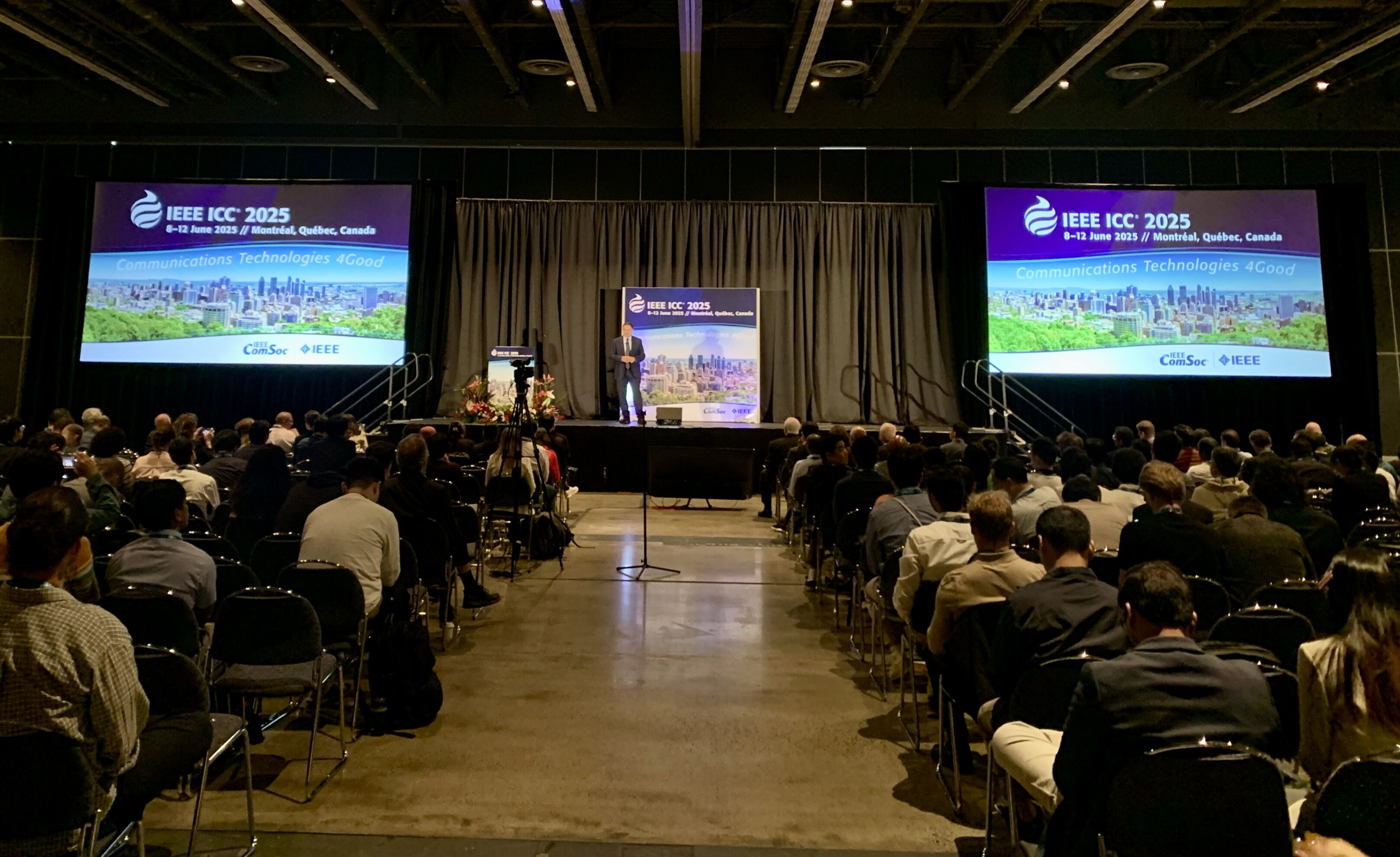
A few days after their visit, Valeria Pagliaro participated in the 2025 IEEE International Conference on Communications in Montreal, which brought together over 1,000 attendees from 70 countries. She took part in the panel “Smart Connectivity for Healthy and Sustainable Cities,” sharing valuable insights on designing inclusive and resilient public spaces.
The event united a wide range of disciplines and allowed Valeria to highlight our role in translating data and analysis into actionable strategies for the built environment. This approach makes digital innovation both tangible and visible, empowering efforts to enhance urban sustainability.
These experiences further reinforce our belief that sustainability is a shared language that transcends countries and disciplines, from architecture and urban design to technology and telecommunications. Collaboration remains the key to building future-ready, Nature-Positive Cities around the world.
Don't miss out on our inspiring project stories, the latest research, and more.
All mandatory fields are marked with a *
Date
20 June 2025
People
Desirée PierluigiDaniele GalimbertiLuca EckertAlessandro CianciMichele BencivengaGonzalo GilValeria Pagliaro
Office