Nature is our life insurance – we need nature positivity
Verena Ehold, Managing Director at Umweltbundesamt - Environment Agency Austria on Embracing Nature Positivity: A Call for Transformative Change
On January 22 at the Annual Meeting of the World Economic Forum in Davos, Switzerland, I had the pleasure of taking part in a discussion on nature restoration and the role of companies and cities in the transformation to sustainability. The discussion was organized by LAND and Porsche Consulting and included the presentation of the Nature-Factory Manifesto. I would like to share with you the main thoughts I expressed on the podium.
I underlined the necessity of nature positivity, an important international concept for a shift to transformative change for nature, as required by international agreements such as the Kunming—Montreal Global Biodiversity Framework and the Intergovernmental Panel for Biodiversity and Ecosystem Services IPBES.
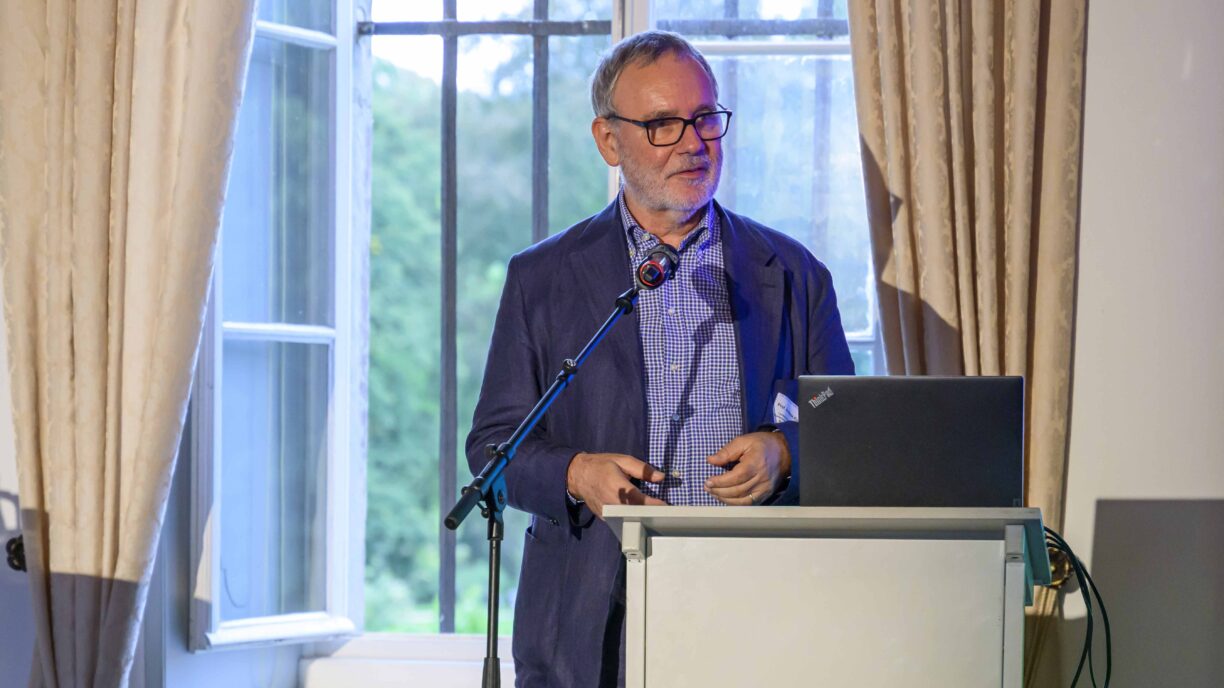
© Image by Porsche Consulting – Verena Ehold, Managing Director at Umweltbundesamt – Environment Agency Austria, in Davos, discussing the importance of nature positivity in transforming cities and economies.
Why is nature positivity so crucial for society and the economy? Nature is our life insurance as it harbours ecosystem services crucial for human wellbeing. Biodiversity and nature-based solutions contribute to all ecosystem service categories – production (sustainable food and feed), regulation (carbon storage and thereby contributing towards climate change mitigation, climate change adaptation through flooding retention and water storage against drought) and cultural services (sustainable tourism).
Measure progress through natural capital accounting
Ecosystem services can and need to be assessed in qualitative and quantitative terms, where possible also economically. Thereby nature and ecosystems can be included in economic assessment tools, such as gross domestic products and accounting. Economic decisions have to be based on this broader fundament, also in terms of awareness raising for society and the economy. Therefore I particularly agree with point five in the Nature-Factory Manifesto Measure progress through natural capital accounting. Umweltbundesamt – Environment Agency Austria has set up a task force to further develop methods and models along those lines, to be fueled into the national, EU-wide and global debate. The methods can be used to assess any necessary compensation funds in case of unavoidable nature degradation via economic activities.
The EU Nature Restoration Law provides an excellent basis for this necessary shift towards nature positivity. Urban ecosystems need to be restored gradually, leading to better climate change adaptation and beneficial for city-dwellers. Point two in the Nature-Factory Manifesto rightly refers to Urban Development through nature richness. Also, enterprises can and should play a key role towards achieving nature positivity. In the EU the Corporate Sustainability Reporting Directive (CSRD) requires certain companies, among other issues, to report their effects on as well as dependence on biodiversity.
I would like to take this opportunity to draw your attention to an upcoming event: Transformative Change for Nature – Engaging with European Nature Conservation Agencies.
How can we jointly achieve transformative change for nature? This question will be explored on February 21, 10:30-12:00 CET, in a virtual event held by the European Network of Heads of Nature Conservation Agencies (ENCA) and the German Federal Agency for Nature Conservation (BfN).
The public webinar will introduce the topic of transformative change and spotlight that the European Nature Conservation Agencies stand ready to engage, enter into dialogue and share expertise to help guide and support this process.
Transformative change is defined as a fundamental, system-wide shift in views, structures and practices. Such a transformation is urgently required to halt the underlying causes of biodiversity loss and safeguard our natural resources.
The event features a keynote by Prof. Karen O’Brien, Co-Chair of the recently published IPBES Transformative Change Assessment, who will present potentials, barriers and strategies for achieving transformative change for nature. Next, speakers will highlight the interest in and commitment of the European Nature Conservation Agencies to supporting the rapidly evolving transformative change agenda, and showcase concrete examples of transformation fields. The discussion will allow participants to engage and pose questions to the panel speakers.
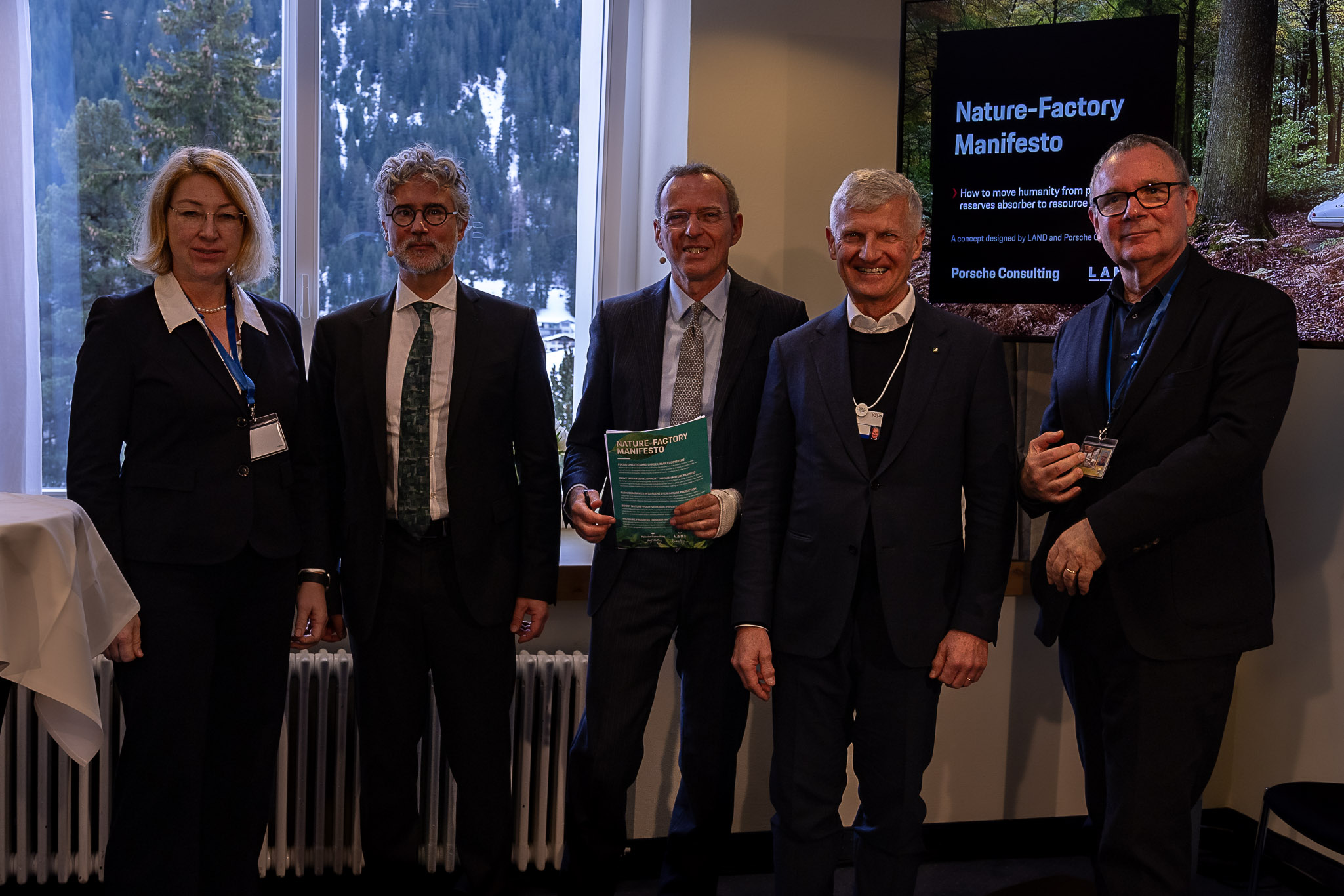
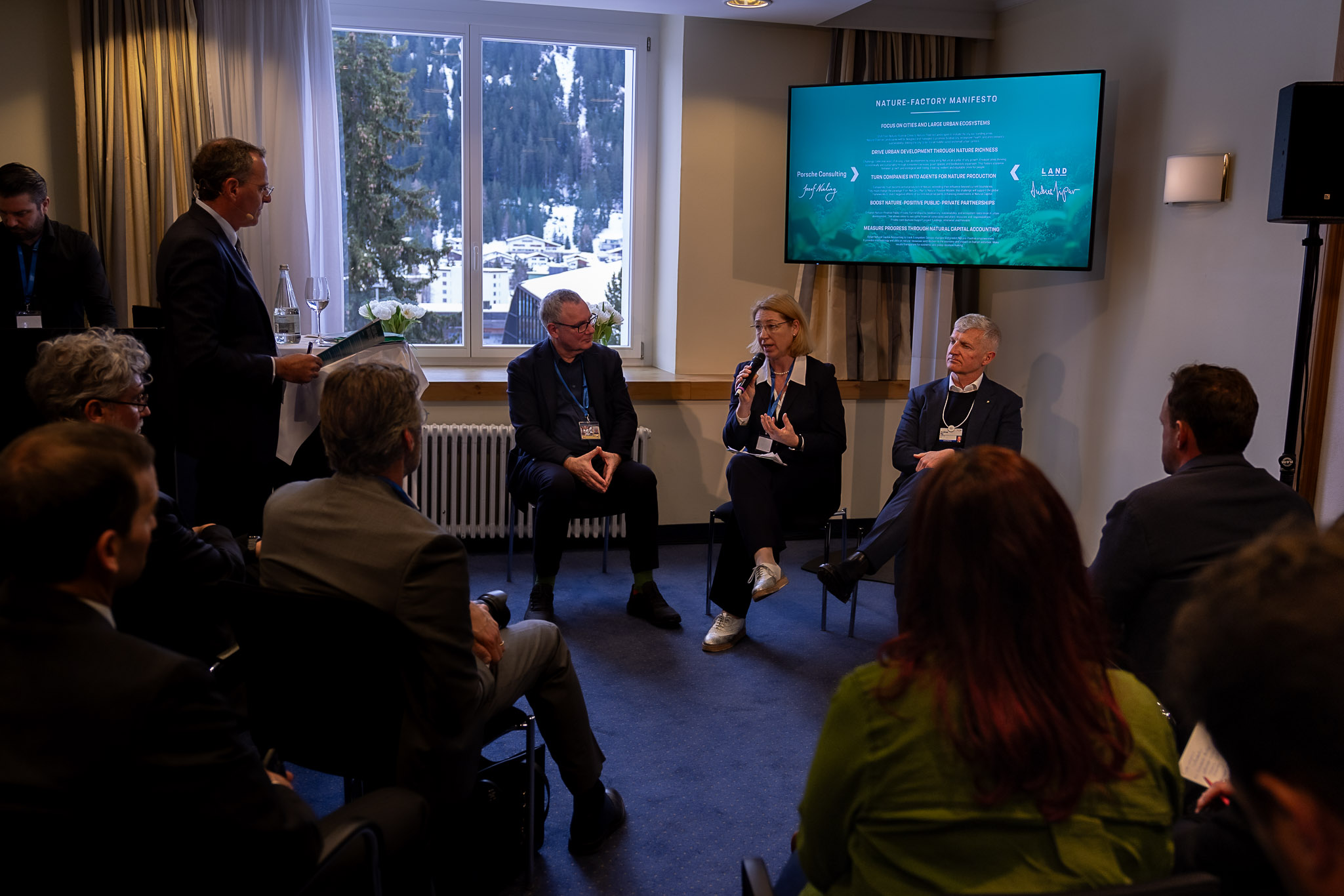
© Image by Porsche Consulting – From left: Verena Ehold, Managing Director at Umweltbundesamt – Environment Agency Austria; Josef Nierling, CEO of Porsche Consulting Italia; Andrea Cabrini, Director of Class CNBC and Co-Director of MilanoFinanza; Andrea Illy, Chairman of illycaffè S.p.A.; and Andreas Kipar, Co-founder and CEO of LAND, in Davos.
The webinar is open to everyone who is working on transformative change or interested in further engaging on this subject. You are kindly invited to attend!
Date: February 21, 2025, 10:30-12:00 CET (for the UK: 09:30-11:00 GMT)
About Verena Ehold, Managing Director of Umweltbundesamt – Environment Agency Austria
Want to know more? Read about WEF at Davos and its impact on nature positivity here:
https://www.landsrl.com/en/unveiling-the-nature-factory-manifesto-at-wef-2025-davos/