nAIture: Our Path to the Future of Landscape & Sustainability Consultancy
A Year in Review from Nikolas Neubert, Chief Innovation Officer and Managing Director of LAND Research Lab.
Artificial Intelligence and Its Role in the Planning Industry
Artificial Intelligence (AI) is increasingly permeating our daily lives and transforming our industry. Over recent years, models like ChatGPT have led to a form of AI democratisation, making it accessible to a broader audience. What seemed unimaginable a few years ago is now reality. When I began exploring AI more than seven years ago, I often encountered scepticism within the planning world. I recall being politely escorted out of a mayor’s office after suggesting AI as an analytical tool for climate comfort in public engagement. Many colleagues were dubious as to whether AI could genuinely benefit their work. That is changing.
Today, AI’s applications are more apparent, and its potential has become more tangible. Yet, with AI often comes heightened expectations. People believe it can solve all issues – quickly, efficiently, and comprehensively. I encounter this mindset regularly, as well as a certain level of doubt. I believe in a pragmatic approach: not everything that digitally feasible should be implemented. As a CEO of a German ICT company once said, if you digitise a shitty process, you get a shitty digital process. The question must always be: what value does digitalisation, specifically AI, bring to this particular project? At LAND, we place a strong emphasis on ensuring technology serves the project’s goal rather than the other way around, which is often the case.
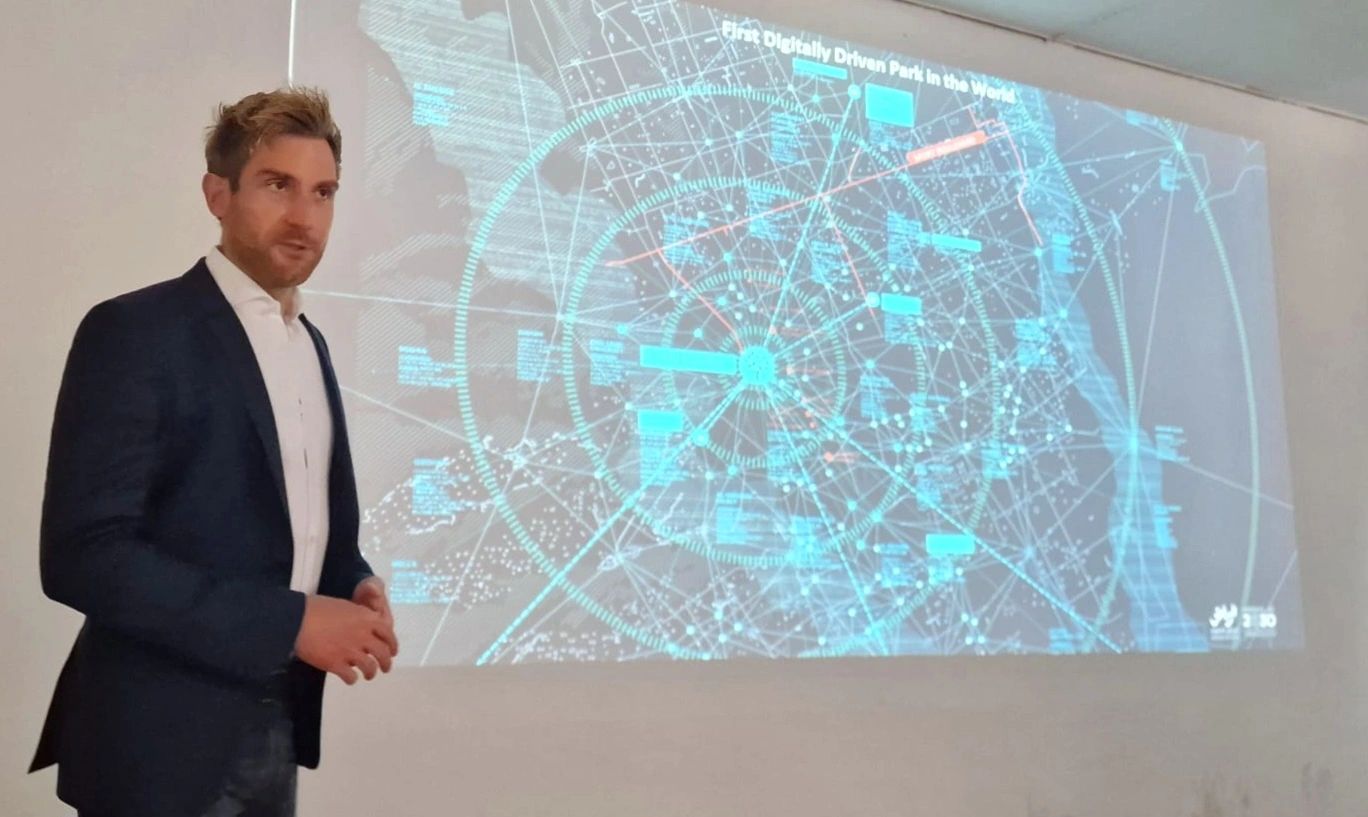
Nikolas Neubert, CIO of LAND
The Start of Our Journey: Values and Vision with “nAIture”
At the end of 2023, LAND deliberately set out on its “AI journey.” Following initial developments, and applications in AI (particularly in remote sensing and climate analysis), it became evident that AI is more than a buzzword for us. Our first step was to define clear values and a position to explore AI’s potential and limitations within the planning process. This led to the creation of our concept nAIture – a term symbolising the merging of “Nature” and “Artificial Intelligence.” With nAIture, we aim to combine the latest technical knowledge and digital innovation to position the LAND Group as a pioneer in the planning and consulting industry.
Our vision is to reach a new level of sustainability through data-driven planning supported by AI-based forecasts, making sustainability measurable, plannable, and optimisable. nAIture is more than a technical term; it is a guiding principle reflected in all our projects. We aim to use AI to accelerate processes and create genuine value. Combining technology with nature is vital for us to address today’s challenges while advancing sustainable transformation in planning.
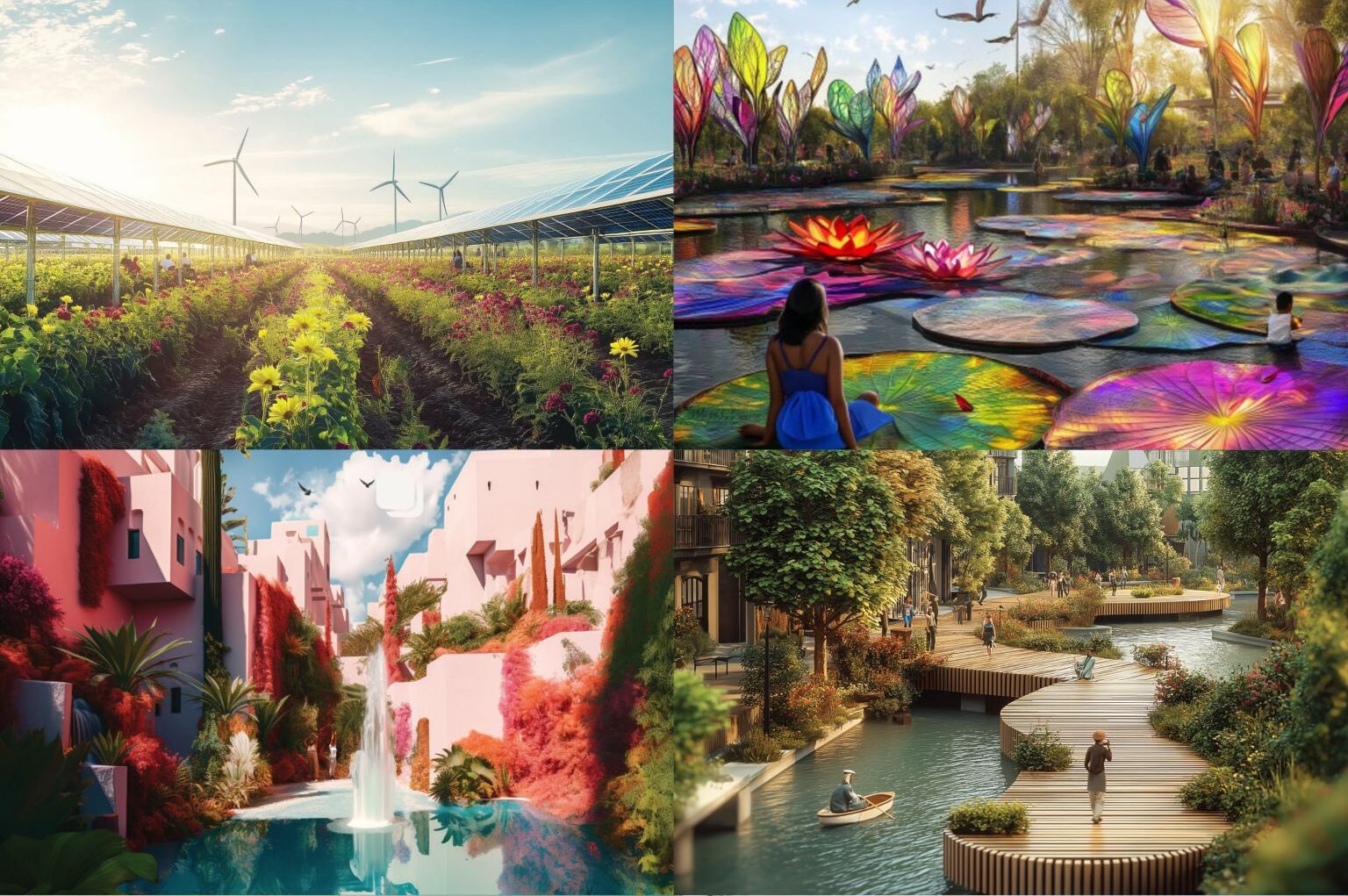
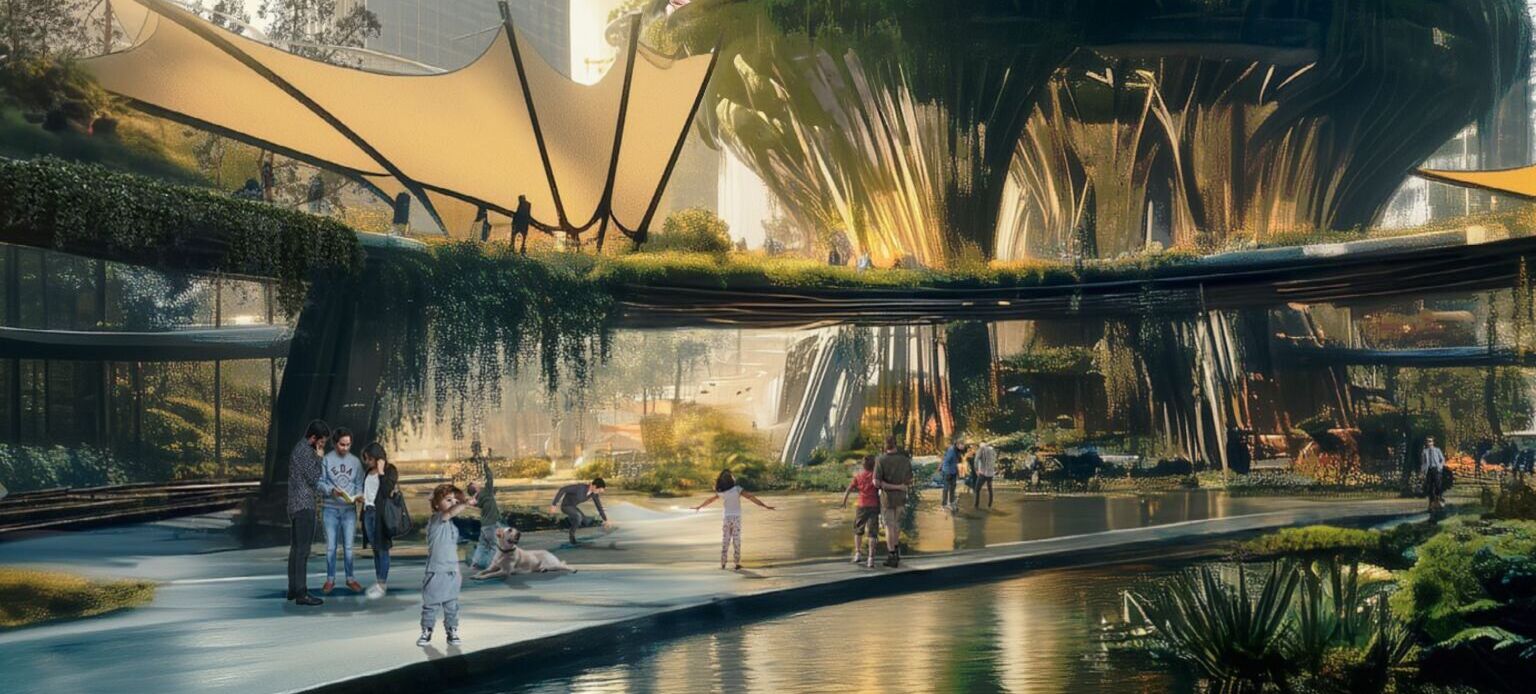
AI-generated visualizations of futuristic public spaces designed during LAND’s AI Rendering Course, showcasing lush greenery, water features, and innovative architecture that integrates nature and urban design.
LAND Academy: Building Competence and Partnerships
Digitalisation is an extensive transformation process- with AI being just one aspect. Implementing AI technologies leads us to question existing workflows and explore organisational structures that allow us to adopt and scale new working approaches. It’s not simply about applying new technologies, in reality, it’s about transformation management. This process is critical to building internal expertise and collaborating with partners, start-ups, and research institutions.
This year, we expanded our LAND Academy programme, establishing two significant innovation partnerships: first, a collaboration with the esteemed Institute of Advanced Architecture of Catolonia (IAAC), where we partner in the world’s first master’s programme in “AI in Architecture and the Built Environment.” This partnership allows us to drive cutting-edge developments. We work with course participants through a series of defined AI challenges to find pioneering solutions for our real-world projects.
Another significant partnership is with the Bauhaus-Universität Weimar in the field of digital planning tools. These collaborations are incredibly valuable. We bring current research and development topics from our field into academia while students gain the opportunity to develop their skills on concrete case studies. This year, we welcomed the first students from these programmes to our offices in Düsseldorf and Milan. They have made valuable contributions, further developing internal digital workflows and integrating them into ongoing projects.
We have also created specialised training formats for our team, specifically designed to utilise AI in daily planning. Particularly in the “Text-to-Image” field, we’ve provided our team with targeted workshops equipping them with new tools. Lastly, we actively cultivate cooperation and exchange with start-ups and innovation leaders.
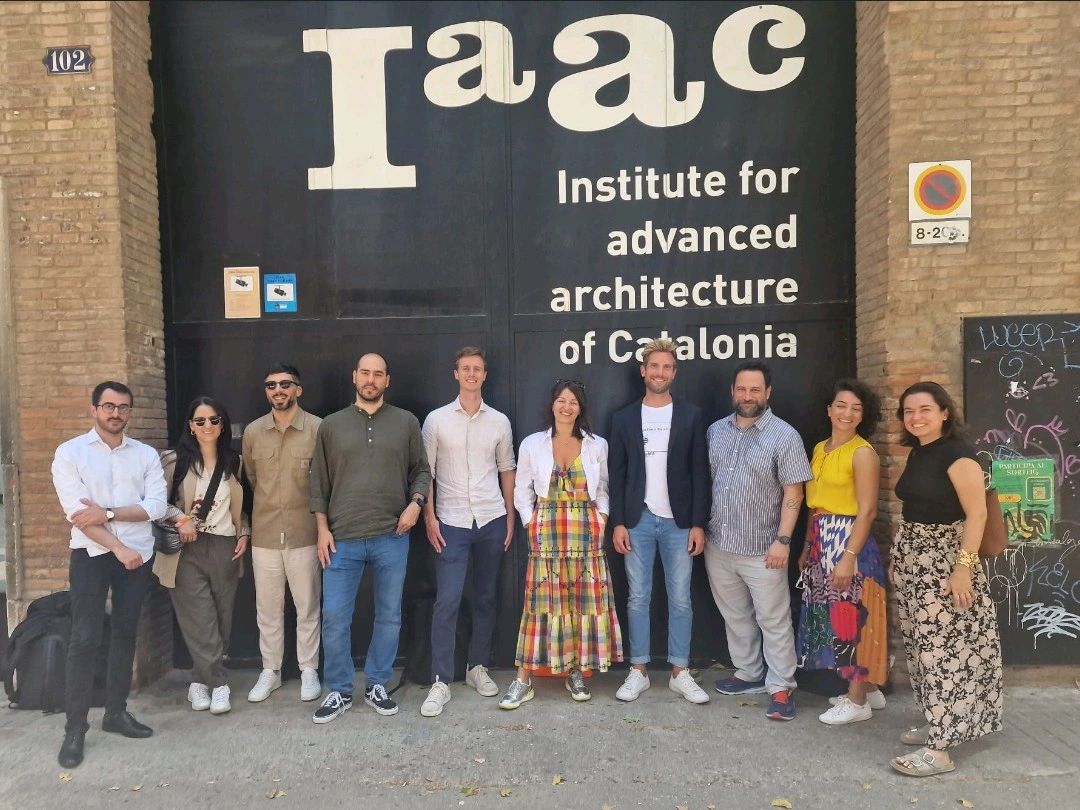
Nikolas Neubert, CIO of LAND, with participants at IAAC’s AI research studio, exploring the integration of artificial intelligence into urban planning and sustainable architecture.
AI in Practice: Pilot Projects & Insights
This year, we initiated the practical implementation of AI with targeted pilot projects. A remarkable example is a large-scale urban development project in Riyadh. We faced the considerable challenge of creating a conceptual urban plan for an area exceeding 400 square kilometres in an extremely short timeframe. While the deadline was tight, the requirements were high. To develop a plan that genuinely creates a liveable environment with new natural capital for residents and aligns with the city’s environmental goals, it was clear that we needed to work from the outset with digital, data-driven methods. From urban concept design to rendering, it became LAND’s first fully AI-supported planning project, exclusively employing parametric planning approaches combined with AI – a tremendous feat for the entire team and a true milestone. The process provided deep insights into workflow transformation, revealing how significantly AI-based tools challenge conventional workflows.
Another exciting area in which we are deepening our use of AI is evaluating ecosystem services and nature capital. With AI, we can now accurately capture green spaces via satellite images and develop predictive models of their ecosystem services (e.g., how much PM2.5 is sequestered by street greenery) or assess plant vitality. These technologies enable more efficient planning and maintenance of green spaces, especially regarding plant and irrigation management– a crucial aspect given increasing climate extremes. Such innovative approaches help save resources and ensure our projects are designed to be resilient and future-proof.
Challenges and nAIture +2025
Digitalisation is an ongoing process that rarely follows a linear path. Introducing new technologies presents numerous challenges. Flexibility and adaptability are essential. This also includes facing setbacks. It’s obviously disappointing when a pilot project doesn’t yield the results, we were hoping for. But each setback is also an insight. We consistently cultivate a culture of “experimentation” and “learning.”
The planning and construction sector is often viewed as Laggard with innovation. The targeted use of AI opens new perspectives. For us, AI is not a short-term “buzzword” but a profound opportunity to make our planning processes even more sustainable and data-driven. One example of the benefits is the integration of microclimate analyses into iterative design steps, ensuring we deliver projects with an ingrained climate DNA. With the help of AI, we can establish a solid basis for decision-making, enabling us to illustrate and explain complex interrelationships. Furthermore, we can provide clients with detailed insights, like the impact of greenery on energy savings, for example, or how our projects contribute to our partners’ Corporate Sustainability Reporting (CSRD) or city targets.
For 2025, we have set ambitious development goals to advance the nAIture concept further. We aim to build on the experiences gained from our pilot projects, integrating them strategically into our working processes. Our focus remains on optimising planning processes, deepening partnerships, and embedding sustainability further into our work.
Our goal is clear: to leverage AI and a strong foundation of values to create innovative solutions that make our work more efficient but also forward-thinking and sustainable. Our journey with nAIture has only just begun, and we look forward to actively shaping the future of landscape planning alongside our partners and clients. The curiosity of our team and our responsibility not only to design but to drive transformation inspire us every day.