Newsletter #23: Landscape As Act Of Resistance: From Floods to Nature-Positive Cities
In a world that often feels more divided than united, I find myself turning to Nature, a constant reminder of connection, harmony, and hope. The fifth edition of LANDconnects captured this beautifully, bringing us together to celebrate 35 years of #ReconnectingPeopleWithNature. It’s a powerful message I’d like to reflect on in my latest newsletter.
A few weeks ago, media headlines screamed about the disgraceful images of Milan, Ischia, Spain, India and many more. Taking Milan’s example, I assumed they referred to the brown floodwaters that submerged entire neighborhoods. Instead, they pointed to isolated social protests that had spiraled out of control. That contrast struck me: when climate shocks hit the city, they no longer make the news. Have we resigned ourselves to them—or simply decided not to look?
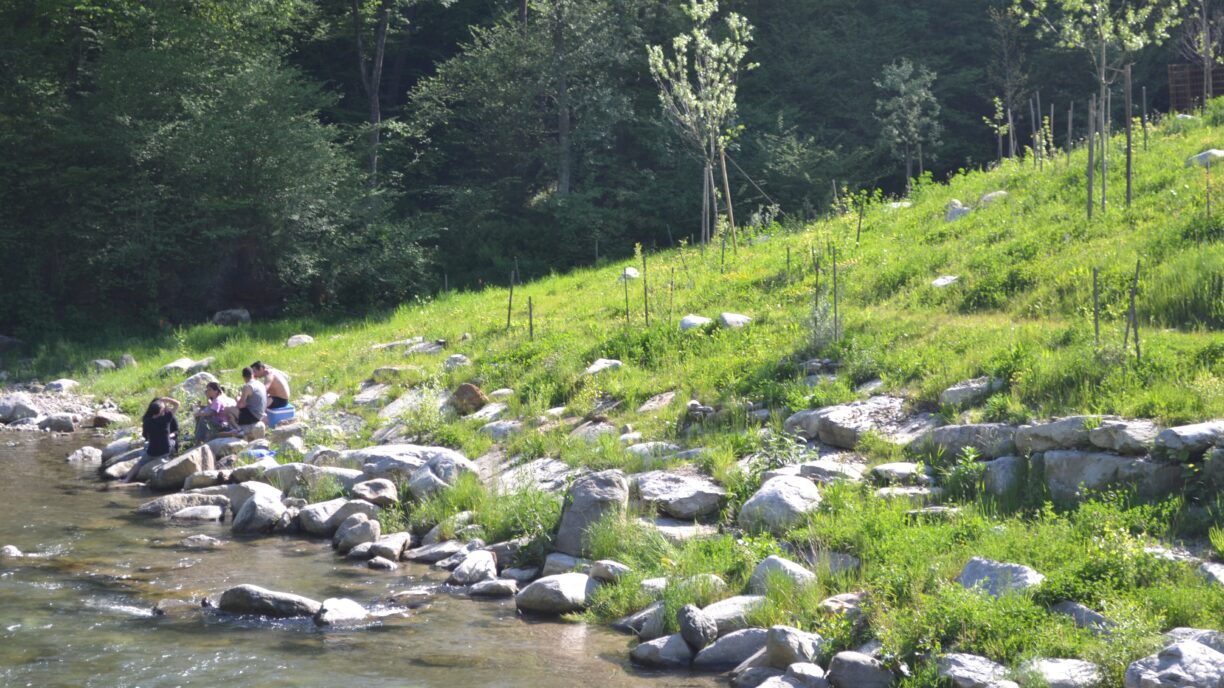
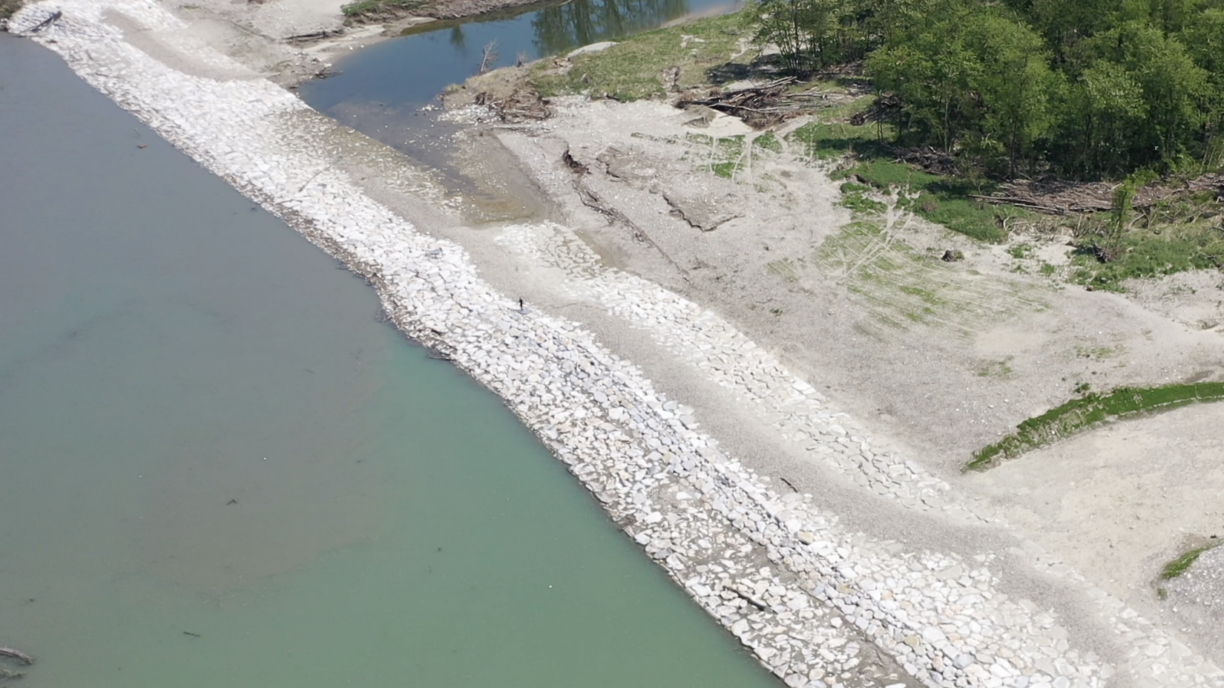
As a landscape architect who has lived and worked in Milan for over forty years, I recognize the significant achievements made so far: hundreds of thousands of trees planted; greater permeability and multifunctional public spaces; retention basins like Lura, where we transformed agricultural areas into sustainable solutions; and water parks such as the new one in Sulbiate–Aicurzio, the largest green-blue infrastructure in Brianza.
All this matters, but today I must acknowledge that the pace of climate change is outpacing the pace of our positive actions.
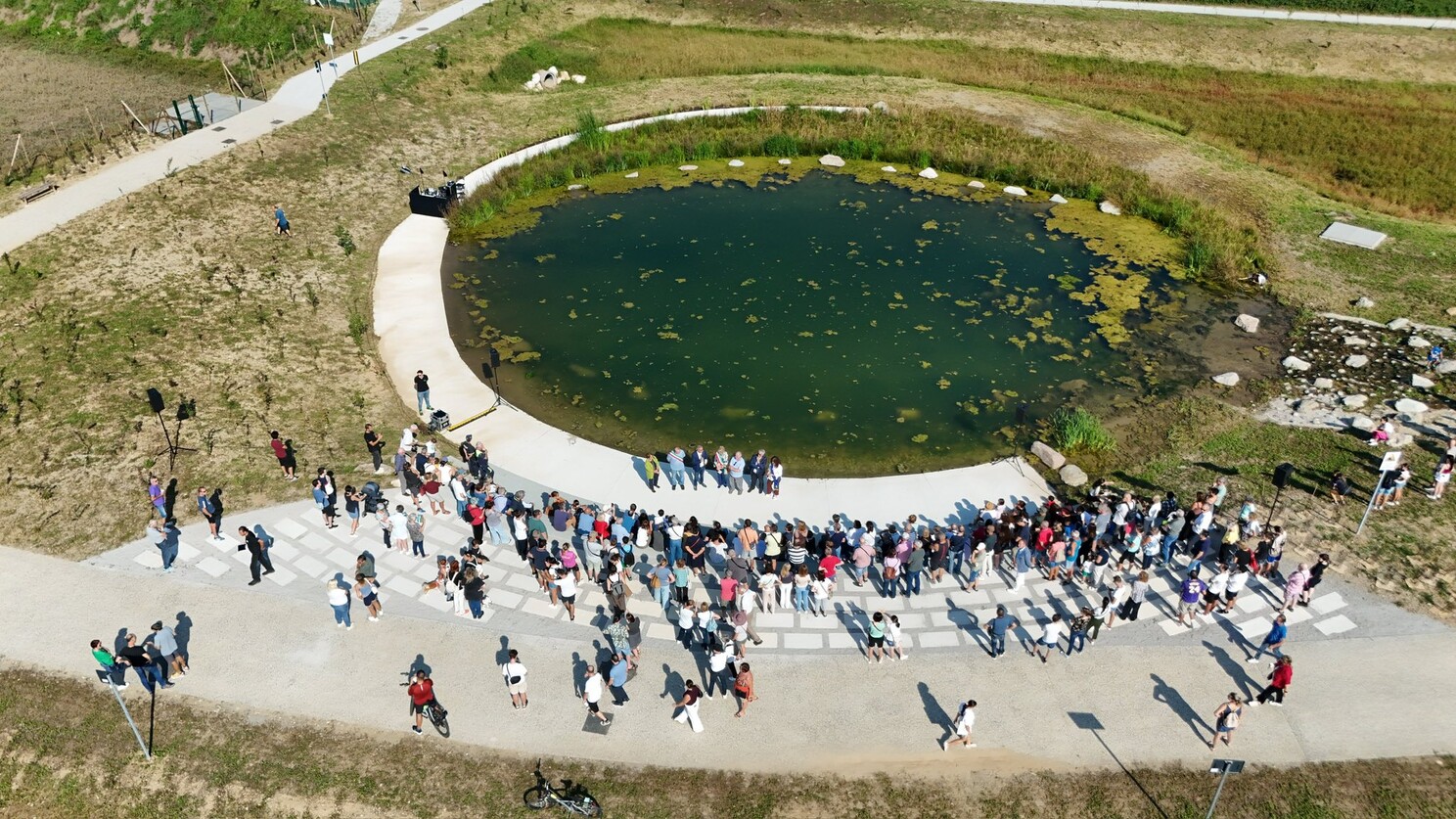
The recently inaugurated Sulbiate-Aicurzio Water Park. Ph. Comune di Sulbiate
Small Remedies Are Not Enough
Basins and water parks are necessary, but they are only local remedies. They treat the symptoms, not the illness. As I recently shared on the podcast Unfiltered Dialogues, I see “soil as body, water as soul, green as dress” for our cities. The dress of a city can be changed—but only if its body is first cared for. Nature can redefine the future of our cities by being understood as living infrastructure. The real challenge is to change scale and paradigm: from isolated sponge cities to a collective, integrated system that unites generations, institutions, and civil society.
This is not utopia. It is a tribute to late colleague Kongjian Yu, the originator of the term Sponge City, who suddenly went missing.
And it has already happened: consider Parco Nord, established as a regional park and expanded step by step for 50 years, still honoring the vision of its first director, Francesco Borella. Now we must revive that kind of vision with a new institutional and social pact for a large, well-financed program of multifunctional green infrastructures.
In this process, modern technologies, digital tools and artificial intelligence should not replace Nature but support it, shaping a dynamic dialogue between Innovation and Sustainability.
A Pact for Lombardy’s Future
As Matteo Pedaso reminds us, “every project, every investment should generate climate adaptation as a positive externality.” In Lombardy, pledging to create a regional park for the Seveso River, Villoresi, and Central Brianza through a systemic vision could be a turning point. This approach would transform hydraulic works into landscape works, combining flood risk mitigation with ecosystem functions that benefit the entire community. It would make Nature a shared, daily experience.
After decades of bottom-up initiatives, it may be precisely the time to relaunch strong protections—with formal institutional commitment alongside civil society.
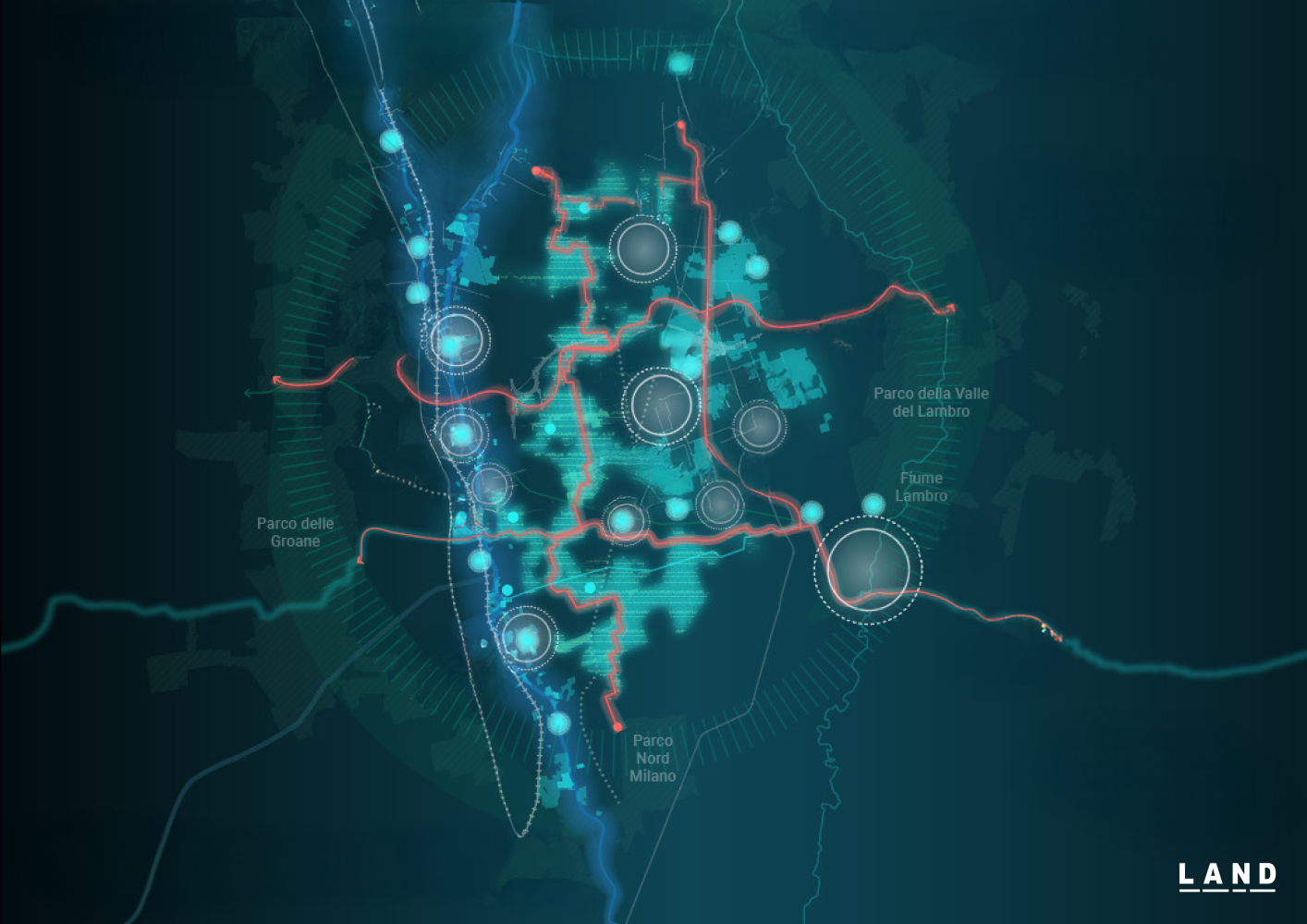
Landscape Concept for the Seveso River Park
Eurostat’s 2023 data shows that Lombardy has the second-highest GDP in the Eurozone. This proves that Nature and growth can move forward together when planning is done at a territorial scale. For this reason, I strongly support Professor Paolo Pileri’sinitiative to launch a serious, widespread, and ambitious depaving program in the areas north of Milan.
Nature-Based Infrastructures: More Than Technical
Nature-Based Solutions demonstrate how technical functionality and ecosystem value—innovation and memory—can coexist. For us, as landscape architects—often acting as social mediators—it is essential to convey to institutions, administrations, partners, and local communities the instrumental, intrinsic, and relational values of Nature and its ecosystemic services. Only then can infrastructures be truly sustainable.
This is the foundation of the holistic approach of Nature-Positive that guides our work in LAND: a way of designing that gives back more than it consumes, multiplies connections and exchanges, and encourages shared processes and results. Infrastructures that act as cultural as well as ecological ecosystems—the expression of a new pact between people and Nature. In short: Landscape as Life, a dynamic palimpsest of relationships.
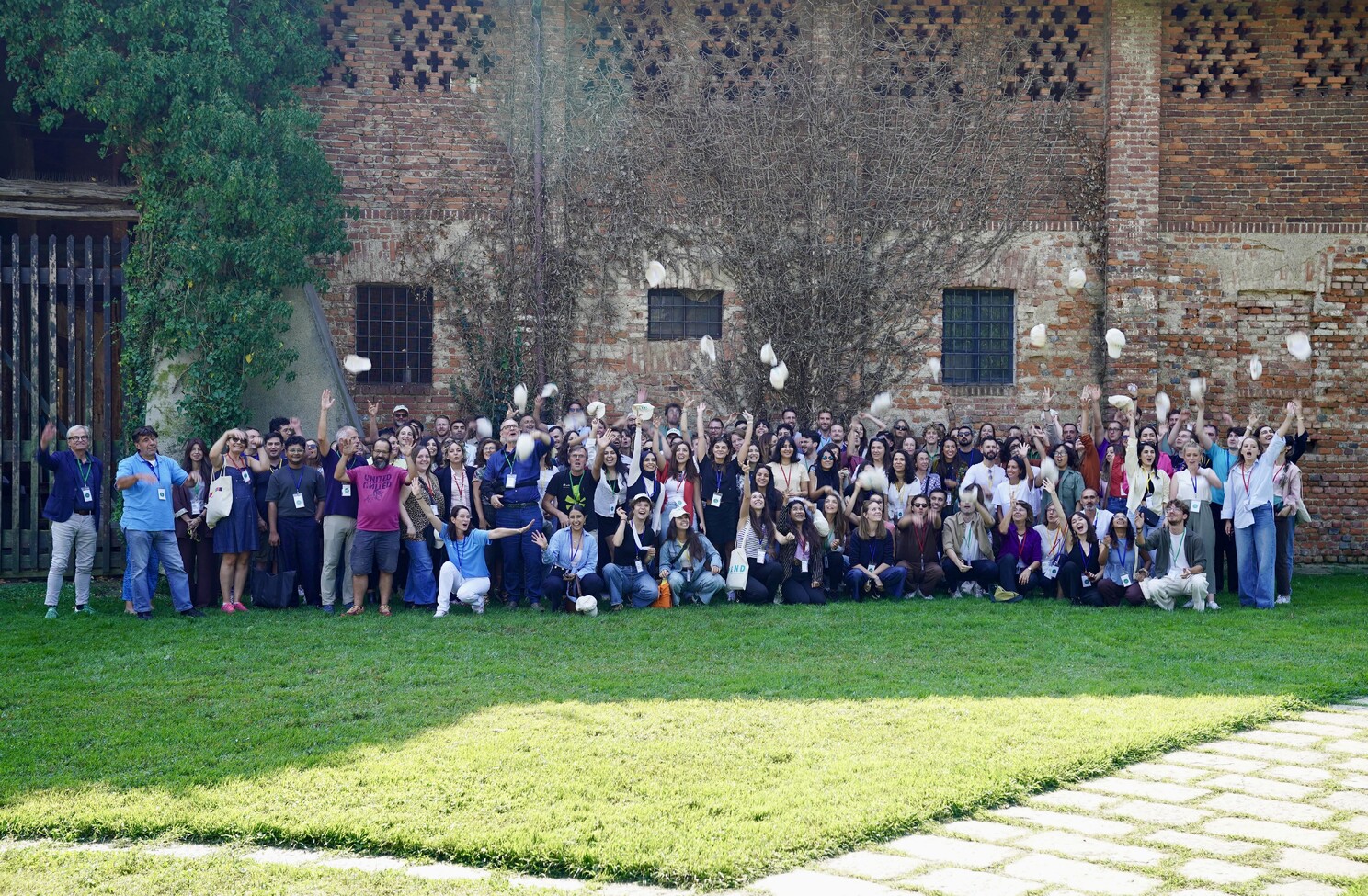
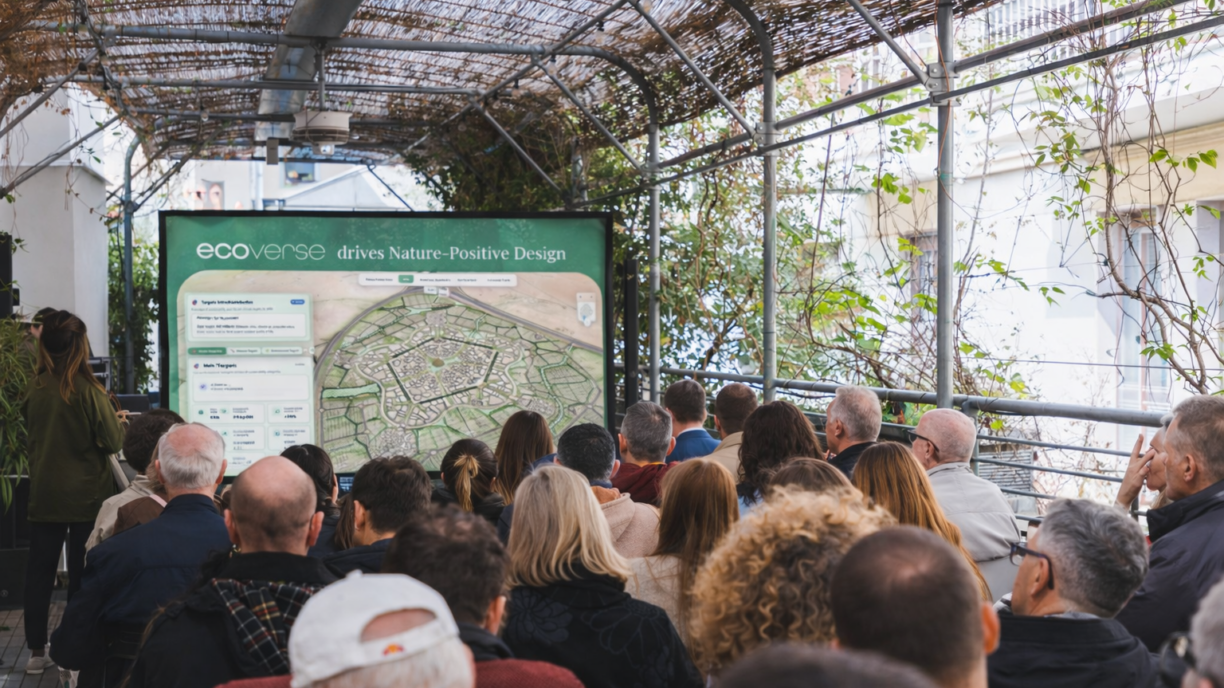
Group Photo from LANDconnects 2025, the 5th edition reuniting LAND’s global community
Nature Powers the Economy: New Alliances Needed
As Valentina Galiulo rightly reminds us, two international frameworks reinforce this direction. The EU’s evidence on the economy’s dependency on Nature shows that even digital industries rely on ever-changing dynamics of natural processes to drive socio-economic growth. Moreover, the World Economic Forum’s work on innovations to finance Nature makes it clear that healthy ecosystems are the very substrate of innovation and investment.
To confirm this, the Frankfurter Allgemeine Zeitung reported just this week on OECD estimates, showing that global ecosystem services contribute $125–140 trillion annually to the world economy. The German Federal Statistical Office published data covering 2015 to 2023, offering concrete proof: urban greenery demonstrably lowered the average temperature on summer days by nearly one degree Celsius. Yet, despite such clear and immediate evidence, tree growth in Germany continues to decrease, and the political agreement on implementing the Nature Restoration Law is slow to arrive.
There is a gap we must close—and fast! Resources are finite, and we must forge new public–private alliances.
This is precisely the ambition of Action V in our Nature-Factory Manifesto: building pacts and coalitions capable of regenerating ecosystems and territories while strengthening both Natural Capital and economic vitality. Only through constant collaboration between the public and private sectors can the cities become truly resilient, by reestablishing an authentic relationship with Nature.
Sustainability Starts With Us
I love the city I live in. I’ve watched it transform, and I know what we can do together. But climate change will not wait. It’s time to move from isolated projects to territorial strategies, from emergency works to long-term pacts. If Lombardy embraces this scale of action, it could become a European example of how to go Nature-Positive. For real.
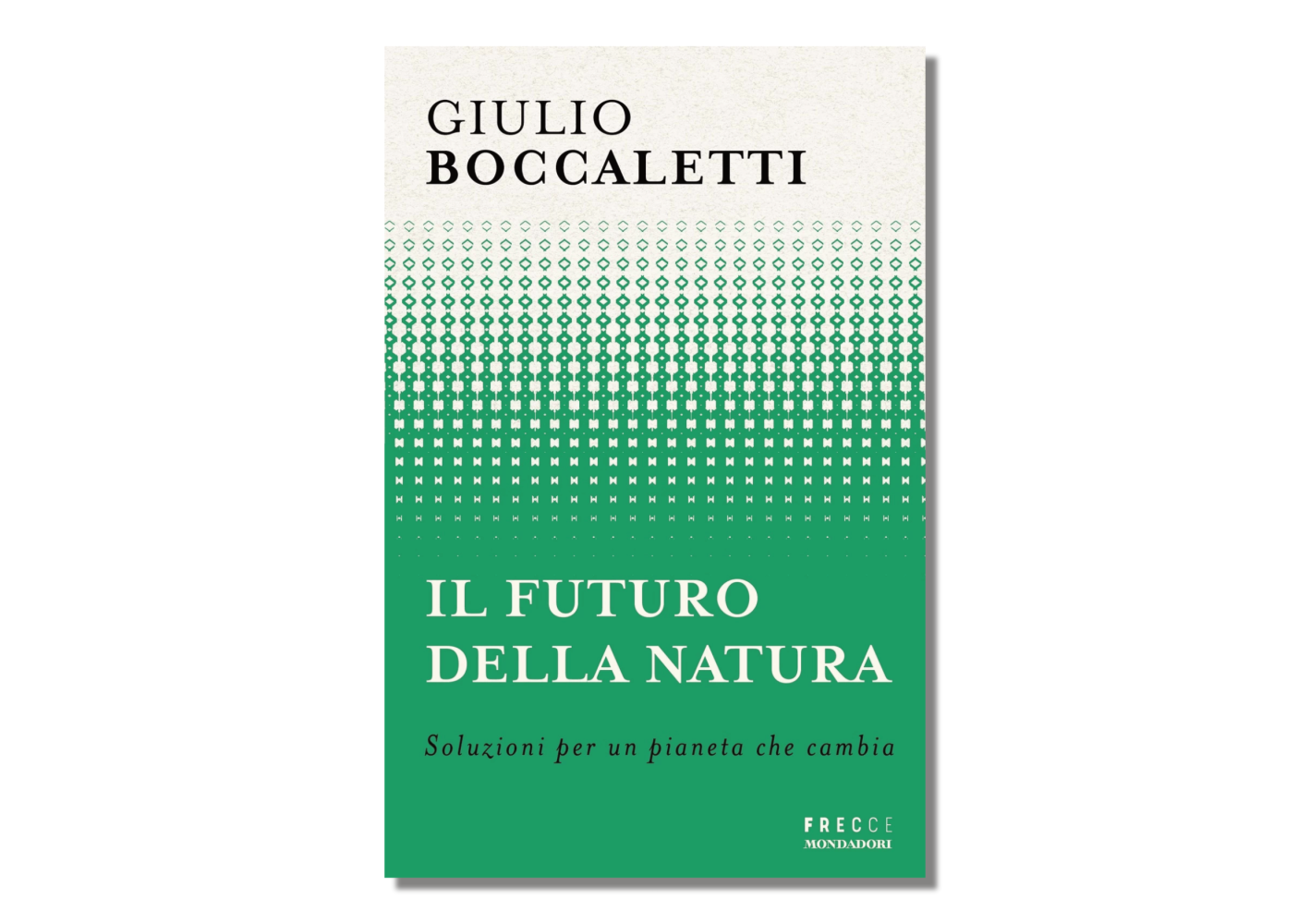
As Giulio Boccaletti emphasizes in his book “Il Futuro della Natura”, it is not the apocalyptic scenario in which we must assert ourselves, but one of hope. We must not give up on progress, but rather learn to live it together with Nature. It is a choice that also defines our way of being and relating to others, through the constant lens of the environment that surrounds us. As he states, “Landscape is a social and political construct, the result of the decisions we make collectively. We already have the technologies and examples needed to regenerate ecosystems, reduce emissions, and build a prosperous future. Because the future of nature is, in fact, our future.”
As the world faces increasing division and destruction, the jury of the Lisbon Architecture Triennale Debut Awards reminds us of the urgent need to design spaces for life: places that nurture dignity, community, and coexistence.
Let’s continue to choose architecture and landscape as acts of re-existence, re-imagination, and resistance, and let’s share and learn from experiences—both local and global—that demonstrate the transformative power of going Nature-Positive.