Via Tevere Living Street Rho
Italy
The landscape project for Via Tevere aims to bring people back to the center by creating a dynamic and resilient space—a platform for socialization for students and citizens alike. In line with environmentally conscious design that addresses contemporary challenges, Nature and Water become the project’s structuring elements, capable of providing ecosystem services and creating a sustainable urban environment.
The landscape project for Via Tevere aims to bring people back to the center by creating a dynamic and resilient space—a platform for socialization for students and citizens alike. In line with environmentally conscious design that addresses contemporary challenges, Nature and Water become the project’s structuring elements, capable of providing ecosystem services and creating a sustainable urban environment.
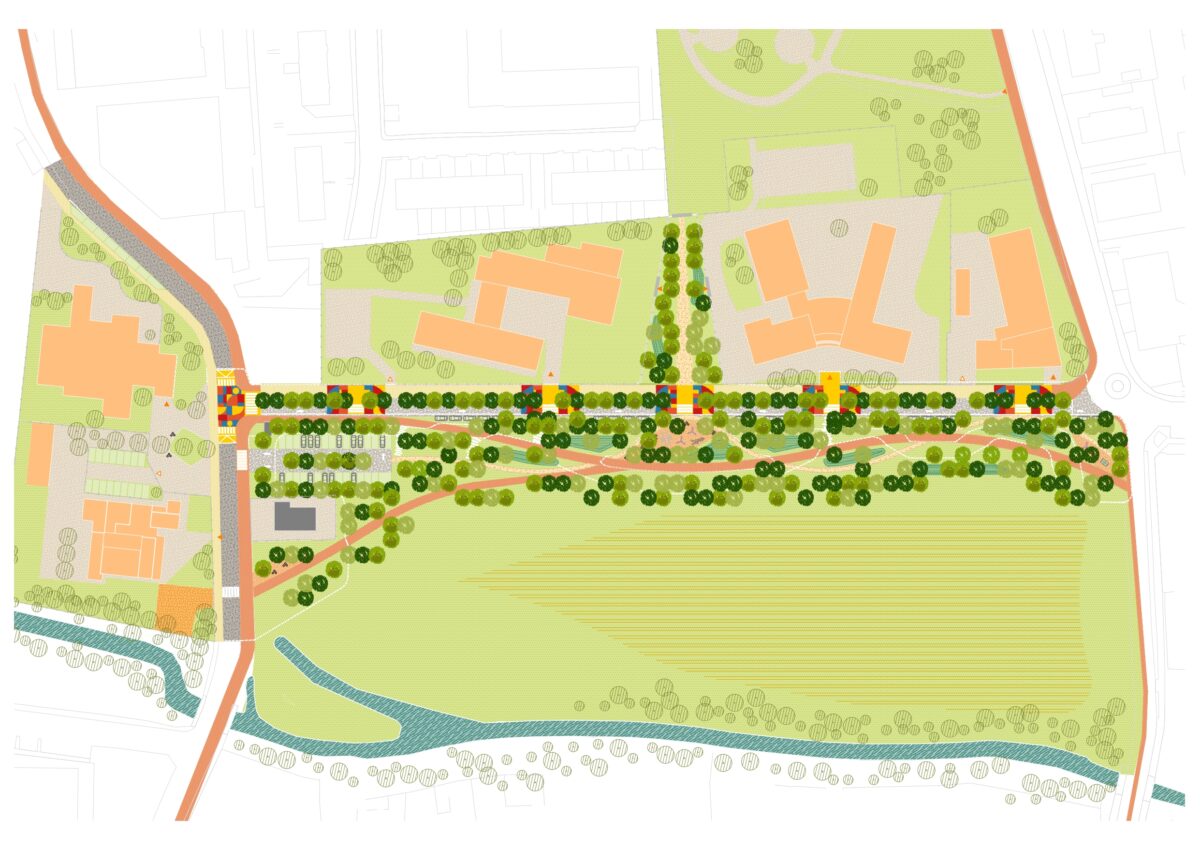
Masterplan
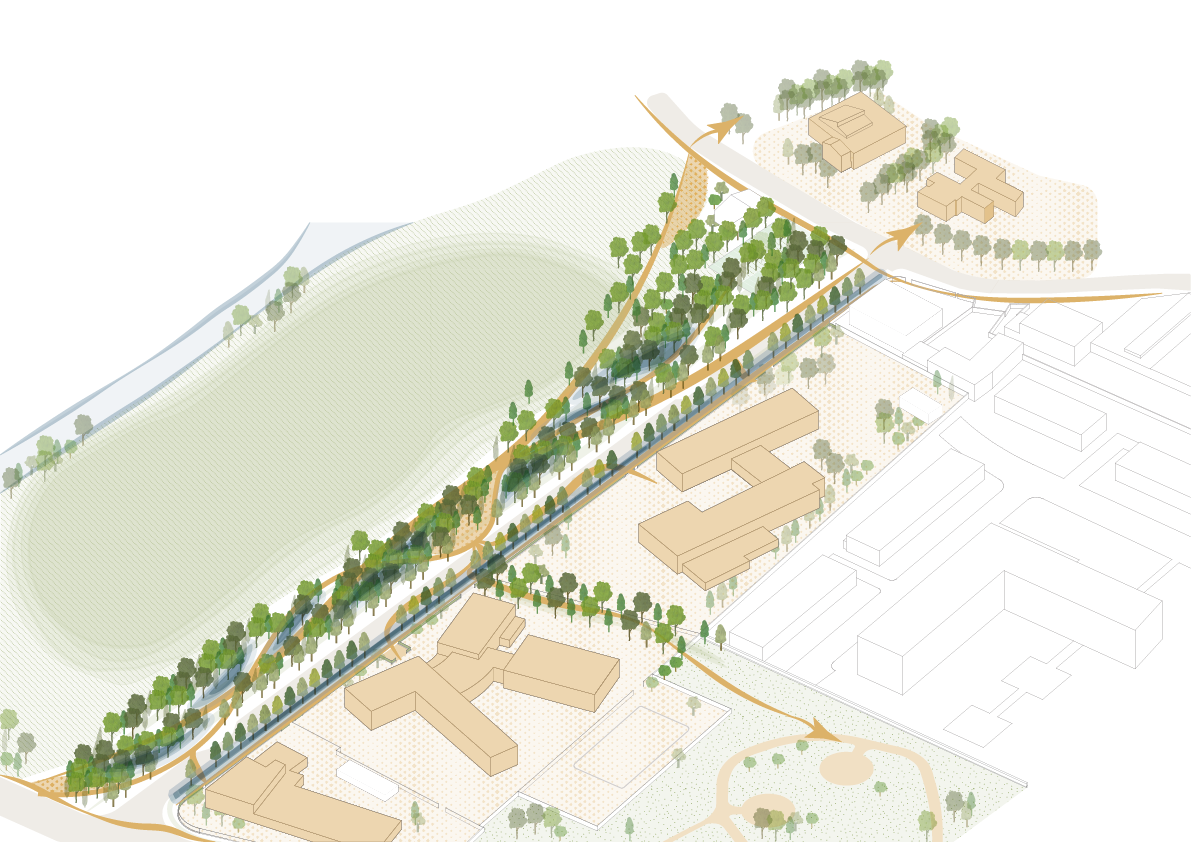
Schematic Axonometry
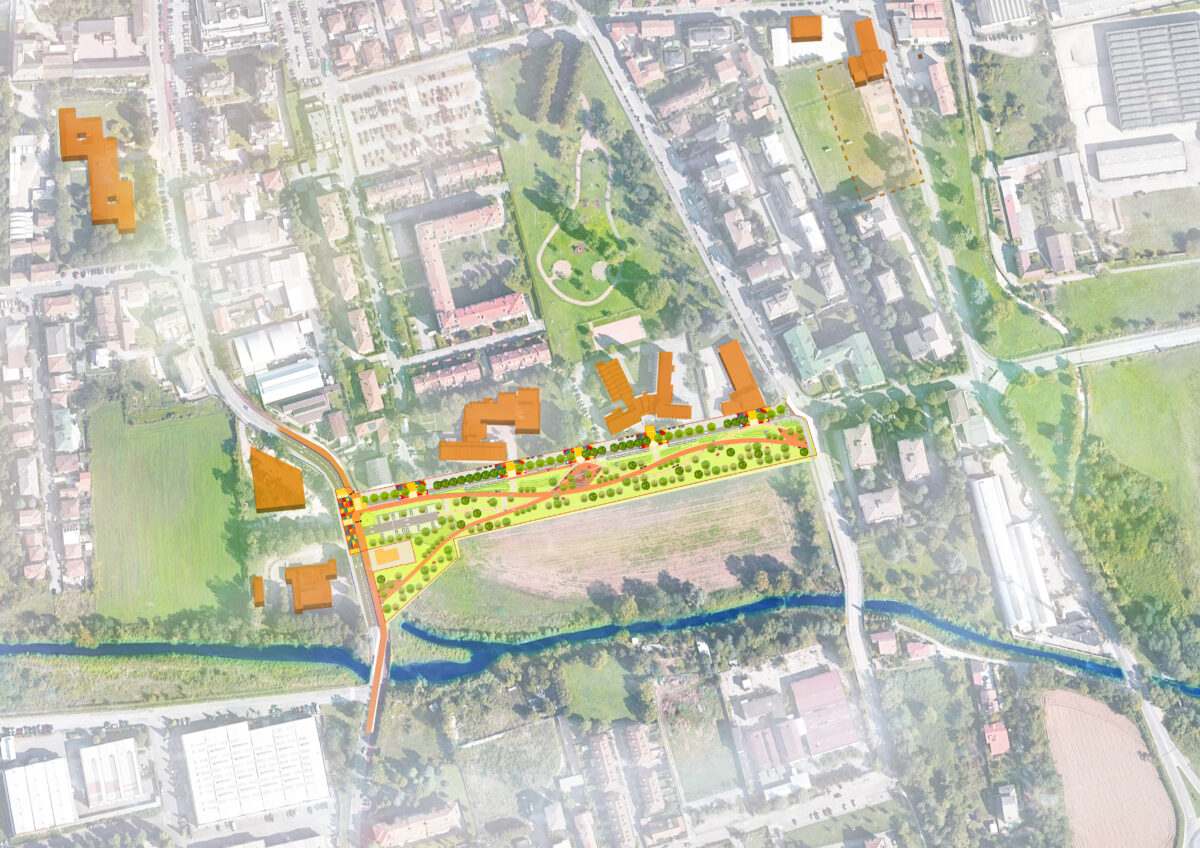
Masterplan, zoom out
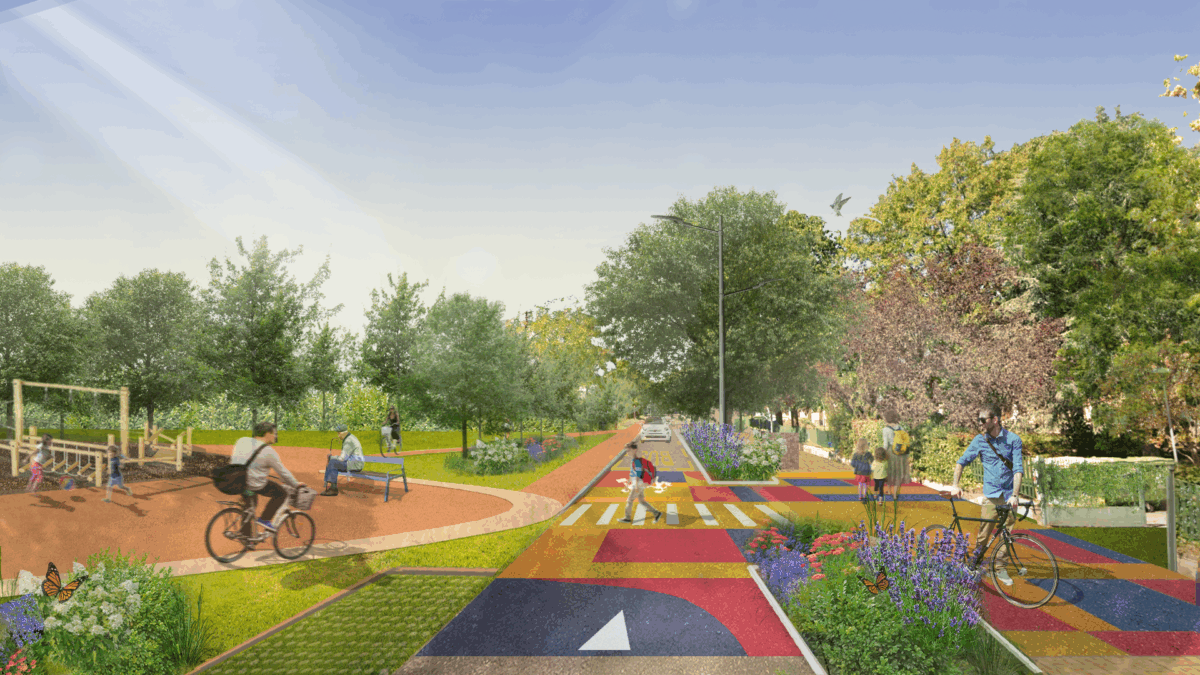
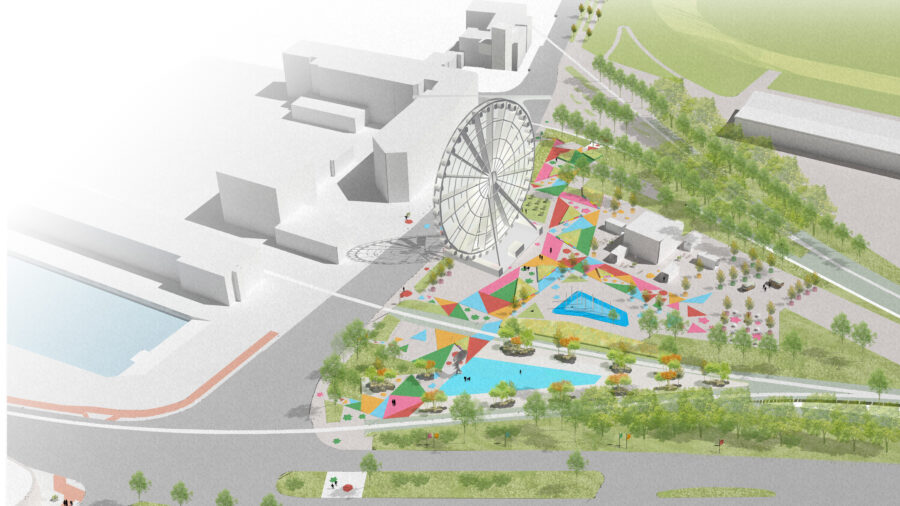
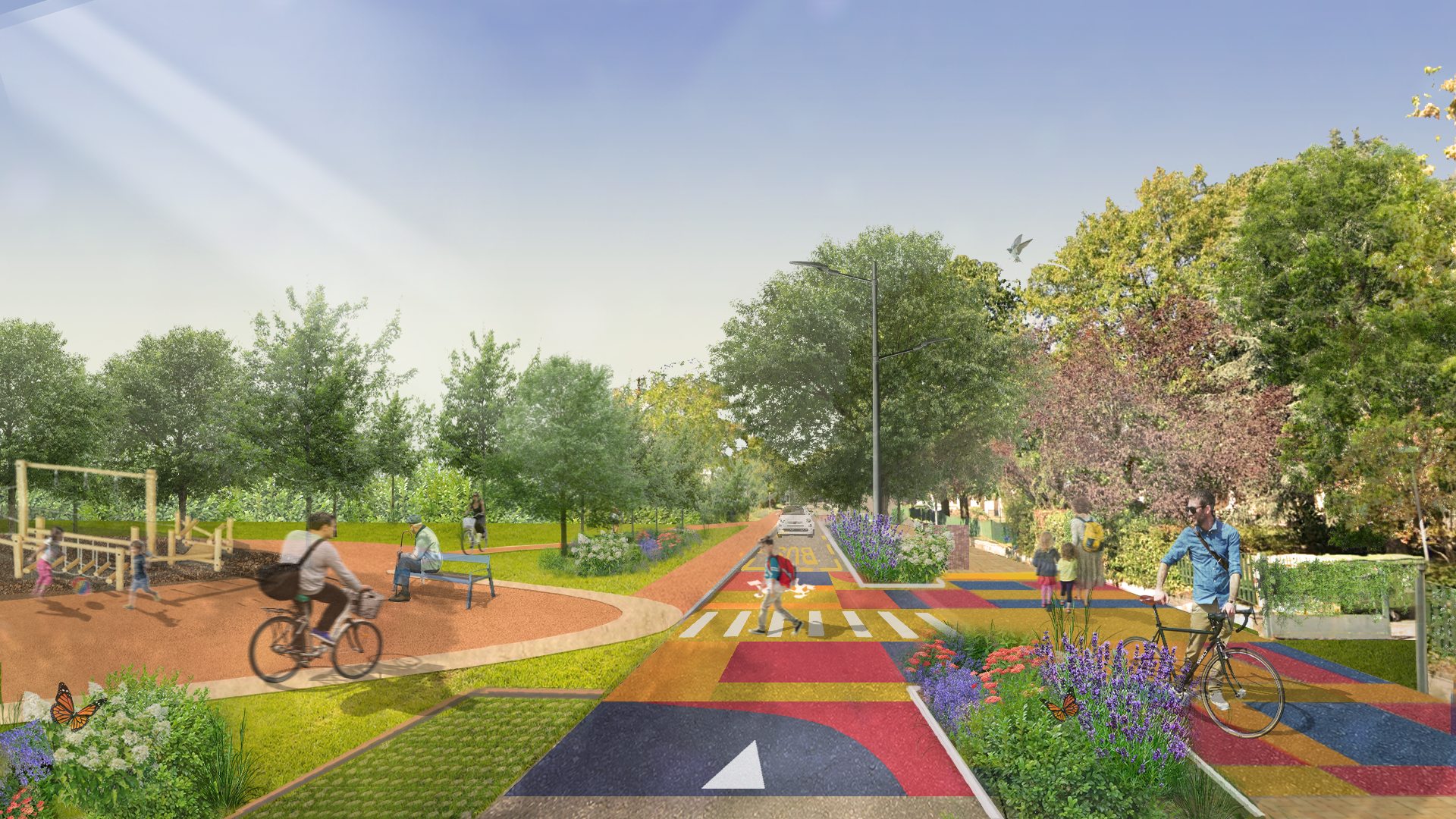
Rendering of via Tevere Living Street
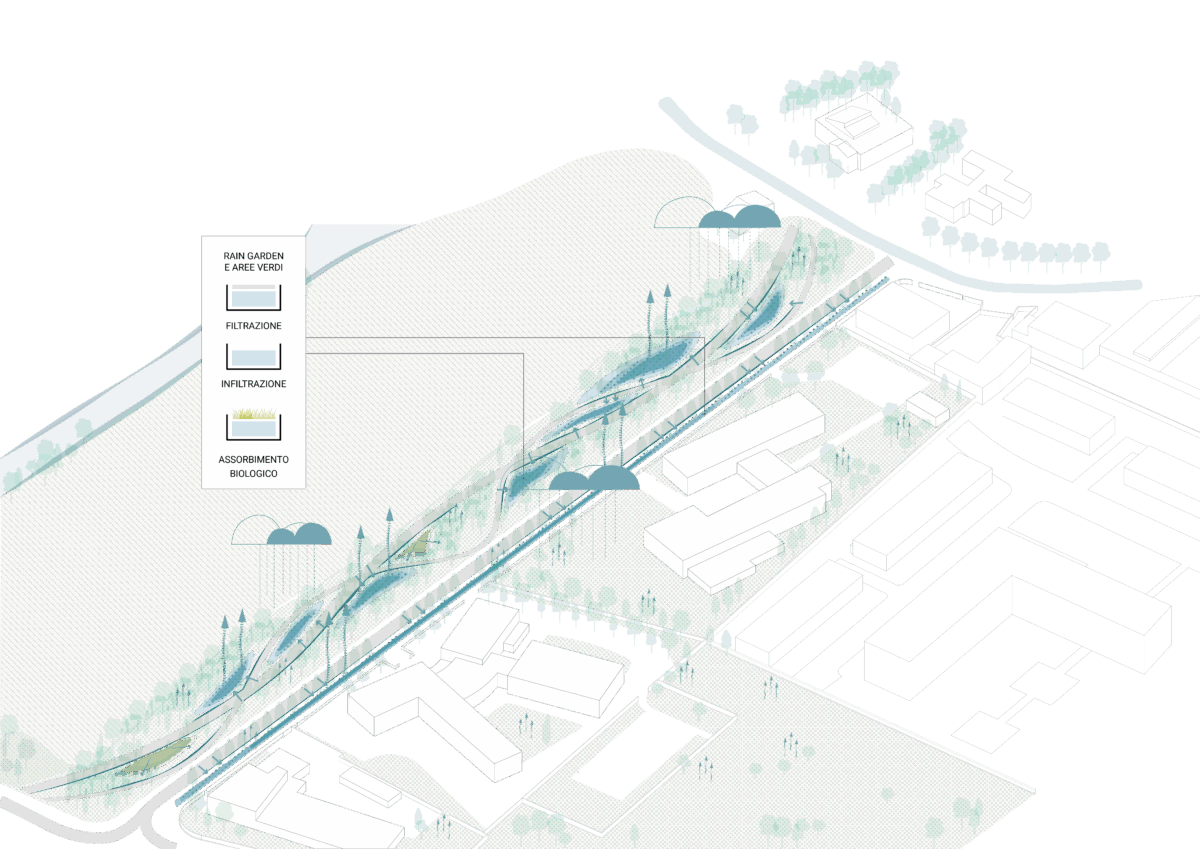
Water management axonometry
The project includes a green “passpartout” characterized by tree species typical of the local context, such as plane trees and elms. The tree-lined row along Via Tevere acts as a backdrop to the park and reflects the rhythm of the traditional Lombard planting grid, a generative framework for the arboreal compositions typical of the local landscape. This framework frames the views and creates shaded spaces that are pleasant for walking or resting.
Water is managed through a system of raingardens and basins, nature-based solutions that contribute to sustainable urban drainage. On the side of Via Tevere facing the schools, a linear rain garden system is introduced to collect water from the road and sidewalks. In the park area, vegetated basins are created to serve as a buffer between the road and the park paths, contributing to a dynamic and biodiverse environment. These basins also serve as water retention areas during significant weather events, acting as true environmental devices in support of the existing sewer system.
With the goal of making Via Tevere a true public space returned to the citizens, the introduction of bike paths—connected to the soft mobility routes of Via S. Martino and Via Ghisolfa—and pedestrian paths within the green area toward the Olona River aims to create a new system of accessibility and use. The winding paths through the park intersect three functional areas: two connected to Via S. Martino and Via Ghisolfa, which act as equipped gateways, and a central area featuring a playground space for students coming out of school.
Via Tevere, understood as a platform for socialization, is given a new identity through the use of colorful paving near pedestrian crossings. These interventions aim to promote active collaboration between citizens and the Public Administration, encouraging free initiative and involving both the community and schoolchildren in rethinking the street as a place for interaction, socialization, and gathering.
From a functional point of view, the proposal includes converting the road to a one-way street, maintaining space for 18 parking spots. The goal is to give greater space to pedestrians by widening the sidewalk in front of the schools, making it a proper forecourt for school drop-off and pick-up. At the same time, access for vehicles serving the schools is preserved, within a space where cars are treated as temporary guests. Parking needs are met by a lot created at the intersection of Via Tevere and Via S. Martino, which integrates seamlessly into the landscape project, becoming a fully integrated element of the new street-park.
Related projects
Technical Framework “Environment–Climate–Climate Change”, Rosenheim
Technical Framework “Environment–Climate–Climate Change”, Rosenheim