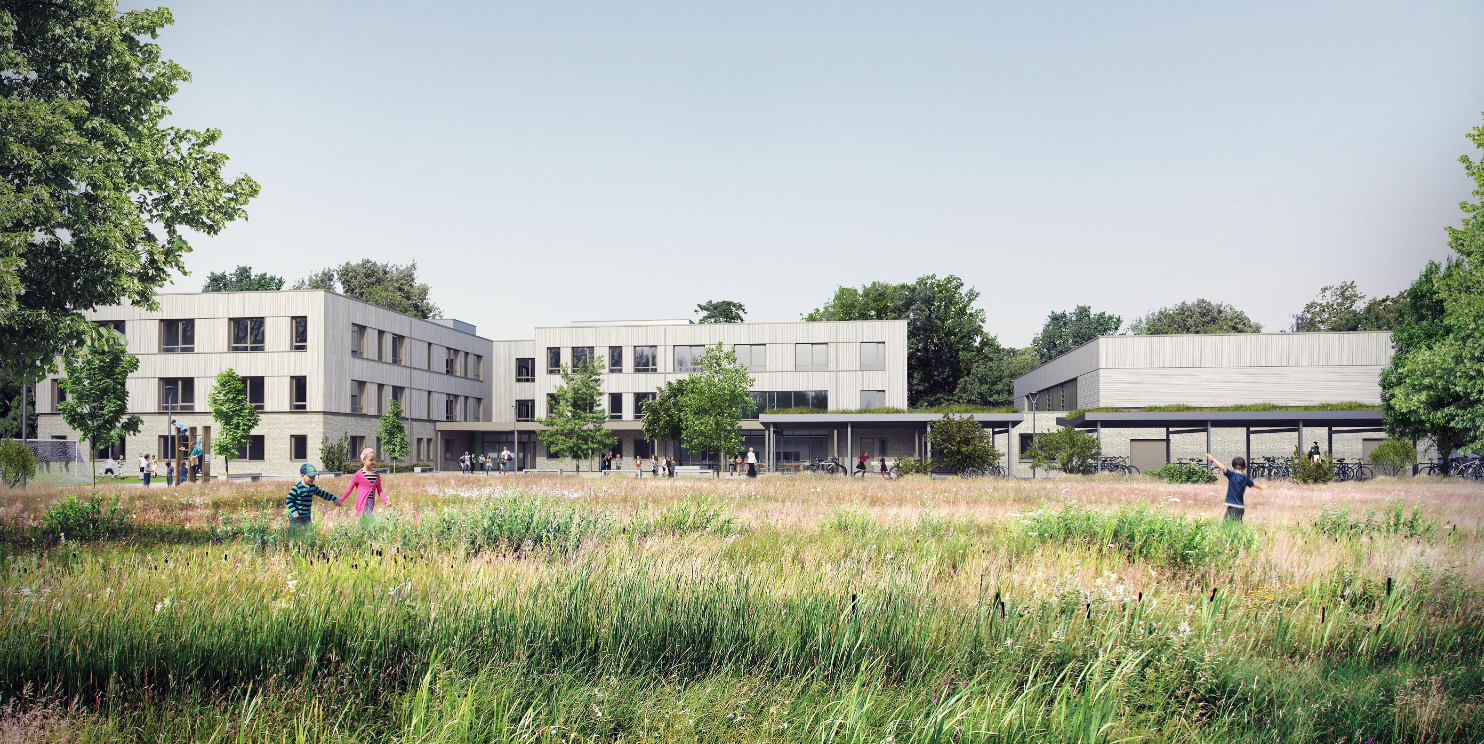
Gemeinschaftsgrundschule Vennhauser Allee, Düsseldorf
Germany
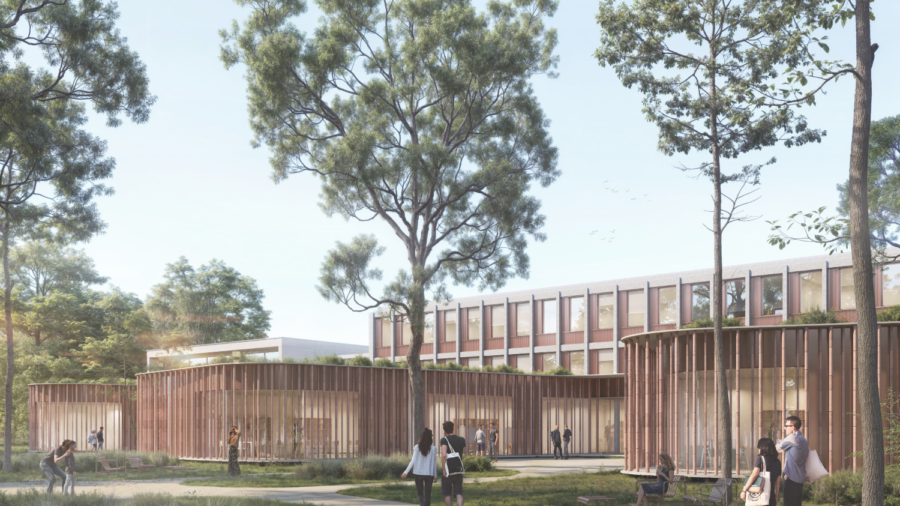
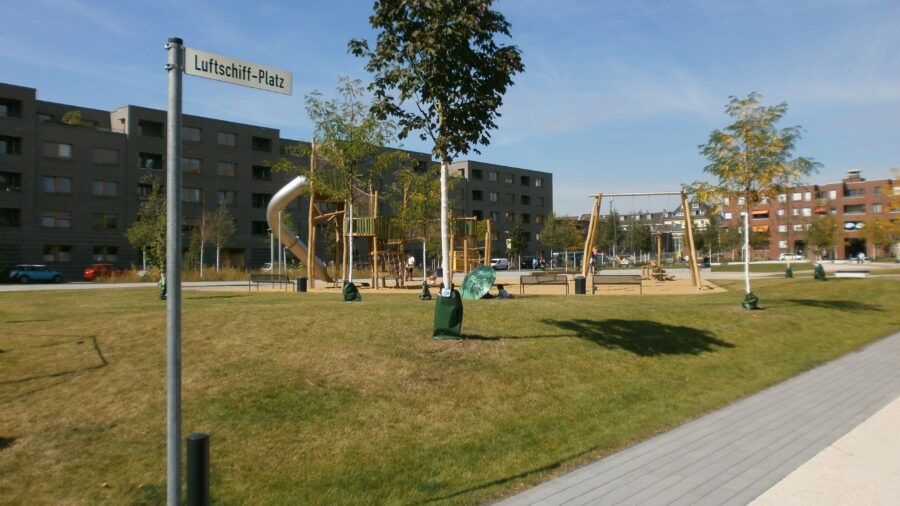
At Vennhauser Allee in Düsseldorf, the new campus for the community primary school is setting a benchmark for sustainable educational landscapes. A DGNB-certified project commissioned by the City of Düsseldorf, the design creates a generous and multifaceted outdoor space that supports learning through play, while placing a strong emphasis on greenery, biodiversity, and the quality of open space.
Client
IPM Immobilien Projekt Management Düsseldorf GmbH
Geography
Status
Year
2021-ongoing
Area Size
8.088 m²
Partners
HLK Architektur, Landeshauptstadt Düsseldorf (LHD), Florack Bauunternehmung GmbH, THOR Bauphysik, Grüning Consulting, Bell + Mende Beratende Ingenieure für Bauphysik und Brandschutz, Drees & Sommer (DGNB Beratung), IBS, KD Fassadenplanung, Pirlet & Partner Baukonstruktionen
At Vennhauser Allee in Düsseldorf, the new campus for the community primary school is setting a benchmark for sustainable educational landscapes. A DGNB-certified project commissioned by the City of Düsseldorf, the design creates a generous and multifaceted outdoor space that supports learning through play, while placing a strong emphasis on greenery, biodiversity, and the quality of open space.
Client
IPM Immobilien Projekt Management Düsseldorf GmbH
Geography
Status
Year
2021-ongoing
Area Size
8.088 m²
Partners
HLK Architektur, Landeshauptstadt Düsseldorf (LHD), Florack Bauunternehmung GmbH, THOR Bauphysik, Grüning Consulting, Bell + Mende Beratende Ingenieure für Bauphysik und Brandschutz, Drees & Sommer (DGNB Beratung), IBS, KD Fassadenplanung, Pirlet & Partner Baukonstruktionen
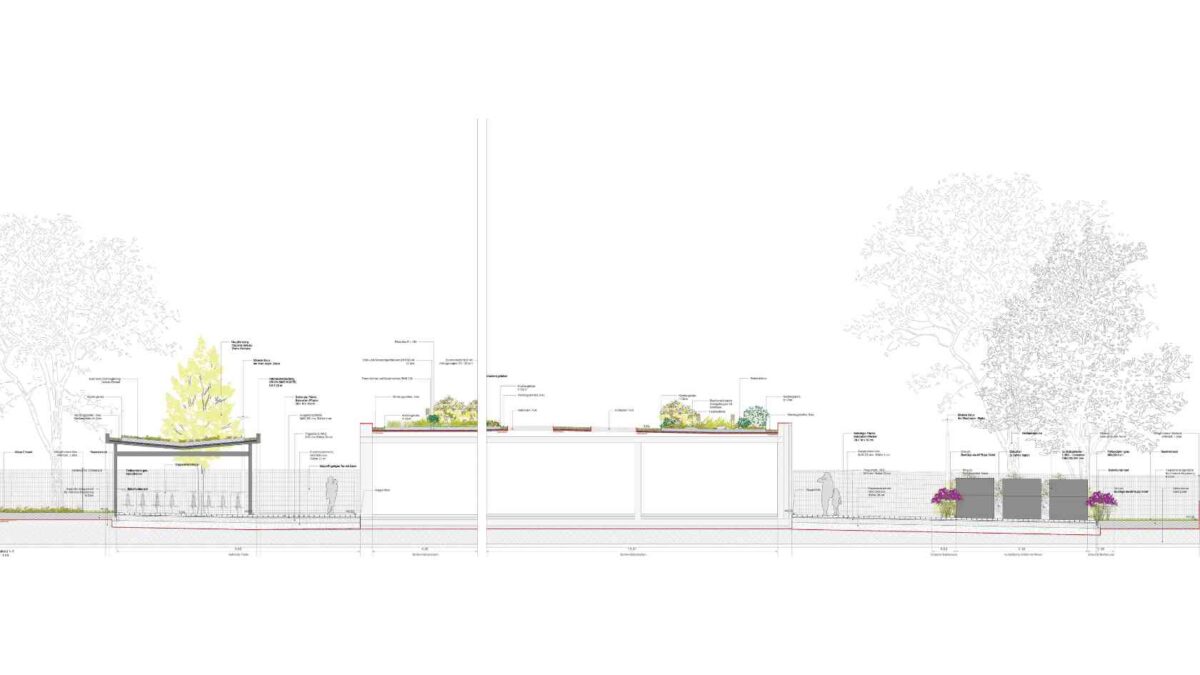
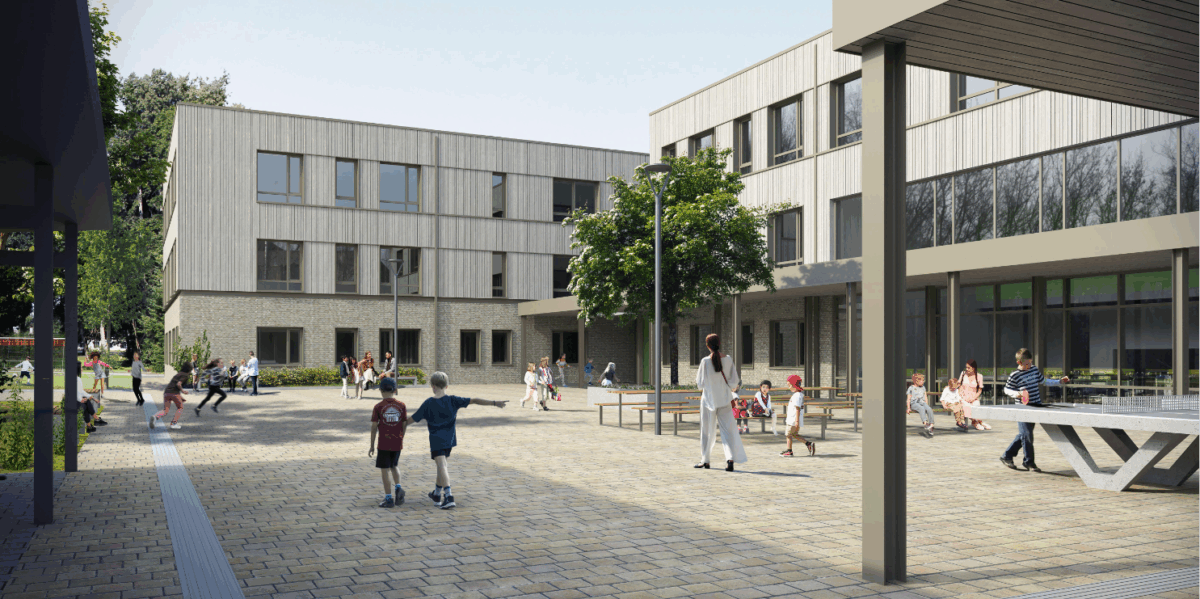
©Immobilien Projekt Management Düsseldorf GmbH
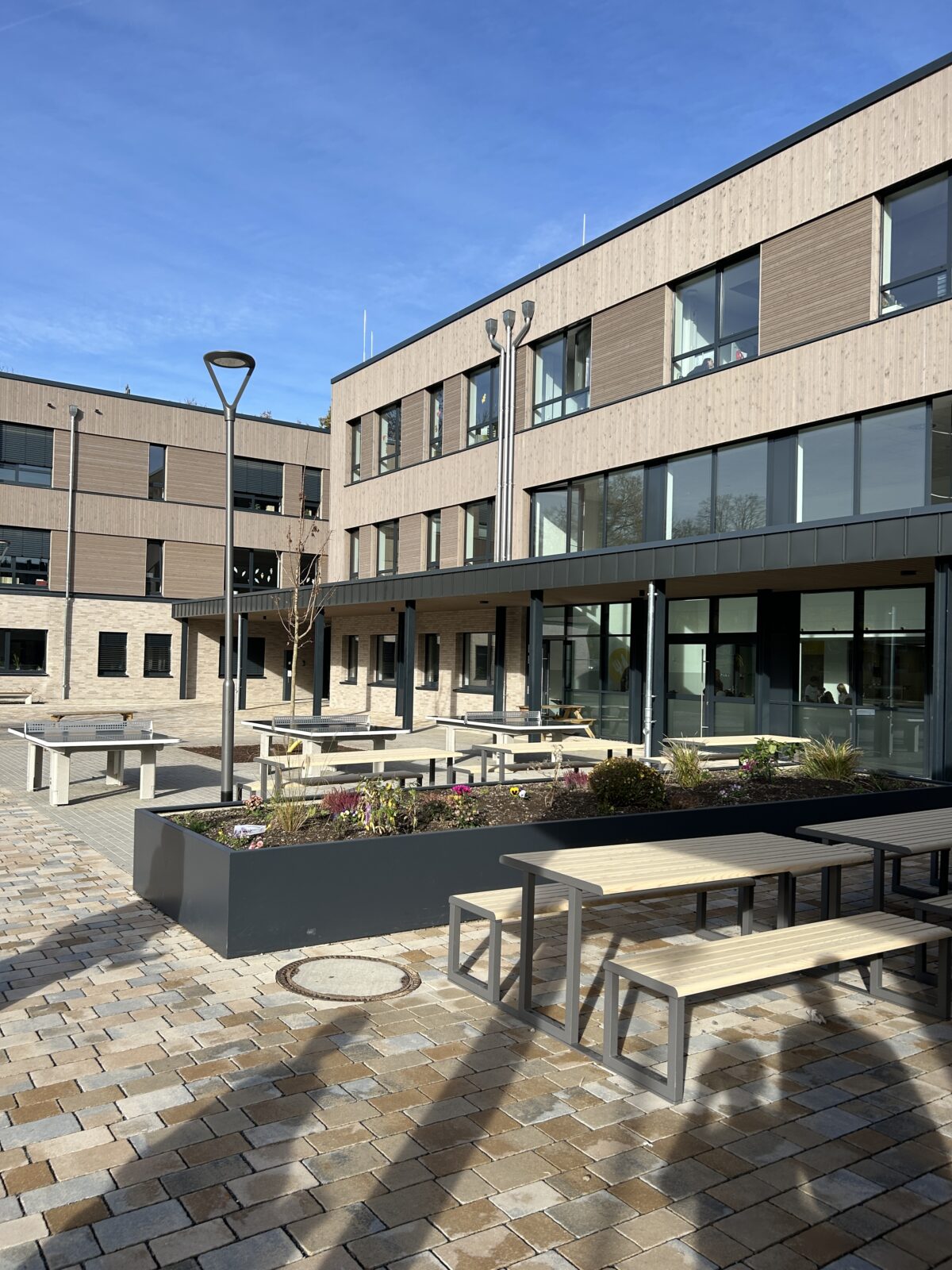
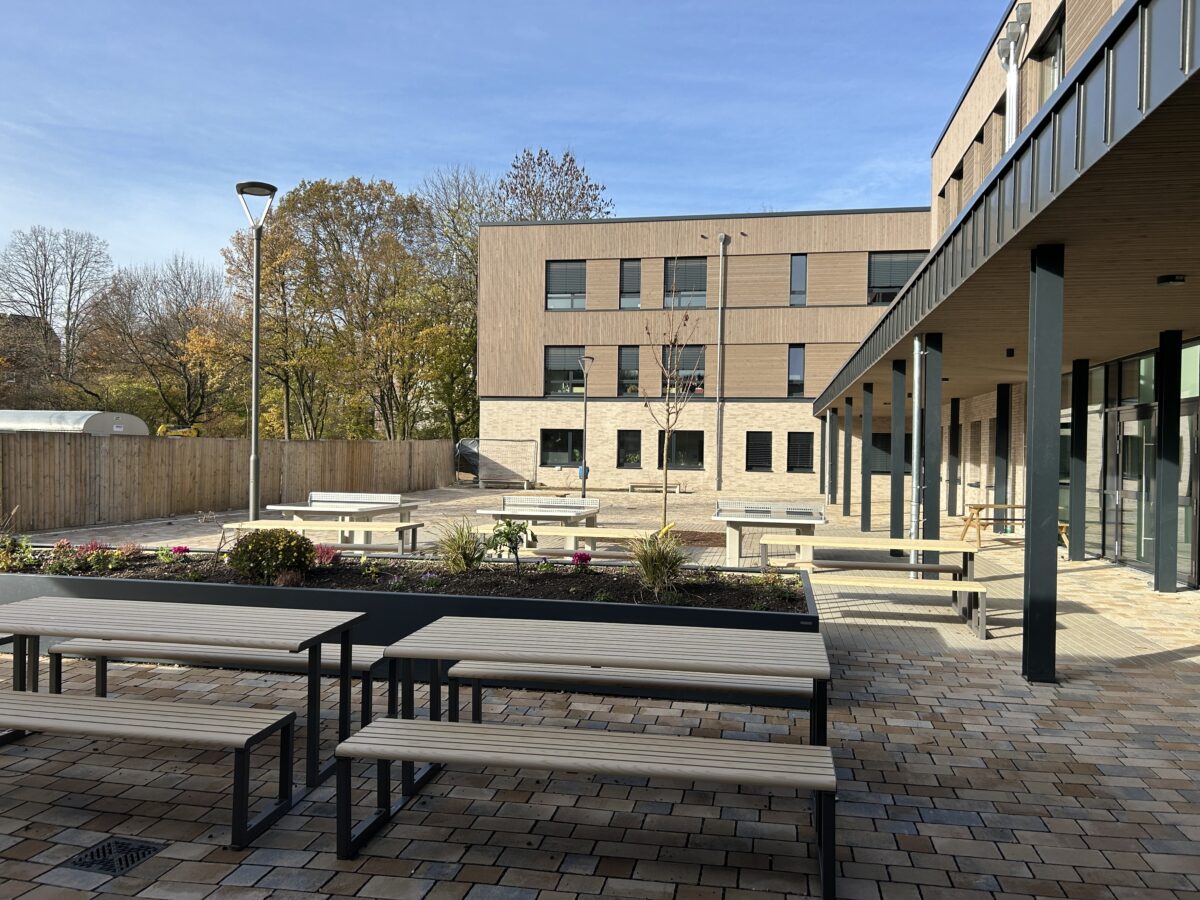
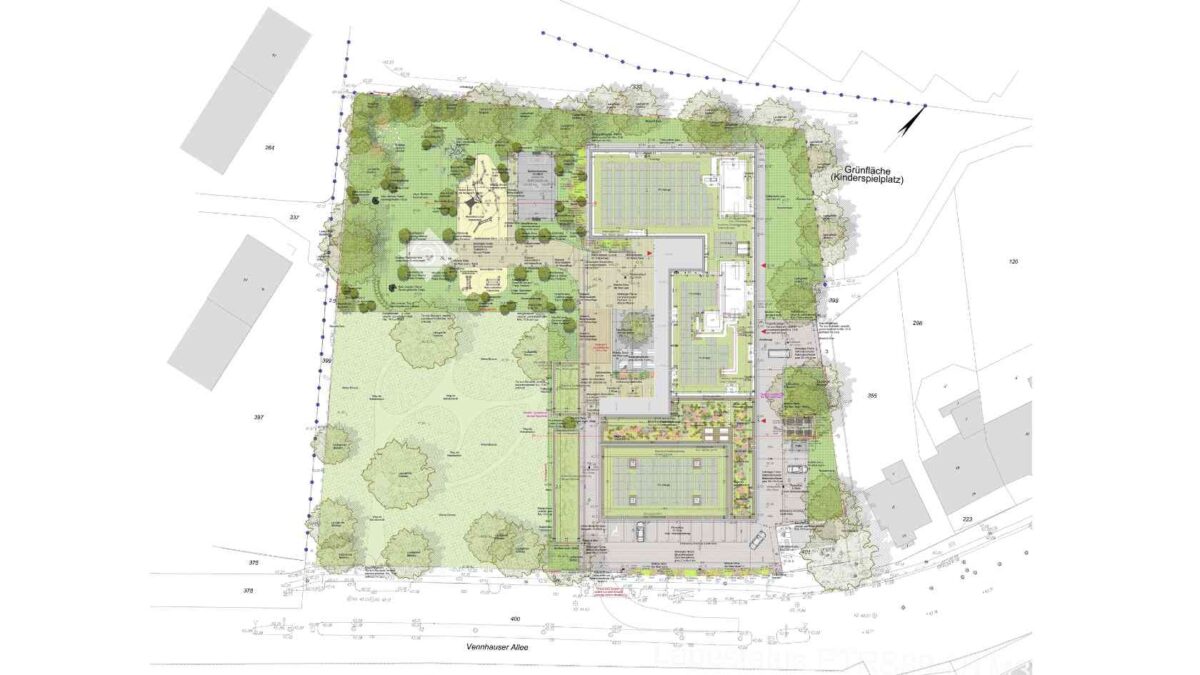
A green frame of mature trees, complemented by native shrubs such as Spiraea arguta, Kolkwitzia amabilis, and Salix purpurea ‘Nana’ form a soft natural buffer to the street. The green belt of existing trees is enhanced with serviceberries (Amelanchier lamarckii and A. ovalis), providing both shelter and structure, while offering quiet, nature-oriented zones for rest and reflection. Willow tents and tunnels enrich the outdoor experience, encouraging imaginative play and interaction with nature.
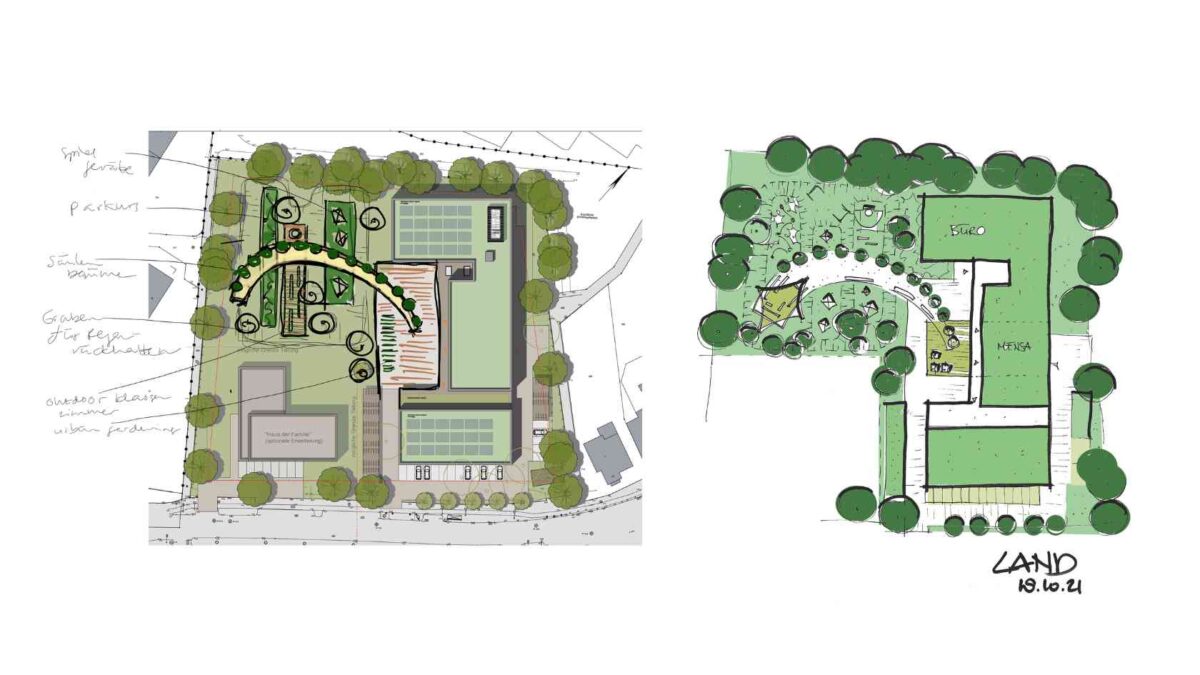
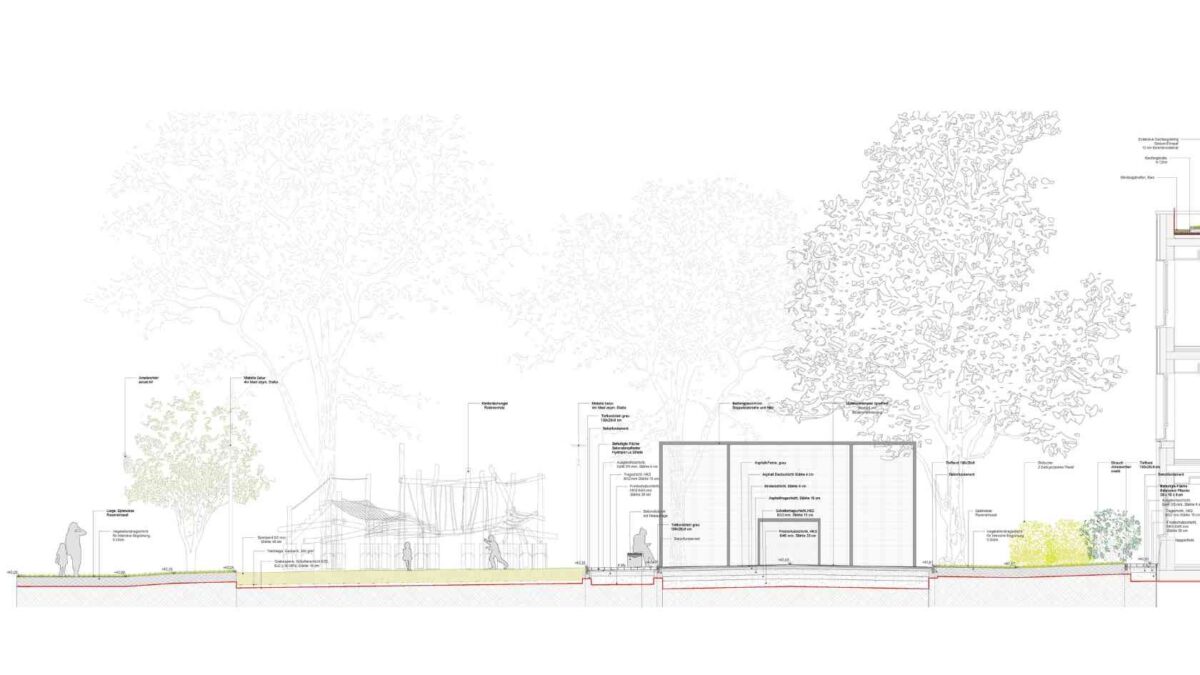
The layout of the school grounds is designed for shared, intergenerational use. Differentiated activity zones allow for a wide range of movement, learning, and recreation: a climbing jungle made of timber structures, balance beams, and multi-purpose play and sports fields defined by colourful markings. A centrally located green classroom, shaded by a weatherproof canopy and surrounded by curved seating, provides space for open-air lessons and collaborative learning.
The forecourt is lined with Carpinus betulus ‘Frans Fontaine’ — a tree designated by the City of Düsseldorf as a Zukunftsbaum (“Tree of the Future”). Selected for its resilience to heat and drought, it symbolises the city’s strategy to adapt its urban tree population to changing climatic conditions.
Sustainability is integral to every aspect of the design. A large photovoltaic system on the roof generates renewable energy for on-site use, while regional, certified materials ensure durability and low environmental impact. The paving material “La Strada” by Rinn, made with a high recycled content and certified with the Blue Angel eco-label, underscores this commitment.
The entire campus is barrier-free, with minimal sealing and extensive planted areas that improve water infiltration, moderate heat, and enhance the site’s microclimate. Insect-friendly lighting keeps light pollution low and preserves nocturnal orientation for pollinators.
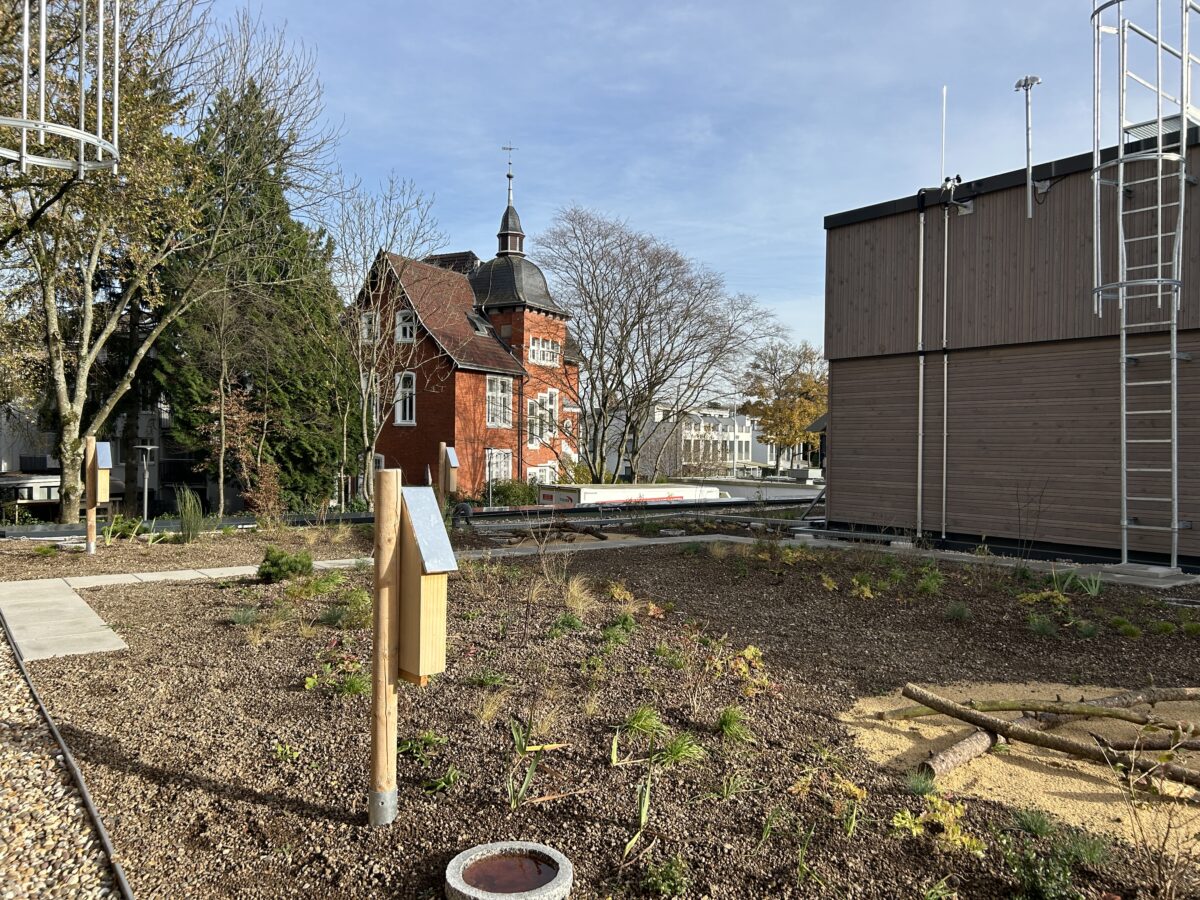
A special highlight is the biodiversity roof: an assemblage of varied microhabitats — from deadwood piles and stone mounds to water basins and insect hotels — that together form a rich urban biotope. This mosaic supports wild bees, butterflies, and ground-nesting birds, offering refuge, nesting sites, and food sources in the heart of the city.
Through these measures, the new Vennhauser Allee School becomes more than an educational facility: it is a living ecosystem that teaches by example — a place where children learn, play, and grow in harmony with nature, and where the landscape itself becomes a teacher.
Office
People
Norbert BusseLaurent Großklaus
Typology
Urban regeneration & developmentEducational & leisure spaces