The Q, Nürnberg
Germany
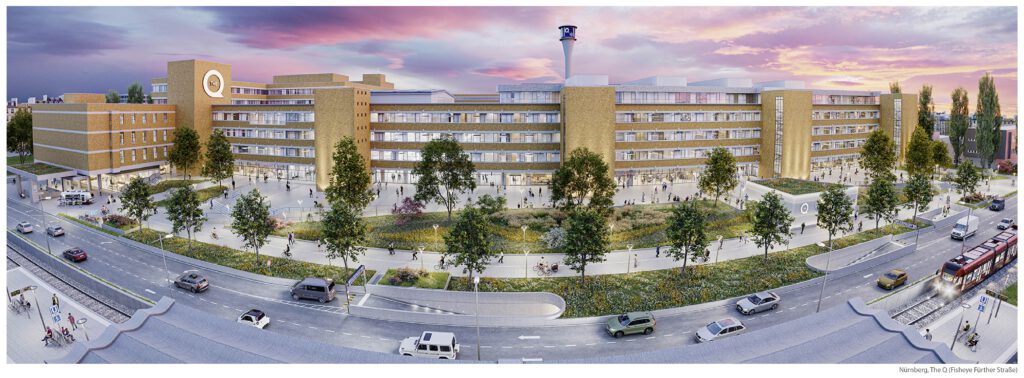
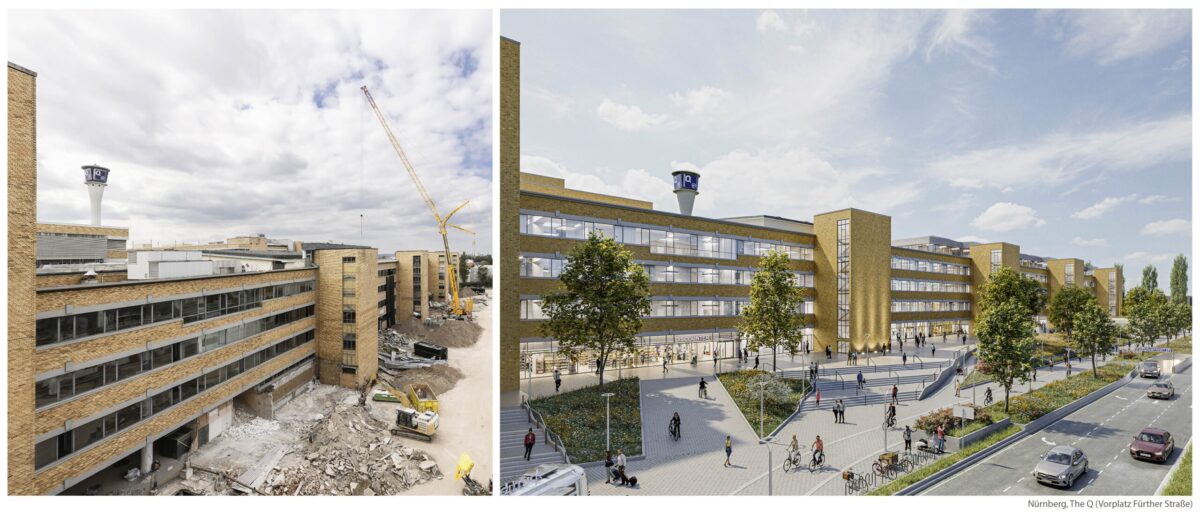
The Q reactivates the former Quelle Versandzentrum in Nürnberg, a protected landmark of post-war modernism designed by Prof. Ernst Neufert. Following its closure in 2009, the large area of 250,000 m² remained vacant. Since 2018, a comprehensive mixed-use redevelopment strategy has been advanced for the site. LAND Germany was involved in the feasibility study for the regeneration of the green areas of the site, as well as in the detailed planning and executive design.
Client
GERCHGROUP AG | Bayerisches Immobilien Kontor GmbH | Q Nürnberg Real Estate GmbH & Co.KG
Geography
Status
Year
2019 - ongoing
Area Size
25 ha
Lead Consultant
LAND Germany
Partners
ksg kister scheithauer gross architekten und stadtplaner GmbH, Köln · Diete + Siepmann Ingenieurgesellschaft mbH, Kaarst · Bohnzirlewagen GmbH, Düsseldorf · S3P Seyler + Pärssinen ProjektPartner GmbH, Stuttgart · Werner Sobek AG, Stuttgart · Hetzel, Tor-Westen + Partner Ingenieurgesellschaft mbH & Co. KG, Düsseldorf · Corall Ingenieure GmbH, Meerbusch · Peutz Consult GmbH, Düsseldorf · BST Becker Sanierungstechnik GmbH, Oberhausen · Zech Roh- und SF-Bau GmbH, München · Wayss & Freytag Ingenieurbau AG, München · TAMPAH real estate management GmbH
The Q reactivates the former Quelle Versandzentrum in Nürnberg, a protected landmark of post-war modernism designed by Prof. Ernst Neufert. Following its closure in 2009, the large area of 250,000 m² remained vacant. Since 2018, a comprehensive mixed-use redevelopment strategy has been advanced for the site. LAND Germany was involved in the feasibility study for the regeneration of the green areas of the site, as well as in the detailed planning and executive design.
Client
GERCHGROUP AG | Bayerisches Immobilien Kontor GmbH | Q Nürnberg Real Estate GmbH & Co.KG
Geography
Status
Year
2019 - ongoing
Area Size
25 ha
Lead Consultant
LAND Germany
Partners
ksg kister scheithauer gross architekten und stadtplaner GmbH, Köln · Diete + Siepmann Ingenieurgesellschaft mbH, Kaarst · Bohnzirlewagen GmbH, Düsseldorf · S3P Seyler + Pärssinen ProjektPartner GmbH, Stuttgart · Werner Sobek AG, Stuttgart · Hetzel, Tor-Westen + Partner Ingenieurgesellschaft mbH & Co. KG, Düsseldorf · Corall Ingenieure GmbH, Meerbusch · Peutz Consult GmbH, Düsseldorf · BST Becker Sanierungstechnik GmbH, Oberhausen · Zech Roh- und SF-Bau GmbH, München · Wayss & Freytag Ingenieurbau AG, München · TAMPAH real estate management GmbH
© Pulsschlag Network GmbH
© Pulsschlag Network GmbH
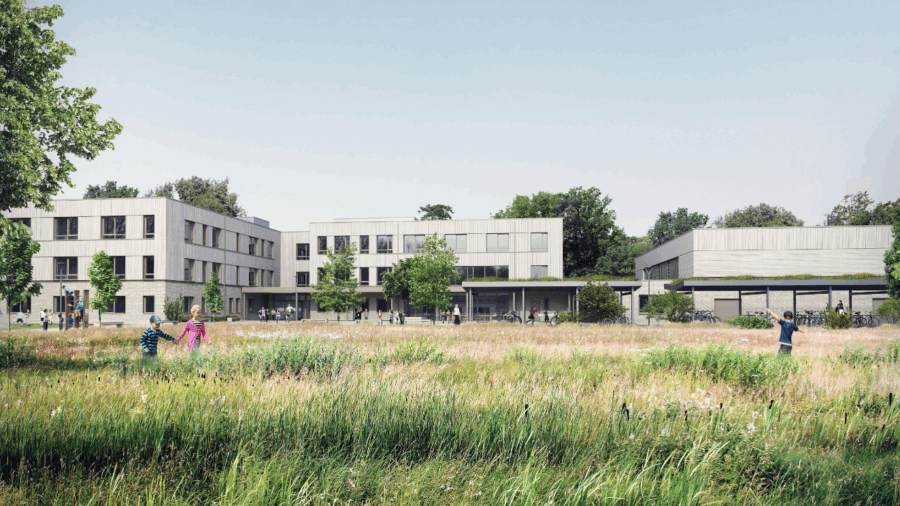
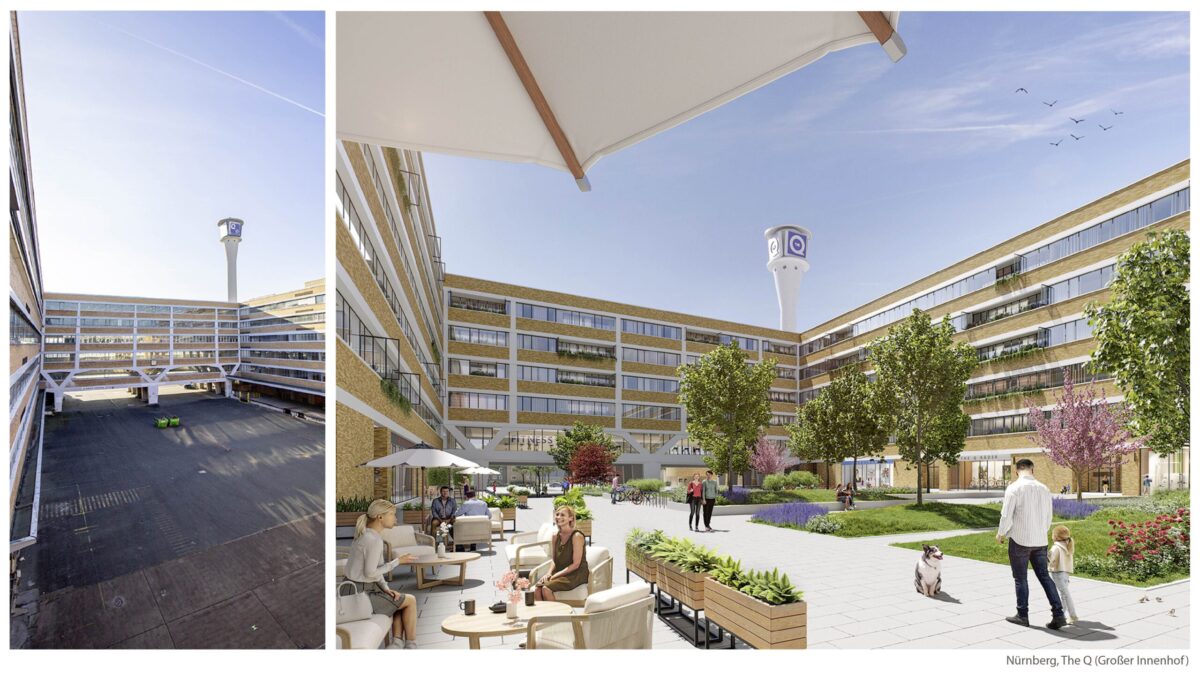
The transformation of the historic Quelle site reimagines a former industrial complex as a vibrant mixed-use urban landscape. The new programme introduces around 1,000 residential units alongside workplaces, retail, gastronomy and social infrastructure, including a daycare facility. At the same time, the project carefully balances heritage protection, contemporary energy standards and new spatial needs. Strategic architectural interventions – such as the introduction of light-filled courtyards – open the massive building structure and enable high-quality living and working environments.
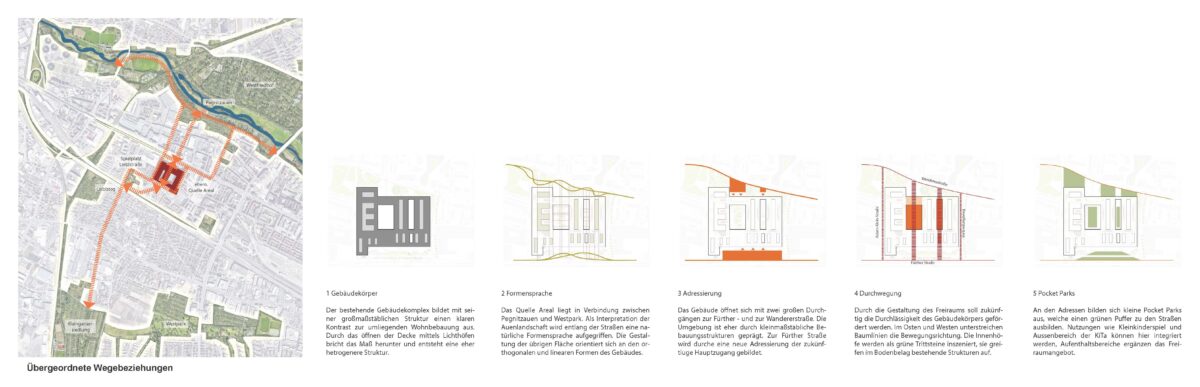
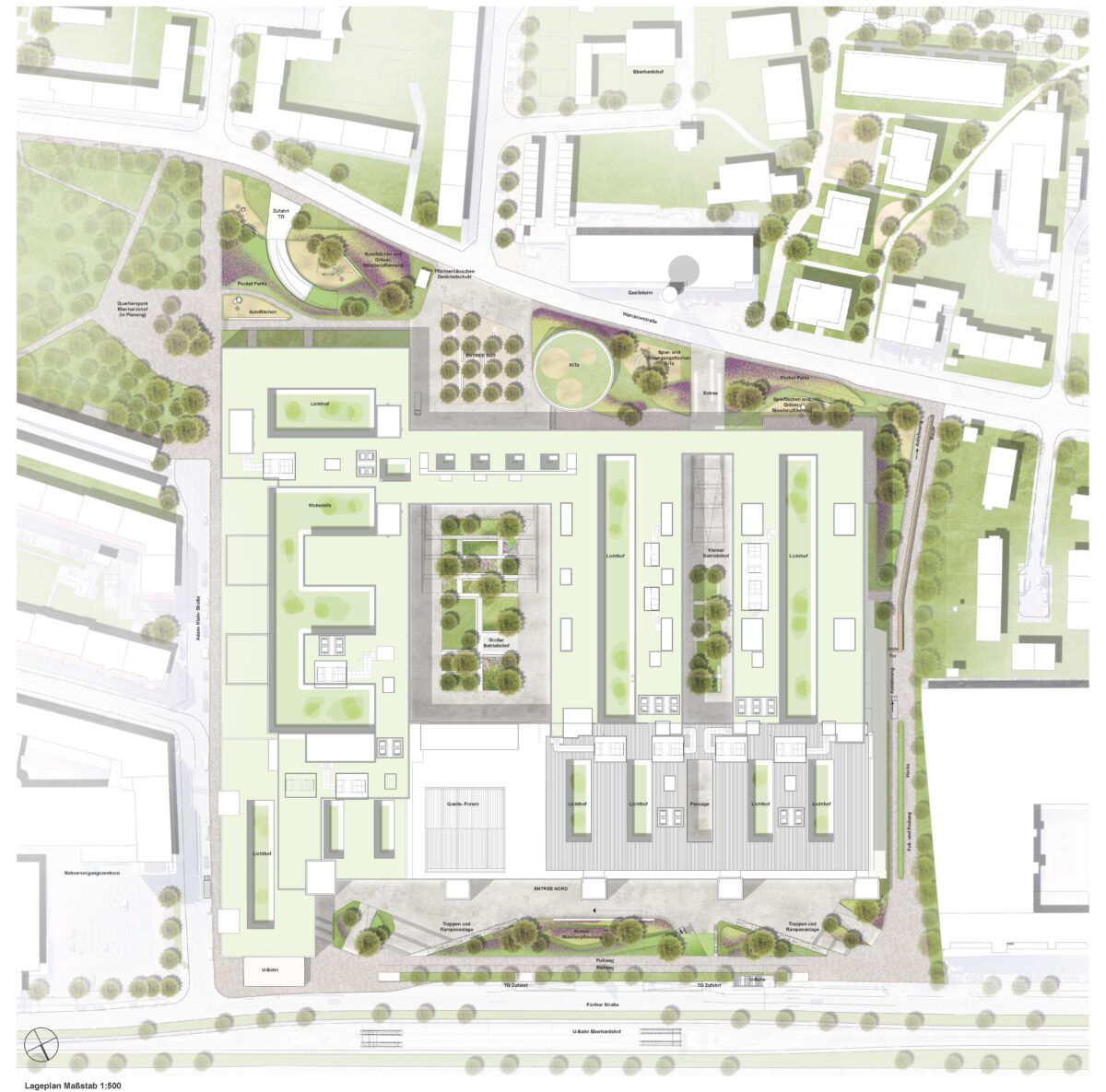
LAND’s landscape concept focuses on reconnecting the site with the surrounding urban fabric and its ecological context. Once an impermeable industrial block, the area becomes a permeable landscape of public spaces and pathways. New connections across the site link the surrounding neighbourhoods and reconnect the southern residential districts with the northern pedestrian and cycling networks, extending toward the recreational landscape of the Pegnitzauen.
The open space design interprets the natural morphology of the nearby river landscape while responding to the orthogonal structure of the historic architecture. A sequence of courtyards, plazas and green corridors forms a network of “green stepping stones” that structure the site and create diverse places for everyday life. These spaces not only support the new mix of uses but also establish the area as an important link within the wider open-space system of the district.
Sustainability and climate resilience are central to the design approach. Extensive planting, permeable surfaces and green roofs contribute to cooling the urban microclimate, managing stormwater and enhancing biodiversity. By increasing green space and reusing existing materials where possible, the project transforms a sealed industrial ground into a productive and nature-positive landscape – a place where living, working and everyday life unfold in close relationship with nature.
Related projects
Technical Framework “Environment–Climate–Climate Change”, Rosenheim
Technical Framework “Environment–Climate–Climate Change”, Rosenheim