FILI, Cycle Superhighway from Milan to Malpensa
Italy
FILI is an ambitious project spearheaded by the Lombardy Region, FNM Ferrovie Nord, and Trenord. It is one of Europe’s most significant urban regeneration initiatives, reimagining the region’s railway infrastructure to foster sustainable mobility and revitalise urban landscapes. This transformative vision centres on the Milan-Malpensa corridor, a vital 54-km axis that links Milano Cadorna station with Malpensa Airport, positioning it as a strategic backbone for the metropolitan area’s future.
Client
FNM Group S.p.A. / Arcadis Italia
Geography
Status
Year
2024 - ongoing
Area Size
from Milan to Malpensa
Lead Consultant
Arcadis Italia
Key project datas
3 Provinces involved; 30 Municipalities involved; 20 Railway stations involved of which 4 regenerated; 5 parks and protected areas crossed; 5 crossed; 54 km cycle superhighway; 11 km2 regenerated areas; 500.000 potential new trees
FILI is an ambitious project spearheaded by the Lombardy Region, FNM Ferrovie Nord, and Trenord. It is one of Europe’s most significant urban regeneration initiatives, reimagining the region’s railway infrastructure to foster sustainable mobility and revitalise urban landscapes. This transformative vision centres on the Milan-Malpensa corridor, a vital 54-km axis that links Milano Cadorna station with Malpensa Airport, positioning it as a strategic backbone for the metropolitan area’s future.
Client
FNM Group S.p.A. / Arcadis Italia
Geography
Status
Year
2024 - ongoing
Area Size
from Milan to Malpensa
Lead Consultant
Arcadis Italia
Key project datas
3 Provinces involved; 30 Municipalities involved; 20 Railway stations involved of which 4 regenerated; 5 parks and protected areas crossed; 5 crossed; 54 km cycle superhighway; 11 km2 regenerated areas; 500.000 potential new trees

FILI, the sketched vision of Andreas Kipar. Image by LAND
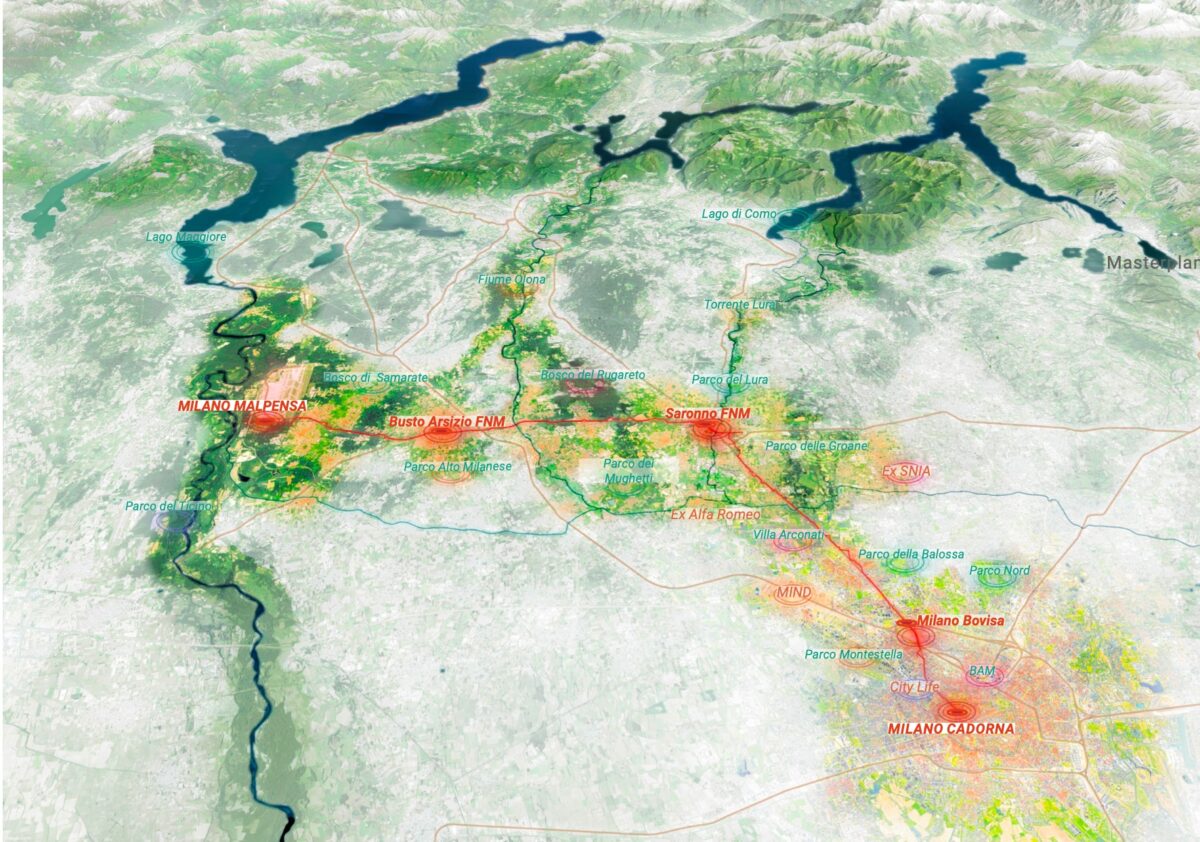
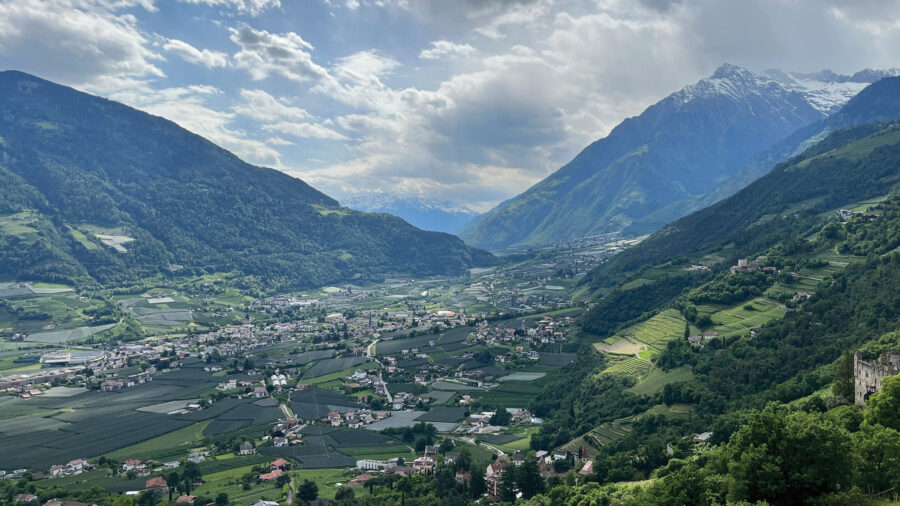
Layout of the FILI intervention in the regional context of Milano, looking towards the Alps and the lakes. Image by LAND
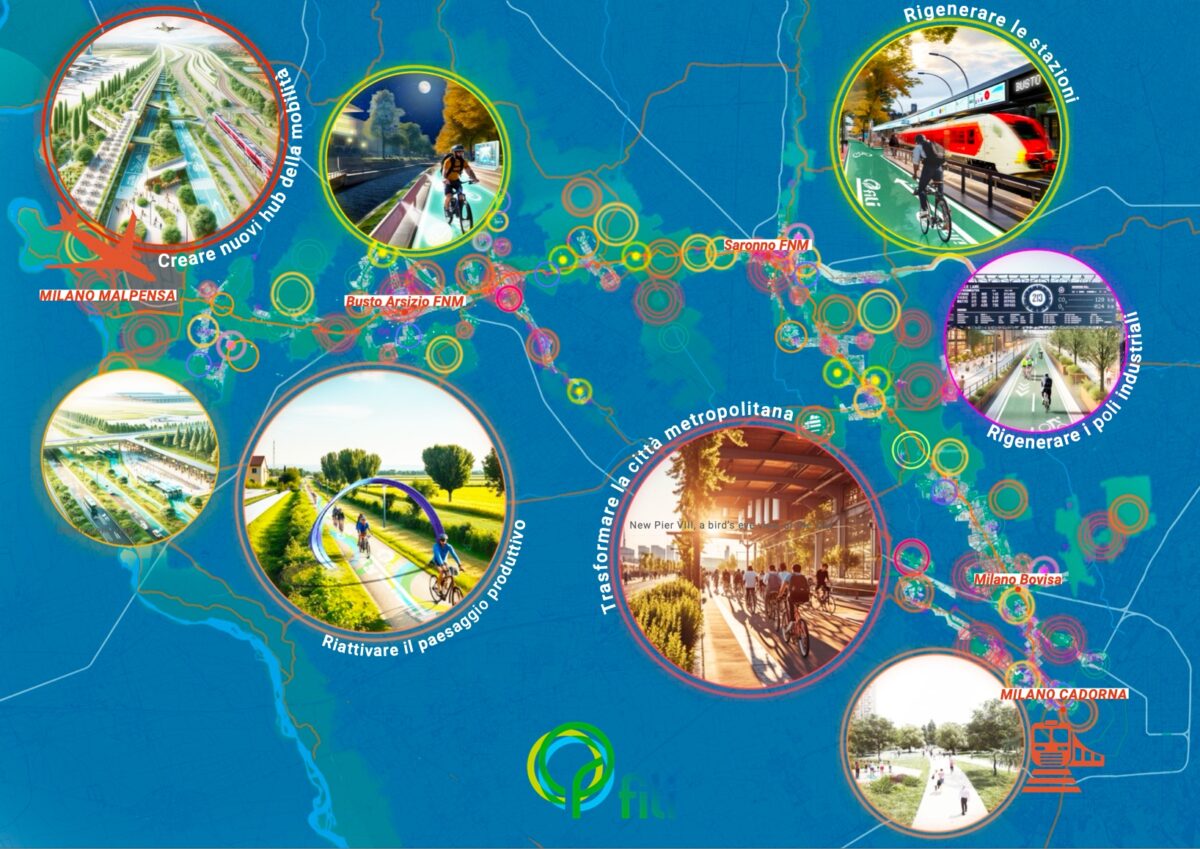
The different elements of the FILI strategy. Image by LAND
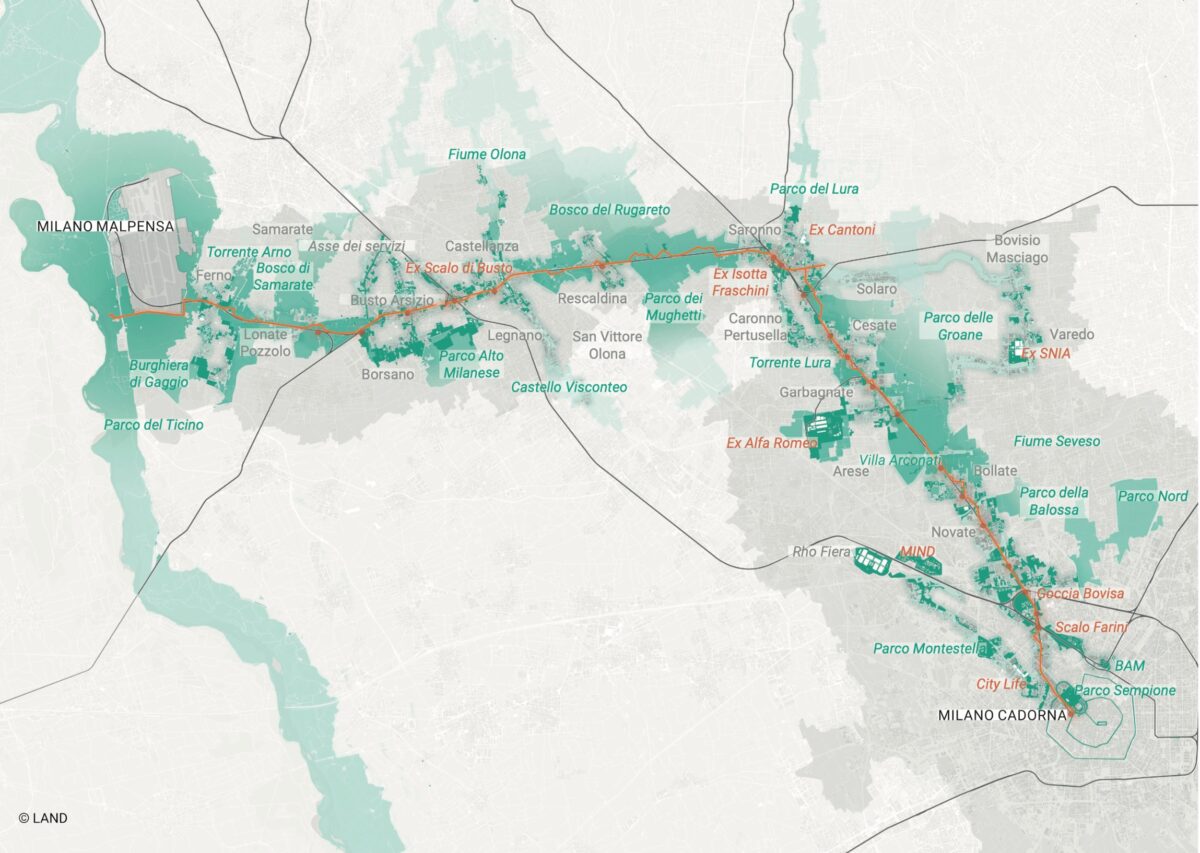
Layout of the municipalities involved in the FILI project. Image by LAND
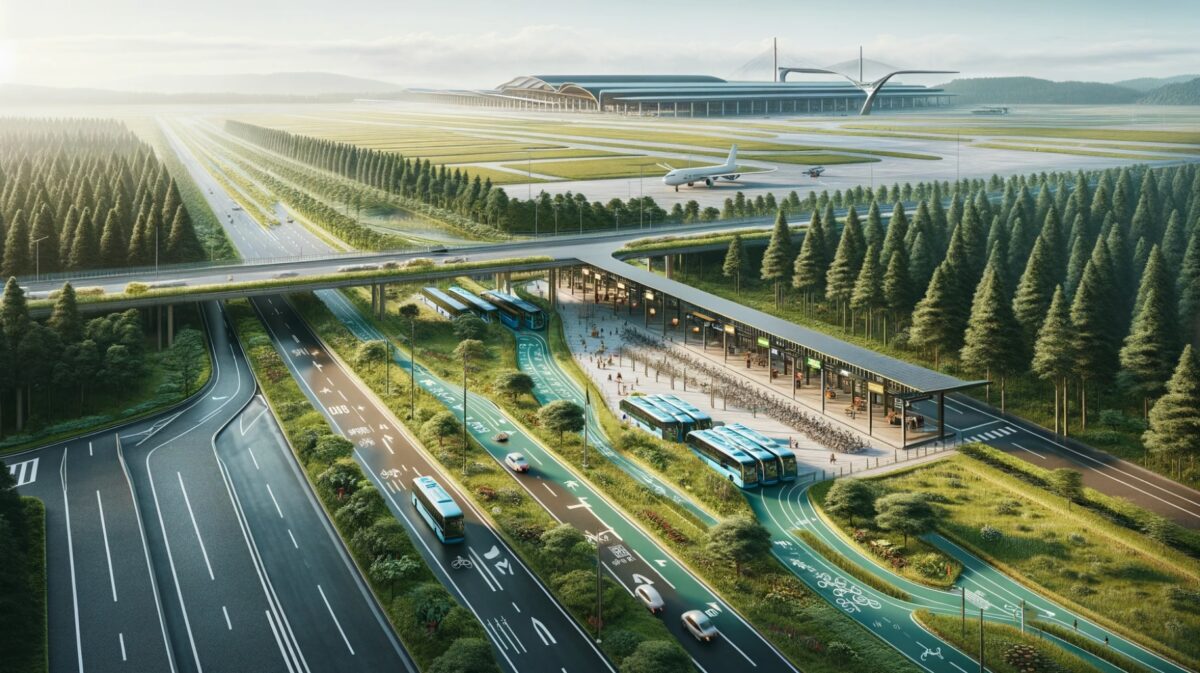
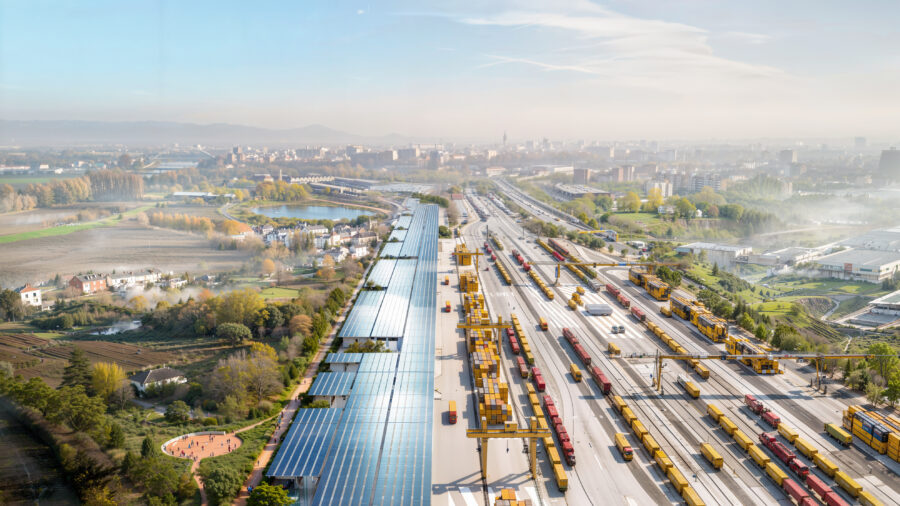
AI generated image showing Malpensa airport with the new FILI cycle highway. Image by LAND
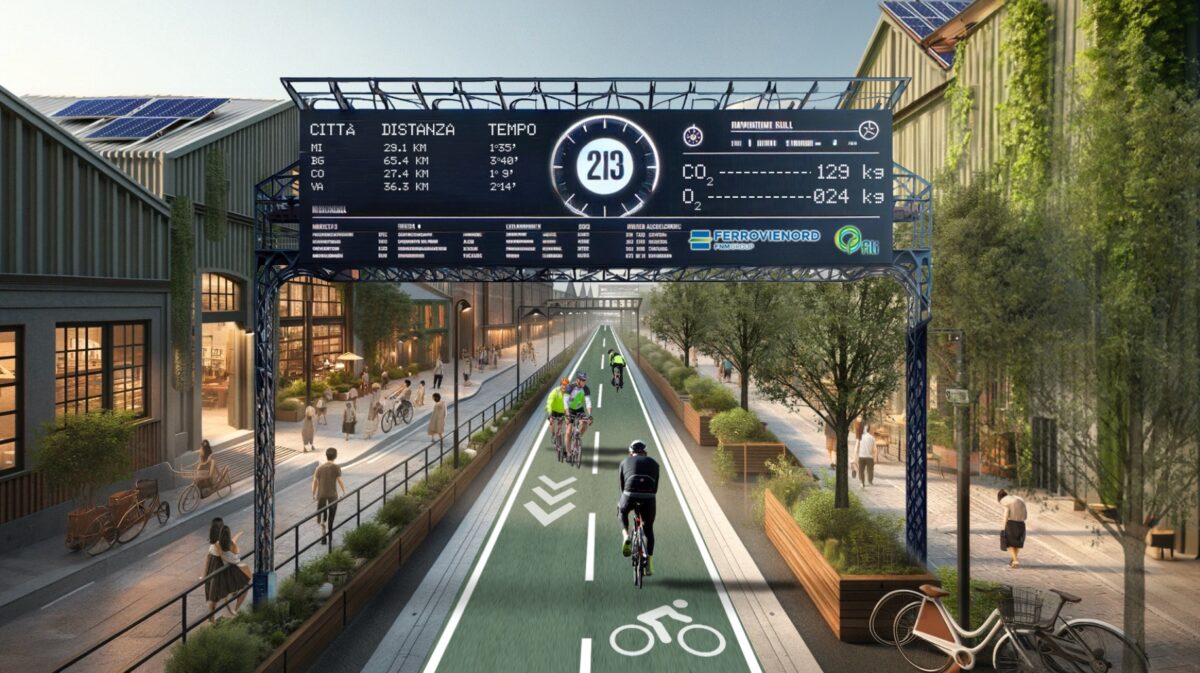
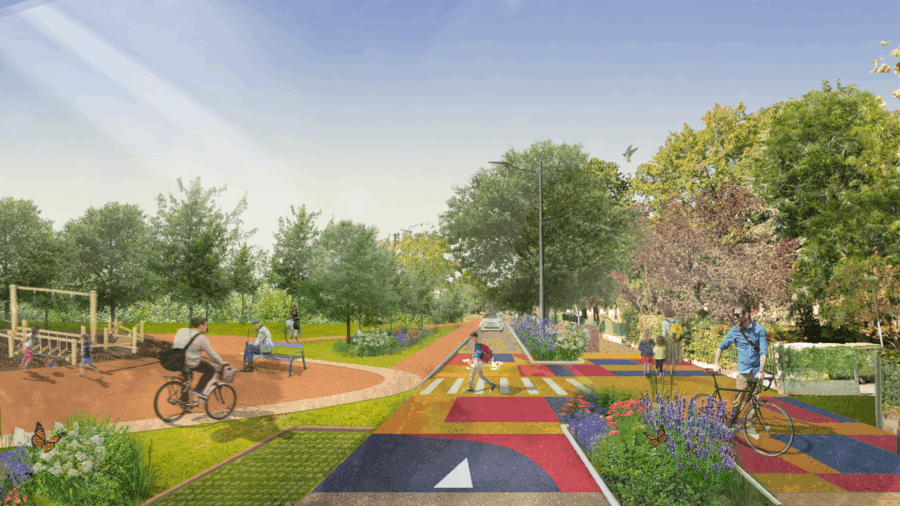
The FILI cycle path in the city. Image by LAND
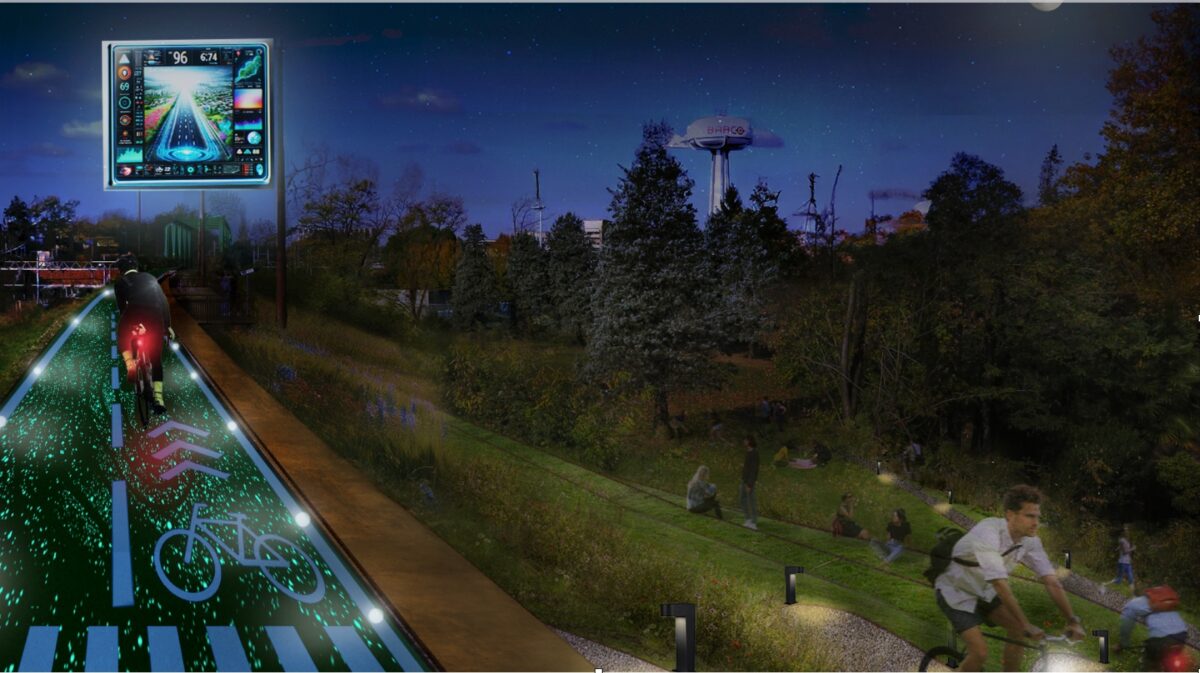
FILI cycle highway during the night. Image by LAND
The Cycle Superhighway project FILI, which links Milano Cadorna station with Malpensa Airport, spearheaded by the Lombardy Region, FNM Ferrovie Nord, and Trenord, is a game-changer in sustainable mobility.
FILI’s standout features include creating a 54-km bicycle superhighway, a dedicated fast cycling route designed to connect urban centres with speed, safety, and sustainability. This cycle superhighway exemplifies a forward-thinking approach to mobility, activating new connections within the urbanised continuum and encouraging greener, healthier modes of transportation. It is a practical infrastructure and a symbol of innovation, enabling efficient, seamless travel while fostering regional collaboration.
Reviving Landscapes, Connecting Communities
FILI is a unique opportunity to breathe new life into disused areas, transforming them into hubs of innovation that balance economic development with environmental preservation and landscape enhancement. The project envisions a paradigm shift in how the Milan urban region interacts with its surroundings, leveraging the area’s untapped potential to create inclusive, environmentally sustainable spaces. For us, this is about redefining existing infrastructures and rethinking their relationships with the metropolitan region to unlock opportunities often overlooked.
FILI’s comprehensive strategy goes beyond transport. It reimagines the Milan region as a dynamic macro-territory where urban inclusiveness, ecological restoration, and cultural preservation converge. It calls upon stakeholders to collaborate across administrative boundaries, inspiring new projects in synergy with the overarching goals of the initiative.
The regeneration process extends to reviving rivers, preserving cultural and natural heritage, and introducing innovative ways of moving and relating to spaces. FILI acts as a living laboratory for the renaturalisation of Lombardy, addressing past challenges and reinterpreting them to create a vibrant, interconnected urban landscape.
Related projects
Strategic Campus Development Framework, Schaeffler Areal Herzogenaurach
Strategic Campus Development Framework, Schaeffler Areal Herzogenaurach