Thinking big for BUGA29: “Two Cities, One Future”
The future development of the twin cities Sankt Goar and Sankt Goarshausen—located opposite each other on the Rhine in the heart of the Upper Middle Rhine Valley UNESCO World Heritage Site—reaches a new milestone
The official documentation following the International Planners’ Workshop held on October 2024, titled “Zwei Städte, Eine Zukunft” (Two Cities, One Future), outlines an ambitious, joint urban transformation strategy, with the Bundesgartenschau 2029 (BUGA29) serving as a critical catalyst.
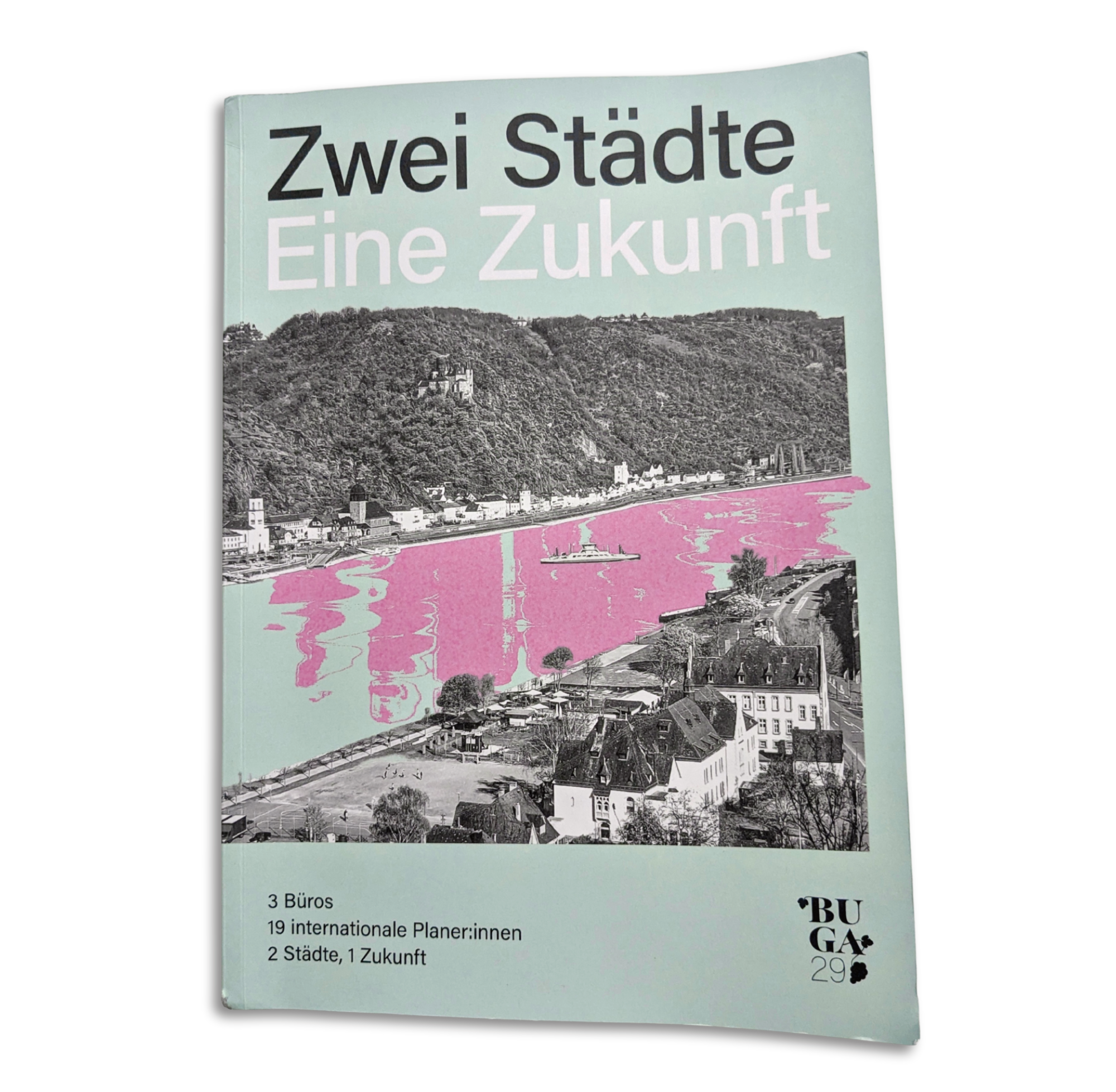
Last year, the symposium workshop brought together 3 offices and 19 international planners from France, Denmark, the Netherlands, and Germany. The core focus was to address modern challenges by enhancing the quality of stay and promoting attractive public spaces.
In his preface to the text, along with BUGA29 MD Sven Stimac, Andreas Kipar emphasizes the need to “think big” (“groß zu denken”). He positions BUGA29 not just as a temporary event, but as a strategic tool to generate long-term urban impulses and sustainable development across the region.
He introduces the guiding word of the future as “Talent” (“Begabung”) and promotes the concept of the “Productive Landscape” (“produktiven Landschaft”). This framework suggests filling the regional space with a network of relationships and new productivities, where nature and culture are respectfully combined to foster a sharing society and strong togetherness.
The vision transcends local boundaries, extending beyond the narrow Loreley Valley, where the successful design of smaller spaces can only be achieved through interaction with larger spaces. This is exemplified by the regional partnership between the district of Mainz-Bingen and the Province of Verona, symbolically linking the Rhine across the Alps to the Adige and the Po Valley.
BUGA29 will act as an impulse to strengthen the landscape as a space for identification, particularly along the waterfronts. The ultimate goal is to future-proof the quality of life in both city centers and keep them vibrant through exchange with the adjacent hillside locations.
The workshop’s format itself reflected this philosophy, encouraging a common thinking and working environment that “knows no winner, no competition”. This collaborative approach aims to enable a future for the two sister cities and coming generations across the river and into the region.
All territorial stakeholders—from chambers of commerce and businesses to planning associations and social partners—are called upon to embrace these impulses to ensure a lasting legacy for the Upper Middle Rhine Valley beyond the BUGA.
Read here the preface by Andreas Kipar (in German): (Download file)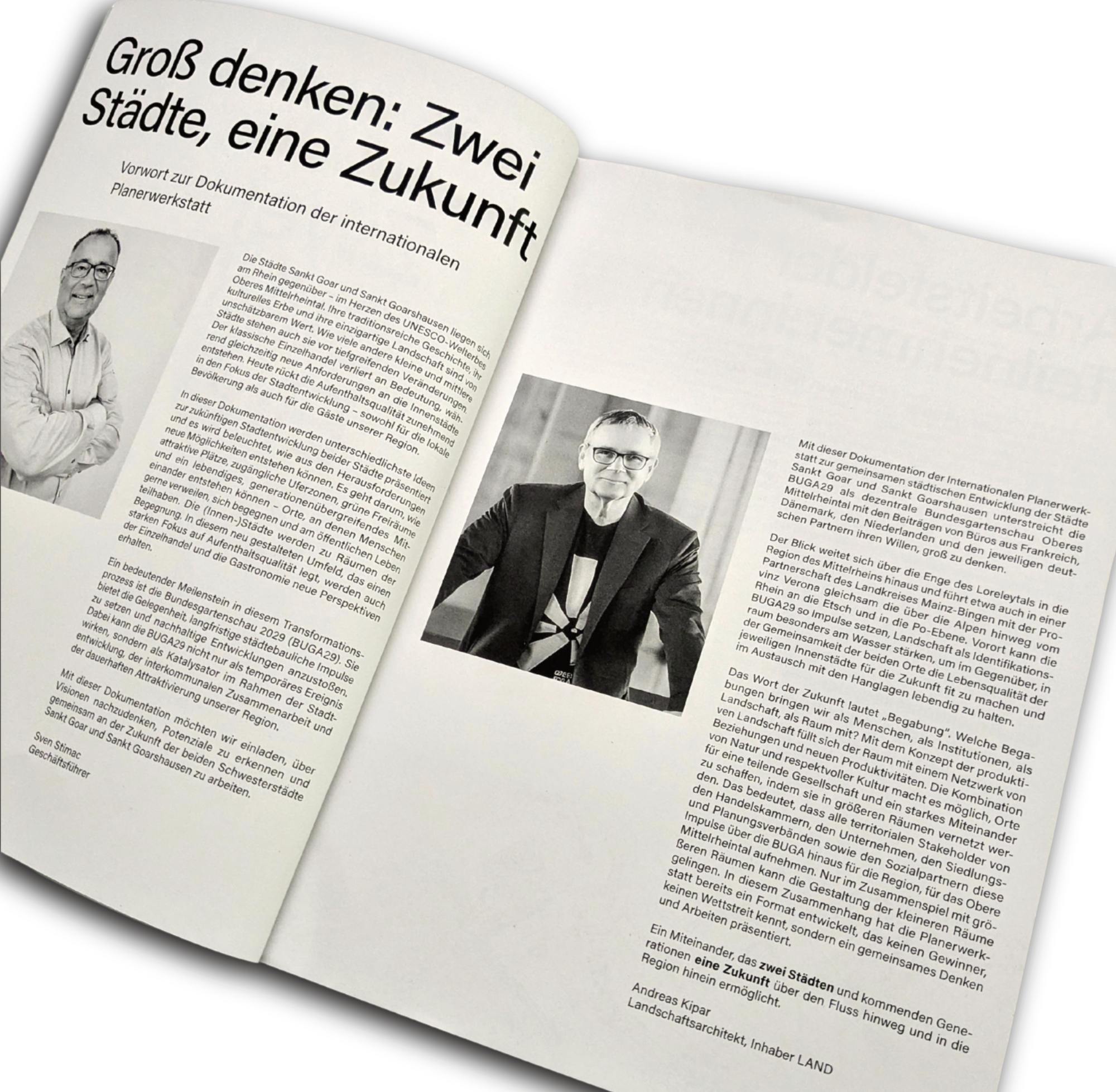
View other publications
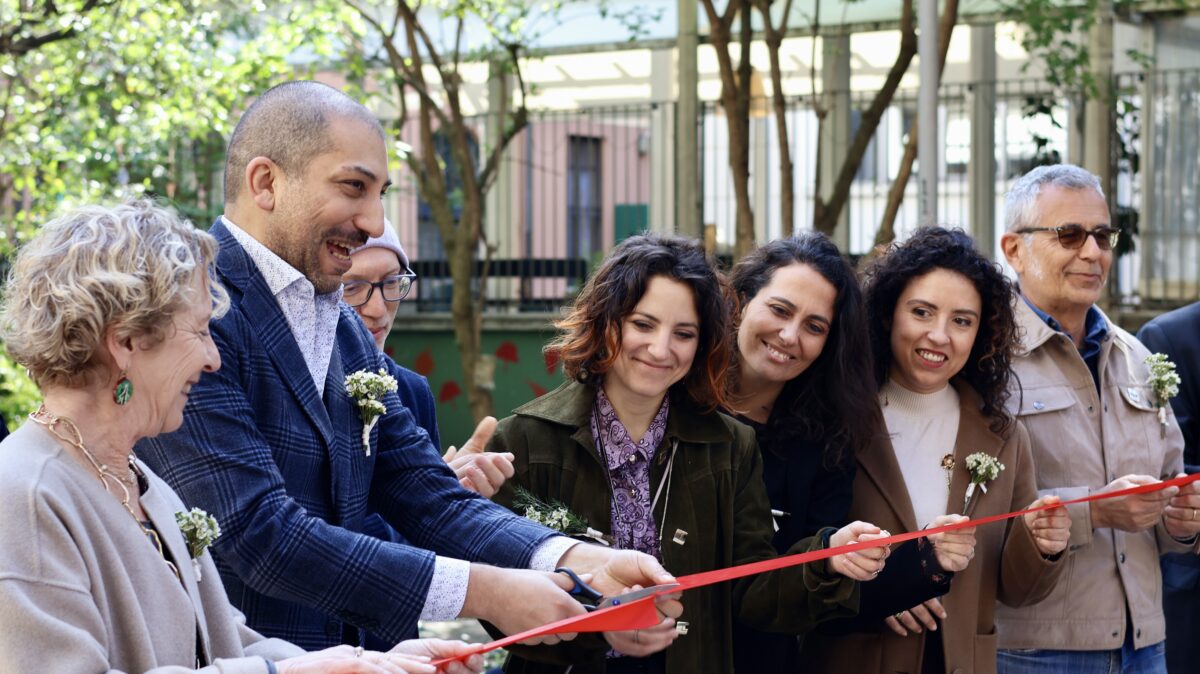
spazioBACCA: a bucolic corner in the heart of Brera
The future development of the twin cities Sankt Goar and Sankt Goarshausen—located opposite each other on the Rhine in the heart of the Upper Middle Rhine Valley UNESCO World Heritage Site—reaches a new milestone