Envisioning the City of the Future: Biodiversity is no longer optional
From climate resilience to cultural transformation: Andreas Kipar highlights in Corriere della Sera "L'Economia del Futuro" how cities can reconnect with nature to build healthier, more liveable urban environments.
From Milan to Frankfurt, from Paris to Rome, cities across Europe are reclaiming their relationship with nature: an urgent transformation driven by the increasing pressure of climate change. In an interview with Corriere della Sera featured in L’Economia del Futuro, Andreas Kipar outlines a clear mission: restoring natural ecosystems within urban fabrics through landscape-based solutions.
Starting with pioneering projects like Parco Nord in Milan and continuing through large-scale interventions such as Porta Nuova and the Wave Park in Frankfurt, he states that urban resilience must begin with permeability, biodiversity, and the reintegration of rivers into city life.
The interview traces how concrete actions, from removing asphalt in Parco del Valentino to restoring the Tevere riverbanks for the Jubilee, signal a broader cultural shift. Today, solutions once considered visionary are becoming structural responses to floods, heatwaves, and environmental degradation.
A global mission drawing inspiration from the “Nature-Positive Cities” taskforce within World Economic Forum. “We must give space back to nature—not out of nostalgia, but because without it, there’s no sustainable development.”
Interview by Elena Comelli
Corriere della Sera L'Economia del Futuro - Città in transizione, la biodiversità non è un optional (Download file)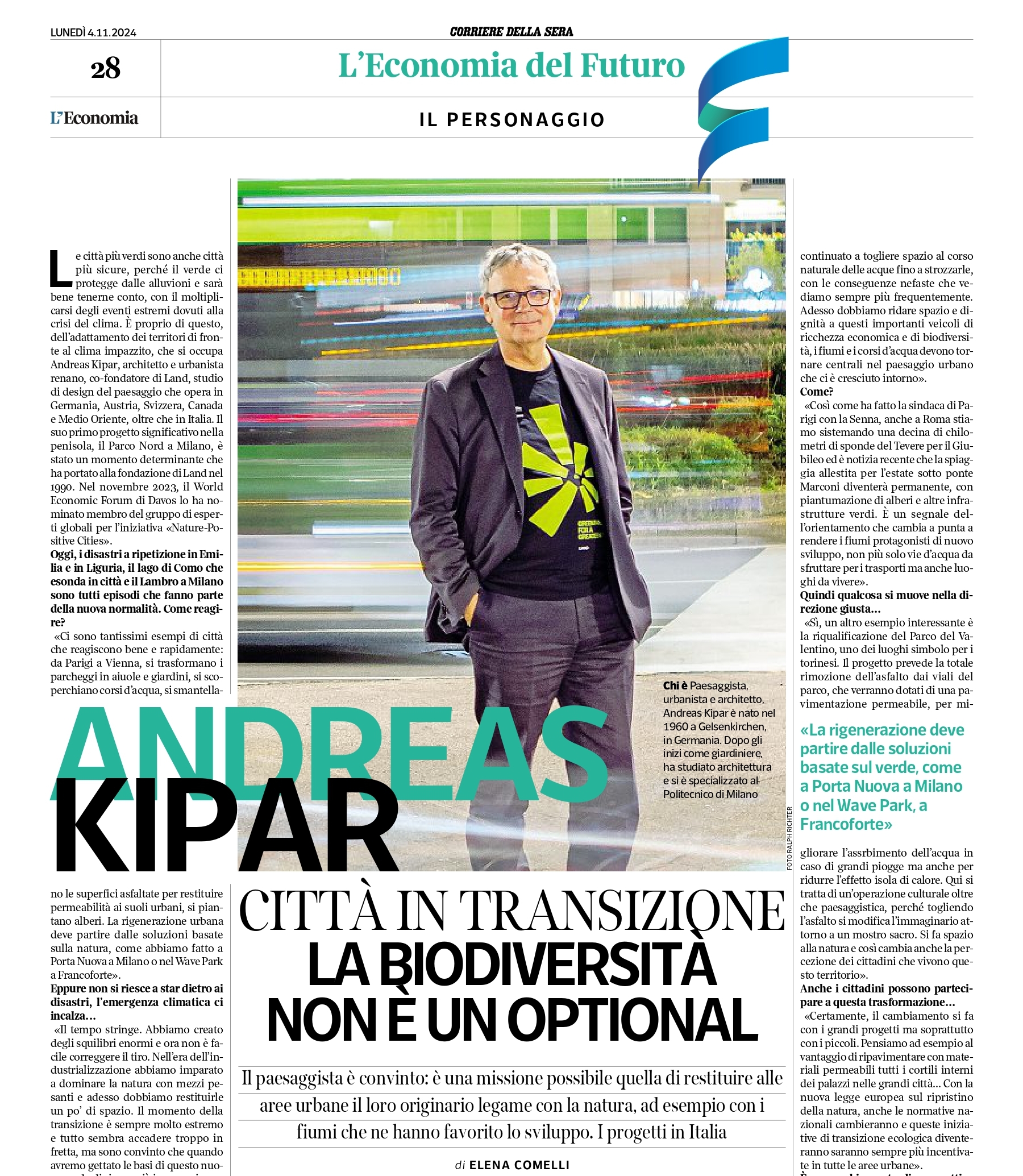
View other publications
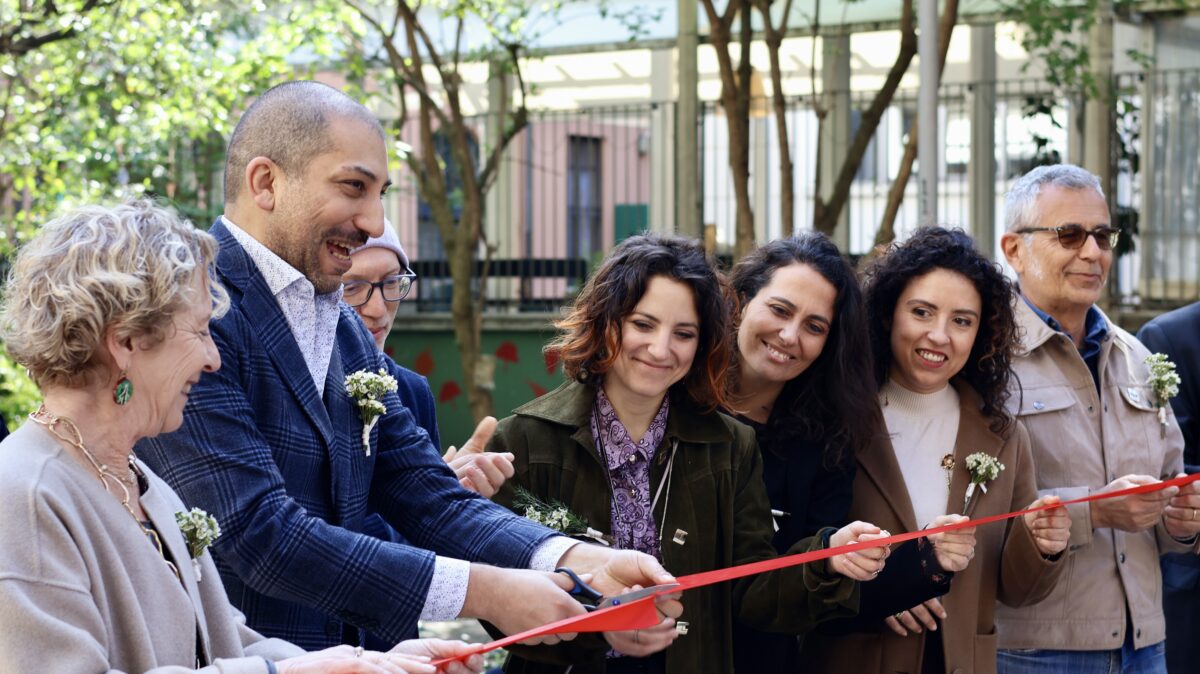
spazioBACCA: a bucolic corner in the heart of Brera
From climate resilience to cultural transformation: Andreas Kipar highlights in Corriere della Sera "L'Economia del Futuro" how cities can reconnect with nature to build healthier, more liveable urban environments.