Newsletter #13: Mountains, an evergreen throughout the year
“Great things are done when men and mountains meet; This is not done by jostling in the street.” With this quote by William Blake, the English poet, artist, engraver, and visionary (1757-1827), Andreas Kipar introduces his December newsletter dealing with the mountain landscapes' vital role—not just as picturesque backdrops, maybe for the upcoming holiday season, but as engines of environmental and economic value. In an era where climate change impacts are increasingly apparent, especially in winter tourism, we must redefine these landscapes as nature-positive assets that generate ecological, social, and economic returns.
A New Toolkit for Mountainous Cities
While preparing my newsletter, some days ago, I stumbled upon a post of CITIES FORUM, sharing that UN-Habitat, the United Nations Human Settlements Programme, launched My Neighbourhood for Mountainous Cities, a transformative guide designed to help urban professionals and planners develop more sustainable, inclusive, and resilient mountain cities.
The distribution of the guide marks an important step for regions that are often overlooked on global development agendas. Mountainous regions are often seen as peripheral or secondary in regional and urban planning, yet they play a critical role as ecological and cultural reservoirs. This guide is a promising starting point for fostering a deeper understanding of these landscapes’ unique challenges and opportunities. If we put it in terms of Nature Capital Accounting, which positions nature as a vital asset and integrates its value into planning processes, green spaces should be treated as essential infrastructure with a fundamental role in addressing urban challenges such as heat islands, erosion, and flooding.
Additionally, it’s fundamental to think beyond the city itself and consider the entire territory. Green connections—both within urban areas and between cities and their surrounding landscapes—should be a cornerstone of every planning step and scale. This approach ensures that nature becomes part of a cohesive strategy rather than a separate feature. At LAND, we’ve always believed that true transformation begins with the landscape itself. Whether we’re designing renewable energy landscapes in Ticino or nature-positive urban promenades in Bolzano, our projects embody a holistic approach that aligns human activity with the natural rhythms of the territory.
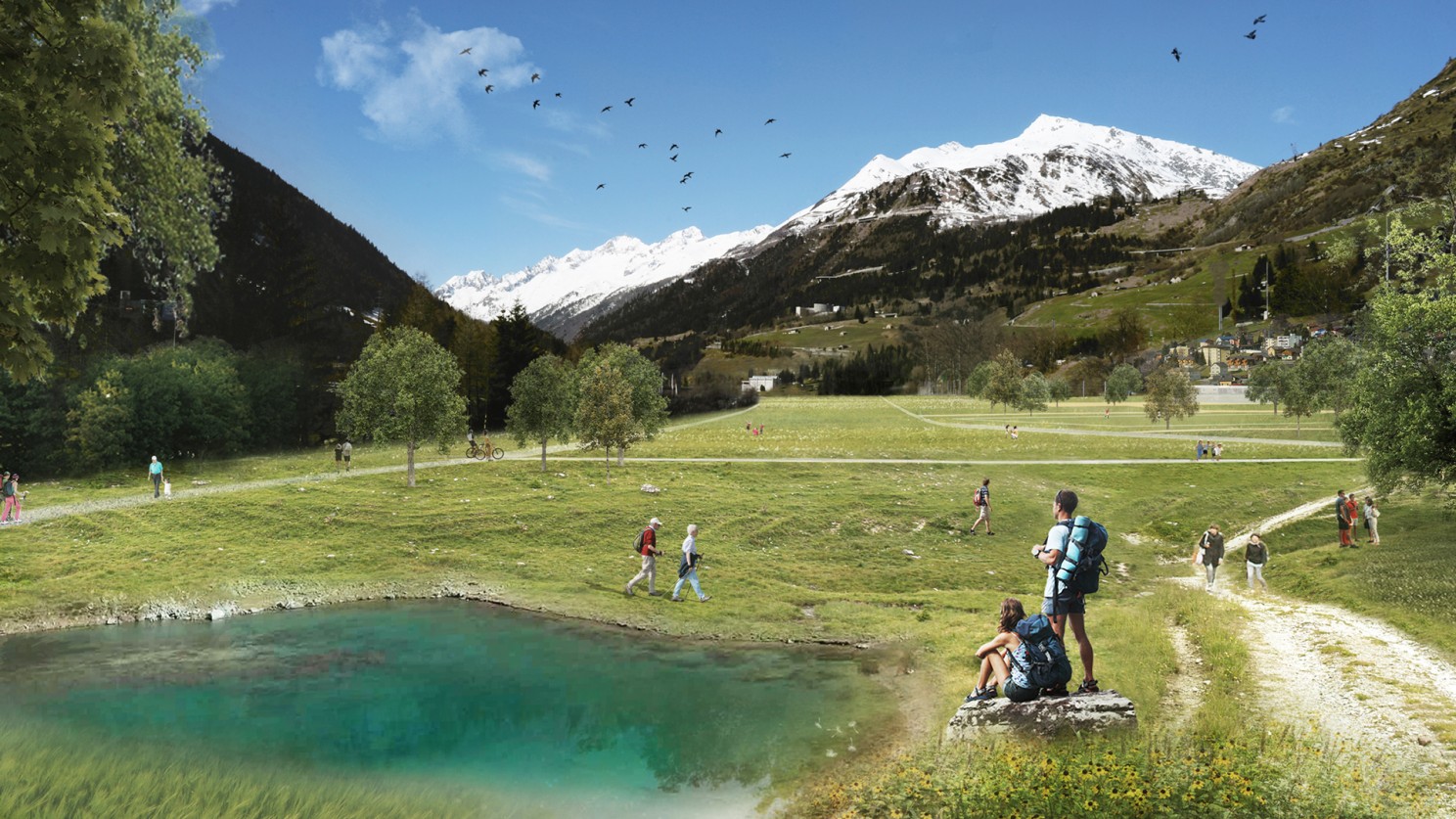
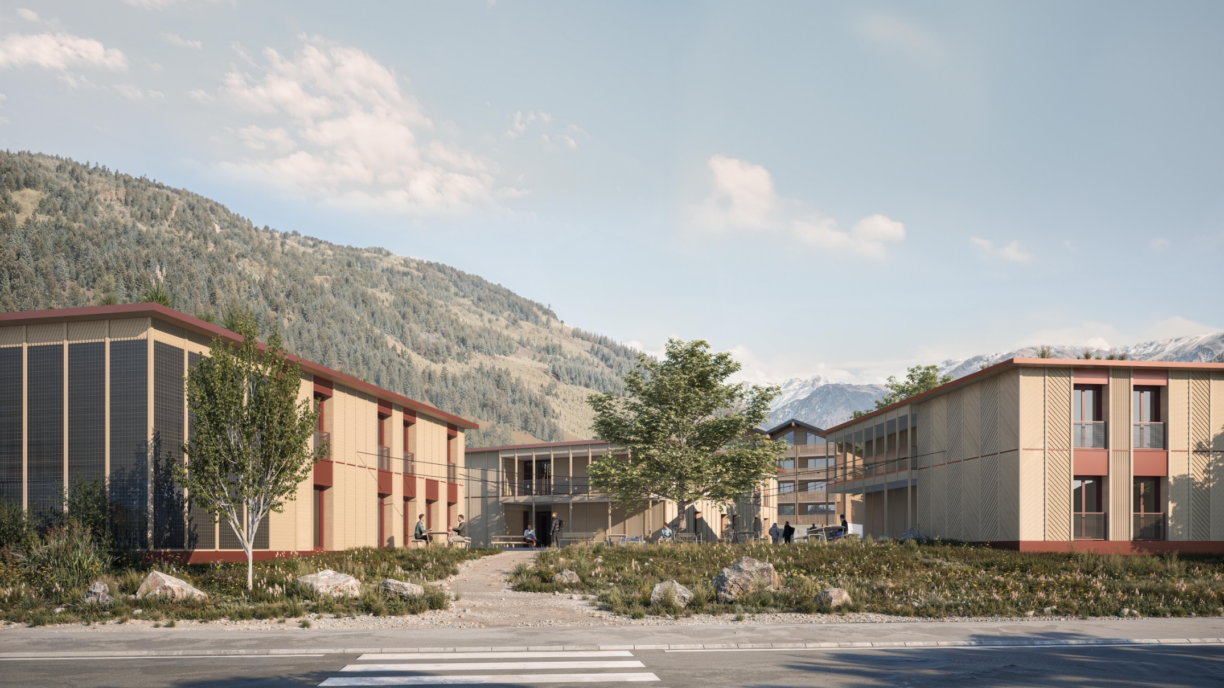
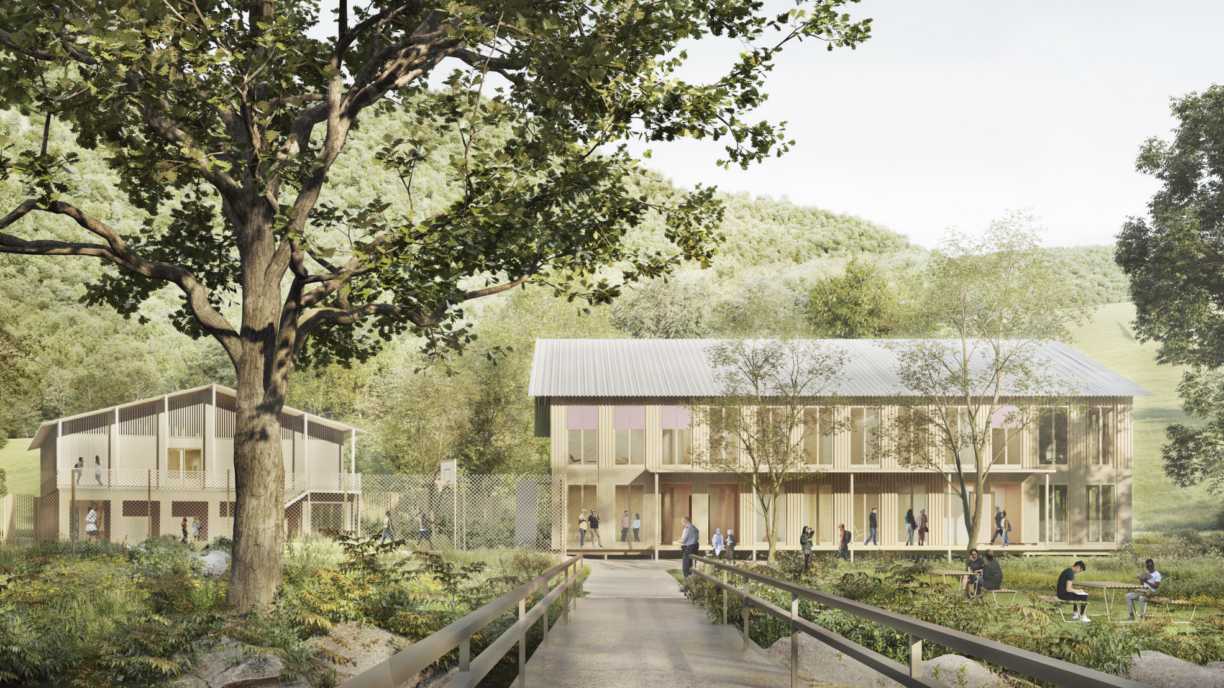
Parco San Gottardo, Airolo, Switzerland. Render by LAND
Nature-Positive Landscapes: More Than Just Beautiful Views
A prime example of how to approach these topics is, as aforementioned, our Bolzano Ringpromenade project. The 30 km Ringpromenade around the South Tyrolean capital city gives concrete and tangible form to the objectives of Bolzano’s Green Plan drawn up between 2021 and 2022, which saw LAND, in the context of a ten-year commitment, to define a strategic development vision with the municipal administration and local stakeholders for green spaces inside and outside the city, for a qualitative and quantitative regeneration of its urban and peri-urban landscapes. By reconnecting pre-existing thematic, natural and spatial areas, the Ringpromenade will become a necklace of nature available to citizens. A new urban model of experiencing nature outside the home will accompany Bolzano’s evolution from a Nature-positive City to a Nature-positive Landscape, connecting the city’s fabric to the landscapes of its surroundings in the name of liveability, sustainability and biodiversity. This landscape architecture model extends beyond aesthetics; it supports well-being, attracts tourism, and enhances real estate values by integrating nature as a core feature. By weaving green infrastructure into urban settings, we showcase how landscape architecture can serve as an economic multiplier, with benefits that ripple out to businesses and communities alike.
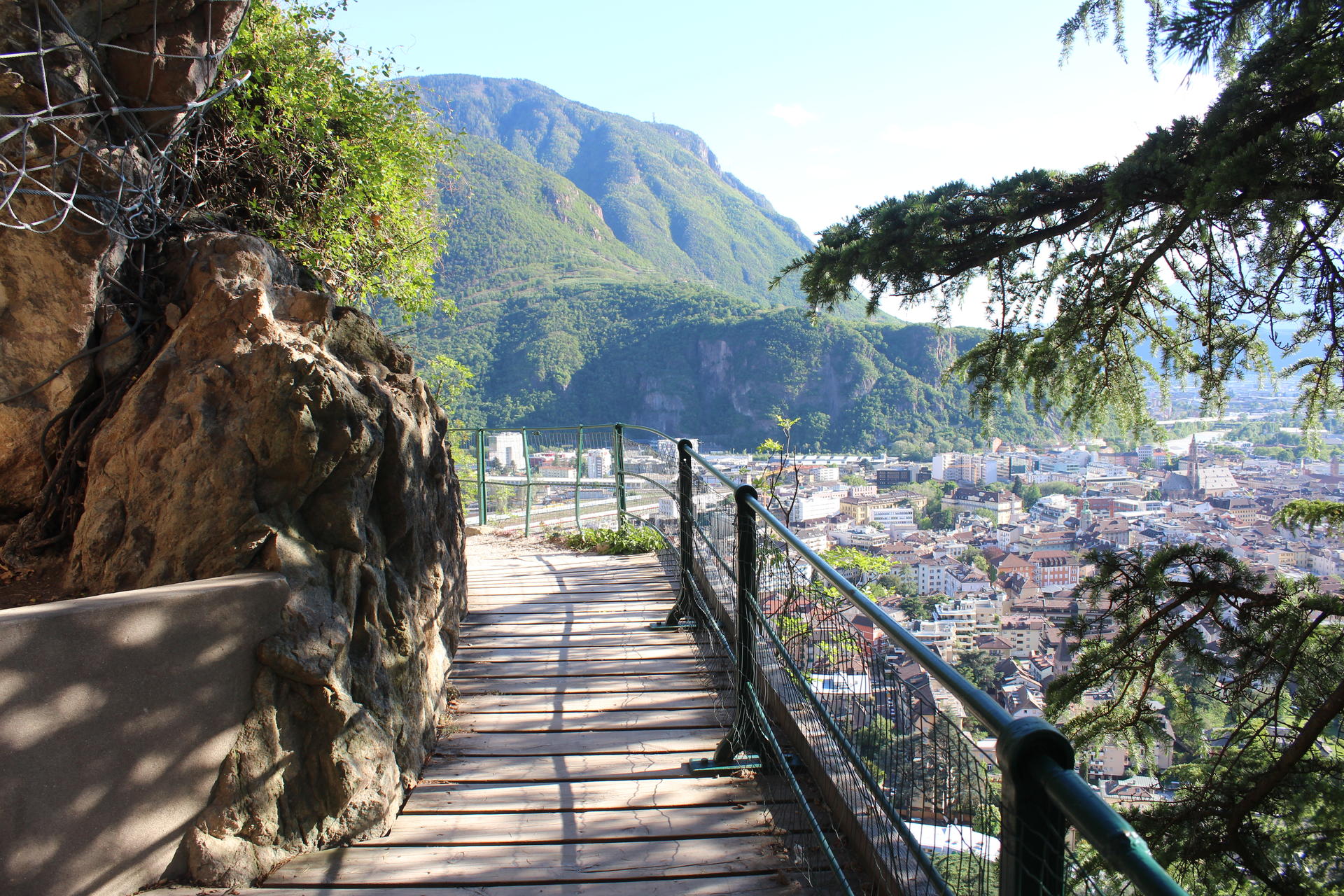
Oswaldpromenade as integrating part of the Ringpromenade in Bolzano. Image by LAND
Duragno Alpine Solar Park: Renewable Energy as a New Alpine Opportunity
The Duragno Alpine Solar Park project in Ticino, Switzerland, exemplifies how landscape architecture can leverage mountain environments for sustainable energy production. Here, the unique alpine setting enhances solar yield, especially in winter, providing a consistent energy source. Our project for S’Rok AG with partners EcoControl, AFRY, IFEC ingegneria and Ing. Alessio Mina, represents a pioneering step in Switzerland’s transition to renewable energy and is the first alpine solar park in Ticino aligned with the „Solarexpress“ initiative, the Swiss federal programme supporting the development of alpine photovoltaic systems, with a focus on boosting domestic winter electricity production. As part of Switzerland’s ambitious commitment to achieving net-zero emissions by 2050, the park stands out as a unique project in Ticino that fully meets this initiative. You can read more about it here.
By framing renewable energy infrastructure as part of a nature-positive landscape, we’re redefining mountains as functional spaces contributing to economic and environmental resilience. This model could be transformational for ski resorts and winter tourism destinations, allowing them to generate revenue year-round, even as climate change threatens traditional winter activities. If you’re interested in the topic, have a listen to this episode of the podcast series “Streitergasse” by SALTO, where I had the pleasure to discuss the future of ski resorts with Markus Redl.
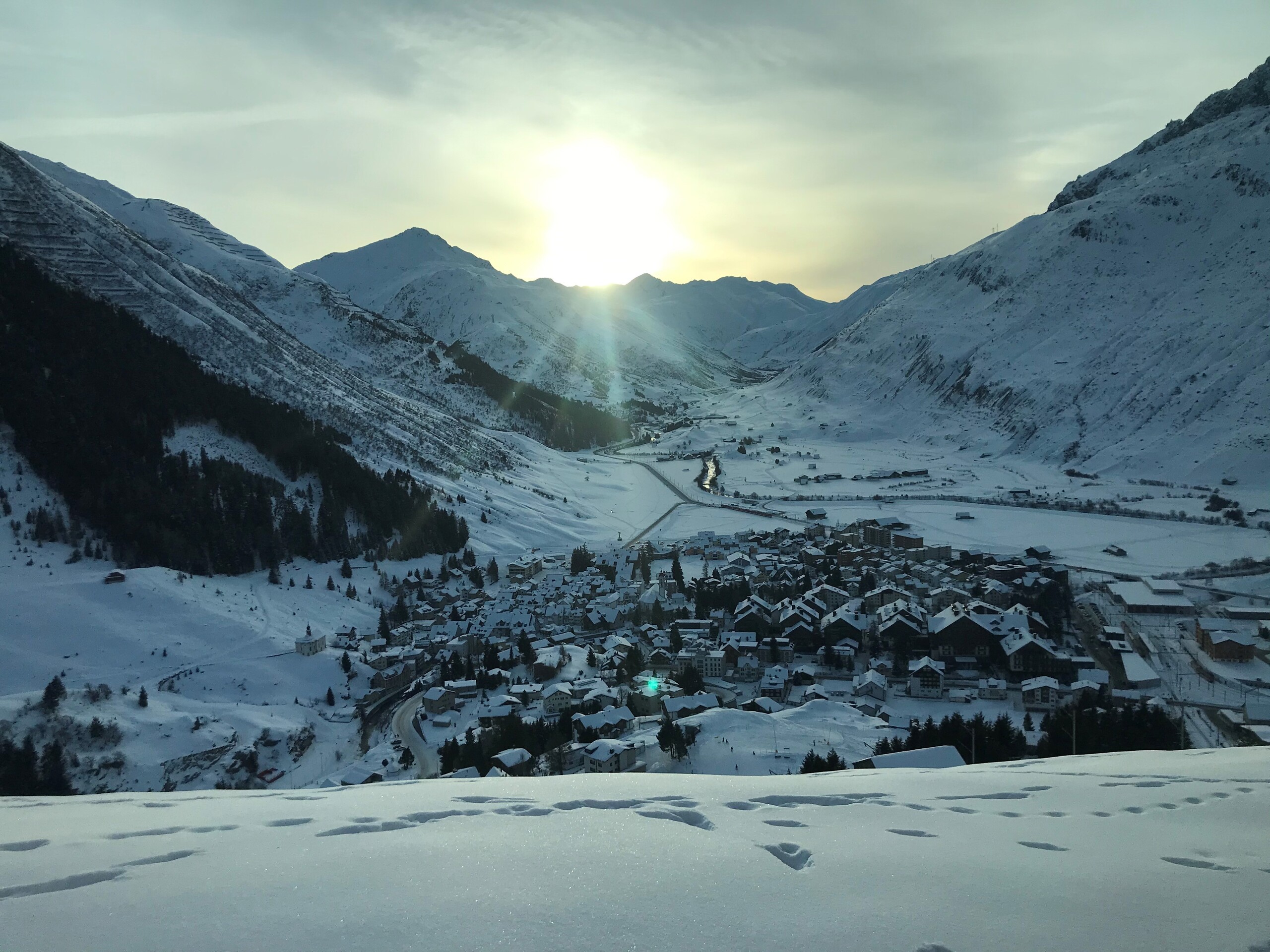
Andermatt Swiss Alps. Image by LAND
Embracing the Mountains This Holiday Season
As the holiday season approaches, many will turn to the mountains as leisure destinations and as spaces to reconnect with nature and experience the serenity they offer. This seasonal tradition serves as a reminder of mountain landscapes’ vital role—whether they reduce energy costs or integrate trails and green spaces that attract year-round tourism, they yield long-term returns financially, environmentally, and socially.
Beyond their striking beauty, mountains represent opportunities for sustainable tourism, renewable energy, and nature-positive living. As visitors enjoy the slopes, trails, and vistas, they become part of a larger narrative that envisions mountains as year-round hubs of activity, creativity, and innovation.
I see this festive period as an invitation to rethink the potential of mountain regions. Let’s use this time to reflect on how we can champion landscapes that inspire us today while ensuring their resilience for future generations. Every holiday adventure in the mountains offers an opportunity to contribute to a broader story of sustainability, regeneration, and harmony with nature.
How will you spend the days „between the years“, as we say in German? I hope you recover from this intense year and get a great start to the new one that brings something special for me and LAND: our 35th anniversary. So, stay tuned because a lot is going on!
I wish you and your loved ones a Merry Christmas and a Happy New Year.