Newsletter #28: What about Nature?
A reflection on aligning urban development with ecological systems in times of growing environmental uncertainty
In these intense days, I find myself turning to the wisdom of Nature.
Nature does not negotiate with our development plans, financial systems, or geopolitical agendas. It does not bend to our timelines or adapt to our expectations. It follows ecological laws, complex and non-linear, reminding us that resilience is born from balance rather than control.
At a time marked by geopolitical tensions, resource conflicts, and environmental instability, one truth becomes increasingly evident: Nature is not a backdrop to our systems. It is their foundation.
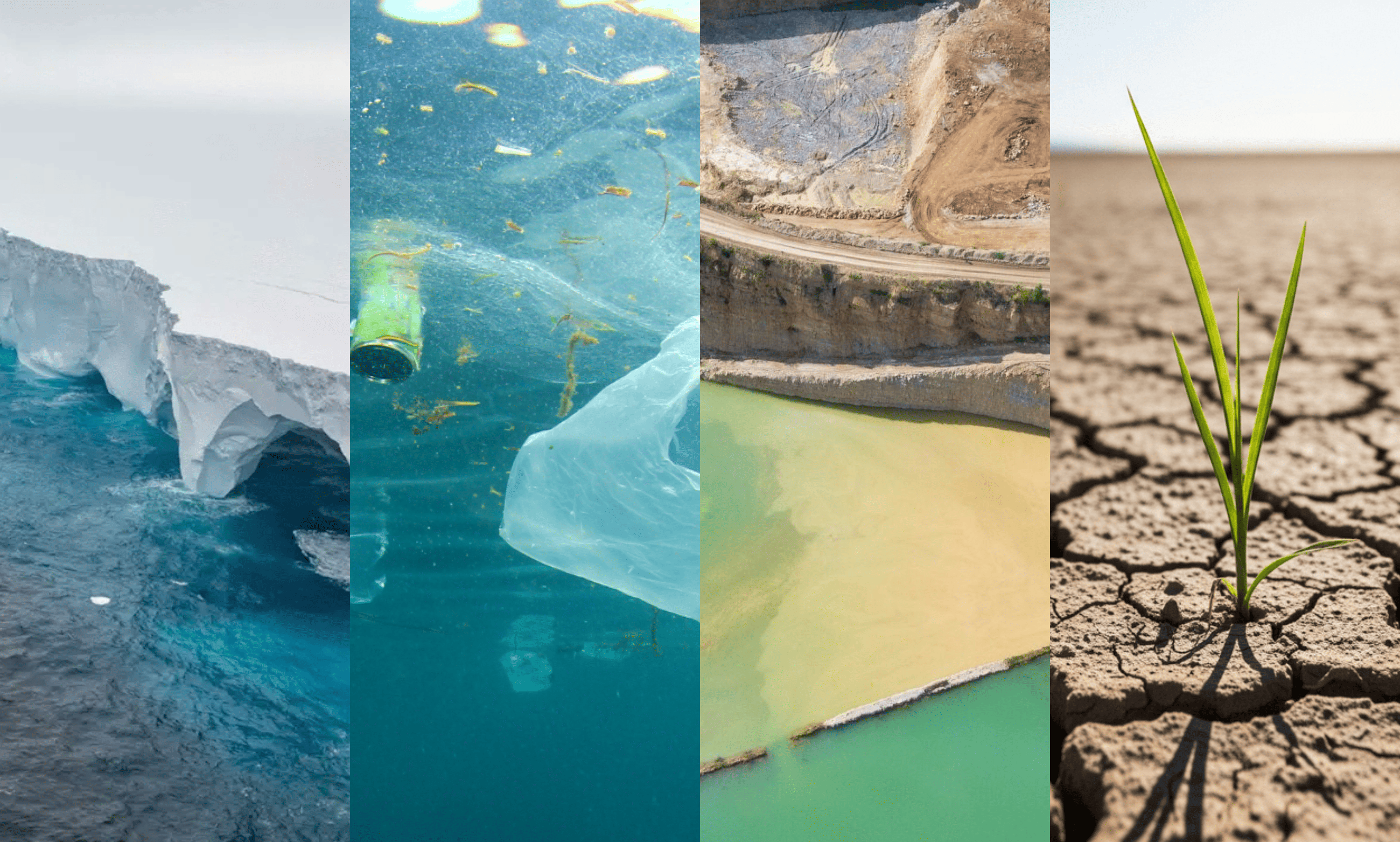
Whether we will withstand the pressures ahead and shape a viable future is ultimately in our own hands. Yet a systemic misalignment between urban development, global financial stability and ecological reality persists, as evidenced by the increasing frequency of climate-related disasters. The urgency of nature-driven planning is not ideological; it is structural.
So where are the paths that lead us forward, toward ways of planning and building that resonate with the deeper order of Nature?
Unlocking Nature’s Value: The Launch of nAIture Capital in NRW
One answer takes shape in North Rhine-Westphalia (NRW), one of Europe’s most industrialised and dynamic regions.
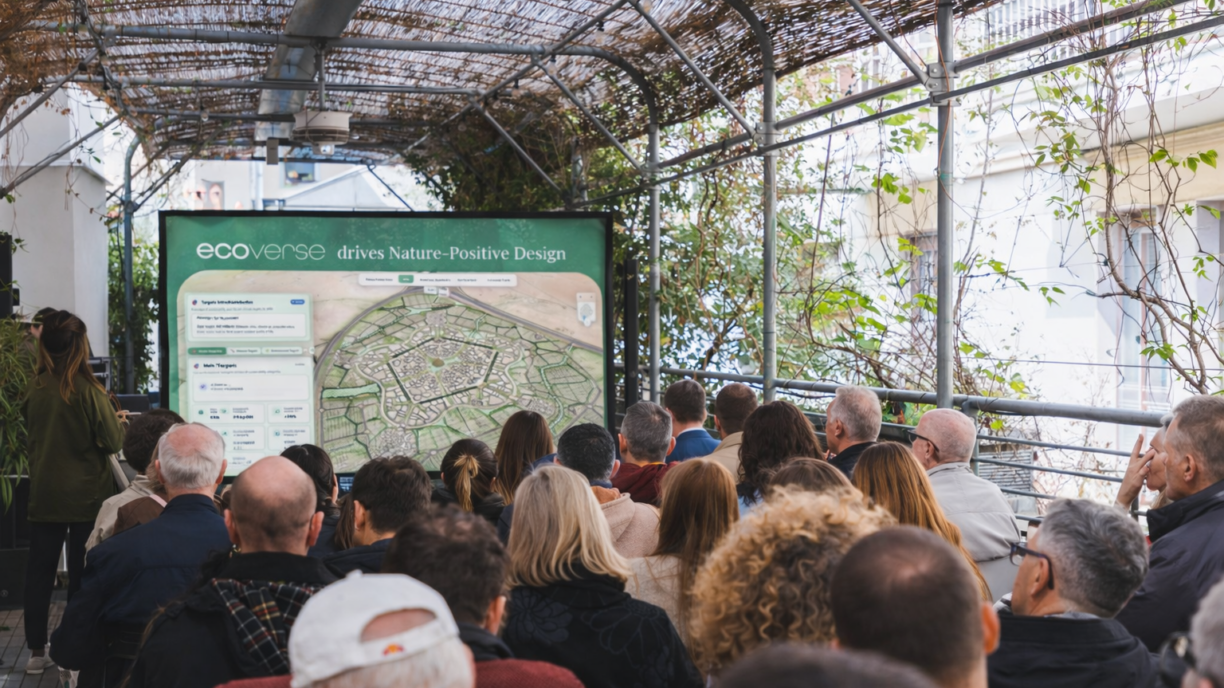
With the LAND Research Lab, we have launched a new initiative: nAIture Capital in NRW, a digital platform designed to quantify, monitor, and strategically plan the region’s natural assets.
Commissioned by the State Government and co-financed by the European Union, the project is developing NRW’s first AI-supported Natural Capital Accounting system. The goal is clear: to make Nature measurable, visible, and actionable in planning and investment decisions.
The platform combines machine learning, remote sensing, and ecological expertise to build a high-resolution digital understanding of landscapes across the region. A Vegetation Recognition Model provides a continuously updated map of NRW’s natural assets, while a Growth and Ecosystem Services Forecasting Model can simulate multiple land-use scenarios and evaluate their ecological impacts.
Together, these components form the nAIture Capital Accounting method, a new foundation for evidence-based nature planning, climate adaptation, and sustainable development. In short: Nature becomes an infrastructure that we can understand, measure, and actively cultivate.
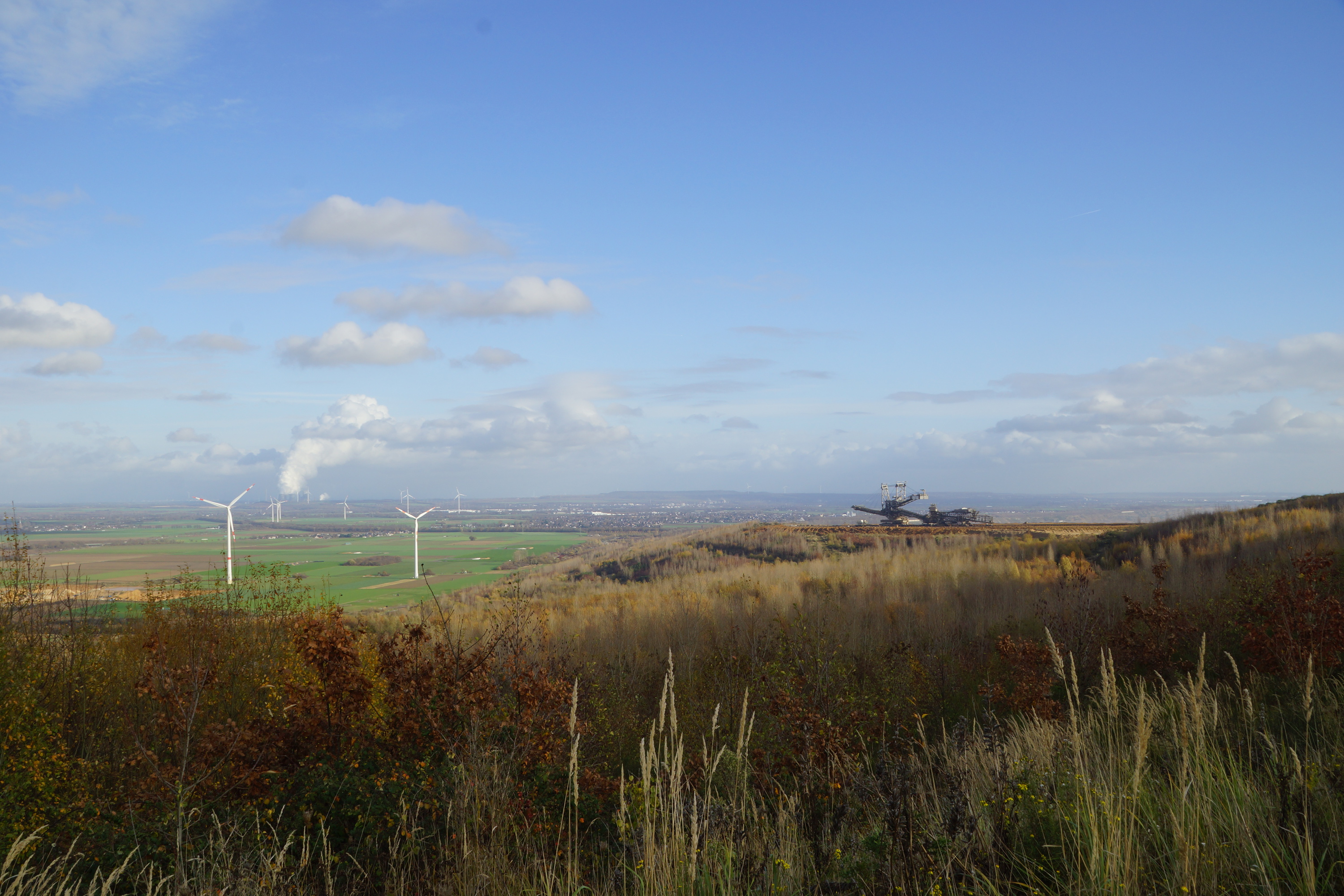
The Sophienhöhe, one of Europe’s largest reclaimed mining landscapes. Where lignite extraction ends, a new landscape emerges around the future Hambacher See, a place full of challenges and potential
Political Signals: A Vote for Nature
Research and technology alone cannot drive transformation. Political leadership and governance are equally essential.
In this regard, the recent election in Baden-Württemberg offers an encouraging signal. The Green Party, led by Cem Özdemir, secured a narrow victory, reaffirming a commitment to climate action, sustainable mobility, and ecological responsibility.
The message is clear: climate protection is not a niche ideology, but economic rationality and societal responsibility. Protecting landscapes and green-blue infrastructures means safeguarding ecosystems, as well as the cultural and social foundations of a region. And without shared responsibility and community spirit, no transformation will succeed.
When Nature Pushes Back
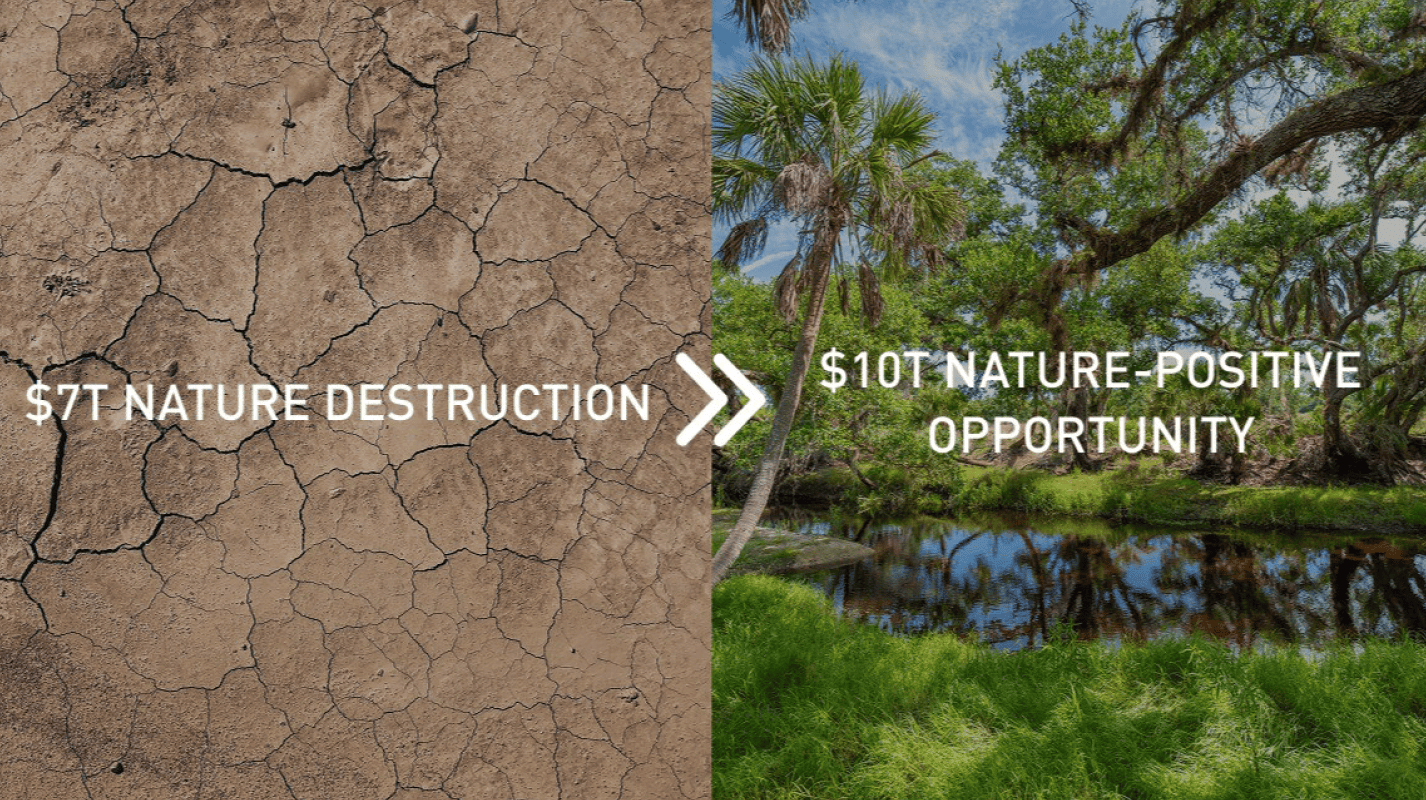
The $10 Trillion Redirection: When Regulation, Measurement, and Finance Converge (ph. Dr. Barbara Dubach)
Yet even as research and political momentum grow, reality on the ground reminds us how fragile our systems remain.
At the World Economic Forum in Davos, the UN Environment Programme revealed a striking imbalance: for every dollar invested in protecting Nature, thirty dollars finance its destruction, more than seven trillion dollars annually.
The consequences appear when landscapes reach their limits. In #Niscemi, Sicily, a landslide recently exposed the region’s hydrogeological vulnerability. Such events are rarely purely “natural”; they are the visible result of accumulated imbalances between soil systems, vegetation cover, water cycles, and urban pressure.
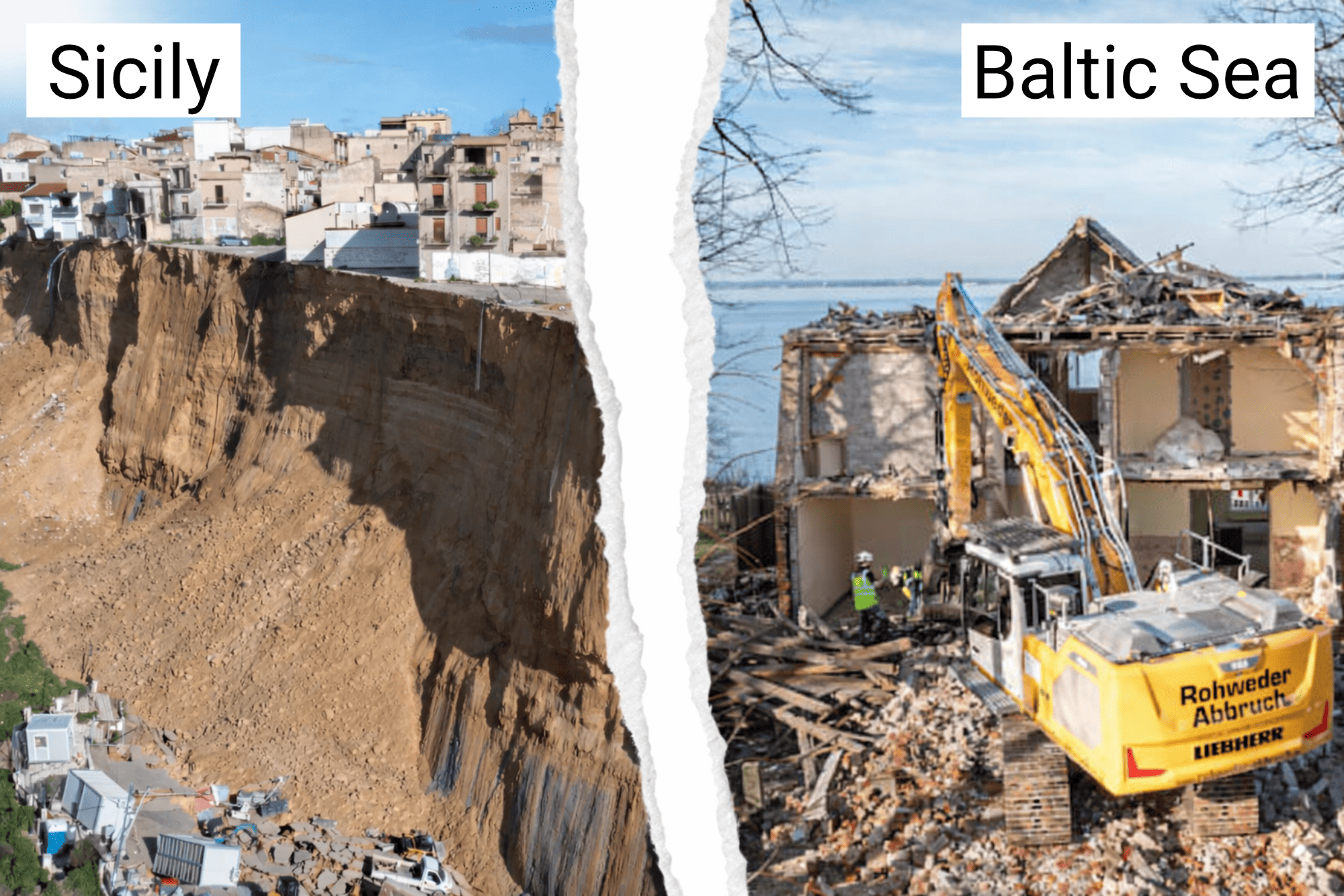
Niscemi on the left, Villa Seeblick on the right
A similar lesson emerges along the Baltic Sea coast near Travemünde, where the historic #VillaSeeblick had to be demolished as erosion steadily consumed the cliffs.
Different landscapes. The same message. When Nature is excluded from planning, instability becomes inevitable. Emergency responses replace preventive investment, and reconstruction replaces regeneration.
Less is more. Landscapes for the Future
Amid political turbulence and accelerating environmental change, our work at LAND seeks to provide orientation and practical answers. The challenges ahead are undeniable, but so is the potential for transformation.
By combining data-driven planning tools with #GreenBlueInfrastructures and #NatureBasedSolutions, we help cities, regions, and institutions translate ecological intelligence into actionable strategies. When applied systematically, these approaches can reduce climate risks, regenerate underused urban areas, and restore ecological functions within the social fabric of our landscapes.
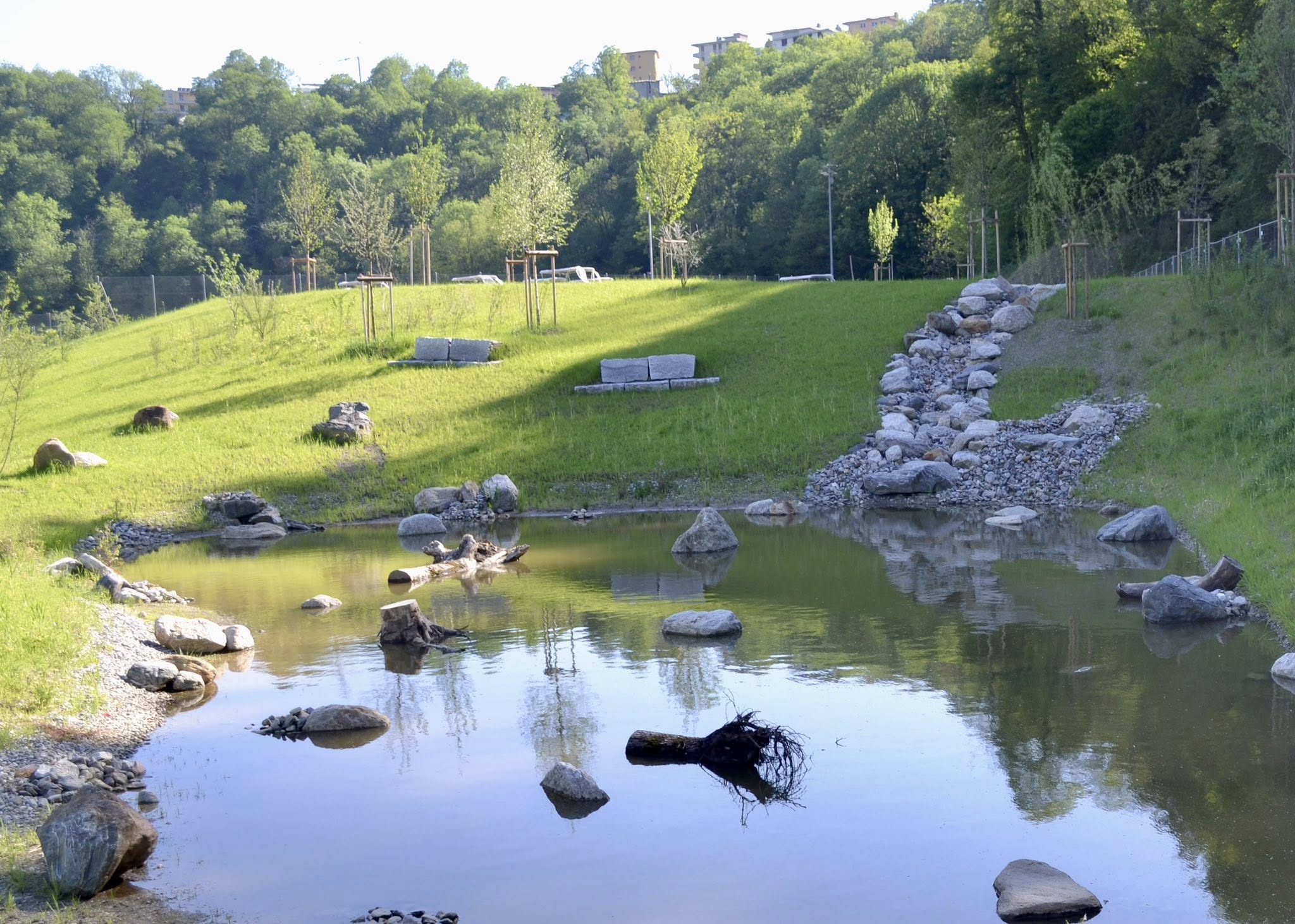
Biotopes as infrastructures: providing protected habitats for diverse species and securing microclimates in public parks such as Parco dello Sport Al Maglio (LAND Suisse)
At LAND, we see landscape as infrastructure: a living system that supports mobility, climate resilience, biodiversity, and social wellbeing. Our work connects research, design, and implementation to guide long-term spatial transformation.
Nature teaches us that resilience grows from diversity, balance, and continuity. If we learn to plan with these principles, the landscapes of tomorrow will do more than mitigate crises; they will enable new forms of prosperity, cooperation, and quality of life.
In uncertain times, asking “What about Nature?” is not a philosophical exercise. It is the most pragmatic question we can ask, a strategic matter for cities, economies, and societies alike, and perhaps the most hopeful one we can ask.
Don't miss out on our inspiring project stories, the latest research, and more.
All mandatory fields are marked with a *