Nature-Positive Futures: Transforming Cities and Landscapes for Resilience and Biodiversity
By Valentina Galiulo, Project Director, LAND Italia and LAND Research Lab GmbH
The concept of “Nature-positive” started to emerge on the global stage during the 2021 G7 summit in the UK when the 2030 Nature Compact was signed.
This agreement called for not only achieving net-zero emissions by 2050 but also restoring nature to benefit both people and the planet.
Since then, the European Nature Restoration Law has been implemented, and growing evidence of the climate crisis has led organizations like the World Economic Forum to champion nature-positive strategies. They launched a global task force that promotes integrating biodiversity into urban planning, ensuring that businesses, governments, and individuals have the tools to contribute effectively.
Andreas Kipar, our CEO and Co-Founder is part of this multidisciplinary task force. Our involvement has accelerated our own transition from compensatory strategies—focused on mitigating harm—to transformative strategies aimed at designing landscapes that actively regenerate ecosystems, restore biodiversity, and improve environmental quality over time.
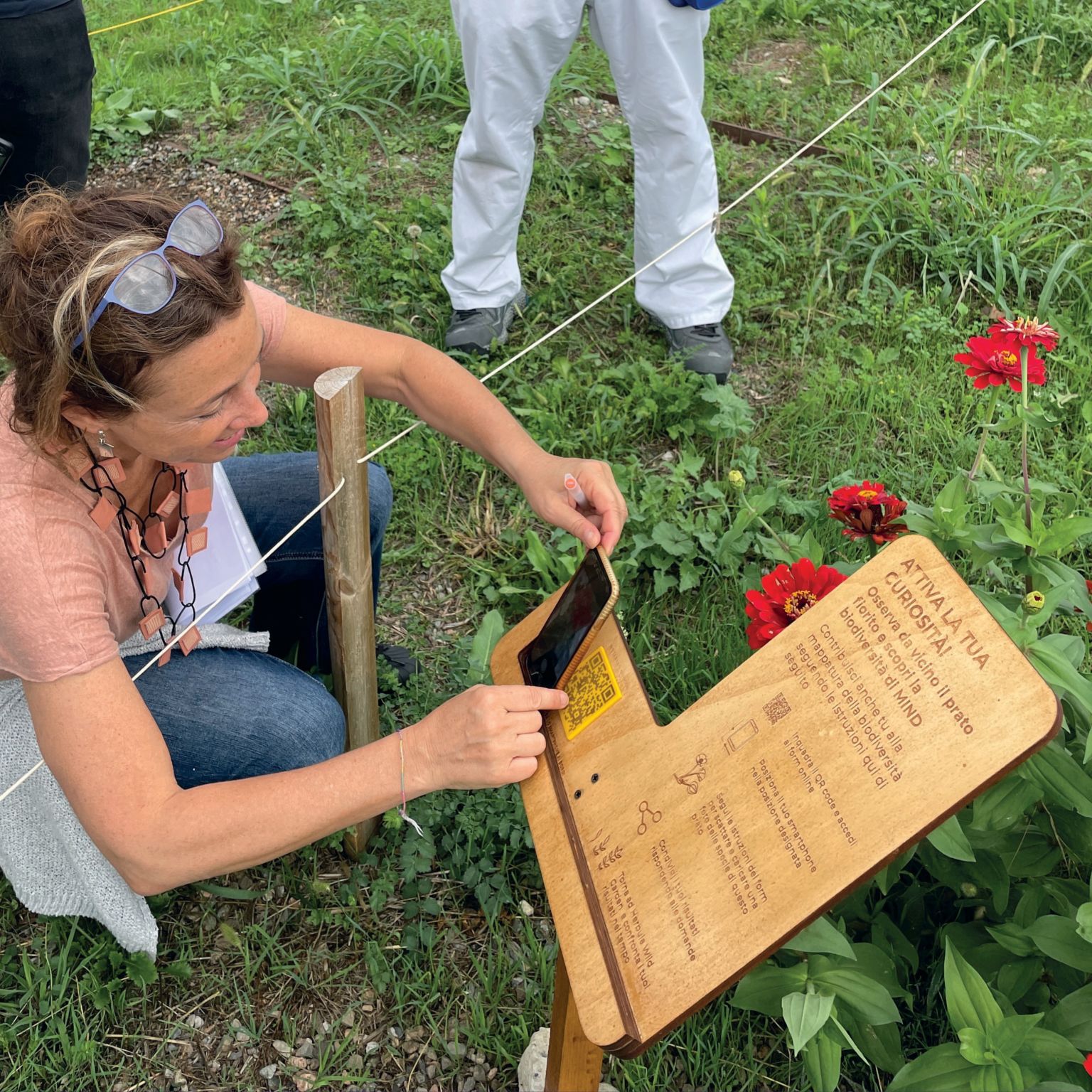
Identifying the environmental, cultural, and social values and potentials of urban biodiversity is at the heart of LAND and Polifactory’s mission. This focus was thoroughly explored within the T-Factor Project – Horizon 2020 project through the applicative research “Bioscopium: Guidelines for Mapping Urban Biodiversity in Urban Regeneration Areas”, developed with the expertise of ecological and wildlife specialists from Terra Viva Studio. Image by LAND
Making Nature Count: Measuring Benefits for Tangible Ecological Impact
To achieve this, it’s crucial to measure nature’s benefits and capital, addressing challenges policymakers and businesses face in quantifying long-term ecological outcomes.
As Galileo Galilei said, “Measure what is measurable, and make measurable what is not.” Only what we can measure can be monitored and accurately assessed.
By applying this principle, we help our clients turn nature-positive strategies into tangible outcomes, focusing on measurable ecological benefits like habitat creation, native species reintroduction, and wildlife corridors—not only within cities but also on a larger scale, striving toward Nature-positive Landscapes. Hence, interconnected landscape systems that are designed and managed to promote biodiversity, ecosystem health, and environmental sustainability in a long-term perspective.
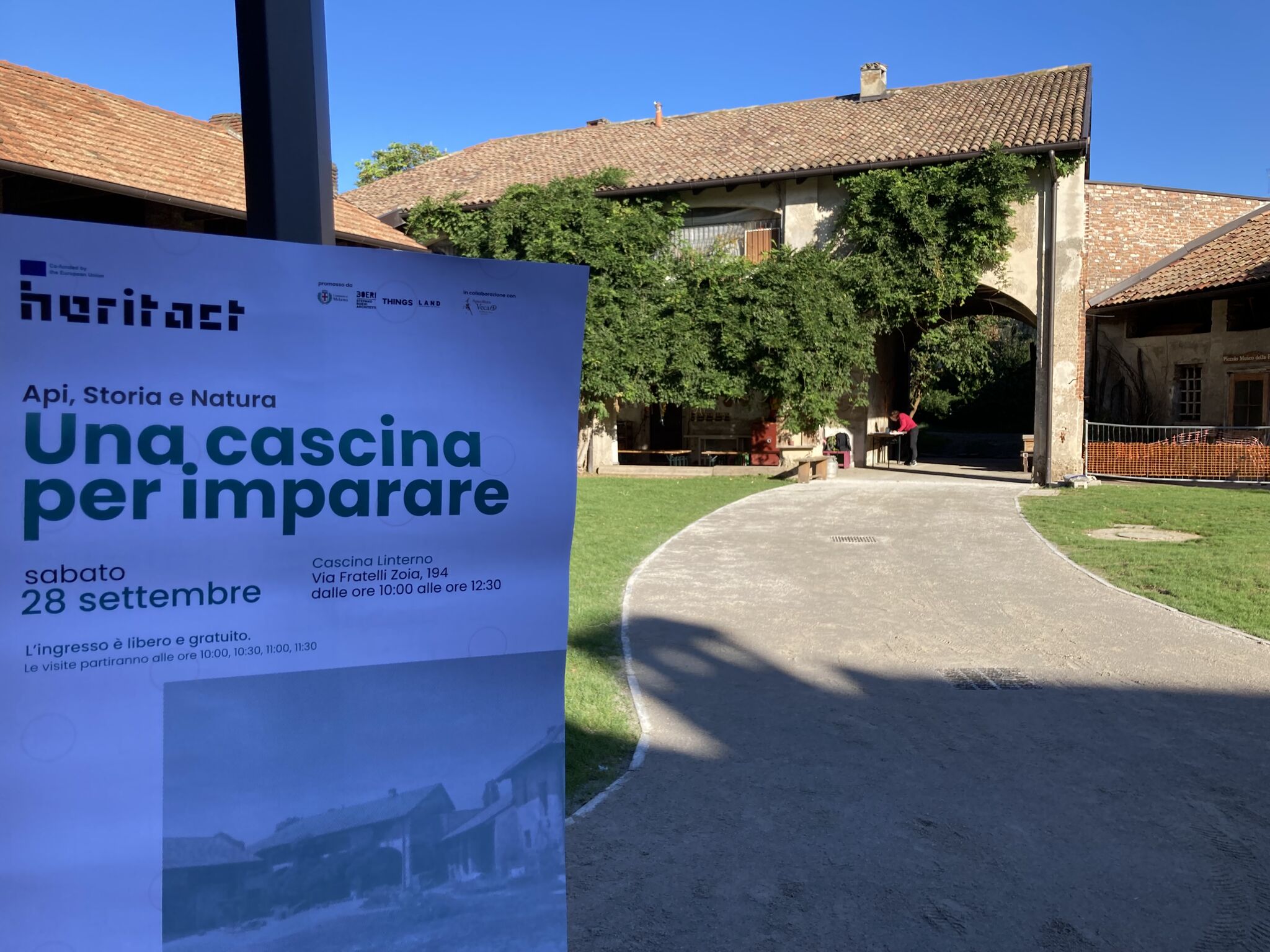
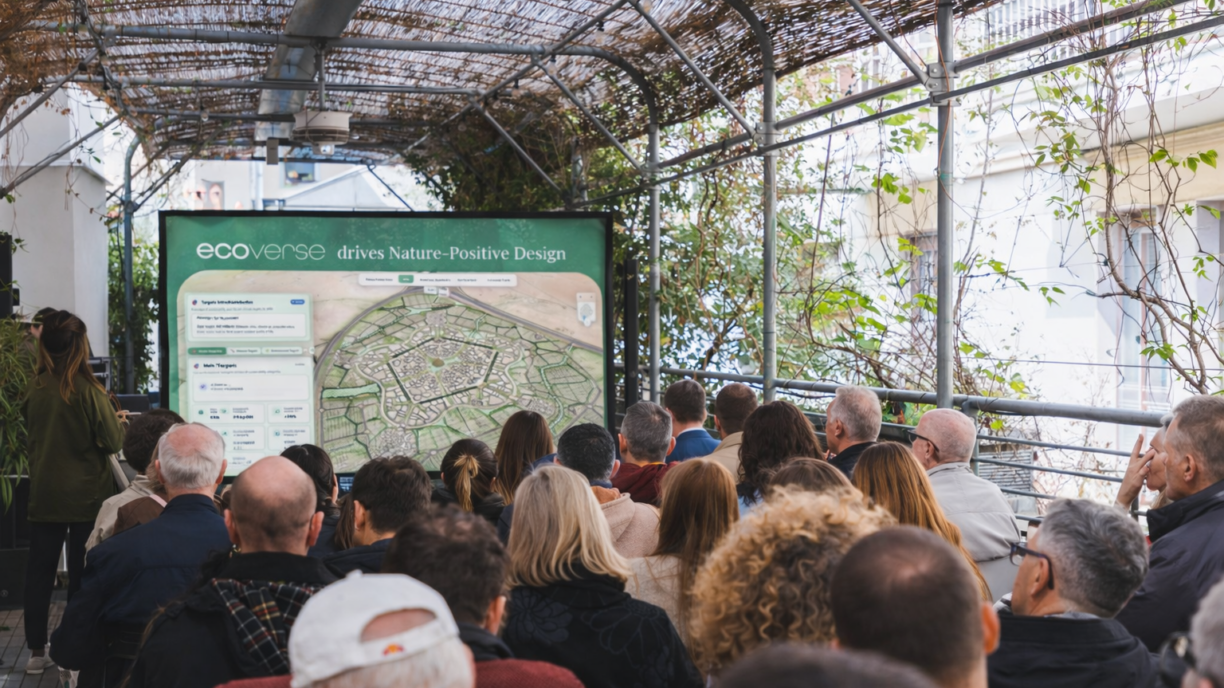
For the HeritACT project, LAND, in collaboration with Comune di Milano, hosted the workshop “Due Cascine per Imparare,” which invited participants of all ages to explore the cultural heritage of urban-rural landscapes and the rich history of Cascina Linterno and Cascina Sant’Ambrogio. Local inhabitants discovered the value of Nature in cities and how this might be integrated into the design of a public space. Image by LAND
Consolidating Nature-Positive Design Through International Projects
This year, fundamental landscape design and consultancy efforts have advanced a multi-scale Nature-Positive approach, strengthened by participation in international experimental initiatives like Horizon European projects (2021–present).
Here are some key projects embracing the shift from compensatory to transformative landscape design—moving beyond merely protecting or mitigating potential nature loss to actively driving the continuous regeneration and enhancement of environmental quality:
- Nature-Based Solutions (NBS) for Meanwhile Landscapes and Urban Biodiversity mapping in T-Factor. T-Factor aims to unlock the transformative potential of temporary use in urban regeneration. The project and its international partnership, operate across advanced and early-stage regeneration initiatives in Europe and beyond, leveraging international collaboration to promote strategic policy-making, research, and innovative practices that incorporate biodiversity into meanwhile landscape projects. We believe that the time factor in urban regeneration can be transformed into a strategic asset when used as a tool for collective placemaking and learning, anticipating more permanent uses and functions, as illustrated in the Bioscopium Handbook.
- Urban Biodiversity as Cultural Heritage in Future Cities within the European HeritACT Project. This project emphasizes cultural transformations as drivers of sustainability, which is in line with the vision of the New European Bauhaus. By enabling communities to co-create, HeritACT redefines the role of cultural heritage and the civic value of biodiversity in urban regeneration. The project introduces innovative architectural, design, and artistic-cultural solutions to enhance environmental and cultural sustainability, strengthening the cultural and creative industries through policy development and wide-scale community involvement.
- Data-Driven Design of Nature-Based Solutions in GreenInCities. The project aims to transform urban spaces through Nature-Based Solutions and technological applications. By balancing both human and non-human needs, we integrate data-driven innovation to co-create a sustainable future, adopting a proactive approach to climate adaptation and nature-positive transformation.
- Design, Implementation, and Monitoring of NBS for Critical Infrastructures in the Mediterranean with Med-IREN. Med-IREN provides a cross-cutting contribution to the phases of diagnosis, definition, prioritization, and implementation of NBS solutions for critical infrastructures across various demonstrators and replicators. The project fosters an in-depth assessment of enabling conditions to guide the transformation of regional systems. The Nature-Positive approach will address landscape challenges, vulnerabilities, and risks, supporting strategic decisions for adaptation and resilience actions in different locations. This will also facilitate the scalability and replicability of these solutions within the Mediterranean region and beyond.
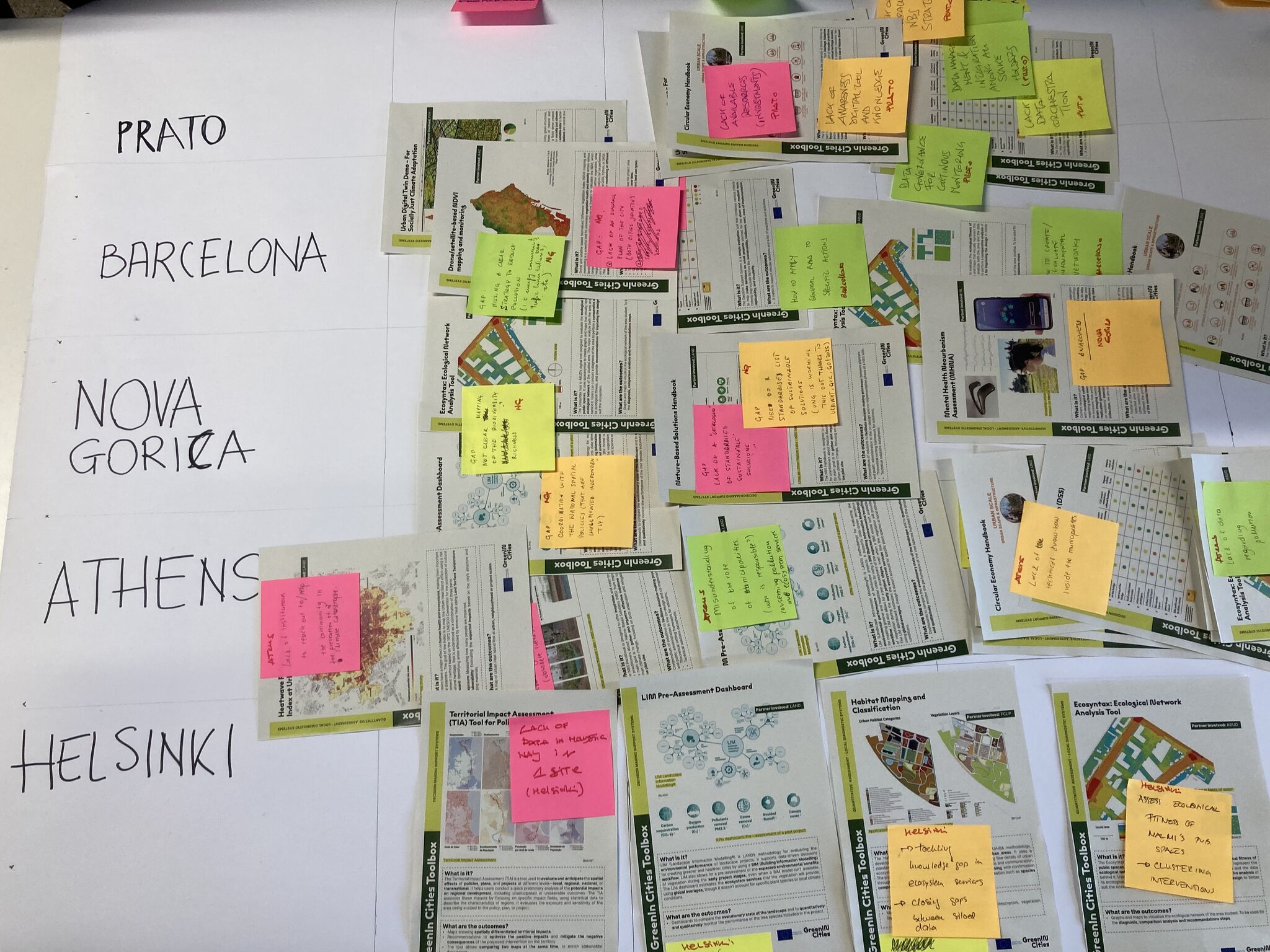
Working session for GreenInCities. Image by LAND
By blending our consultancy and design practices with research, innovative solutions for urban biodiversity, critical infrastructure, and climate adaptation are developed and tested on an international scale. This approach not only informs the design of healthier environments but also establishes a framework for future Nature-Positive interventions globally, advancing the agenda to restore nature and foster biodiversity as key pillars of sustainable development.
(Box: In Italy, the Nature Positive Initiative (which has been active since 2019 as a multidisciplinary, multi-sectoral collective at the national level) has this year culminated in the Charter of Nature-Positive Cities (GreenCity Network 2024). Thirty-three Italian cities have signed the Charter (including major cities such as Bologna, Brescia, Florence, Genoa, Milan, Monza, Naples, Prato, Rome, and Turin). The goal of the Charter is to overcome the climate and ecological crisis by fostering a positive role for nature within cities through ten carefully defined measures aligned with the Kunming-Montreal Global Biodiversity Framework, which commits nations to halt and reverse biodiversity loss by 2030.)