The Vertical City
UNaLab in Genoa
Discovering Genoa Unique Lab with Davide Pallotta, Geographer and Ecologist at LAND.
UNaLab is a project funded by the European Commission within the Horizon 2020 research and innovation programme. The project aims at developing a more resource-efficient city that’s more inclusive for all social groups, more resilient to climate change, and increasingly sustainable through the use of innovative nature-based solutions, known as NBS.
Davide Pallotta, Geographer and Ecologist at LAND
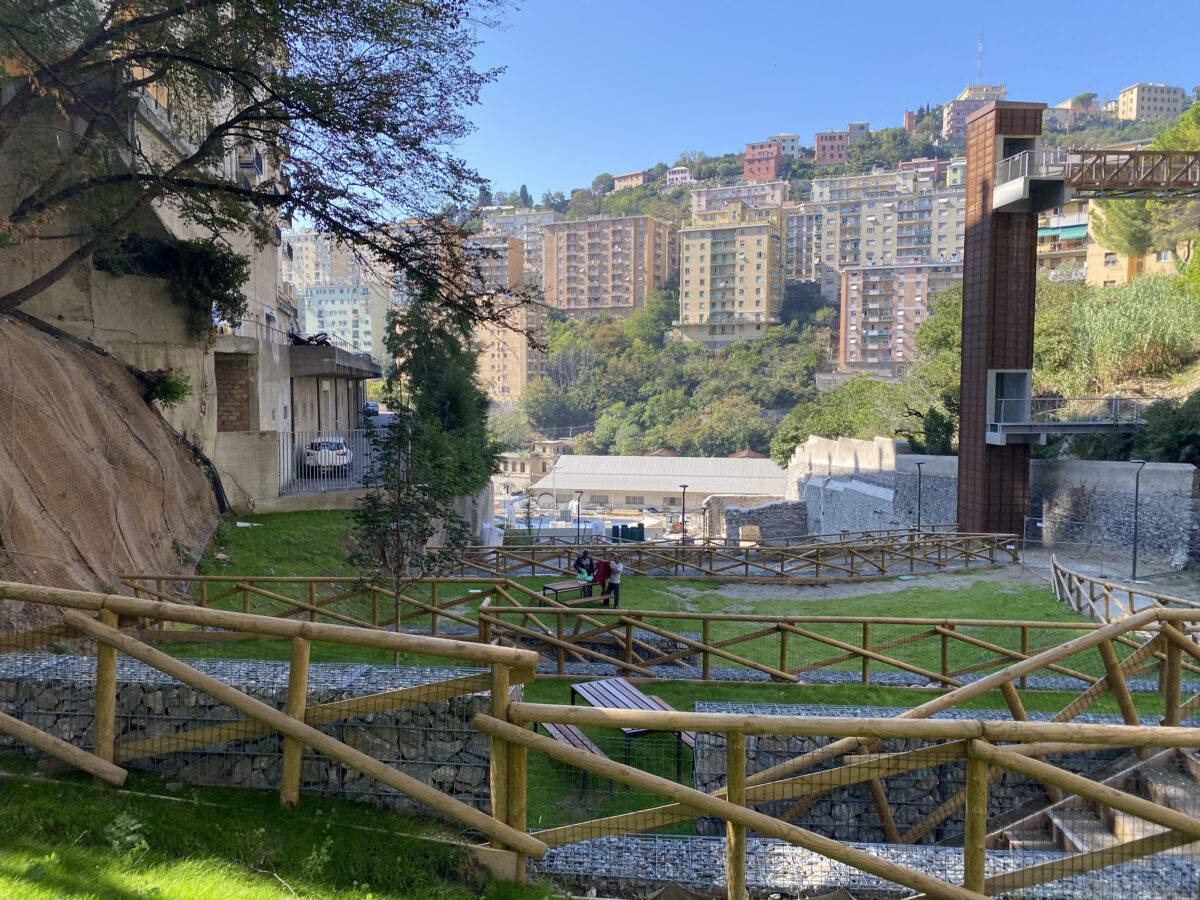
UNaLab has contributed to the creation of public parks consisting of multifunctional green areas, which will serve as an important laboratory of development and a meeting place for inhabitants.
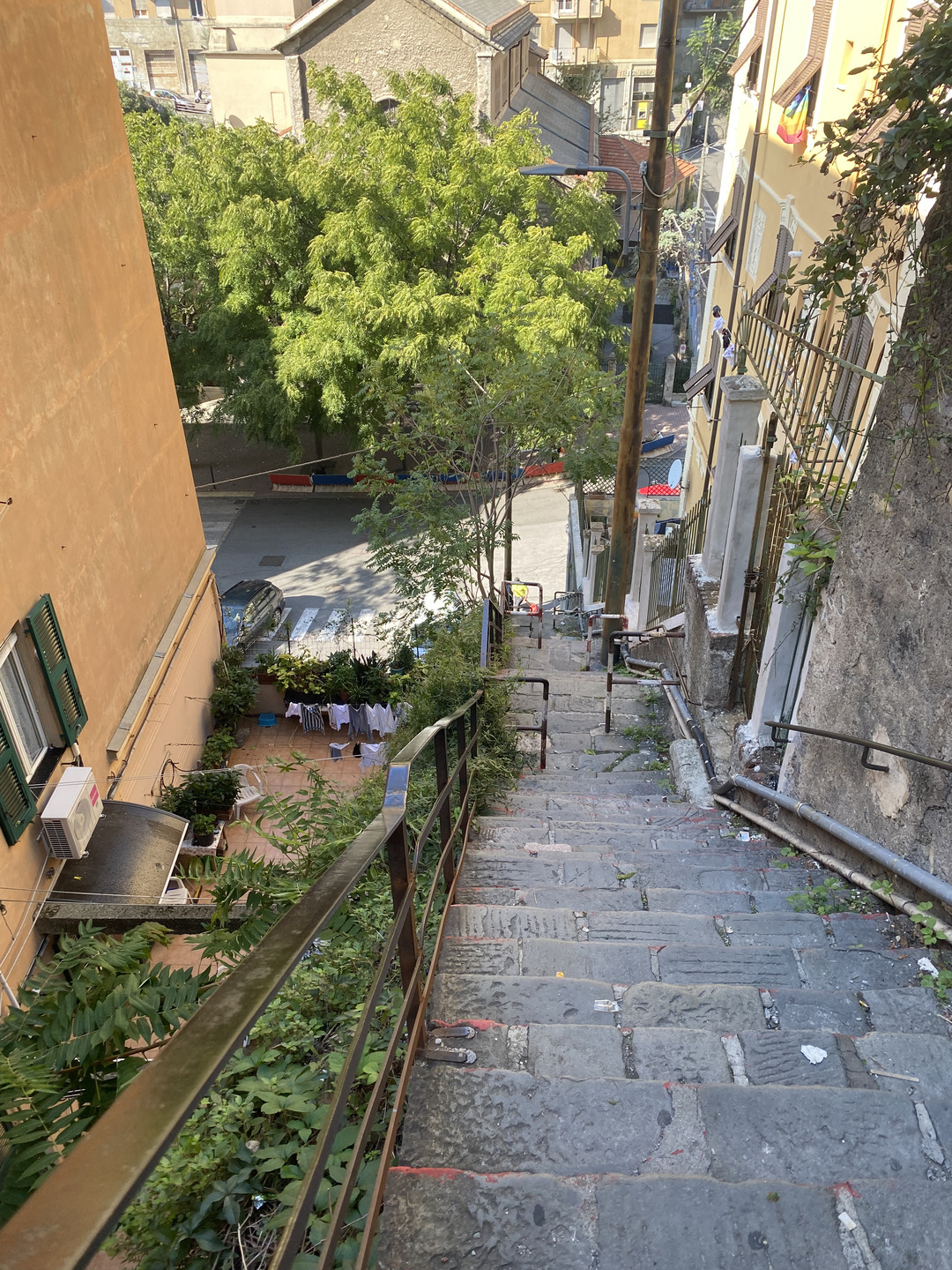
Genoa is a vertical city. From the forts perched on the mountains to the high walls of the buildings lining the carruggi (alleys) to the cranes and piers of the “Porto Antico” (Old Port), the city is a steep descent to the sea. This austere verticality is also reflected in its inhabitants. Montaigne once described the imperturbability of Genoese ambassadors in foreign courts, as inflexible as the rock on which their city is built. Proud by nature, however, the Genoese have always been particularly sensitive to innovation.
Davide Pallotta, a geographer specialized in environmental and forestry sciences, guides us on a tour of discovery in the Lagaccio area, a historically popular and multicultural district named after an ancient reservoir created in the 17th century by the government of the Republic of Genoa to supply gunpowder factories, and buried in the 1960s. Like all of Genoa, this district is at great hydrogeological risk, suffering some of the most damage caused by increasingly frequent and concentrated heavy rain, and is also the most densely populated district in the city. UNaLab is located on the site of the Gavoglio barracks, once owned by the state and now being redeveloped by the municipal administration.
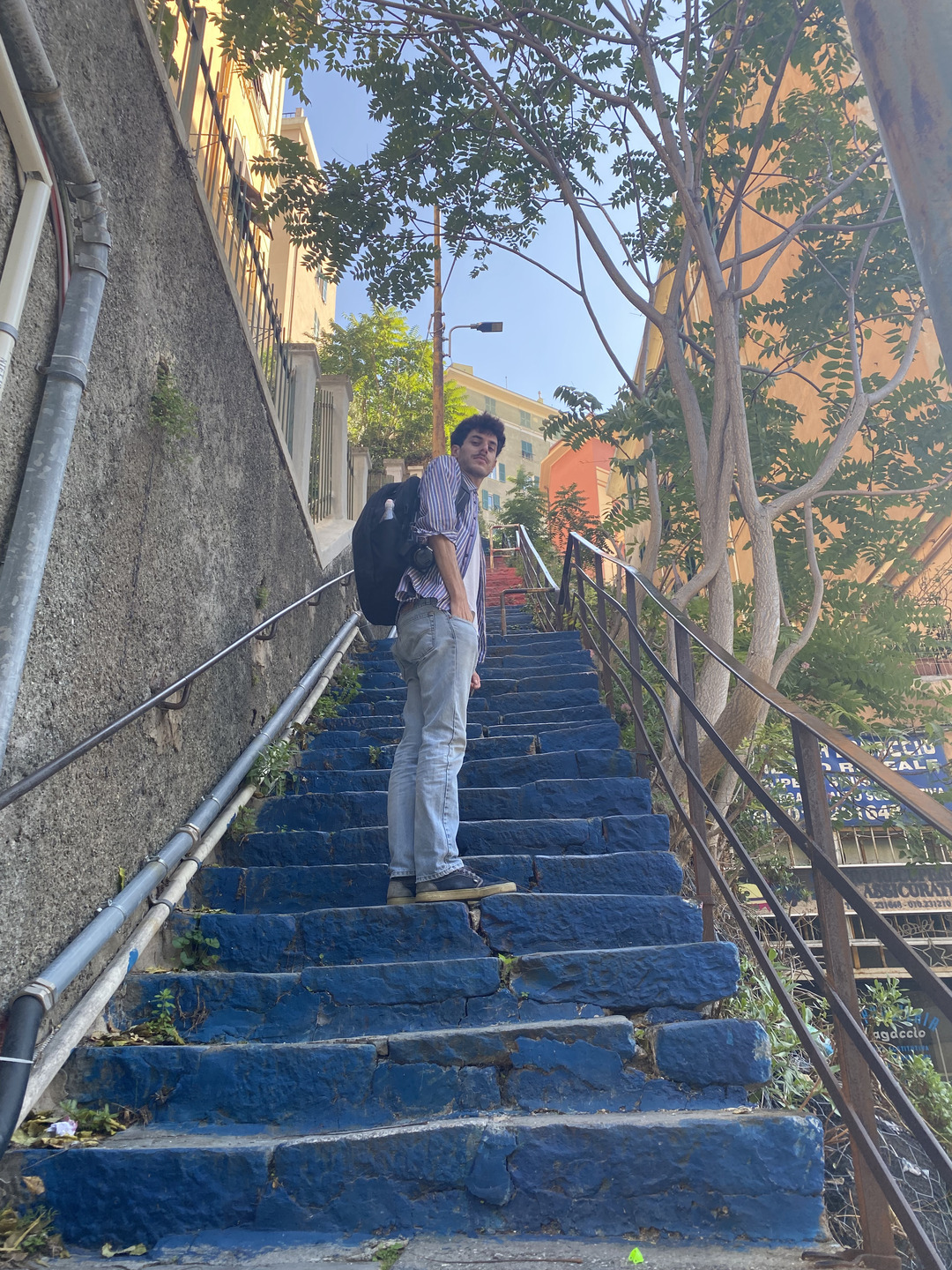
The area is squeezed between the Parco dei Forti, the port, and the Piazza Principe railway station. “The first consideration is that, despite its central location on the map of Genoa, citizens perceive Lagaccio to be a peripheral area,” says Davide as we climb the stairs and ascents that connect the historic centre to the neighbourhood. “The main problem is that this area does not have a separate sewage system for black water and water flowing into the underground streams, so these streams cannot be uncovered because there is no proper sewage infrastructure. This is a problem because rainwater is valuable and can be integrated into the design and management of urban areas.”
Genoa is a vertical city. From the forts perched on the mountains to the high walls of the buildings lining the carruggi (alleys) to the cranes and piers of the “Porto Antico” (Old Port), the city is a steep descent to the sea.
One of UNaLab’s main objectives was precisely to try increasing permeable surfaces to store and infiltrate rainwater, or at least delay and decrease the amount of water entering the drainage system, using natural solutions that can reduce hydraulic risks throughout the area.
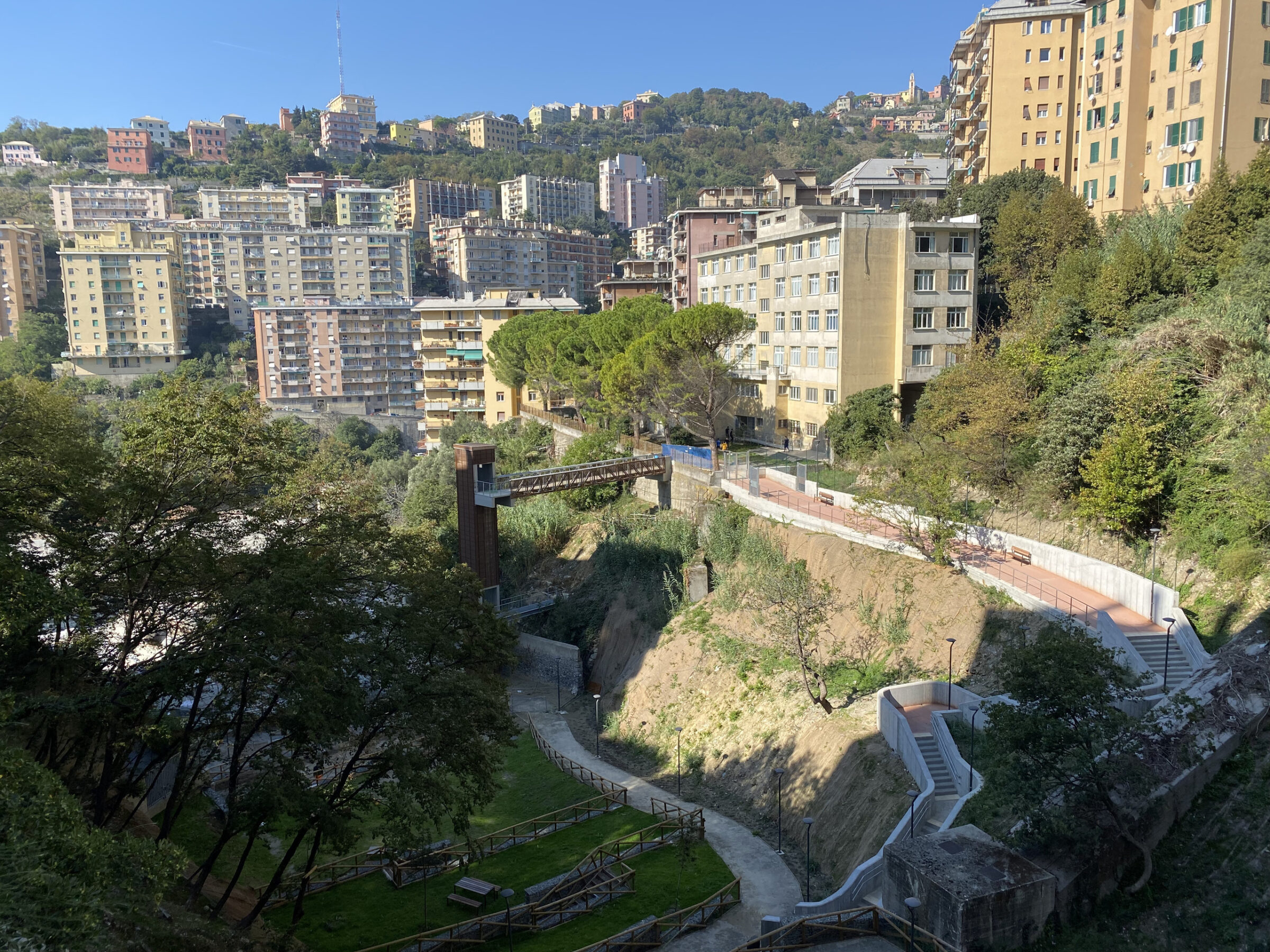
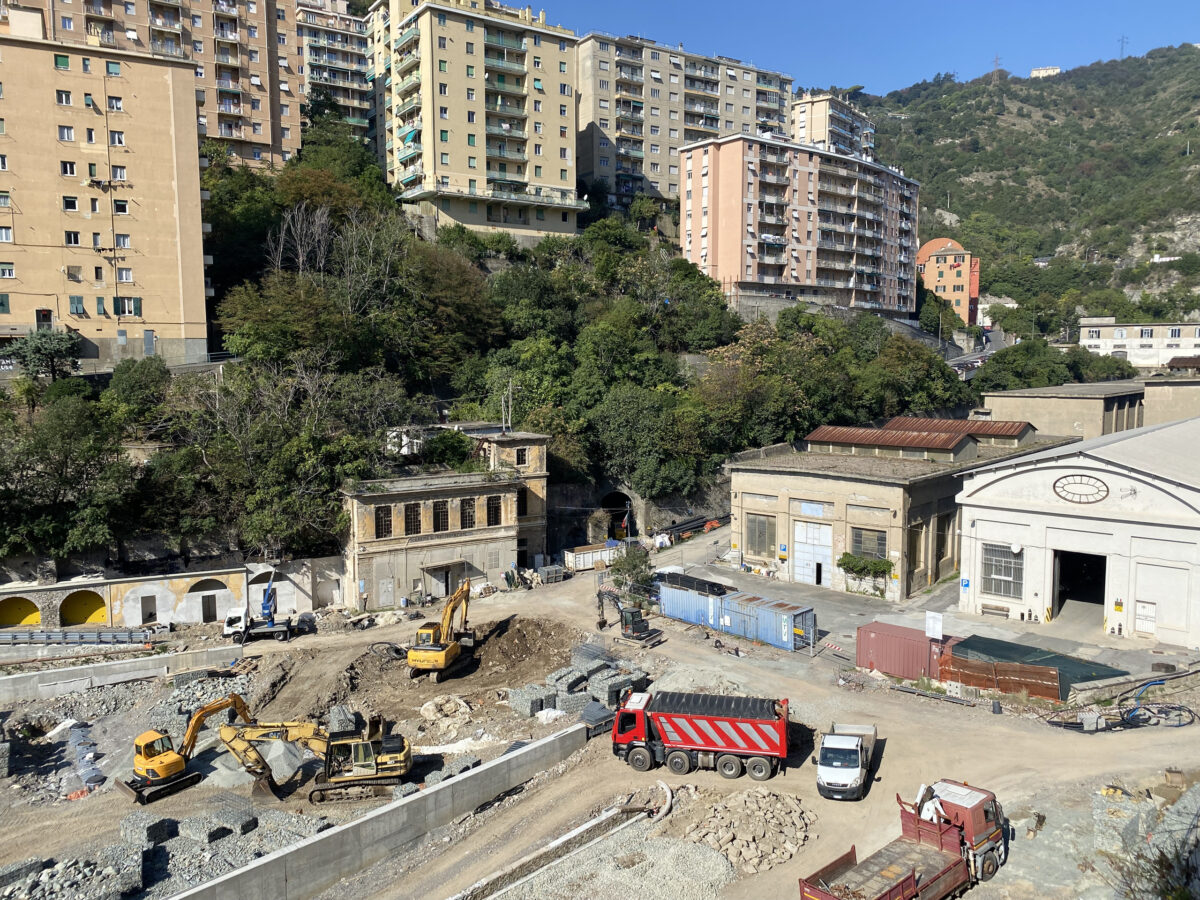
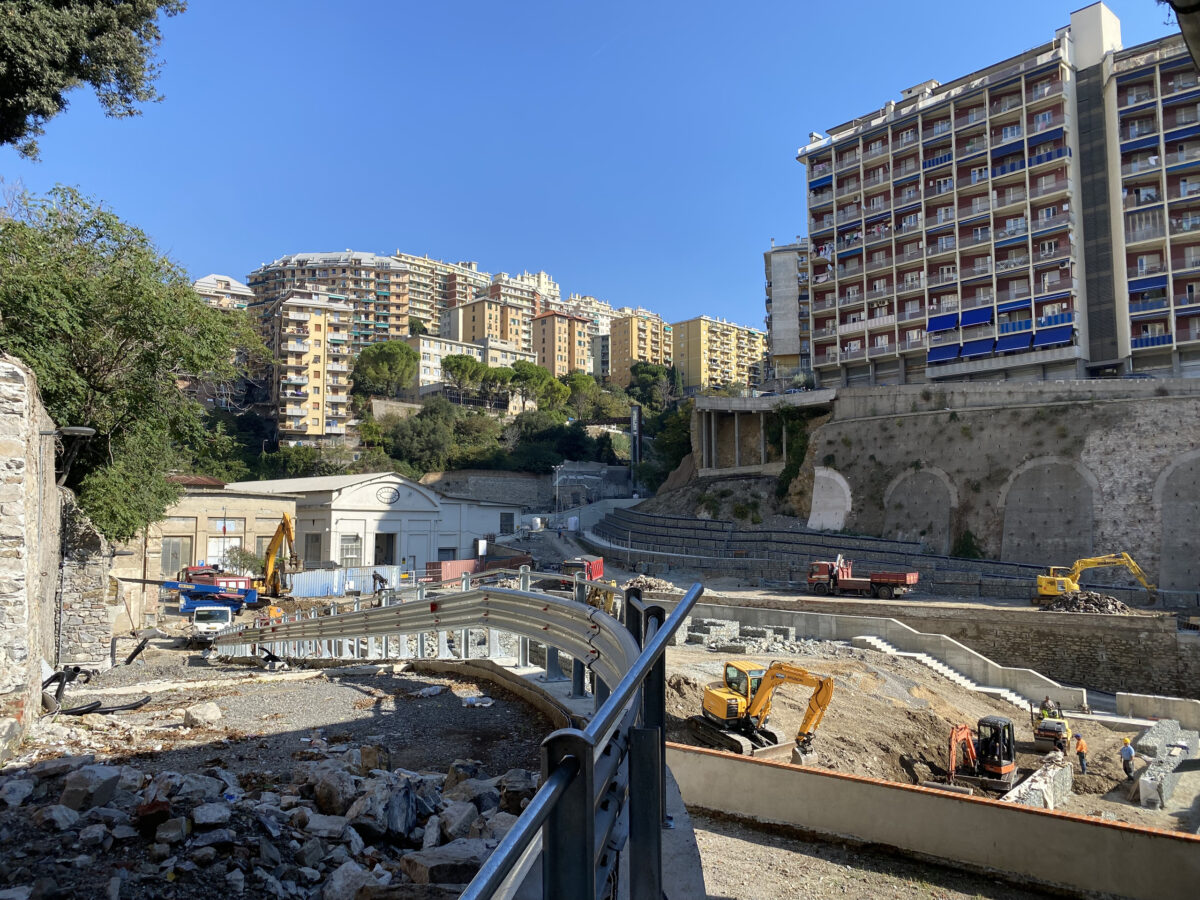
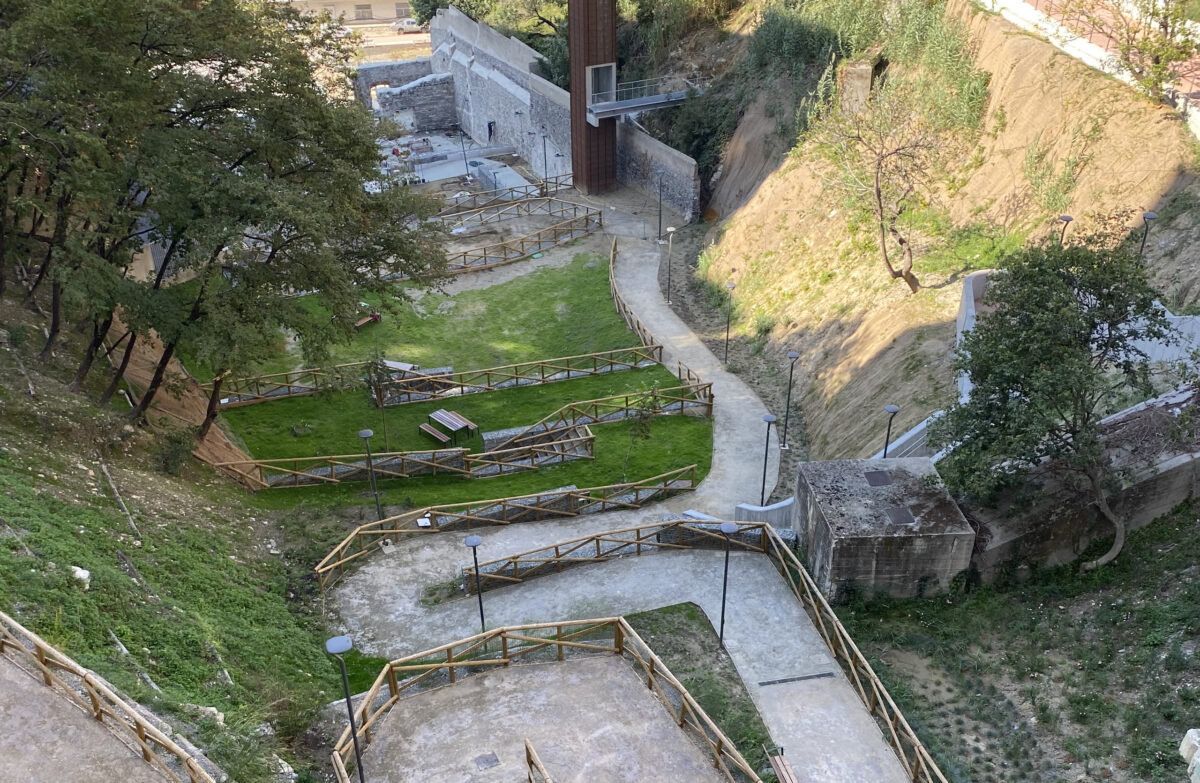
October 2022: bulldozers, trucks, workers. Work is in full swing on the site for the imminent delivery of the park. Looking at it from this viewpoint, the difference in height within which the park will develop is dizzying: about 60 metres from the lowest point to the highest, with a series of terraces stretching up the hill. Typical Ligurian verticality. For this reason, the park is a pilot case study as a laboratory for experimenting with natural solutions in Genoa, which is sadly known for its hydrogeological instability; the City Council, together with project partners IRE Liguria and LAND Italia, hopes that the model can be replicated on a large scale that will completely change the face of the city. Davide points out the parts of the site that have yet to be completed and those that have already been realised: “The rain garden was located in that area, because we realised that the runoff water from the slopes above naturally emerges there, a sort of small natural spring. It’s a very interesting solution, because it is designed to temporarily accommodate rainwater as well, and the temporary presence of water and humidity, in general, helps to counteract the heat island effect and provides a small refuge for biodiversity, as proven by the family of mallards that has already been living here for a few months.
As an innovative pilot project and demonstration of a European-wide research initiative, it will be crucial for UNaLab to have a solid monitoring plan in place to be able to quantify the impacts of the NBS used. Davide tells us that control units have also been installed in the area to measure temperatures and other meteorological parameters. Monitoring, in collaboration with the University of Genoa, will be able to demonstrate the benefits of the multifunctional green, and the data will make it possible to compare the before and after to actually see how much the situation has improved, including from the climate perspective.
It is extraordinary to see with one’s own eyes what once was just a project on paper as it now takes shape, day after day. As we walk away, Davide can barely hold back his enthusiasm. “I graduated with a thesis on UNaLab,” he says, “in which I applied a GIS (Geographical Information System) methodology, and now it’s a great thrill to be able to see the work almost completed. Communicating the contribution of innovation and interdisciplinary collaboration behind this project will be crucial in order to engage citizens and enhance what could – hopefully – become a virtuous practice of designing green areas to rethink our urban landscapes.”
Communicating the contribution of innovation and interdisciplinary collaboration behind this project will be crucial in order to engage citizens and enhance what could - hopefully - become a virtuous practice of designing green areas to rethink our urban landscapes.
Read other Articles from this Edition