In Transition
A Preview of the City of the Future
Walking in Düsseldorf between Am Wehrhahn and Haroldstraße with Gisella Birardi and Arianna Senatore.
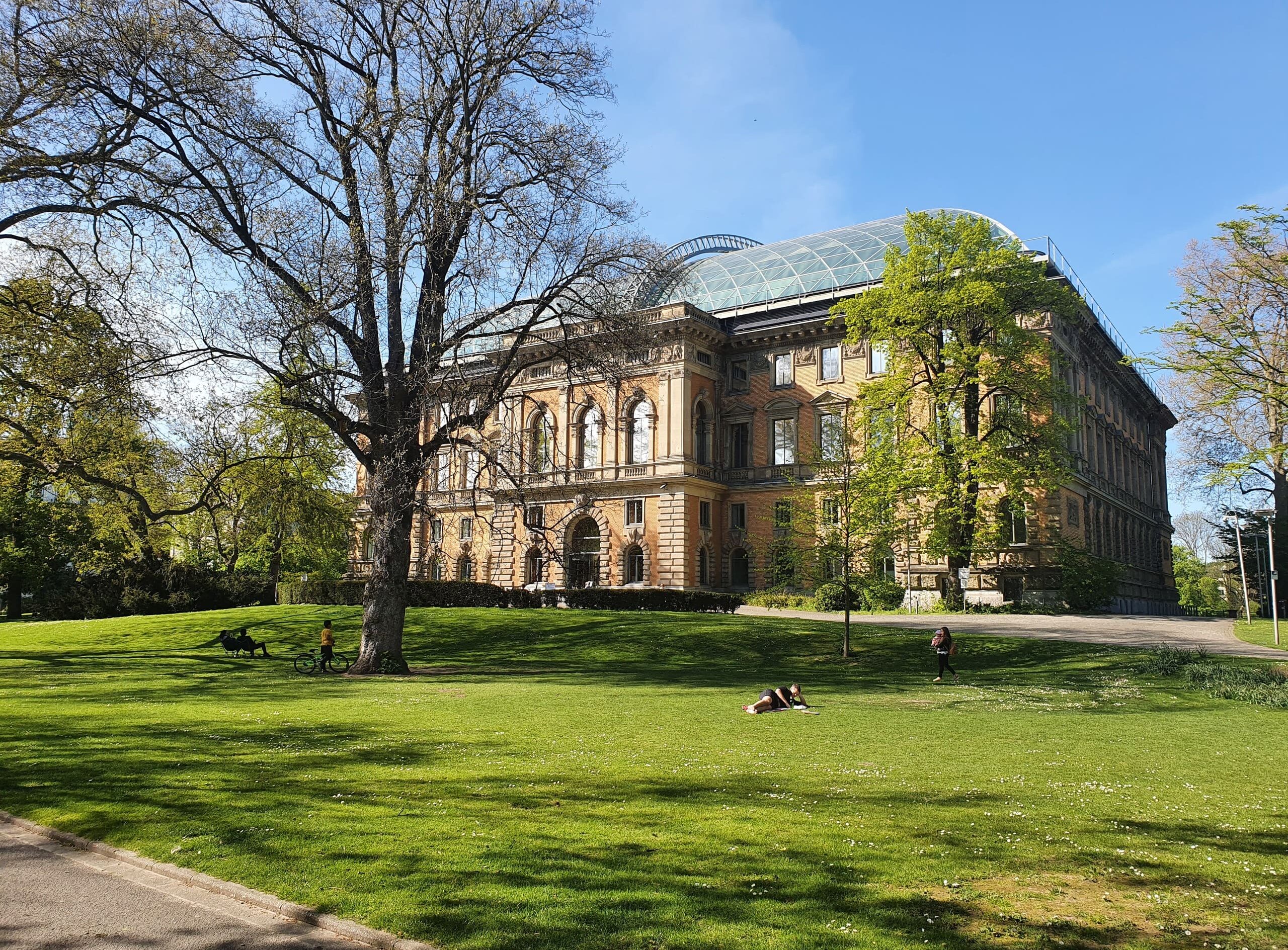
This green vision could play a major role here at Am Wehrhahn, as we can feel the proximity of the Hofgarten, whose biophilic and biodiverse landscape qualities we would embrace.
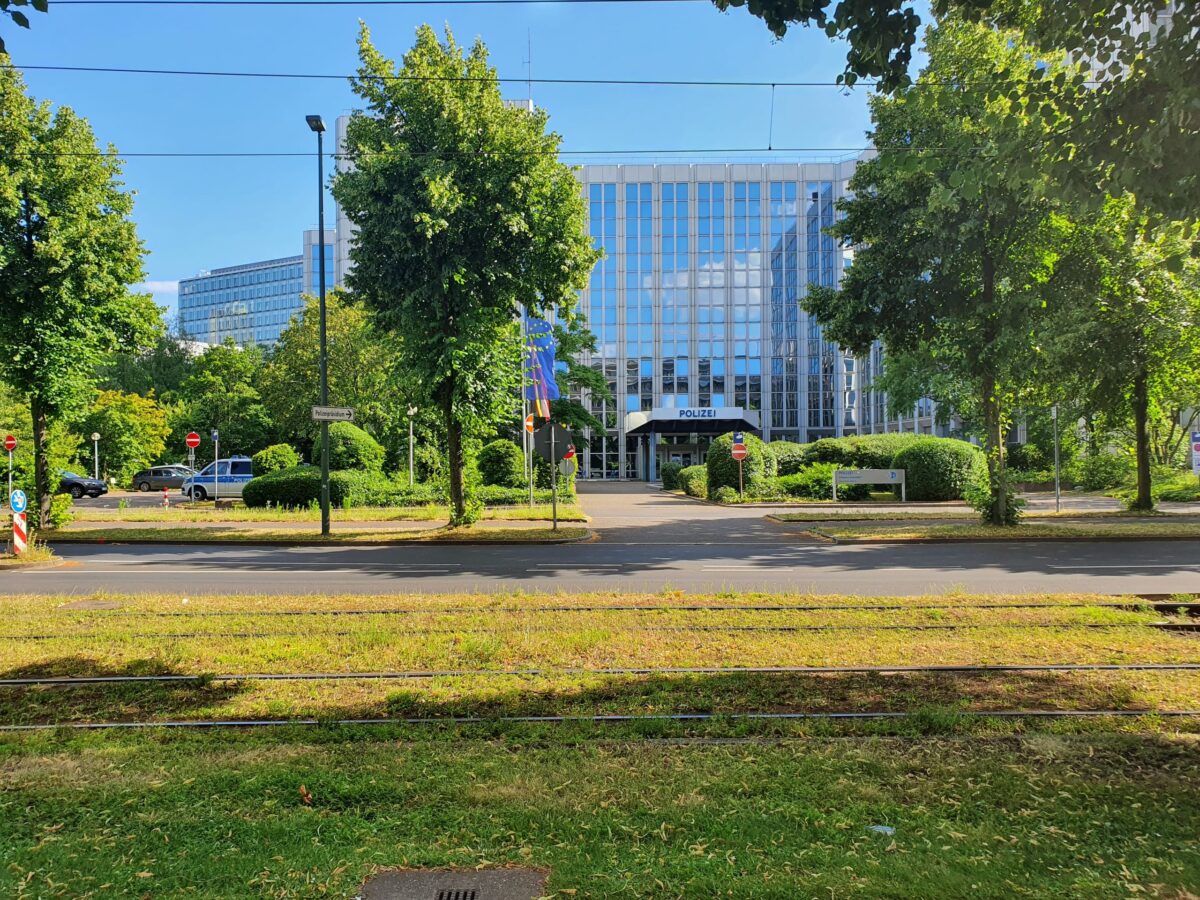
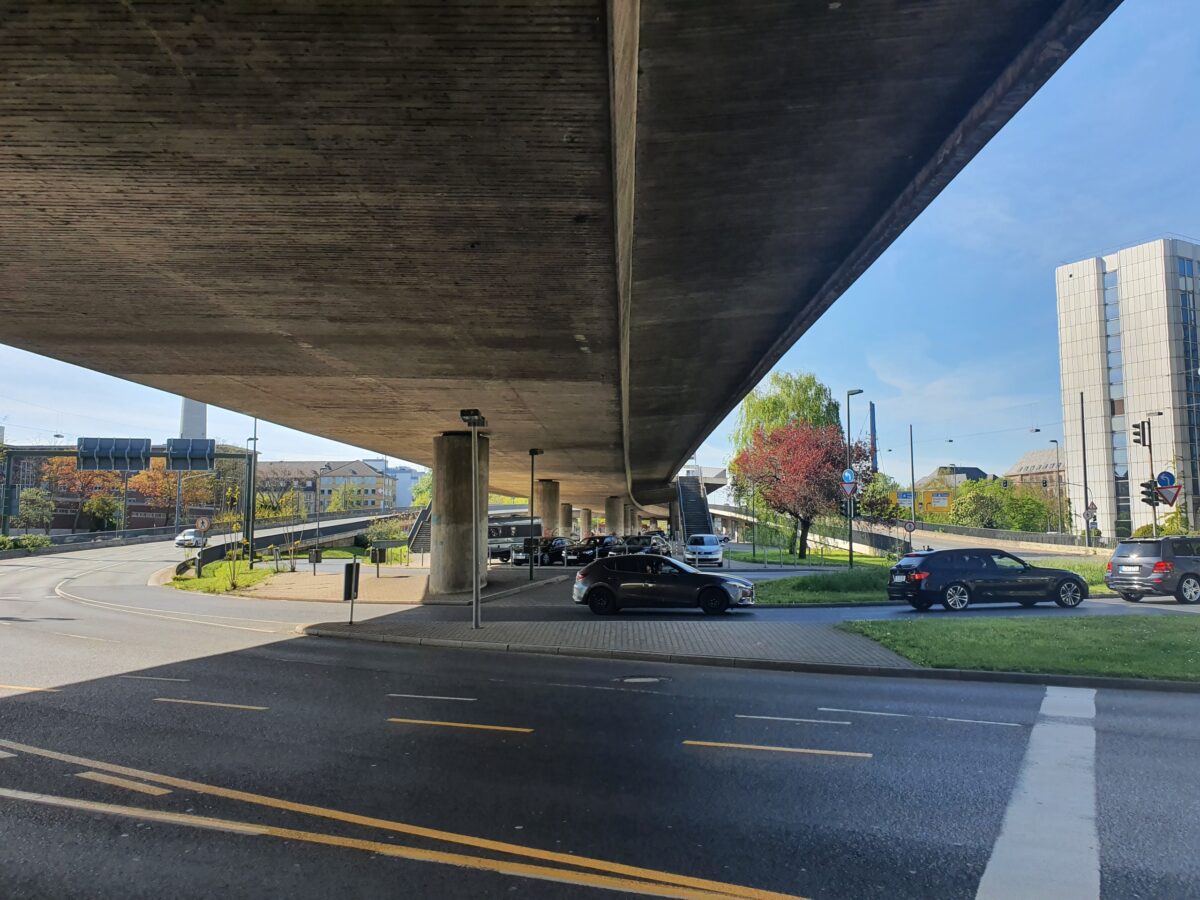
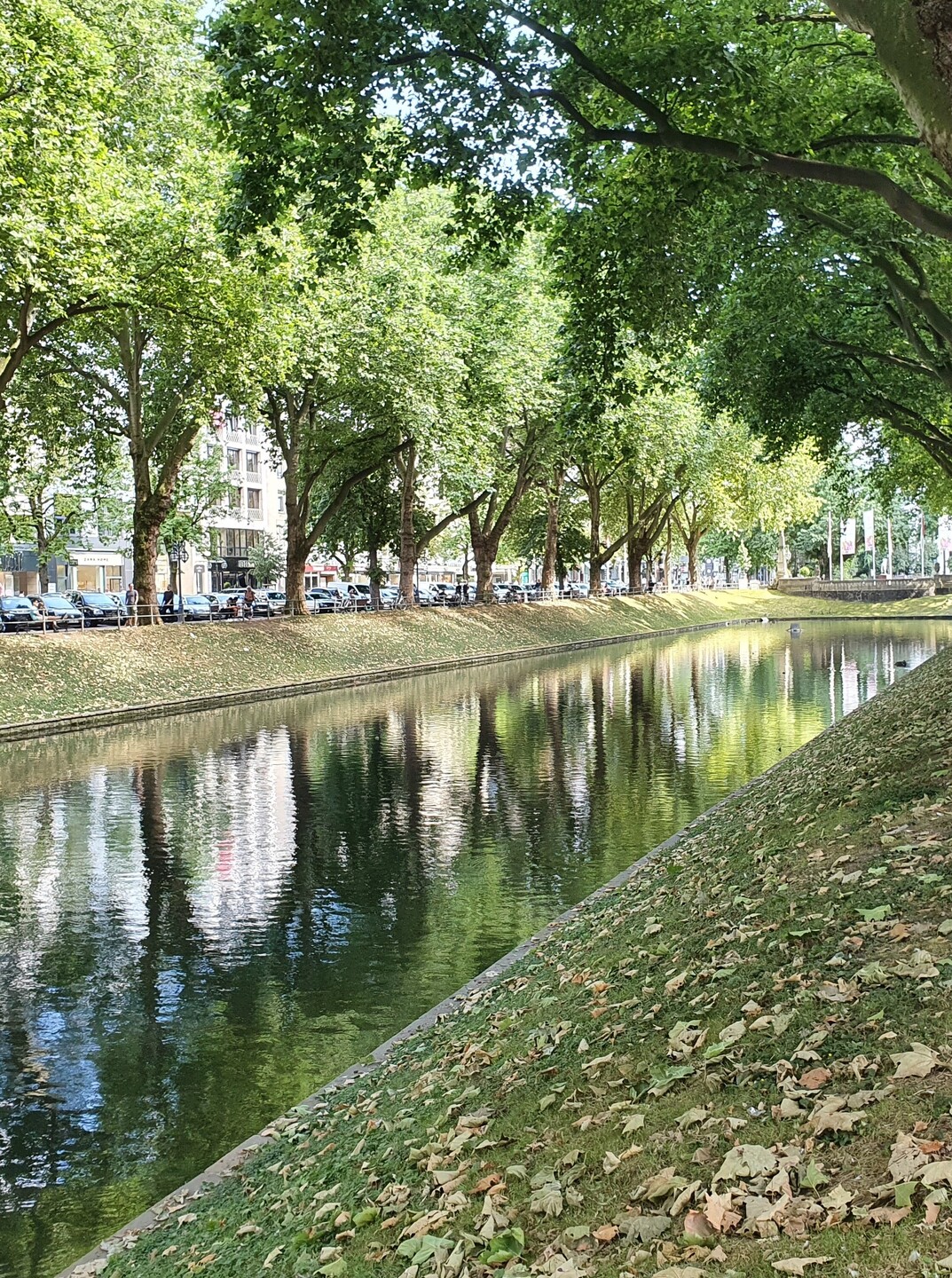
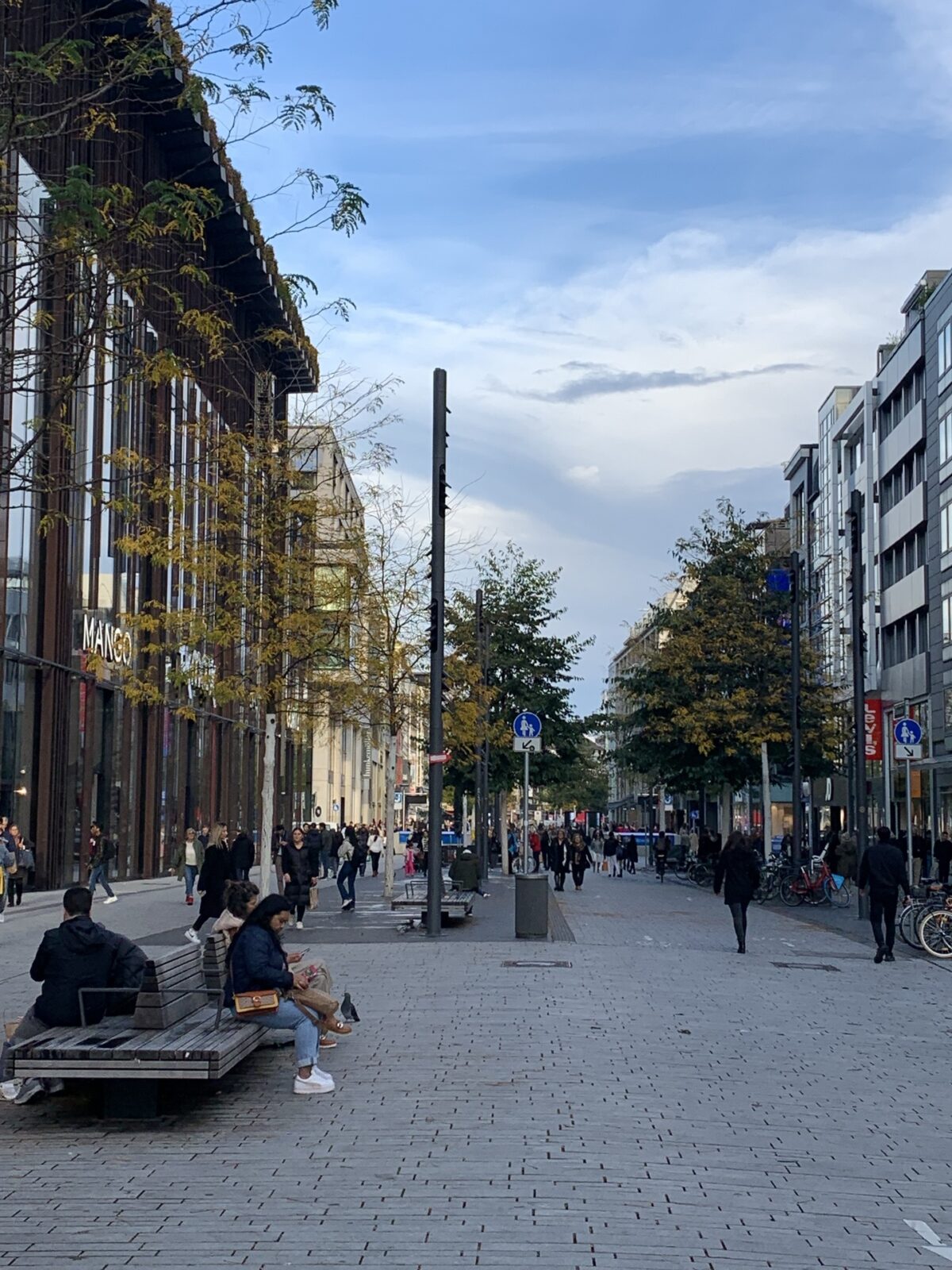
If you step out of LAND’s Düsseldorf office and take a walk around the neighborhood, you’ll soon bump into two projects that LAND is involved in. The first is the Am Wehrhahn 1 property, site of the former Kaufhof building in downtown Düsseldorf, which is easily accessible on public transport and marks the entrance to one of the city’s most popular shopping areas. Intervention in this area could create momentum for the entire neighborhood.
LAND sees Am Wehrhahn 1 as a stage and showcase for the entire city. “It’s a shopping street, the doorways on the ground floor are used primarily for businesses and lead to the offices above. A pedestrian zone would highlight the importance of public space, change its use. People could take back the space,” explains Gisella Birardi. “This green vision could play a major role here at Am Wehrhahn, as we can feel the proximity of the Hofgarten, whose biophilic and biodiverse landscape qualities we would embrace.” The Hofgarten, 28 hectares of big green lung in the heart of Düsseldorf, was created back in 1769 and is the first and oldest public park in Germany. LAND and the architectural firm BIG are participating in Düsseldorf‘s competition by invitation for the Am Wehrhahn and Heinrich-Heine-Allee areas.
Going through the Kö-Bogen complex and down Königsallee, we walk along the Rhine promenade. By moving the once heavy above-ground traffic to an underground tunnel, an immediate connection to the river was restored, and this area became a popular destination for city residents and tourists.
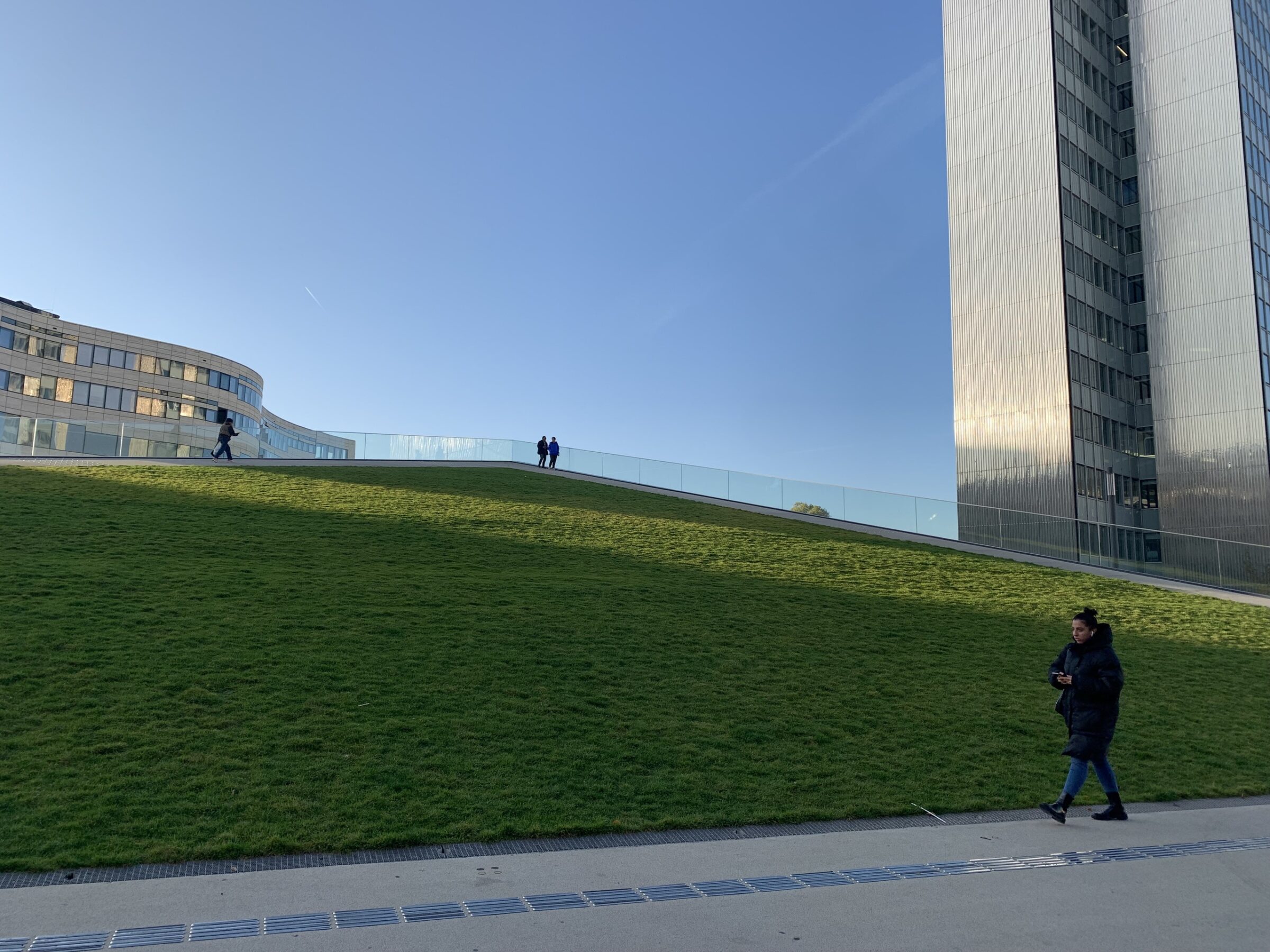
Thus, from Johannes-Rau-Platz, we come to Haroldstrasse 5, a property whose new architectural development has been assigned to JSWD Architekten GmbH & Co. KG + Gina Barcelona Architects. Coming from the Rhine side, we can see that the area is already quite green, although very busy. LAND wants to add character and identity to what’salready there, without diminishing the contribution of existing greenery along the edges of the property. This also applies to the elevated road that runs past the area. Urban greenery already exists there and should be made more prominent. “The idea of changing traffic flow not only makes more room for plants and thus improves the quality of the area, but also creates a connection to the Rhine through Haroldstrasse 5, with the Schwanenspiegel lake at the entrance to the Hofgarten,” explain Gisella Birardi and Arianna Senatore. The stretch of road behind the present complex is almost unused, as we could see for ourselves as we walked towards the streetcar stop on our way back to the office. And it wasn’t because of the time of day. The proposed idea for functional greening of the new architecture at Haroldstraße 5 involves “green waves,” terraced green spaces with places to sit and paths accompanying the new complex. Extending up to seven meters above street level, they would create a vantage point from which to enjoy the neighborhood.
The two Düsseldorf projects we visited, or rather glimpsed during our walk, show the great potential of a green transformation that brings existing spaces and elements together. This will help Düsseldorf reach the goal of climate neutrality by 2035 and clearly shows people the added value of the urban landscape: psychophysical well-being.
Text: Christiane Bürklein
Read other Articles from this Edition