Designing with Time
A Conversation about the Future
Talk moderated by Andrea Küpfer.
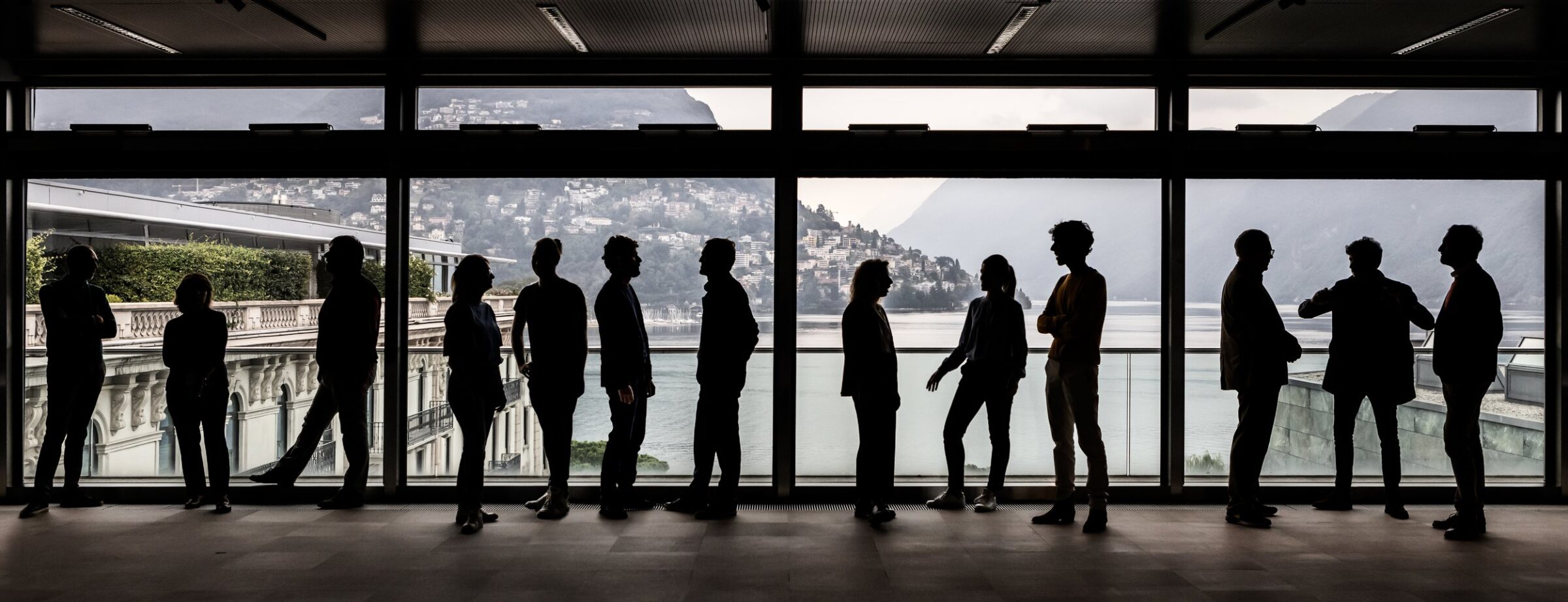
LAND’s leadership team met for a talk in Lugano on September 23, 2021. The occasion? As the driving forces of the LAND international consulting and planning company, they wanted to spend time together and talk about Today and Tomorrow – as people who live in and design public space. This is a brief overview of the topics, challenges and responsibilities they discussed.
Time is an essential component of the work of landscape architects. Landscape has no beginning and no end. Landscape is always evolving and being shaped over time. At any moment in time, it provides a snapshot of the society that lives in it and shapes it. This is precisely why we need visions for our landscape. Common visions that make participatory processes possible and pursue a sustainable strategy. It takes imagination. The power of persuasion.
One of the biggest challenges we now face is maintaining the quality of public spaces and their infrastructure and services during this time of transformation. In the 1980s, Ian McHarg talked about this in his book Design with Nature. Today we know that the dimensions of time and cultivation are also important.
Convincing others to adapt to Nature’s timeframes and be patient is a real challenge. The best answer to impatience is usually to take a walk – out there where LAND launched the green transformation 30 years ago. In Milan, in Emilia-Romagna, in Essen. Even a symbol of environmental destruction like the Ruhr region with its steel mills and coal mines could be restored. Over the last 15 years. How was this achieved? With foresight. With a roadmap of multi-year actions. With a patiently committed community of purpose.
Landscape consultants are not scientists or social engagers, but transferring knowledge and engaging stakeholders are other fundamental components of the work. There must be an understanding (data-based) of how important Nature or Nature-based solutions are for urban and rural open spaces. That they serve not only aesthetics, but above all our future and future generations. There must be first-hand knowledge of how green transitions can succeed. People must be given the opportunity to become part of it.
There’s no longer any doubt that landscape can’t be dedicated to the simple desire for beauty anymore, but must instead pursue ethics and well-being. Our responsibility is to develop tangible and measurable solutions to counteract climate change. And when even Ursula von der Leyen, President of the European Commission, calls us to action because now is the time, then we can’t hold back. Now is not the time to be cautious and moderate, but rather to be decisive. It’s time to form communities of purpose made up of a wide variety of specialists, of political, business and public representatives. All committed to the same purpose.
Landscape isn’t just landscape, but rather a driver of sustainable development, an initiator of successful public-private relationships, and a safe haven for citizens. Finally, it’s the tangible expression of public space in a society where people’s actions reflect their needs, desires, and dreams. With this in mind, we can shape the future.
Read other Articles from this Edition