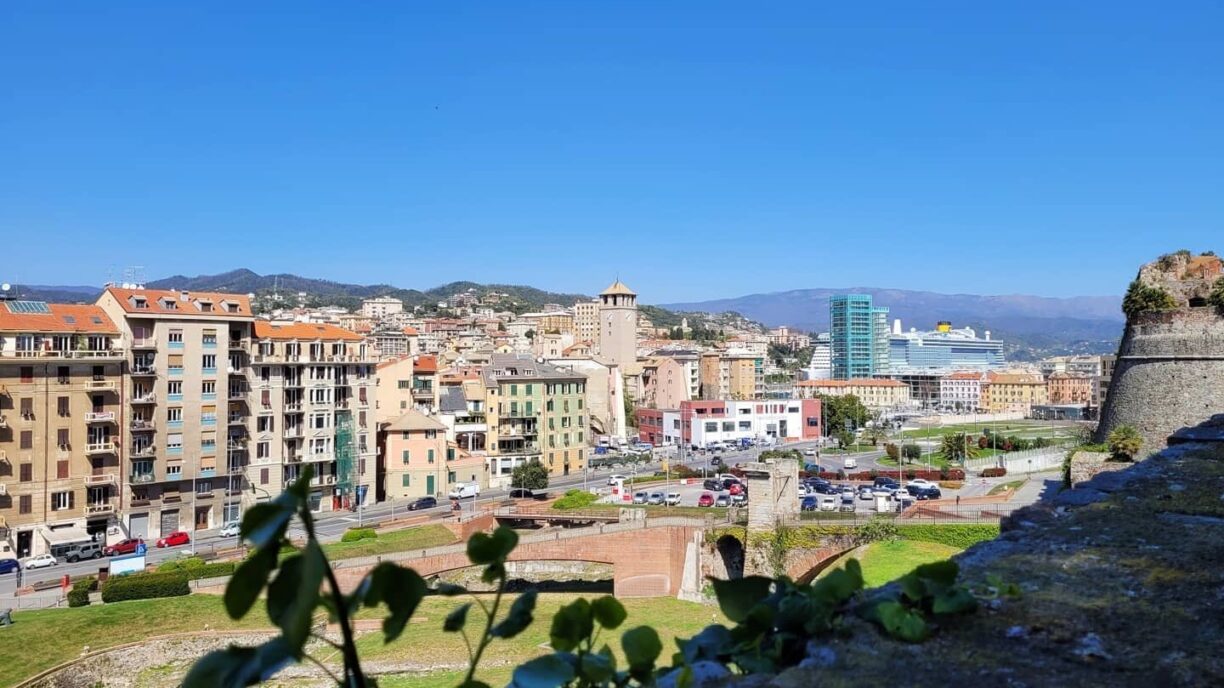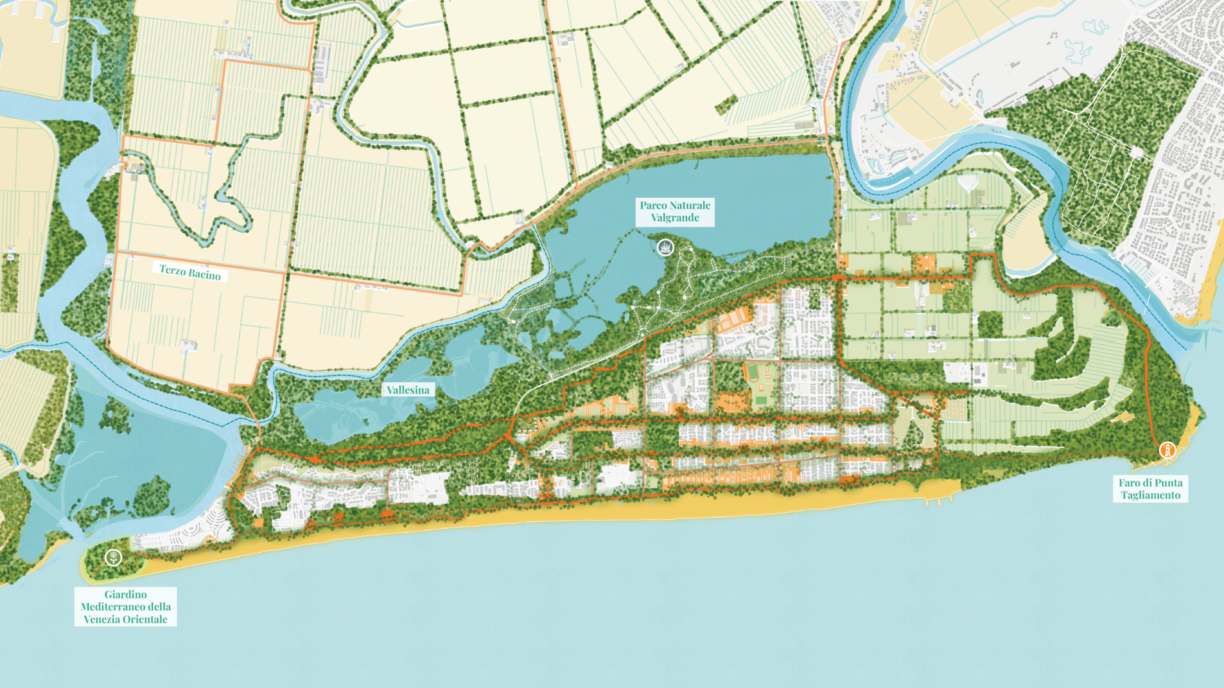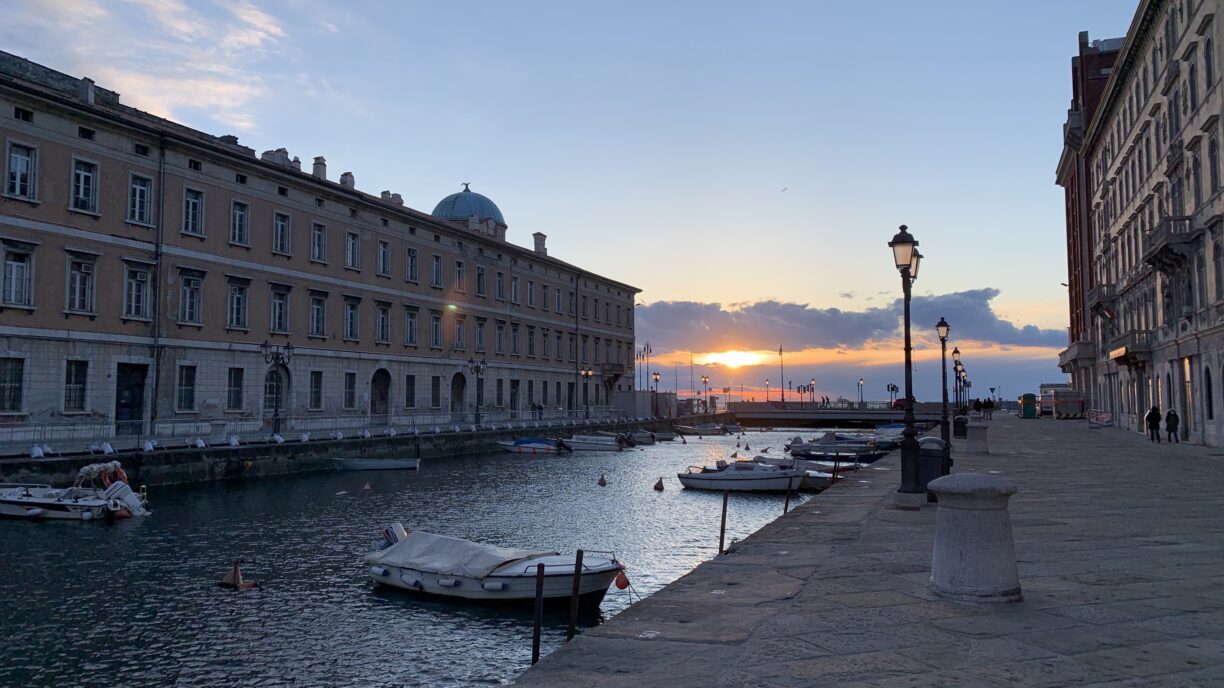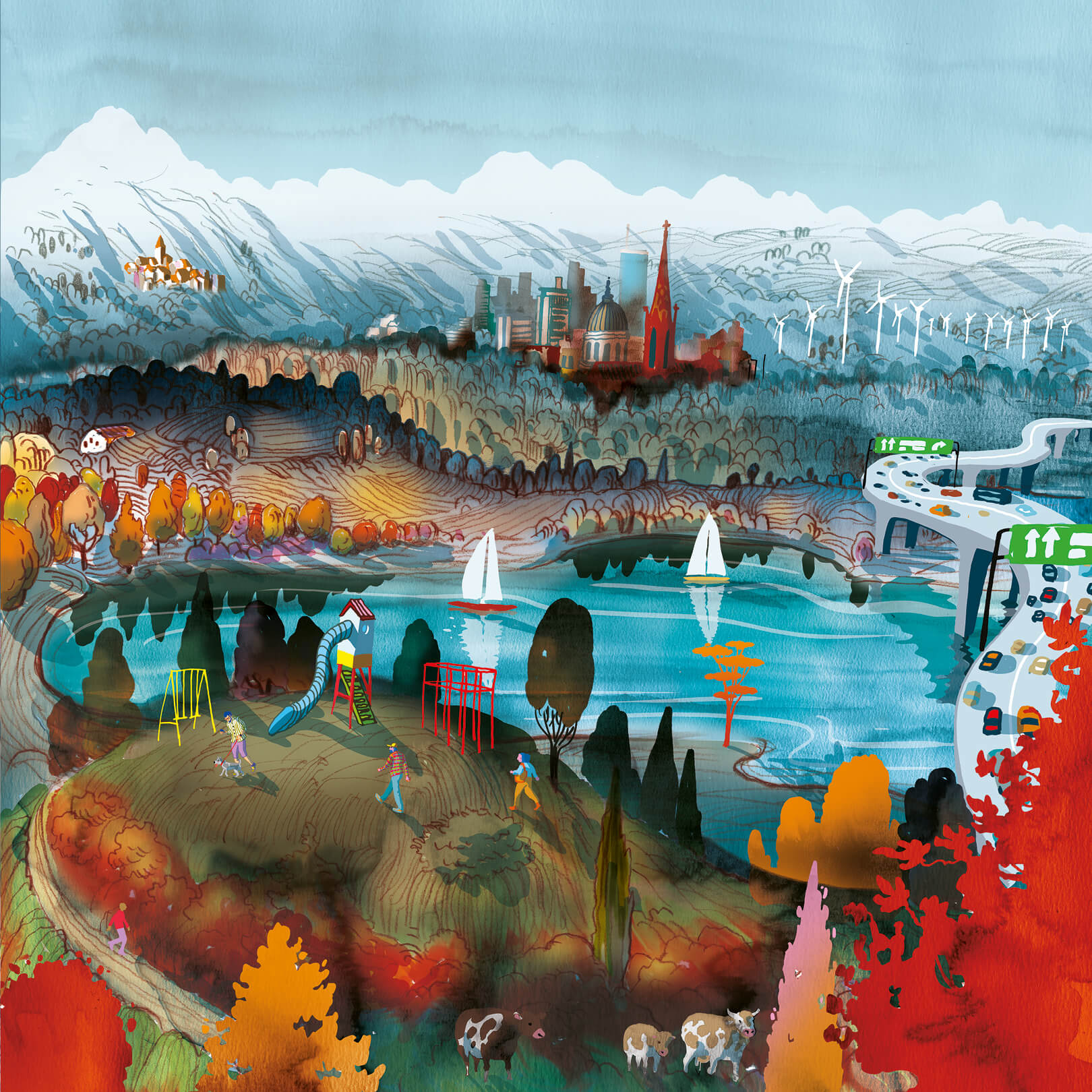
WanderWorld illustration series from Carlo Stanga for LANDmagazine Vol. 2
Carlo Stanga, who illustrated the "WanderWorld" series for our LANDmagazine, talks to us about his work that blends architecture and art, the new challenges in integrating nature with the city, and the need to go beyond an ordinary vision of reality.
From architect to artist, urban planner to urban illustrator: what brought about this change in course?
Carlo Stanga: I would say I didn’t so much change my course as follow my natural path. I’ve always had a passion for drawing. I started drawing when I was a year and a half old and I’ve never stopped. Later, after a trip to Rome in elementary school, I developed an intense interest in architecture and the city. The two passions continued side by side, and while I was attending the Milan Polytechnic, I started to work as an illustrator. After graduation, I was lucky because I was immediately offered important architectural work, like free-standing houses or office buildings, and so I opened my studio in Milan, but alongside that I never stopped illustrating professionally. At a certain point the work of illustrator sort of subsumed that of architect, in the sense that illustration expressed architecture as content. I decided to devote myself to the activity I prefer and that I’ve always felt was freer from bureaucratic issues and compromises. The work of an architect and that of an illustrator are also quite different and require a full-time commitment, you can’t do them at the same time. I had to make a choice, and so I completely embraced illustration, without abandoning the architecture that lives in my images. This work is tailor-made for me, where I can indulge in many passions: illustration, architecture, urban planning, travel, cinema, literature…As a journalist once suggested to me, it’s a dream job.
“The illustrations I did for LANDmagazine were, in a certain sense, a new approach to the subject of the city, beyond the city.”— CARLO STANGA
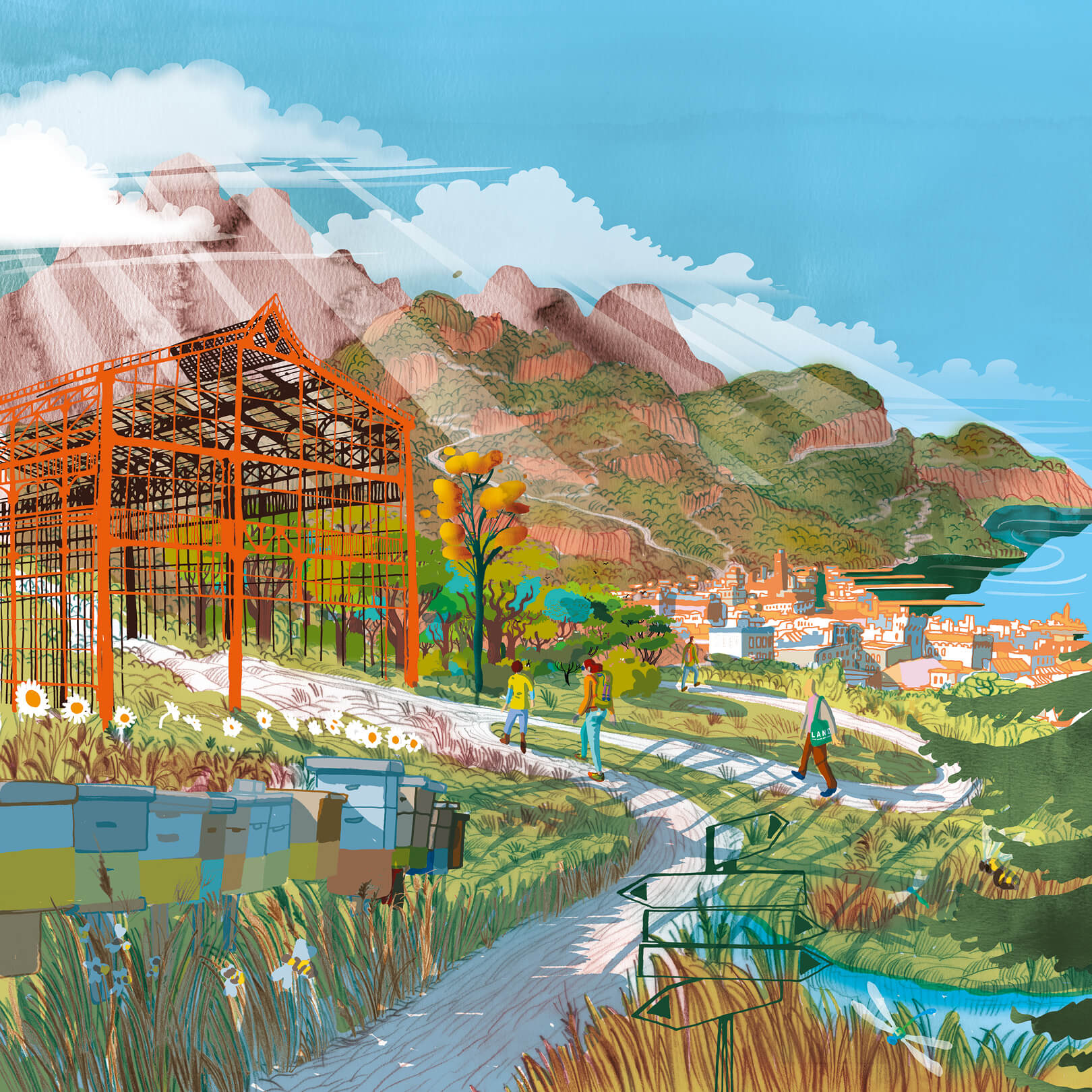
WanderWorld by Carlo Stanga
Your books on Milan, New York and London are quite well-known and have won many awards. The illustrations for “LANDmagazine” regard the connection between urban and rural spaces. Was it a new challenge?
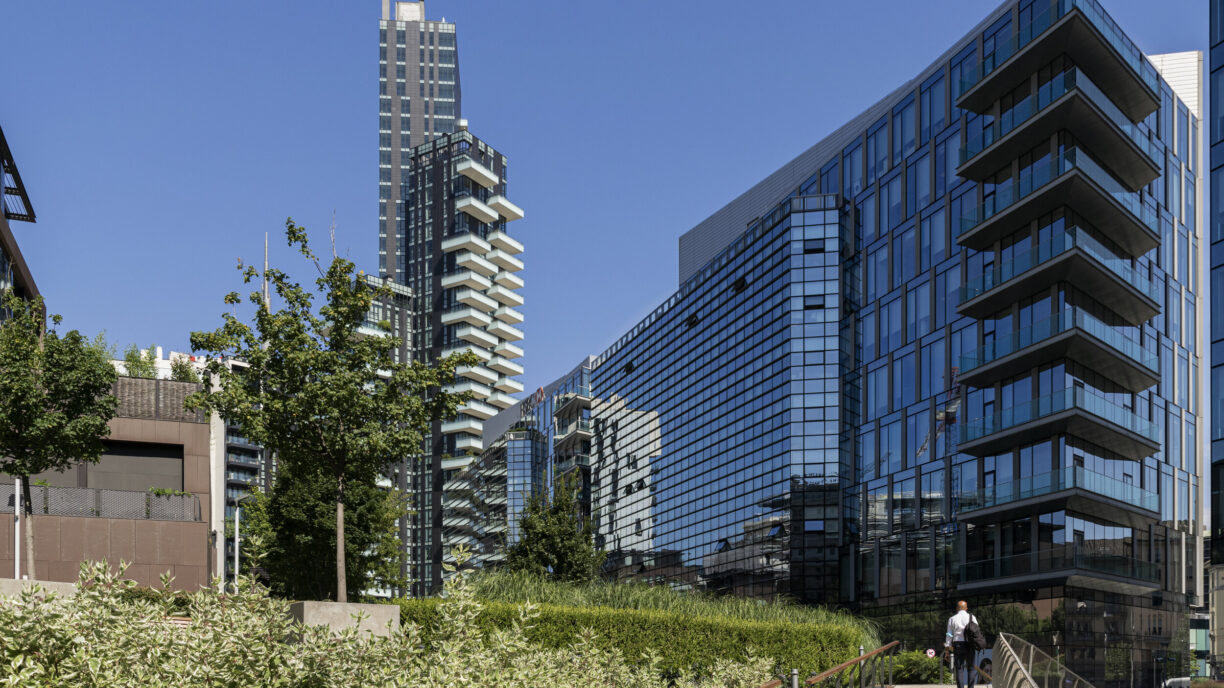
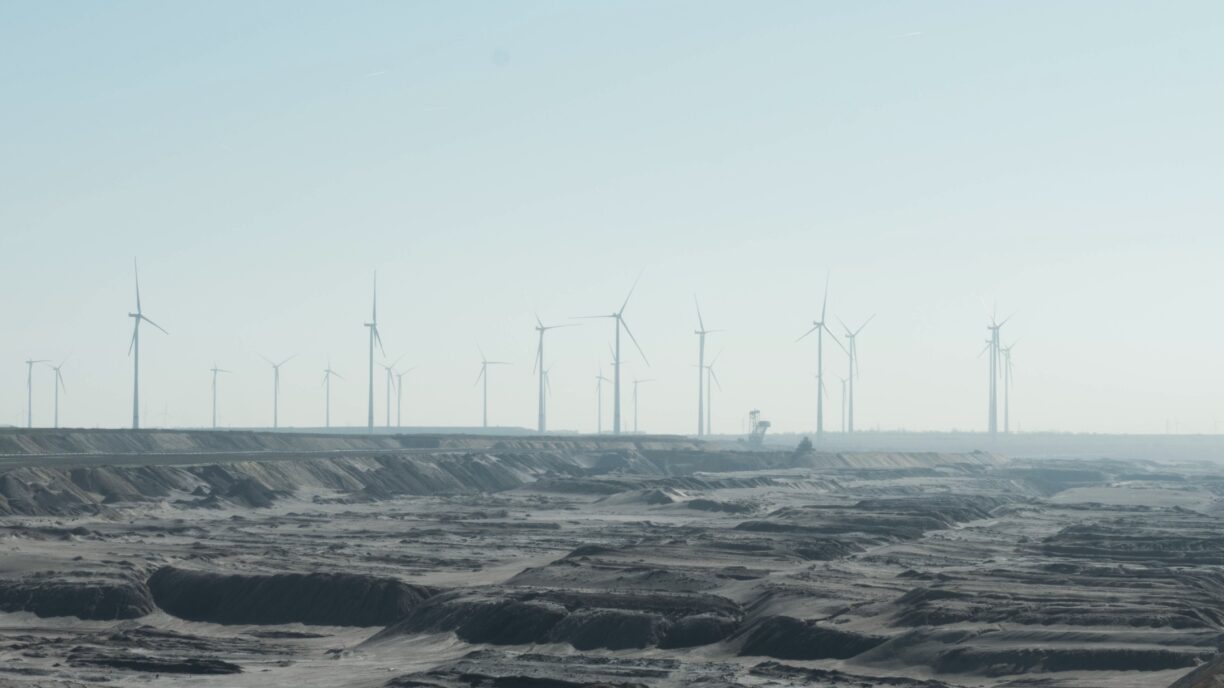
Carlo Stanga: It’s true, for me the illustrations I did for LANDmagazine were, in a certain sense, a new approach to the subject of the city, beyond the city. I was able to tackle the issue of suburban environments, starting with a general vision of the various characteristics of the contemporary landscape, which is certainly no longer like that described by Poussin or Goethe, but instead is heavily impacted by human activity, where the stratification of human intervention is quite varied and interesting. In reality, even the landscape is in a certain sense the city. There is no longer a clear boundary between the urban reality as we traditionally see it, the city center and the surrounding suburban area, but rather we now recognize a vast co-mingling of nature and city, where they co-exist and blend together in a quest for balance. Until now I mostly dealt with the city center, so it was time to look at the contemporary landscape and the intra-urban and regional dimension. I discovered a relationship that was new to me, marked by both humans and nature, which are often intimately linked and indistinguishable. This is a new aesthetic for me, a pursuit of contemporary beauty.
To be able to identify a way to represent such a complex reality, I wanted to draw inspiration from the Renaissance landscape, in particular that of Piero Della Francesca, where harmony and balance are an aesthetic choice that led me to emphasize continuity rather than contrasts and differences. Above all, I wanted to describe the discovery of contemporary harmony, and the Italian Renaissance helped me a lot here.
Where did the title “WanderWorld” come from? What’s behind that?
Carlo Stanga: WanderWorld is a title that suggests roaming through the landscape, a trip that’s unplanned, that gives way to the pleasure of serendipity. Discoveries are endless and unexpected. And I like the verb to wander, because it reminds me of wonder, so wandering while discovering, preserving the capacity to be surprised and excited. I think that marveling at something, Stupor Mundi, tends to be forgotten these days. Wonder seems an emotion of the past. Today, internet algorithms delude us into thinking that we’ve accidentally discovered things we like, but they pull us into an infinite loop that’s always the same. True discovery of the real world comes only through direct, physical experience, wonder-wandering in the world, which is summed up here in Wander World!
“WanderWorld is a title that suggests roaming through the landscape, a trip that’s unplanned, that gives way to the pleasure of serendipity. ”— CARLO STANGA
WanderWorld by Carlo Stanga
The role of nature in architecture: is this something that could interest you in the future as well?
Carlo Stanga: Certainly, as a contemporary man, I’m interested in everything that seems to characterize our time. One of the most powerful aspects of today’s zeitgeist is a new awareness of the crucial role of the environment. I’m convinced that this is going to make more and more sense in the future.
During my architecture studies at the Milan Polytechnic, in the late 1980s – early 1990s, I remember how, as is typical in Latin cultures, architecture was seen as a world separate from nature, and even if nature was present, the built environment was always dominant. You could see the landscape’s subservience to architecture, and in general, while there were certain ecological expectations, at least in our Italian/Latin world, nature was always seen as simply absent or something to be subjugated, almost overwhelmed. For example, think of the work of Gregotti, of my professor Vittoriano Viganò, of all the so-called post-modernists of that time, and of Aldo Rossi. Nature was simply not part of the project, or it timidly peeped out from the pediments of Mario Botta’s churches. I can think of only one architect with a vision where the natural environment seemed to play a major part in the design during those years: Emilio Ambasz.
Today I’m increasingly aware of the need to integrate nature into the city, and thanks to LAND, I’ve been able to explore this crucial issue in greater depth.
Your illustrations use reality as a starting point and at the same time offer a new dimension of reality. How important is it to you to go beyond limits, to transgress?
Carlo Stanga: Thank you for the question, which really gets at one of the characteristics of my work. In effect, through my illustrations I always tend to describe urban reality in a way that goes beyond its immediate appearance. On the other hand, the verb to illustrate comes from the Latin and essentially means to illuminate, to make clear. And so, by illustrating, I try to bring reality into a new light in order to unveil it, explain it. So it’s important to go beyond the boundaries of an ordinary vision of reality, to make it reveal hidden truths, contradictions, using fantasy, “inappropriate” color, upscaling. Of course, like a stage scene, interpretation and personal vision always play a major role in the representation.
“By illustrating, I try to bring reality into a new light in order to unveil it, explain it.”— CARLO STANGA
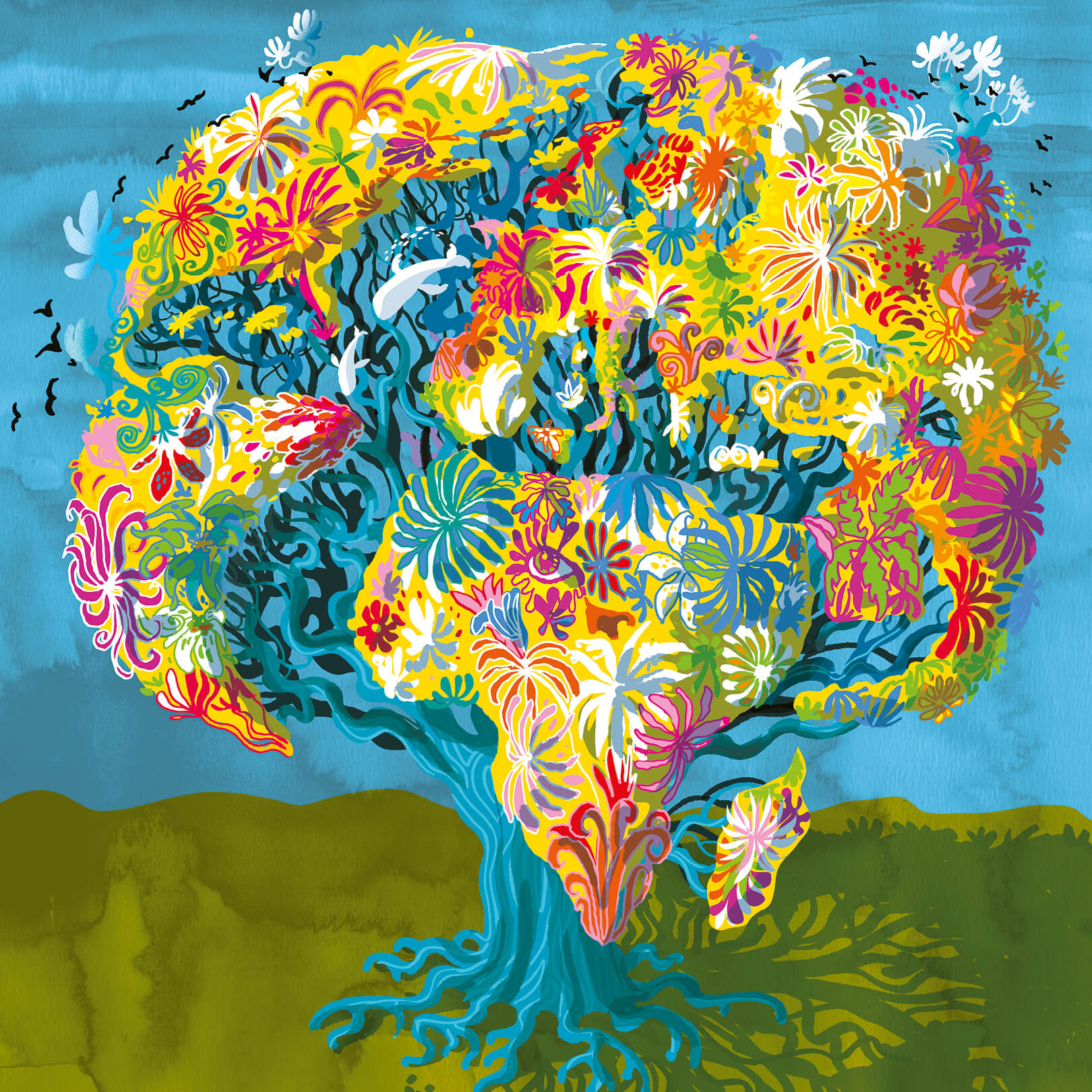
WanderWorld by Carlo Stanga
It’s the playfulness of your illustrations, the childlike component, that distinguishes them. Do your childhood memories play an important part? And can children’s drawings be a model for an artist?
Carlo Stanga: Being an illustrator, but also an artist in general, means first of all knowing yourself, being in touch with your own daimon, as the ancient Greeks called it, that is, the truest and deepest part of yourself. It’s recognizable from the time we’re children, and it’s closely linked to creativity, as I learned from my teacher Bruno Munari.
I often counsel young people who want to undertake artistic work and get in touch with their own creativity, to try to find the drawings they did as children, in preschool or elementary school, and to look at them again, find their most authentic selves in them, to recover very personal and unique aspects of themselves and their way of creating and seeing the world. It’s an exercise everyone should try in order to rediscover their own deep roots. The imagination, the playfulness of that time of life, are tools that help us better understand the world, simplifying it through the eyes of a child.
You can enjoy the magazine with Carlo Stanga’s illustrations here.

Carlo Stanga