From Infrastructure to Benches
The Opportunity for Integrated Mobility in Local Areas
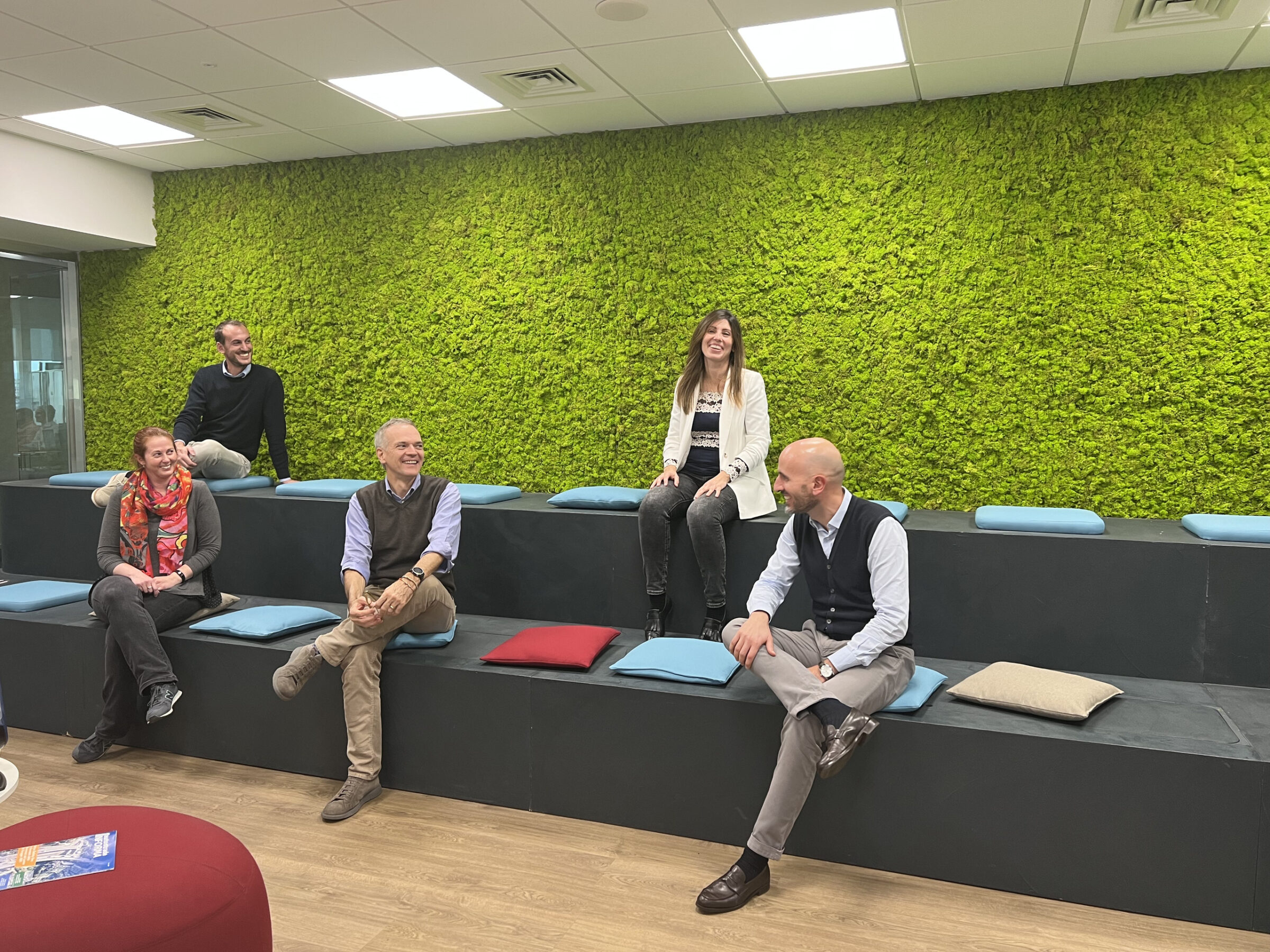
Snippets of a conversation between Shirly Mantin (LAND) and the experts at Tecne, an engineering company from the Autostrade per l’Italia group: Stefano Susani (CEO), Enrico Francesconi (Landscape Discipline Leader/Engineering Coordinator), Mara Airoldi (Landscape Architect) and Lorenzo Regazzoni (Landscape Architect).
The Bologna Bypass’s strong green imprint makes way for a completely innovative approach.
Shirly: We’re talking about a number of issues that we can only skim during the brief time we have, but that principally revolve around infrastructure’s relationship with the surrounding area. Of course, a central point is the concept of sustainability, which is also highlighted repeatedly in the Code of Ethics of Autostrade.
Stefano: Not only in the Code of Ethics. It’s a whole architecture of governance that is pushing Autostrade per l’Italia toward the goal of becoming a leading sustainability player in Europe. The specific mission of Tecne, the Group’s engineering company, is to perform the engineering design and work management activities required to make good use of the enormous investments provided in Autostrade per l’Italia’s Industrial Plan, which includes 14.5 billion euros for investments and 7 billion euros for maintenance up to 2038. Tecne will coordinate all maintenance, upgrading and modernization work for the 3000 km network, in addition to engineering work on strategic infrastructure for the country – like the Genoa interchange known as the “Gronda di Genova” or the Bologna Bypass, where we collaborate with LAND. We’re talking about integrating infrastructure with the local area and with the urban areas we traverse. It’s a strategic architecture that for all intents and purposes hinges on the concept of sustainability.
Shirly: Which wants to be seen, quantified, certified.
Stefano: The issue of measuring sustainability is a fundamental element, both when we’re talking about ESG, responsible investment, and when we’re talking about creating a supply chain of new infrastructure that is effectively sustainable. And through the Envision system, we aim to obtain an infrastructure classification and rating based on a shared international protocol, which is a protocol of sustainability and resilience. Basically the concept of natural capital as it was introduced by the Green Deal. Natural capital in fact permits an ex ante measurement of the ecosystem context into which the infrastructure fits, and an ex post qualification of what is improved within this ecosystem context through new interventions.
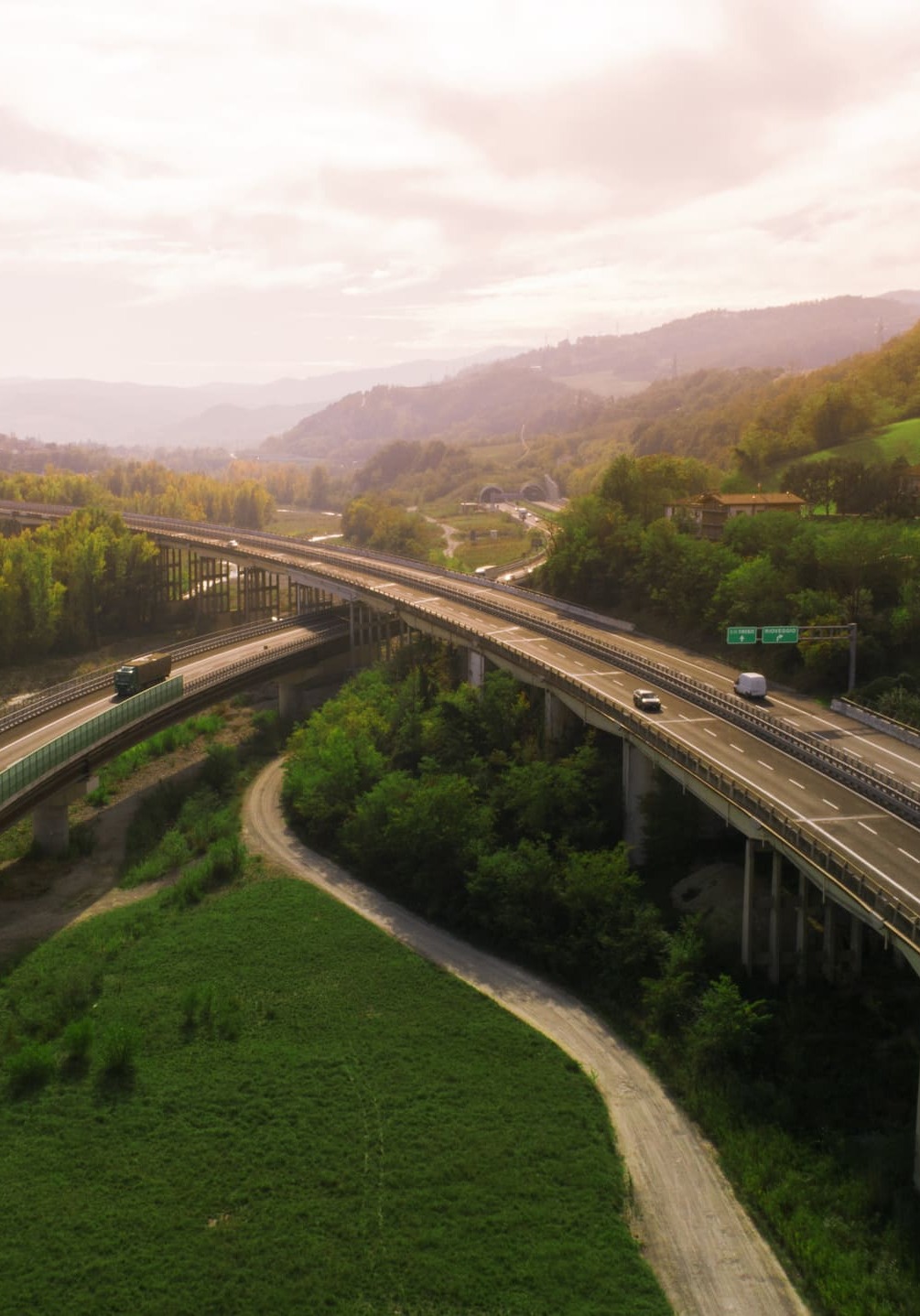
© Photo TECNE Gruppo Autostrade per l'Italia S.p.A.
Shirly: So it’s a new mentality.
Stefano: It’s a completely new mentality. And let’s remember that sustainability is also social, so there are repercussions in terms of safety and in terms of attention to urban planning relationships in the area. Multiple pieces are now fitting together that we used to experience as very disconnected.
Shirly: This issue brings us to the Bypass, which cuts through the north part of Bologna. Initial discussions actually considered moving it over a bit, so it wouldn’t be so visible close up.
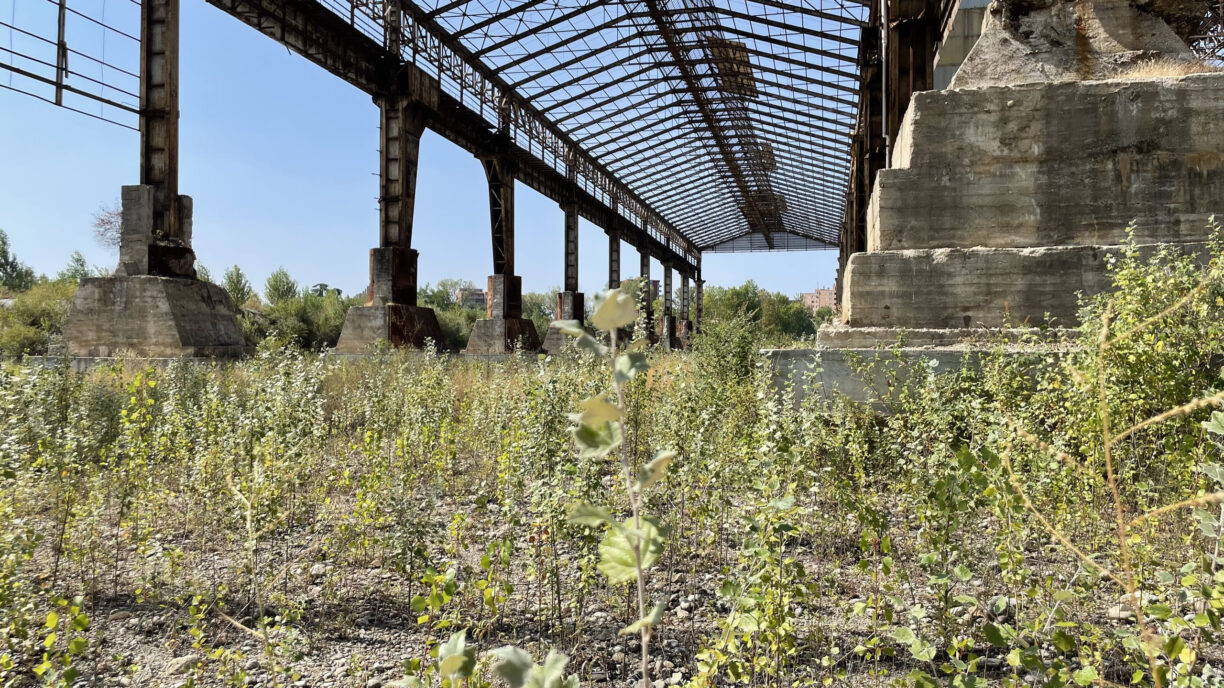
Enrico: The advantage of keeping that infrastructure there is that this keeps the chunks of agricultural land where they are, as they can still be seen and are considered in the plans, making them permeable through slow traffic roads. This transcalarity supports development and has significant potential. Because this project goes from large scale infrastructure to the bench where the person near the infrastructure sits. This ability to be transcalar is certainly one of the strengths of this project.
Lorenzo: It’s an opportunity for urban regeneration. It’s a change of paradigm: no longer designing infrastructure as pure and simple road work, but as a way to upgrade and design the local area. We’re going to stitch various parts of the city back together through work on the road system and bike and pedestrian paths. We will upgrade the various parts of the landscape that the infrastructure crosses, from the natural landscape of waterways to the agricultural landscape of Bologna’s historic countryside, including the landscape of the city periphery itself.
Stefano: One of the strengths is that the highway runs near the city, it’s an opportunity to upgrade the infrastructure of an urban landscape that will continue to be degraded if we don’t intervene. Of all the infrastructure we’re working on, this is the closest one to a city, the Genoa interchange is also close, but we handled it by going underground. But this one is an example of how infrastructure work should be done. It’s a key for other projects.
This is the first highway infrastructure project in Europe to receive Envision’s highest possible certifications rating.
Shirly: Mara, who is now involved in the project through Tecne, had earlier worked with us at LAND.
Mara: When I joined Tecne, I noted that the company works with the same issues of sustainability and integration of the landscape that I dealt with during my experience at LAND, but at different levels. For example, valuing these issues in stakeholder engagement and during the authorization process, with all the obstacles that may arise, to then arrive at the same goal in the design process.
Shirly: A sore spot: the noise barriers, so ugly….
Enrico: We’re going to upgrade the urban scenario for the noise barriers too. For now, I’ve opposed vines on the noise barriers. Not because I’m opposed to vines, but I’m against using greenery as an element to conceal human construction.
Stefano: But the construction could be a little better once in a while.
Enrico: That’s the goal.
Shirly: It sounds like a metaphor for the identity you’ve embraced: that the landscape can no longer be considered as a brushstroke of green, but becomes a foundational issue in terms of how we think about design, about sustainability, which is the foundation for a broader consideration of governance. An attempt to address a priori everything that is qualifying in terms of sustainability, not as a final report to obtain some sort of certification, but actually in terms of content. The landscape becomes one of the driving forces that moves development in the local area. Infrastructure no longer means a break in the local area, but a real reconnection between people, between ecosystems, between Nature.
Registration in Milan, October 2022
Read other Articles from this Edition