Newsletter #29: Less Is More. But What Is Enough?
In moments of acceleration, it becomes necessary to pause. Not to slow down progress, but to question its direction.
In recent reflections, I have found myself returning to a fundamental question: What do we really need?
It is a question I recently had the opportunity to explore further, thanks to my friend Andreas Grosz, within the framework of the KAP newsletter, which dedicates its current series to the idea of sufficiency in architecture, urbanism and landscape.
Across four editions, voices from architecture, planning, science and economics come together to reflect on what it means to achieve more quality with fewer resources, less space, less material, less technical input. Not as a form of renunciation, but as a conscious shift towards a more balanced, resilient and future-oriented way of building.
“Less is more” does not belong solely to planning or design. It touches the way we live, the way we build, and the way we relate to the world around us.
Between growth and balance
For decades, urban development has followed a trajectory of expansion. More space, more infrastructure, more consumption of land.
This logic has produced growth, but also imbalance.
The pressure on soil, water, and ecosystems has reached a point where the consequences are no longer abstract. They shape our cities, our economies, and increasingly, our everyday lives.
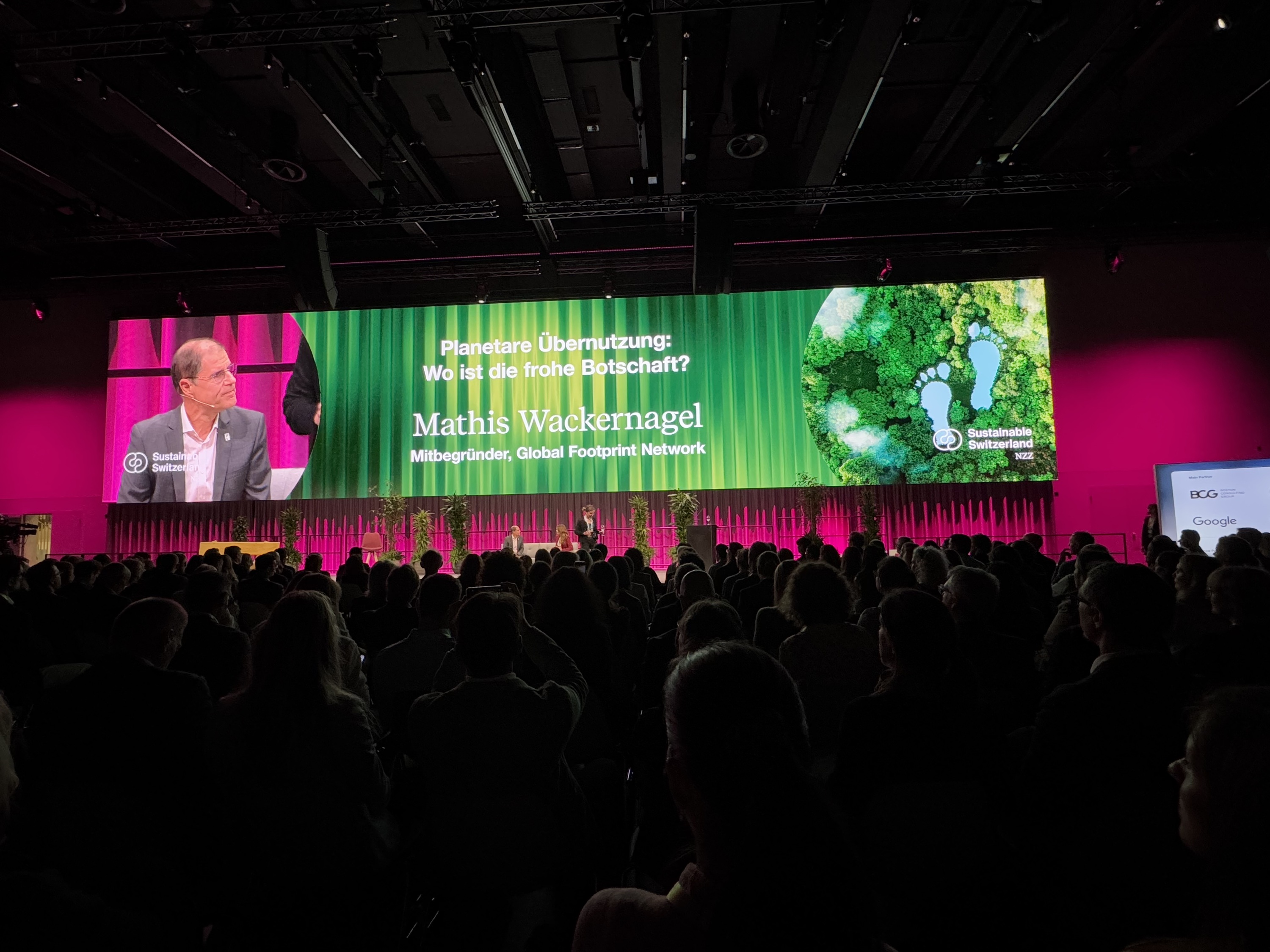
Mathis Wackernagel, Founder and President of the Global Footprint Network, speaking at the NZZ Sustainability Forum in Bern, 2025
A radical contrast between resource demand and Earth’s regeneration capacities, that Mathis Wackernagel, Founder and President of the Global Footprint Network, brought to global attention through the term ecological footprint:
“We look at all the problems in separate ways – climate change or biodiversity loss or food shortage – as if they were occurring independently. But they’re all symptoms of the same underlying theme: that our collective metabolism, the amount of things that humanity uses, has become very big compared to what Earth can renew.” (Source: “Humans now living on ecological credit”. Deutsche Welle Nature and Environment – Global Issues. 2023-08-02.)
In this context, the idea of sufficiency emerges not as a restriction, but as a form of orientation.
It asks us to move from more to enough. From accumulation to balance.
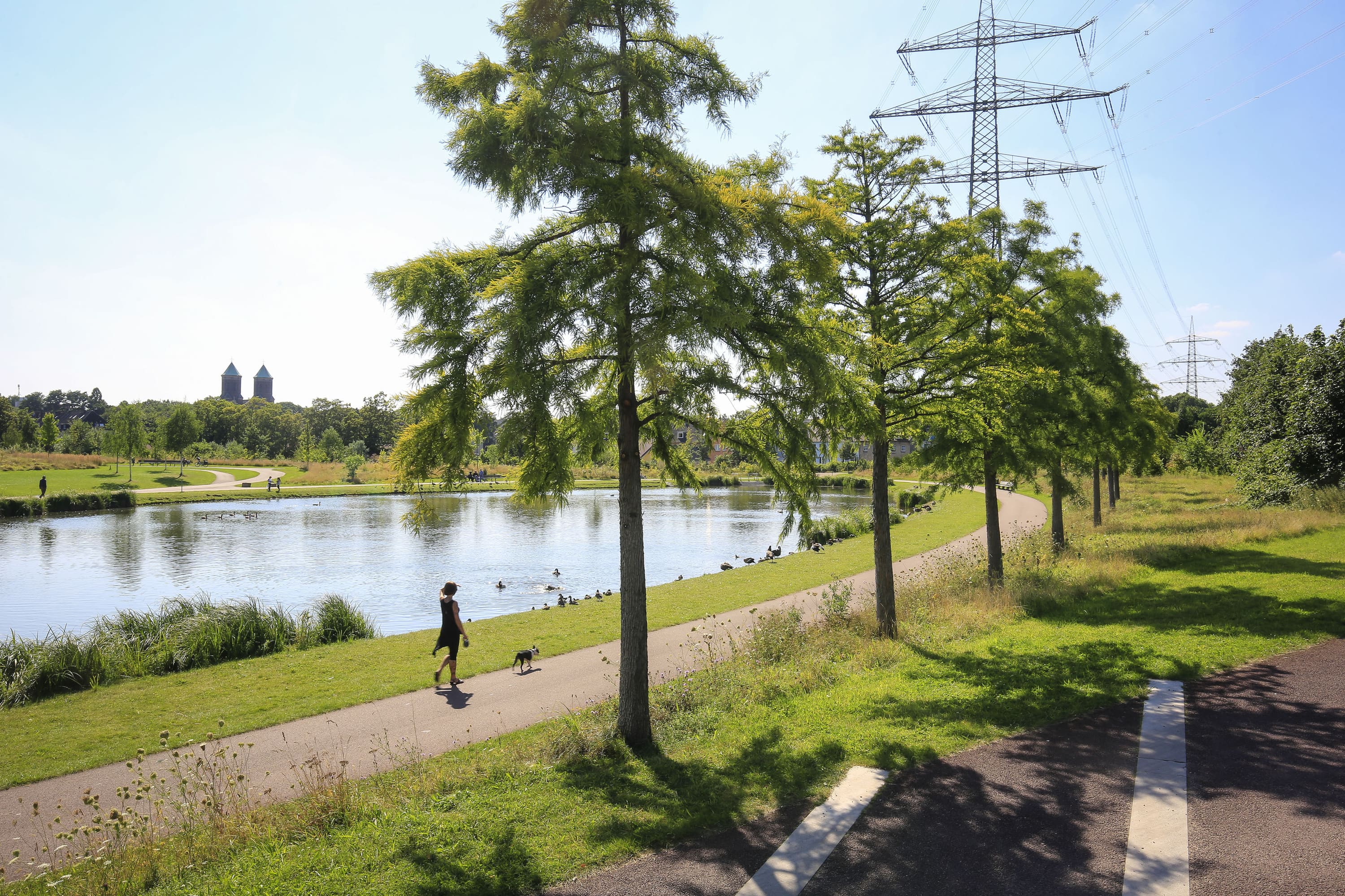
Krupp Park Five Hills, Essen | ph. Oberhauser
Landscape as a relational system
If sufficiency is about redefining limits, landscape offers a way to understand them.
Landscape is not a fixed condition. It is a living system, continuously shaped by natural processes and human action. It cools, absorbs, connects, produces. It holds ecological, social, and cultural functions within the same space.
To plan through landscape means to recognise these relationships:
- between soil and water
- between infrastructure and ecology
- between individual needs and collective wellbeing
In this sense, landscape becomes not an addition, but a framework, a medium through which different systems can coexist and evolve.
Transforming what already exists
This perspective becomes particularly relevant when we look at existing territories.
Across Europe and beyond, vast areas of previously used land, industrial sites, infrastructures, fragmented urban zones are waiting to be reinterpreted.
These spaces challenge us to shift from replacement to transformation.
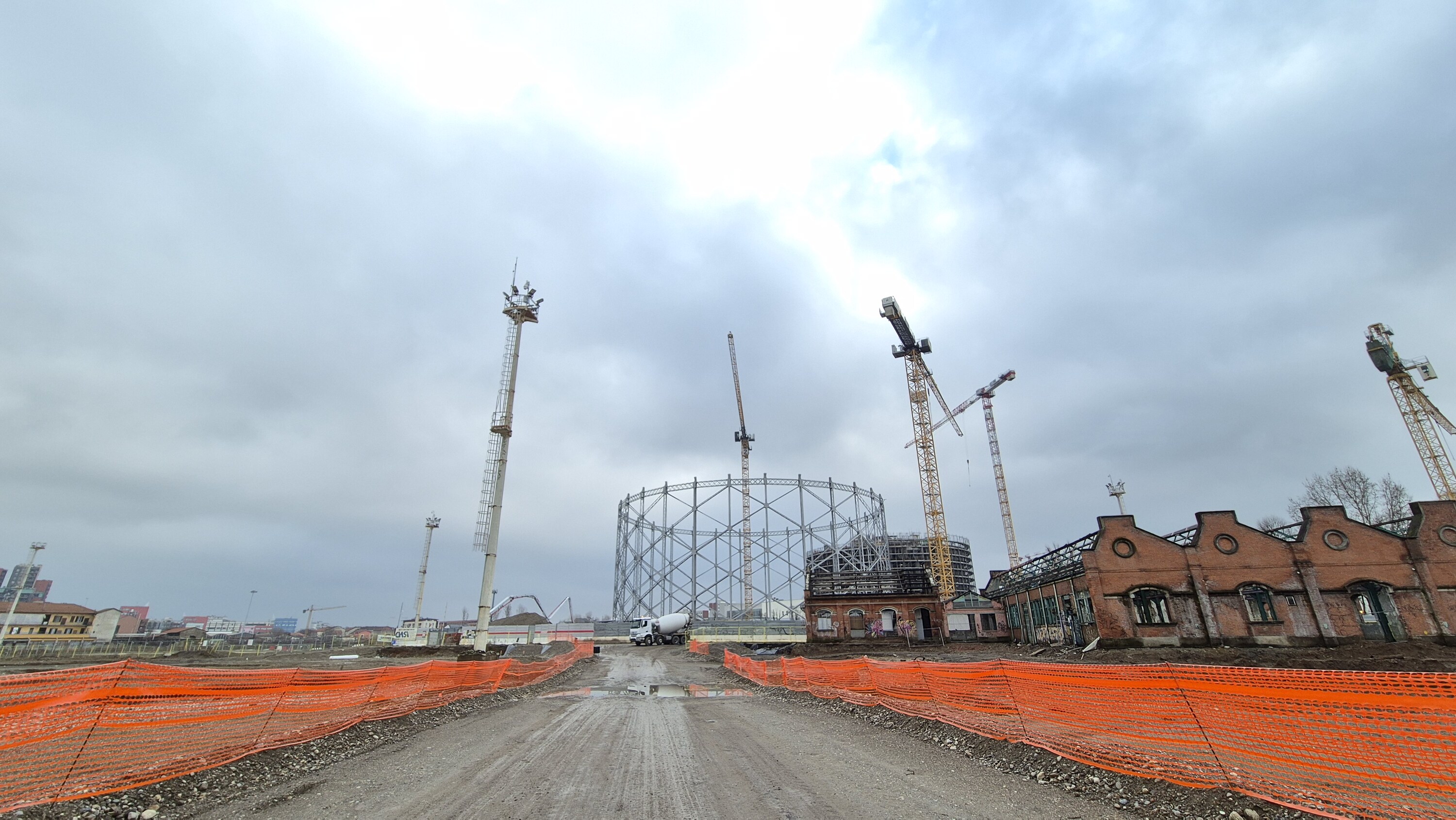
Bovisa Campus Nord Politecnico Construction Site | January 2026
Last year, I had the opportunity to discuss these questions at the 5th International Conference on Brownfield Regeneration and Ecological Restoration in Milan.
The exchange, developed with international experts and colleagues, including many from China, focused on how regeneration can move beyond technical remediation.
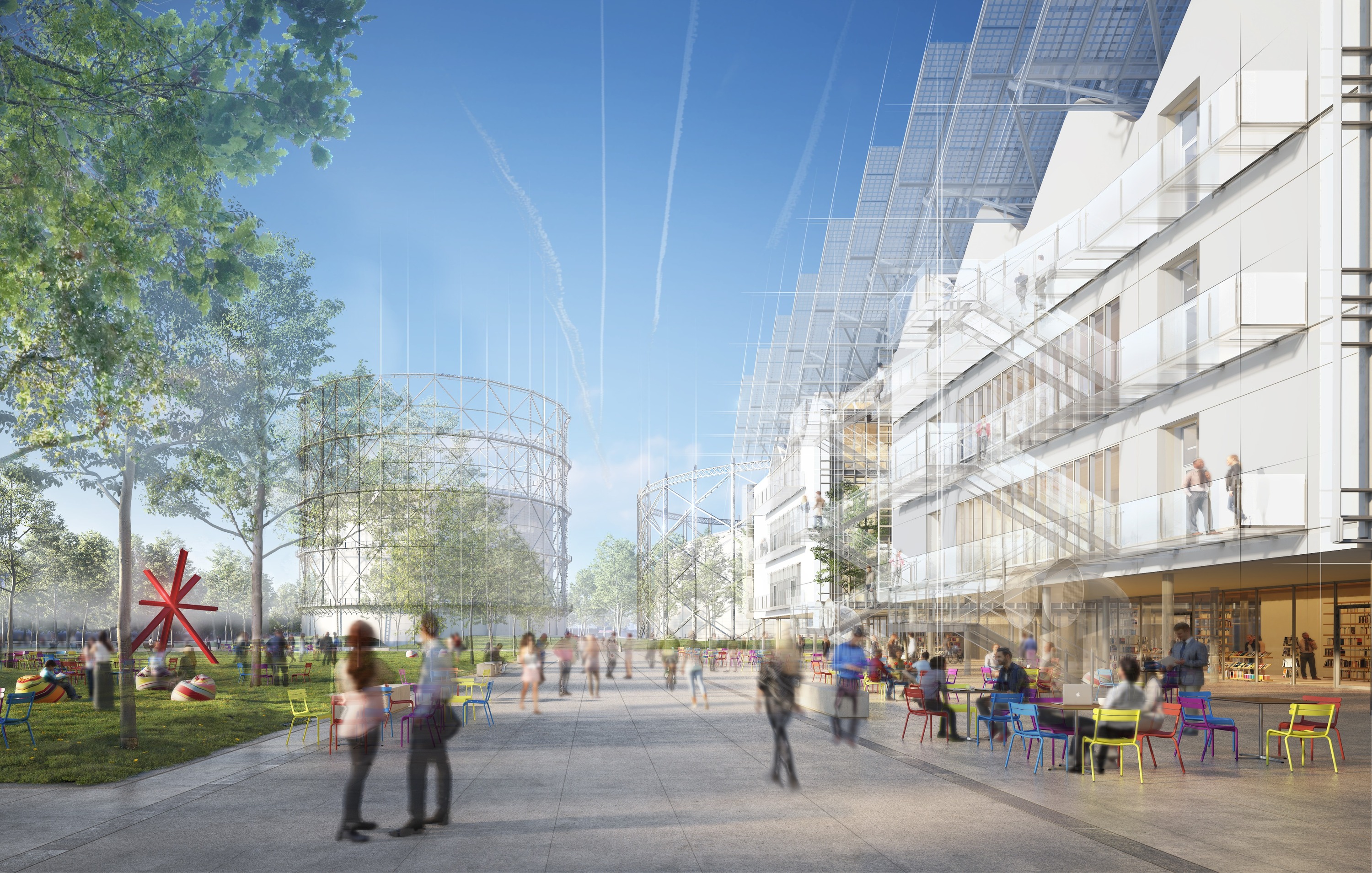
Bovisa Campus Nord Politecnico | © Renzo Piano Building Workshop S.R.L.
It is about reconnecting heritage, culture, and identity, and transforming existing structures into new forms of ecological and social value.
In this context, sufficiency becomes tangible: working with what is there, rather than expanding beyond it.
Observations in motion
As I write this, I am spending time in China with my family. It is a moment of pause, but also of observation.
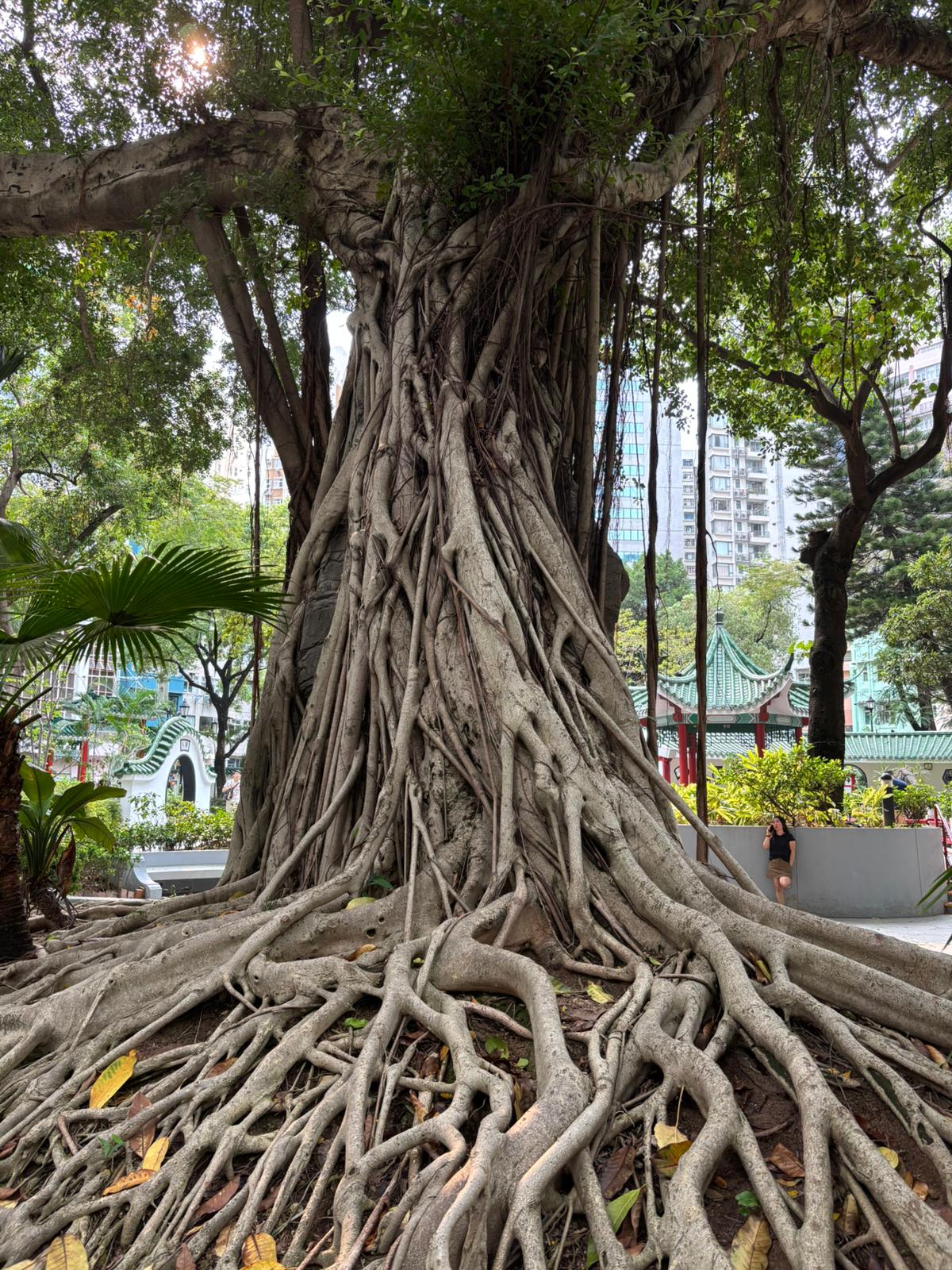
Landscapes here reveal a striking coexistence of intensity and continuity. Rapid transformation unfolds alongside deeply rooted cultural patterns.
Even outside of formal projects, these observations remind me that landscape is always a process, never finished, always evolving.
I look forward to sharing some of these impressions in the coming editions.
A shared direction
The transition toward sufficiency is not a technical matter alone.
It requires alignment across systems:
- governance and policy
- economic frameworks
- cultural attitudes
Many of the necessary tools are already available: adaptive reuse, de-sealing, nature-based solutions, integrated planning strategies.