MENA Logbook #2 - Operating Across Levels
If Logbook #1 was about moving across geography, Logbook #2 has been about navigating across multiple levels.
Riyadh has its own rhythm: bold, ambitious, and constantly accelerating. Understanding it means operating simultaneously across project, institutional, and national dimensions.
Over the last two weeks, I have seen how I can translate #LANDMENA’s long lasting expertise in the area into tangible value: turning this knowledge into high-level conversations, strategic introductions, and a combination of planned and unscheduled meetings that continue to unlock new opportunities.
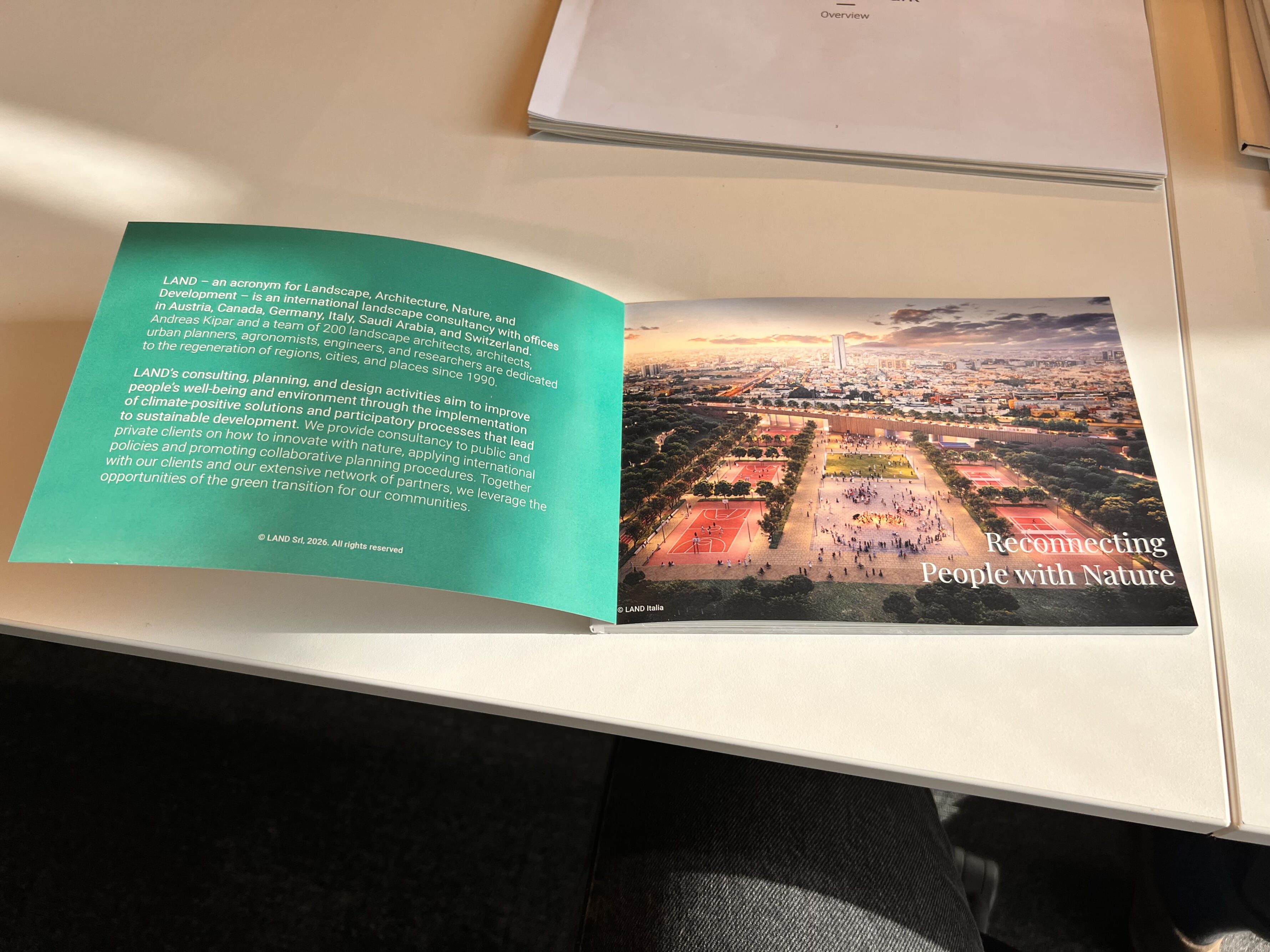
Each interaction adds depth to my experience on the ground. Returning now as an experienced professional to places I once knew and worked in as a young architect carries a powerful significance. It is both a personal milestone and a strategic moment. An opportunity to reconnect, reinforce trusted relationships, and further expand my network, building on the strength and credibility of LAND’s know-how.
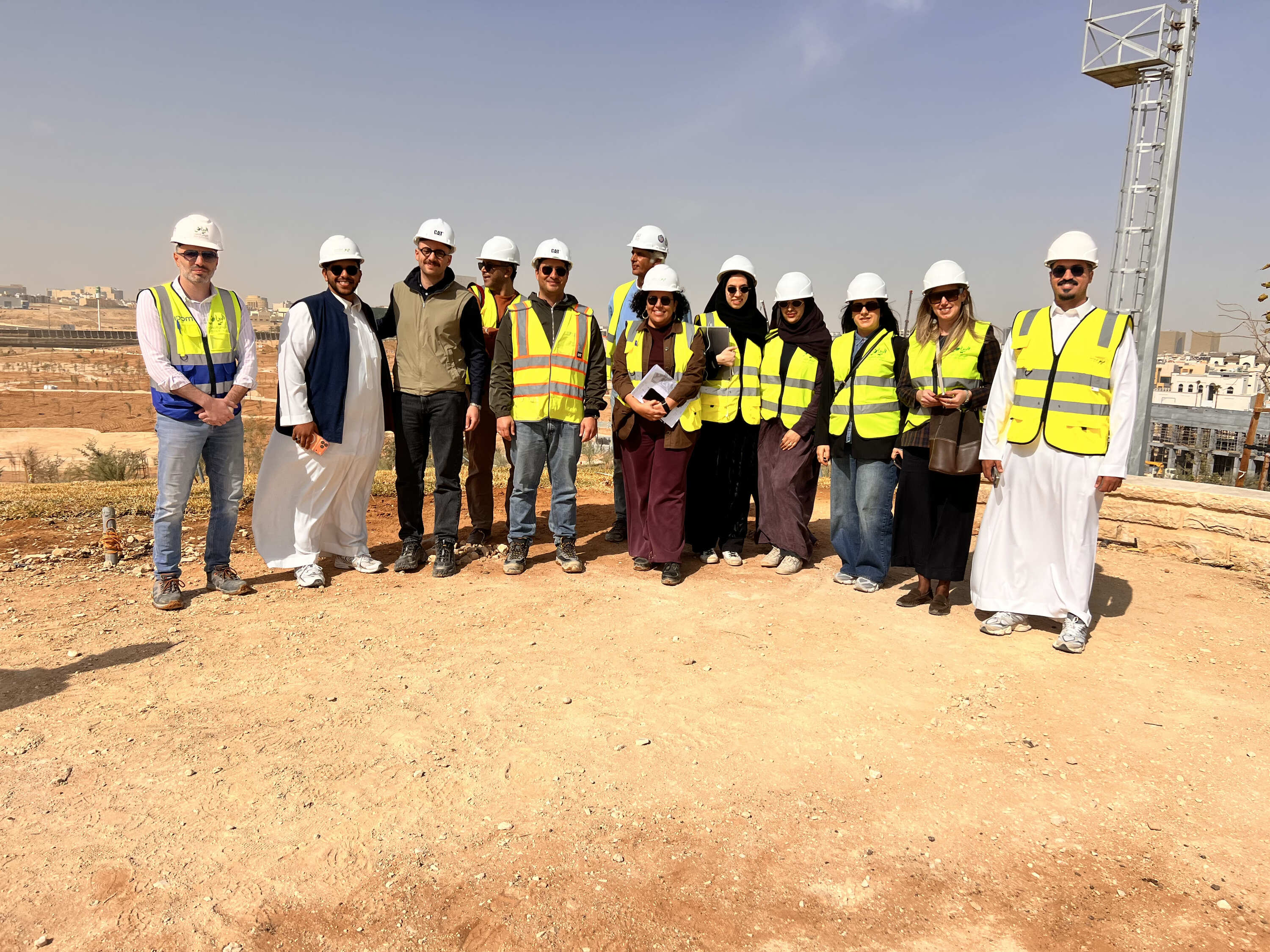
Green Riyadh’s Delegation, Ines Gannouma (Egis), Jens Tippel (Boedeker), IDOM, Lawand Barazi and Myself in Al Urubah Park – Currently under Construction
This feeling is particularly intense at the site of Al Urubah Park, where this energy is always tangible. The project carries a massive scale and cultural importance: a true Volkspark, a park designed for the people.
Our site visit with a delegation from the Royal Commission for Riyadh City was especially inspiring, offering a powerful reminder of the responsibility and opportunity embedded in this transformation.
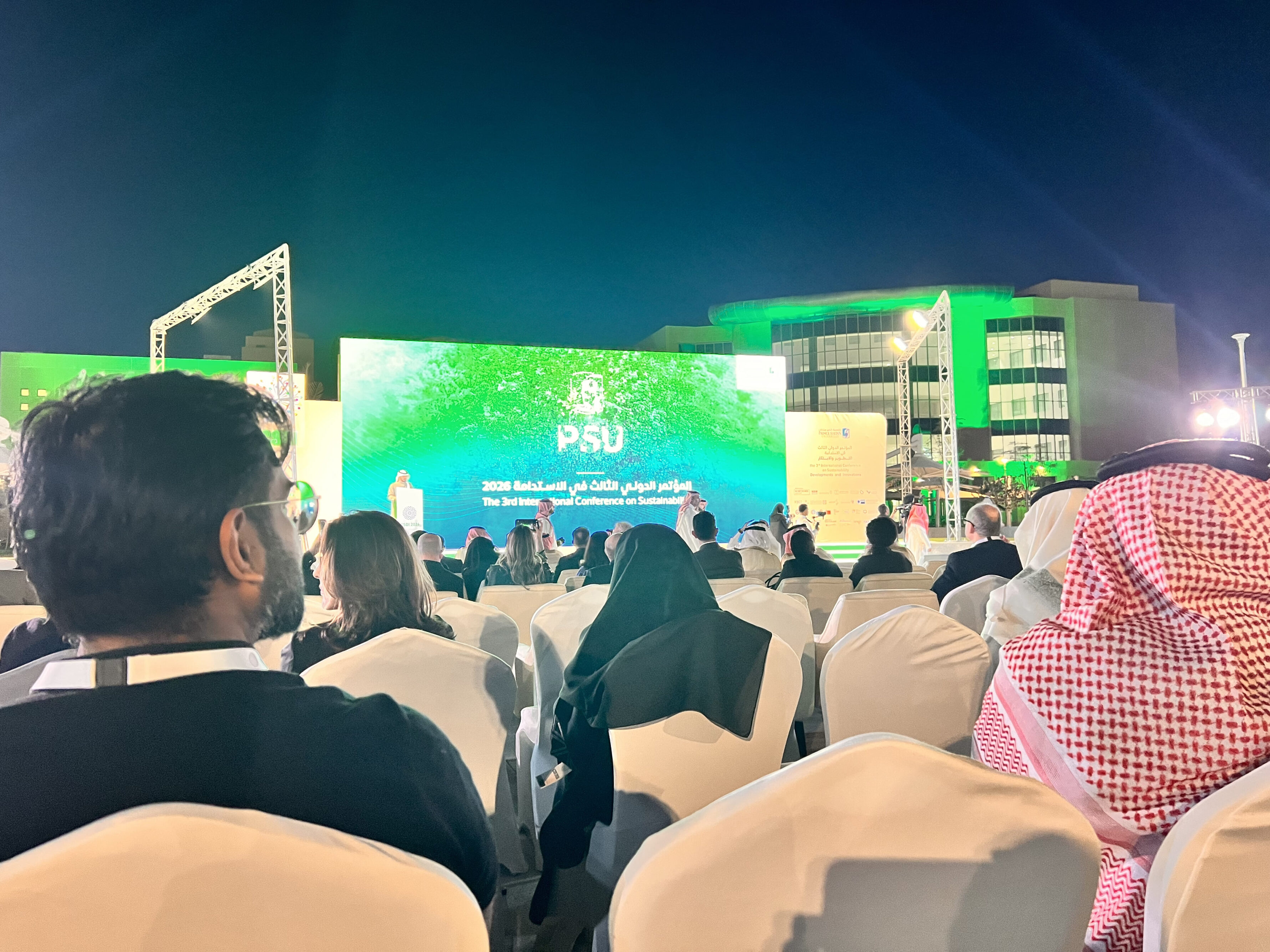
Introductory Panel of the ICSDI 2026 at Prince Sultan University
Speaking of transformation, I was invited by Randa A. Mahmoud, Dean of Architecture and Design at Prince Sultan University, to the Third International Conference on Sustainability, Development, and Innovation. The conversations bridged academia, policy, and long-term strategic thinking. Here, sustainability is debated in auditoriums and implemented on construction sites simultaneously.
During the event, I had the opportunity to connect with Margarete Schramboeck, former Austrian Federal Minister for Digital and Economic Affairs and now Board Member at aramco digital. I shared with her LAND MENA’s vision and our strategic goals for 2026, sparking a truly inspiring discussion about the future of sustainable development in the region.
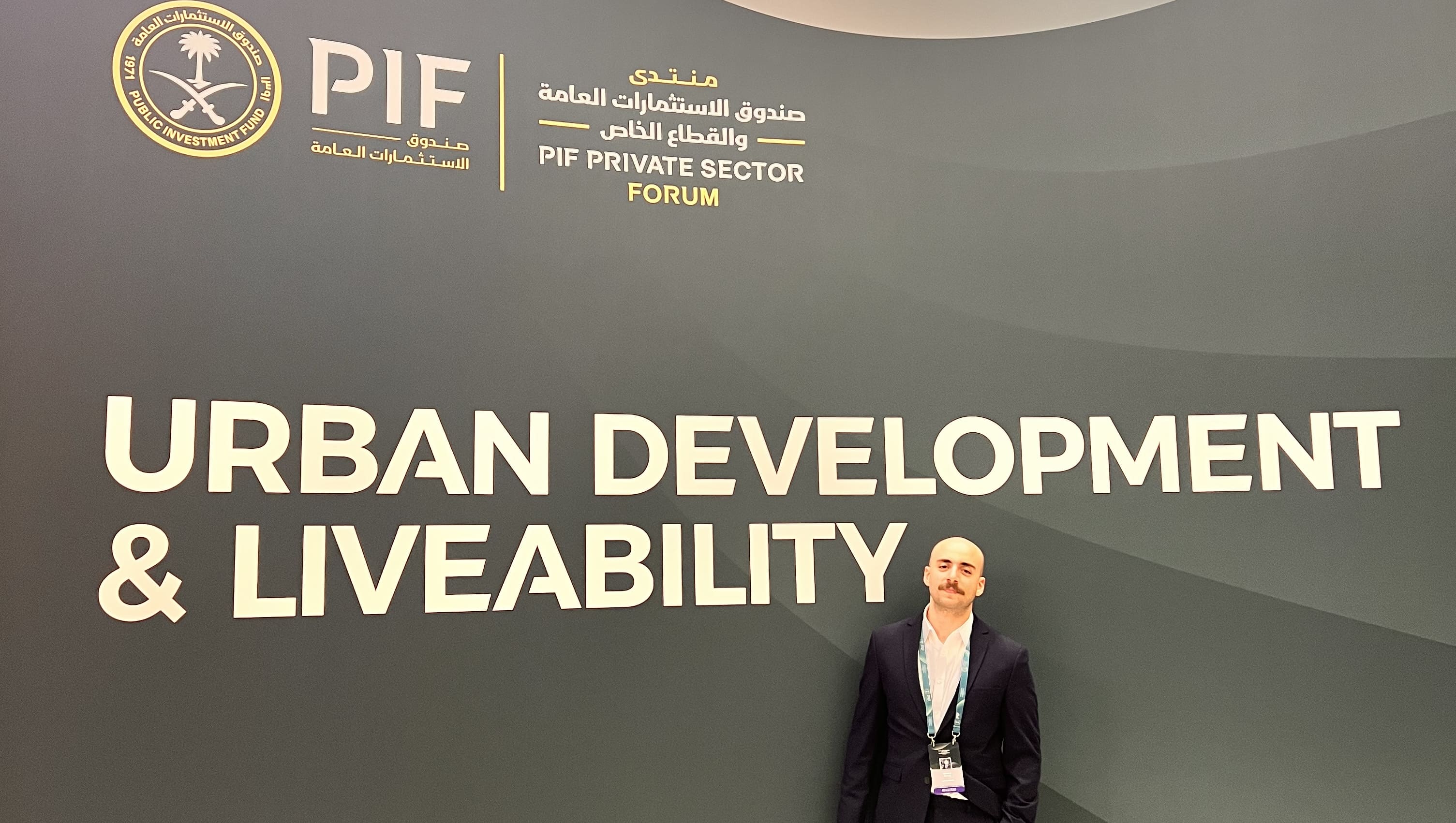
One of the highlights of the past weeks was my visit to the Public Investment Fund (PIF) – Private Sector Forum, which truly showcased the Kingdom’s ambition and scale. I witnessed firsthand the transformative impact of #Vision2030 at the Urban Development & Liveability Zone unfolding at remarkable speed and scope. Development companies presented projects of national significance, while international partners engaged in strategic dialogue.
I had the privilege of meeting Leyla Abdimomunova, PIF Head of the Real Estate and Construction Department, and briefly connecting with Omar Al Grnas., PIF VP and Head of Private Sector Events. Reflecting on the forum, I am impressed by its meticulous organisation and the extraordinary magnitude of the event.
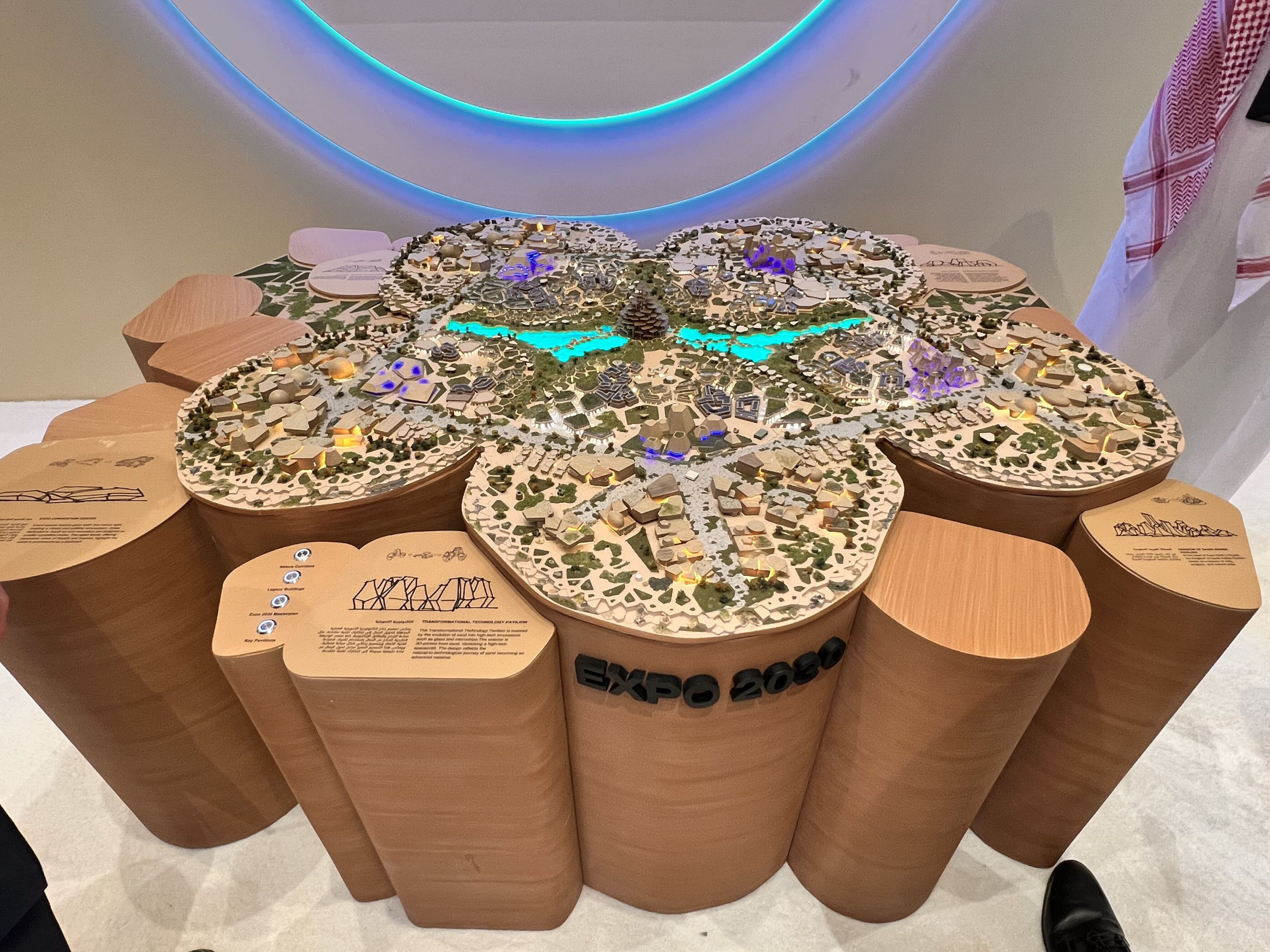
EXPO 2030 Model at the PIF Private Sector Forum 2026
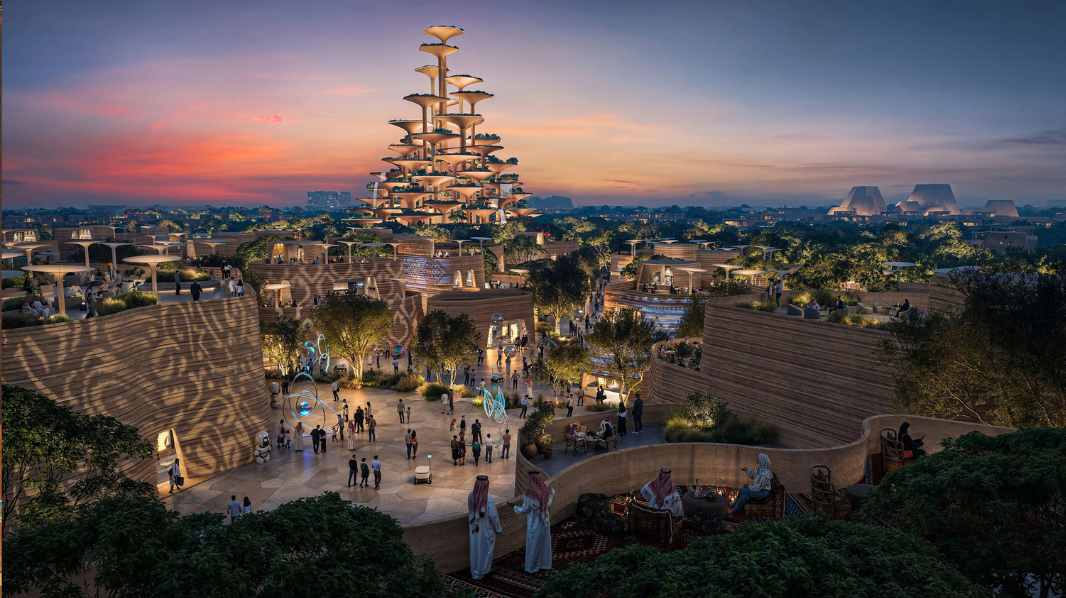
At PIF, I was especially pleased to see the stunning model of Expo 2030 Riyadh. As part of the LAVA #LANDItalia contributed to the concept masterplan of this cutting-edge project. Its organic layout is reflected in the osmotic composition of the site, embodying our Nature-Positive vision that serves as a blueprint for the city of the future. A living framework where ideas, infrastructure, and human experience seamlessly intersect in harmony.
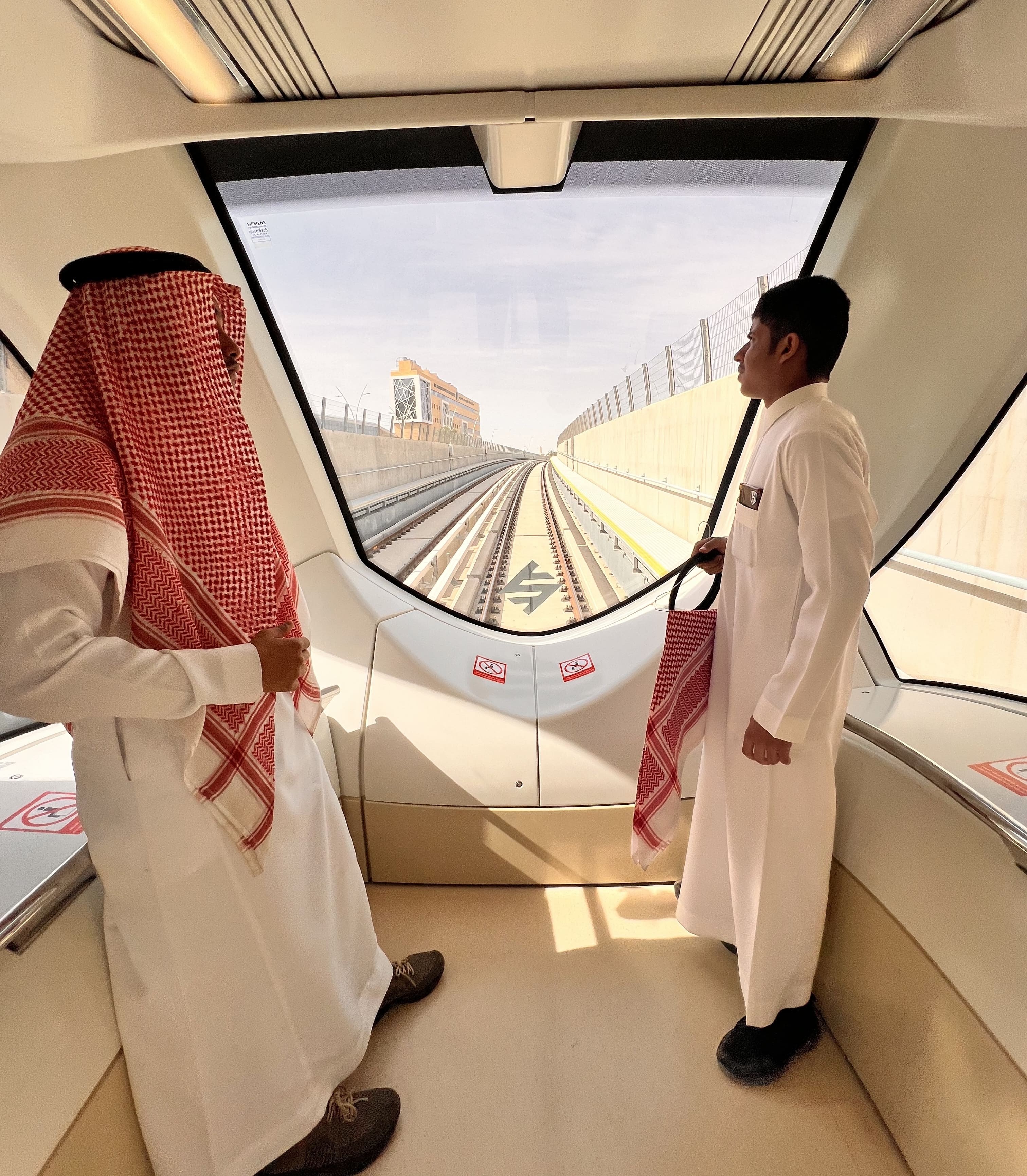
Riyadh Metro Red Line
In Riyadh, even the most everyday systems tell a story of transformation. After two weeks spent stuck in traffic, I finally took the Red Line Metro for forty-five minutes between home and office. Efficient. Seamless. A clear glimpse of the infrastructure driving the city’s next chapter
Lines 1 (Blue) and 2 (Red) delivered by the BACS Riyadh Metro Project Consortium led by Bechtel Corporation, included Almabani General Contractors, Consolidated Contractors Company, and Siemens Mobility.
Line 3 (Orange) delivered by ArRiyadh New Mobility Consortium led by Webuild (known as Salini Impregilo back then), with Nesma & Partners, IDOM Consulting, Engineering, Architecture, Worley and Larsen & Toubro – of whom I met the Consulting & Smart Cities Lead Gaurav Jaisinghania at #PIFPrivateForum.
Lines 4 (Yellow), 5 (Green) and 6 (Purple) delivered by FAST CONSORTIUM led by FCC with Samsung C&T, Engineering & Construction, Alstom, Strukton, Atkins Freyssinet Saudi Arabia, TYPSA and setec.
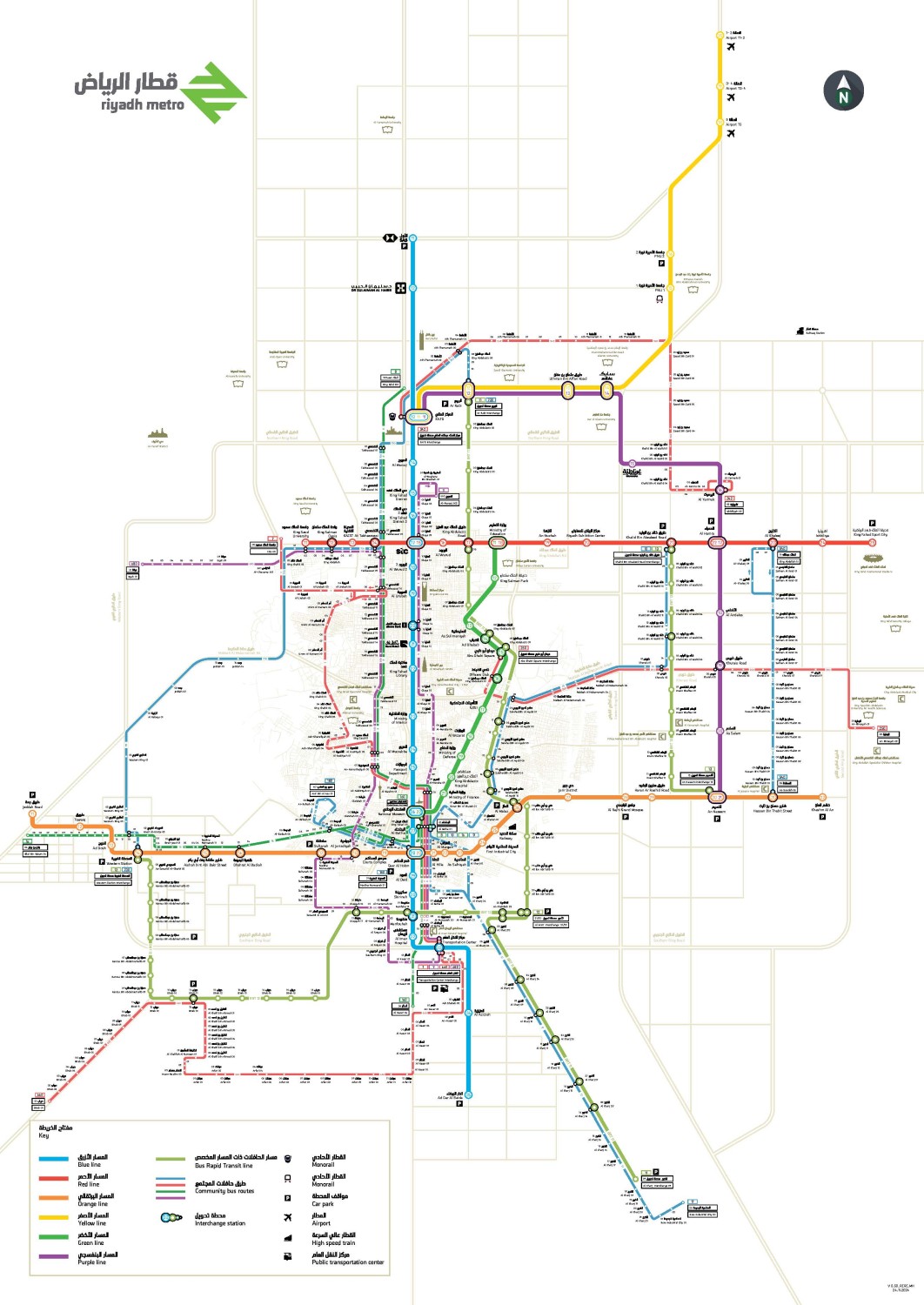
Riyadh Metro Line Map by RCRC
Overarching all of these, the last Consortium Riyadh Metro Transit Consultants led by Parsons Corporation with Egis, and SYSTRA supervised construction and ensured cohesion across all lines. This cohesive layer ensured that these diverse consortia delivered not just lines, but a unified network.
In this Region, competition gives way to collaboration; each company joining forces not to outdo, but to build a future none could achieve alone.
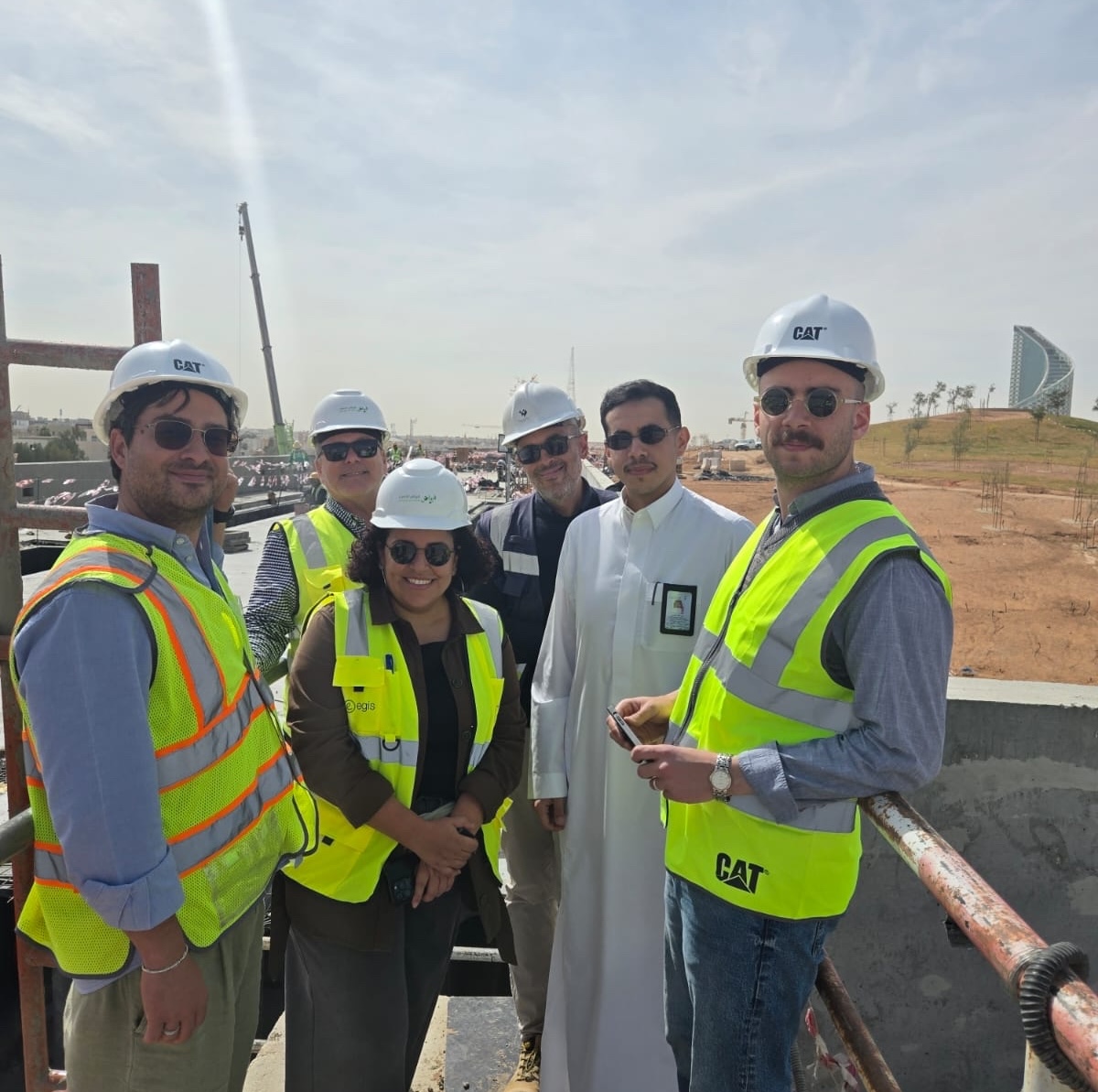
Lawand Barazi, Donald Sharp (Green Riyadh), Ines Gannouma (Egis), Vincent Pepe (Schiattarella Associati), Ali Alghamdi (Green Riyadh), and Myself
At Al Urubah Park, where Al-Hamam Palace stands as a lasting testament to the city’s history, we worked around an ancient well preserved by the Ministry of Culture. We were pleasantly surprised to discover that the well was not dry. This served as a powerful reminder that #Foresight does not erase history but builds around it. Riyadh’s heritage is alive, adaptable, and capable of reinventing itself beyond mere preservation.
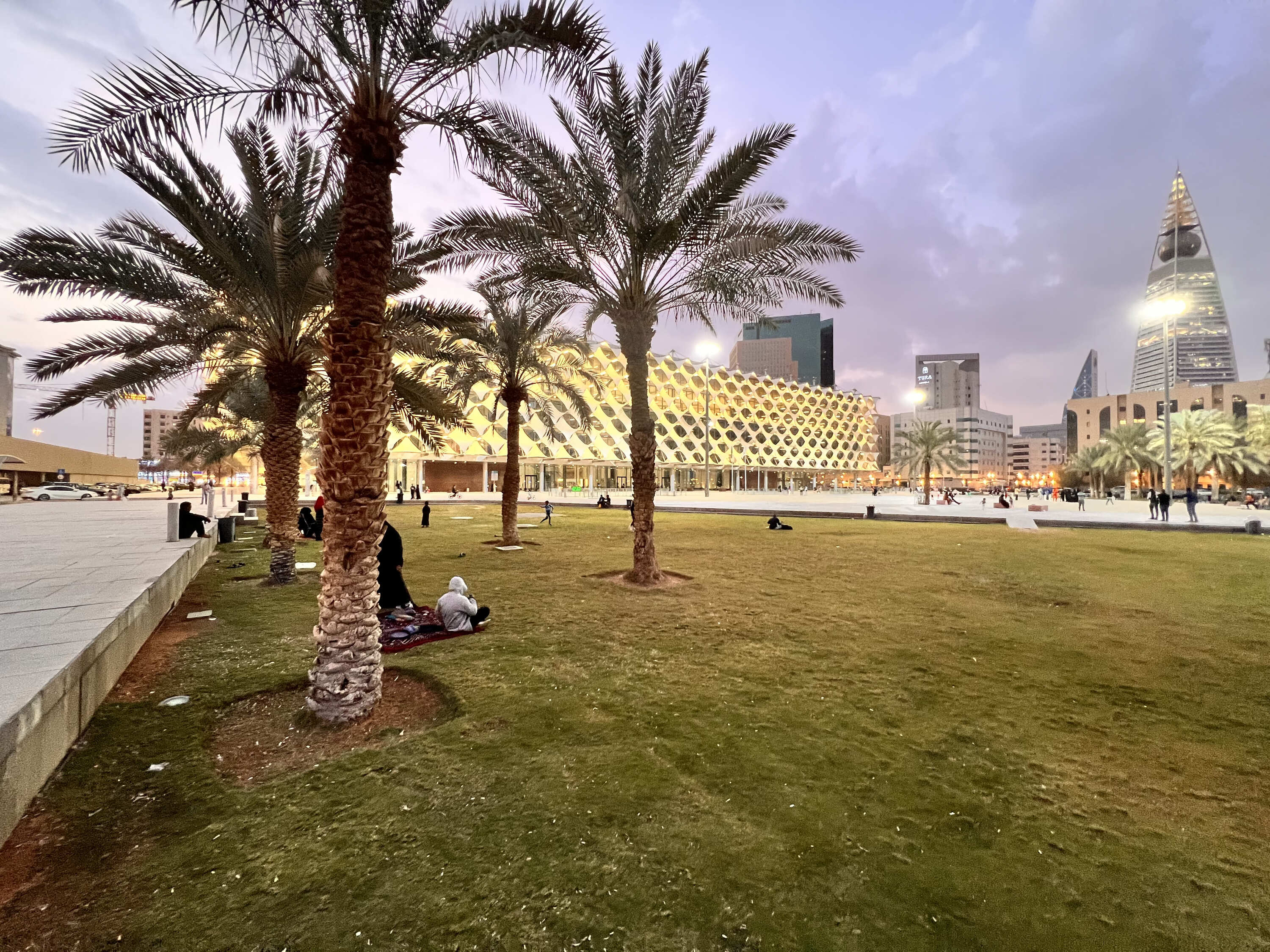
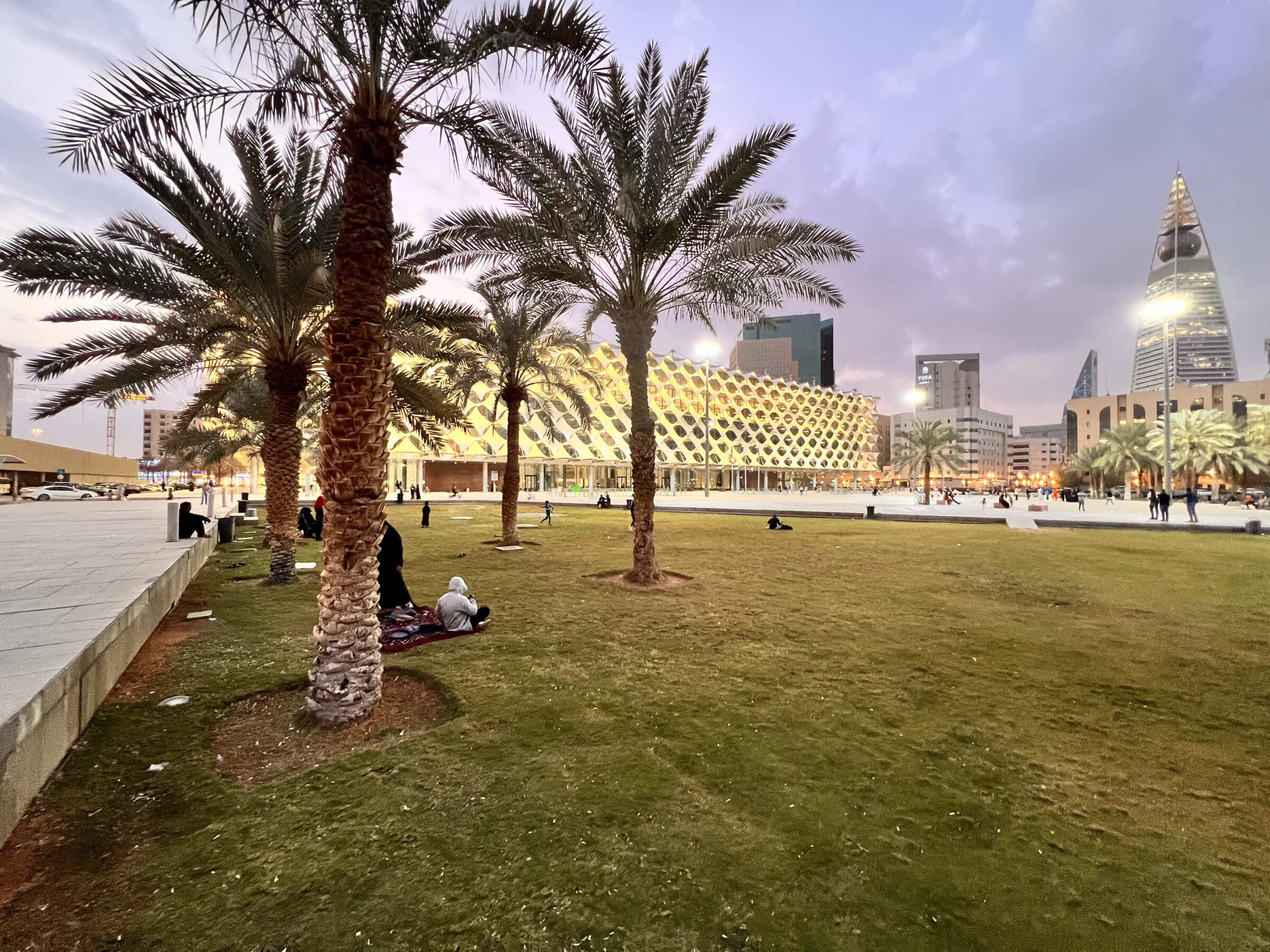
King Fahd National Library, Riyadh
These reflections take shape as I visit the King Fahd National Library, a cultural landmark designed by Gerber Architekten, inaugurated in 2013. The square unfolding before the building remains vibrant at the evening hours of every season, animated by people who gather to eat, study, and connect. Carefully conceived as an open-air landscape, this public space gracefully accommodates a remarkable diversity of uses and users. Its enduring vitality and quiet magnetism reveal the transformative power of well-designed collective space: a lesson that will continue to inform, shape, and inspire my future work.
Over these past two weeks, a clear pattern has emerged.
Saudi Arabia operates simultaneously across multiple levels: heritage, infrastructure, policy, implementation, and vision.
Logbook #1 marked an arrival. Logbook #2 captures my immersion in systems, institutions, and momentum.
Gradually, the focus shifts toward cultivating relationships across all these levels, connecting people, ideas, and actions.