Water Park, Meda
Italy
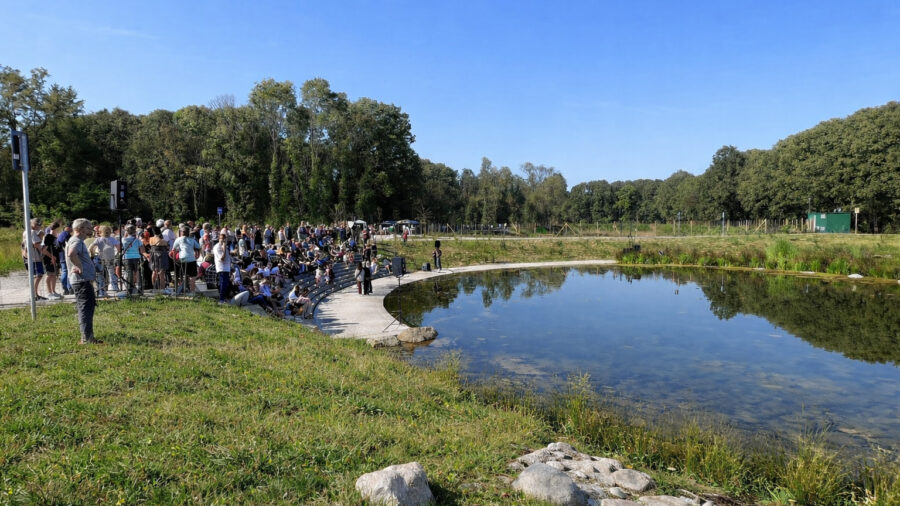
The project of the new detention basin and park area, together with the new bioretention area in Meda represent a point of convergence of fundamental values for sustainable urban development and the improvement of the quality of life in metropolitan areas.
The project of the new detention basin and park area, together with the new bioretention area in Meda represent a point of convergence of fundamental values for sustainable urban development and the improvement of the quality of life in metropolitan areas.
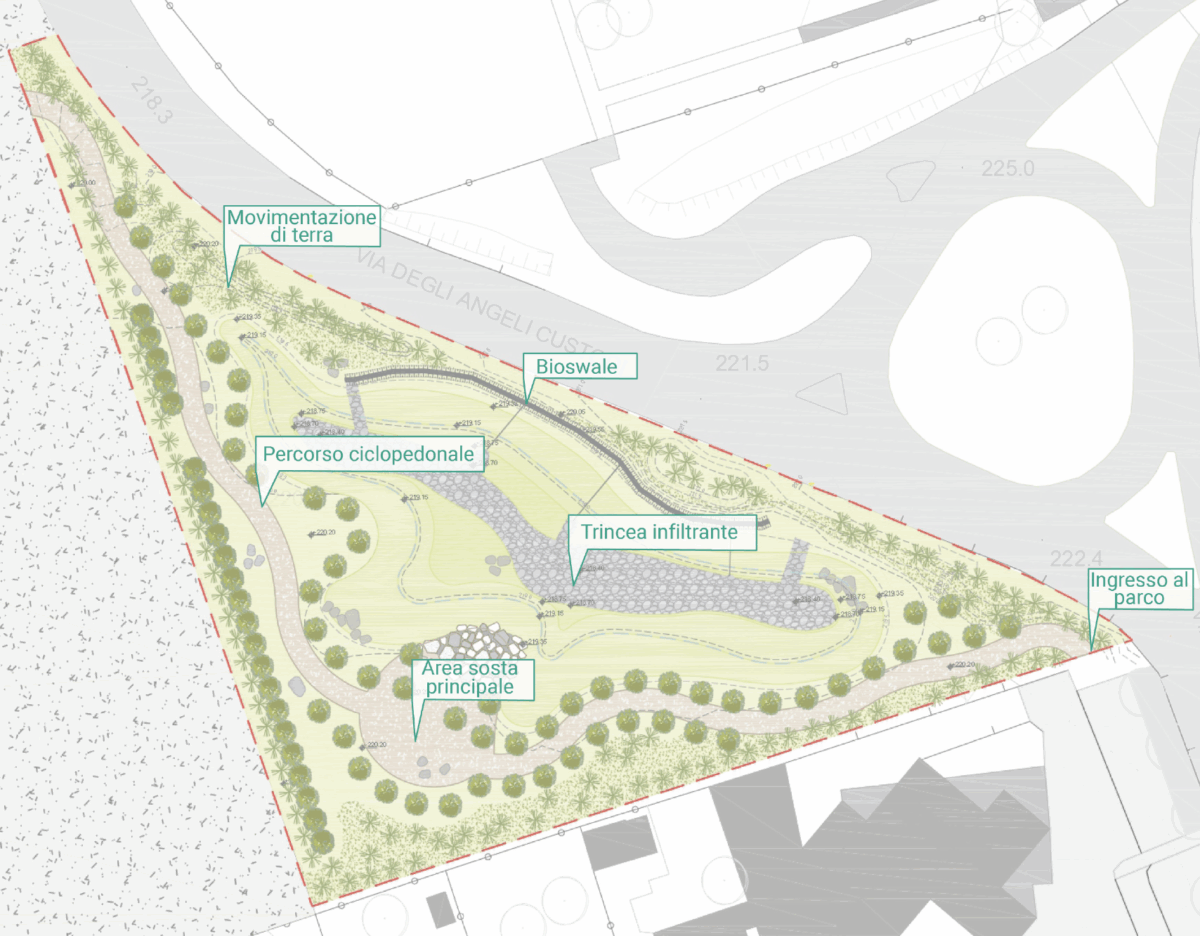
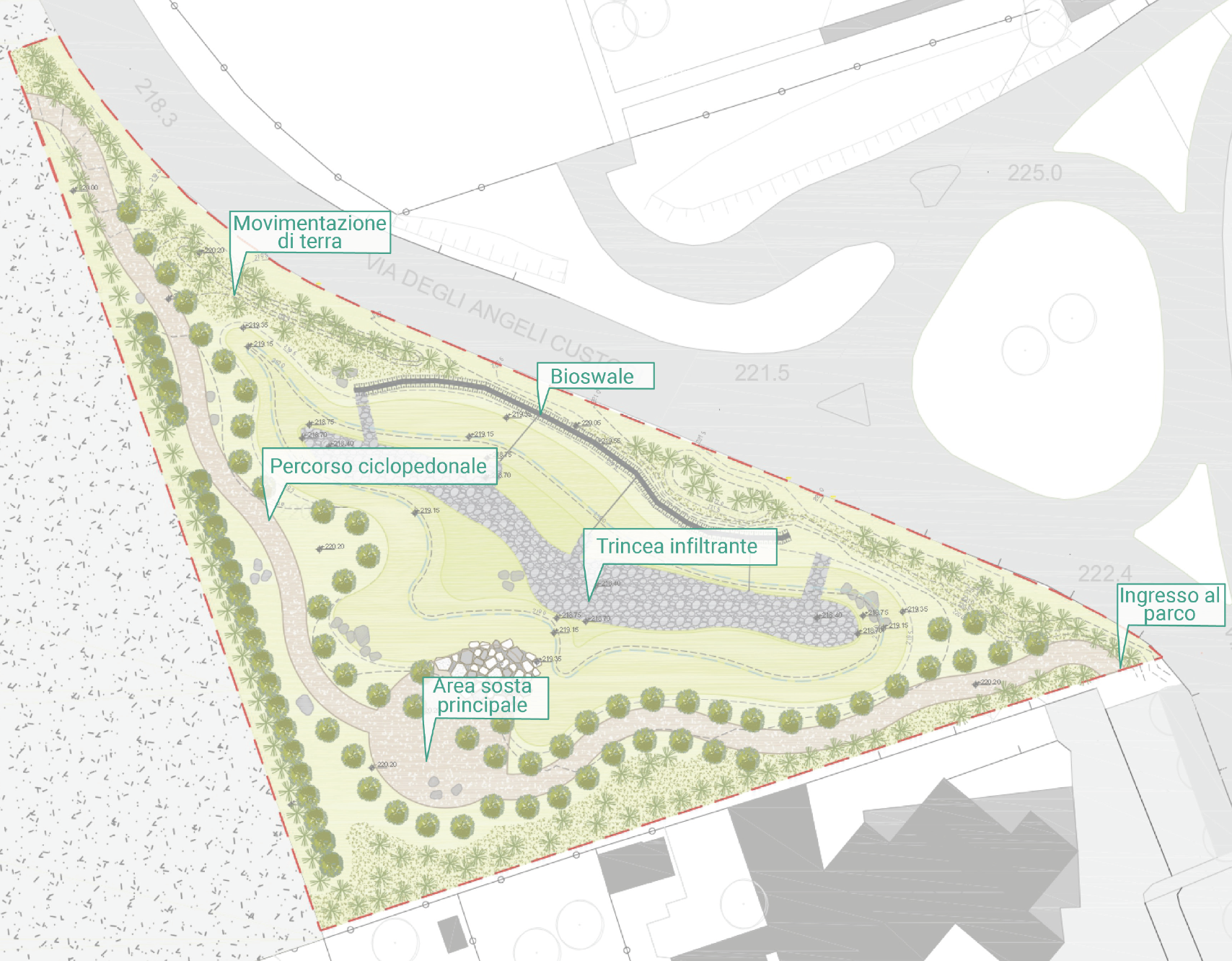
Detention basin and park area - design status
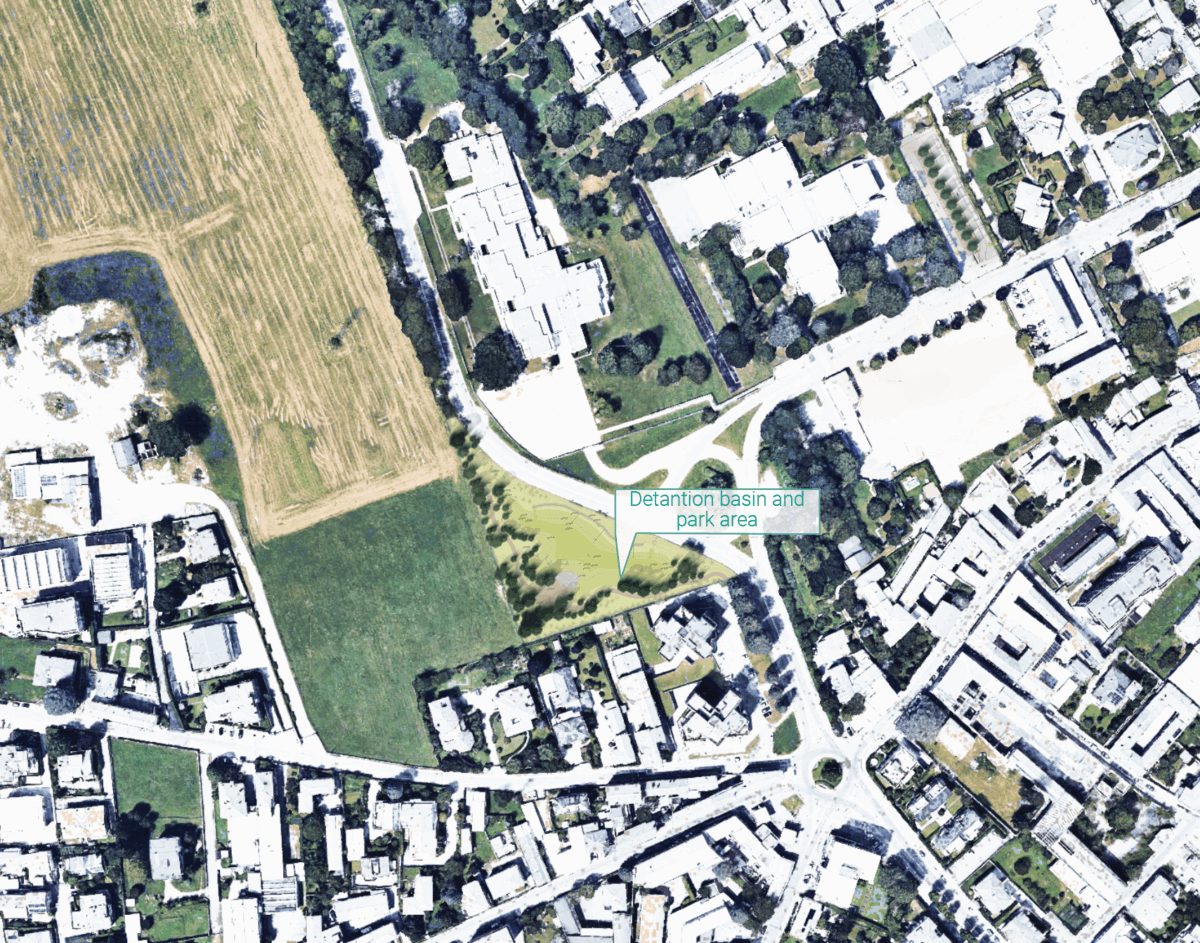
The detention basin and park area inserted in the context
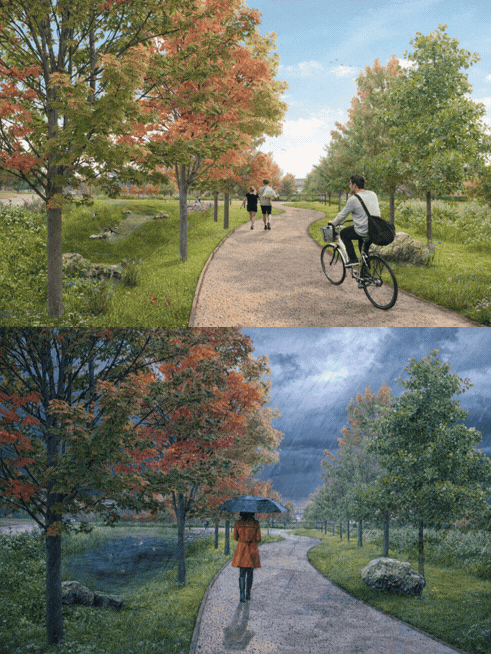
Animated renderings of the water park during dry and rainy days
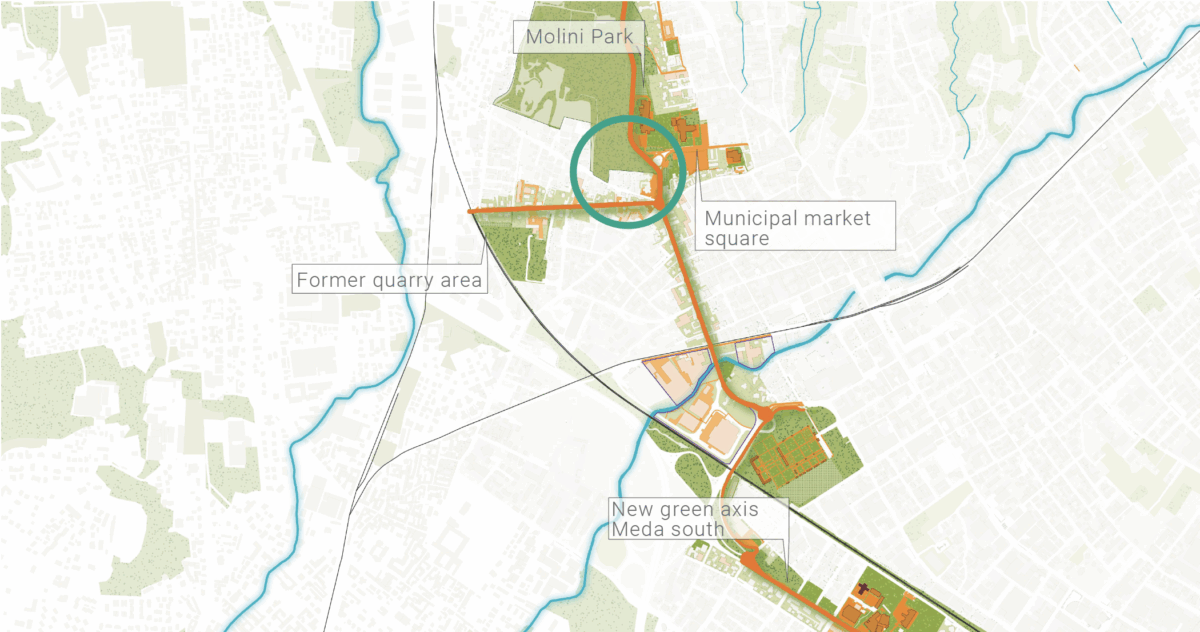
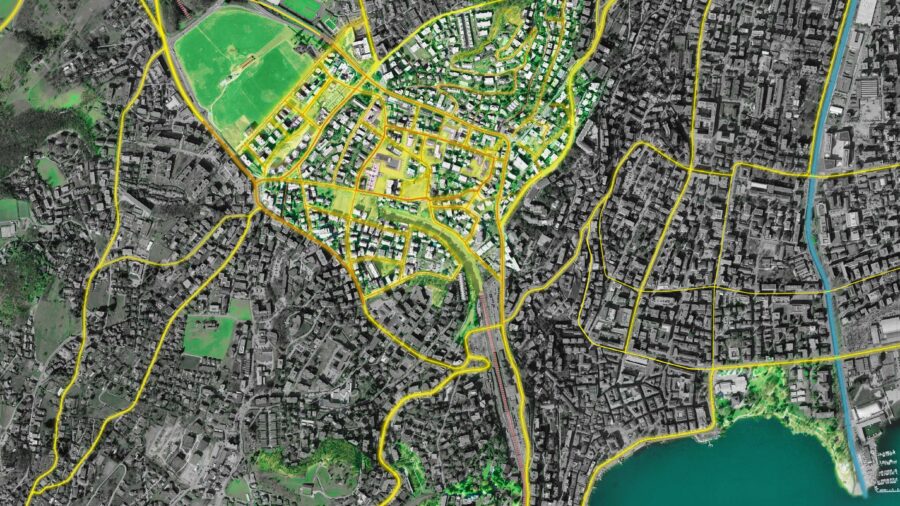
The macro-system of potential related to the introduction of NbS
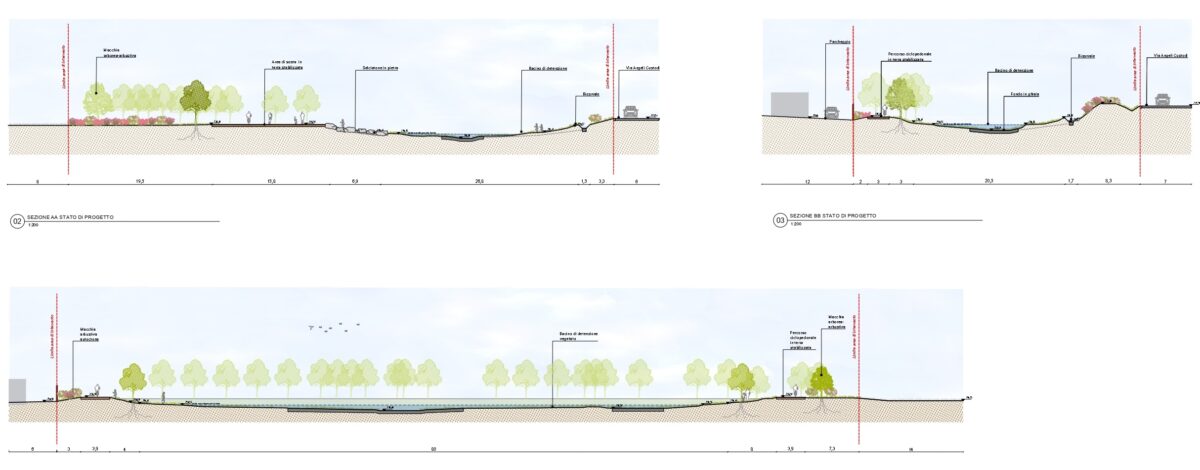
Design sections
The Meda Water Park represents an innovative urban infrastructure capable of integrating climate resilience, landscape quality, and social value. It follows the paradigm established by previous BrianzAcque water parks, transforming an environmental challenge—the risk of flooding and overflow in a historically vulnerable area—into a design and urban opportunity.
The project is part of the broader Meda Laboratory NbS 2025 Masterplan, developed by LAND between 2022 and 2023. From a design perspective, the project proposes an advanced concept of green-blue infrastructure, in which nature-based solutions are interwoven with a holistic landscape vision oriented toward inclusion, social interaction, and environmental education. This approach integrates nature and its regenerative function within the urban environment, recognizing it as an essential factor contributing to quality of life.
At present, construction works are underway for the implementation of Sustainable Drainage Systems (SuDS) along the area surrounding the roundabout between Via degli Angeli Custodi and Via Papa Giovanni XXIII, as well as along the latter roadway.
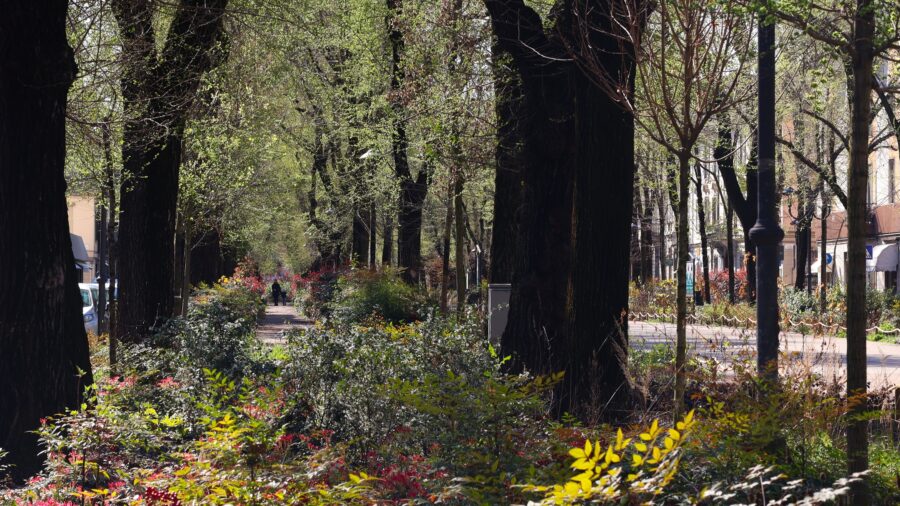
The park will feature bioswales, bioretention systems capable of filtering stormwater and promoting its natural infiltration into the soil; the refurbishment of the parking lot pavement near the Armando Diaz Comprehensive Institute using permeable materials to limit soil sealing; and the construction of a new stormwater drainage network designed to convey rainwater toward green areas, supporting natural absorption processes.
These interventions will not only improve the appearance and functionality of urban environments but will also have a positive impact on the health and well-being of local communities.
Related projects