Learning from Landscape: Educational Environments as Living Infrastructures
On IlQi Life, Susanne Gombert highlights the crucial role of landscape in educational environments. Integrating Nature in these spaces supports learning, climate resilience, and social cohesion while creating long-term value for our cities and communities.
Sustainability is something to be lived, not only taught in theory. We believe that schools should be conceived and designed not just as places of instruction, but as true “landscapes of learning”: living environments capable of integrating education, well-being, and sustainability into everyday life.
Within the Group, LAND Germany has developed a specific and continuously evolving expertise in the design of open spaces for educational environments. With her contribution for IlQi Life – the new format by Il Quotidiano Immobiliare that explores the value of life in relation to the built environment – Susanne Gombert highlights on how primary and secondary schools’ outdoor spaces can be transformed into genuine learning environments that promote movement, social interaction, biodiversity, and climate resilience.
Whether it is the Vennhauser Allee Primary School in Düsseldorf, where outdoor spaces function as a small ecosystem, or the secondary schools Thomas Edison Realschule in Düsseldorf and the Elsa Brändström Realschule in Rheine (Westphalia), our projects shape places capable of growing together with those who use them and of maintaining their environmental and social value over time.
In these contexts, students can grow by exploring nature — touching the soil, observing plants and the rhythm of the seasons — and develop an intuitive understanding of ecological systems. This direct experience strengthens environmental awareness, a sense of responsibility, and care. Designing landscapes for schools means investing in future generations.
Hence, green educational environments are not a luxury, but essential infrastructure. When designed with expertise and a long-term vision, they can make a significant contribution to urban biodiversity, climate adaptation, and social cohesion. Green schools and campuses generate value not only for those who experience them daily, but also act as catalysts of urban quality in the neighborhoods in which they are embedded—and therefore in the everyday lives of all of us.
Download the article from IlQi Life (in Italian) and its German translation (Download file)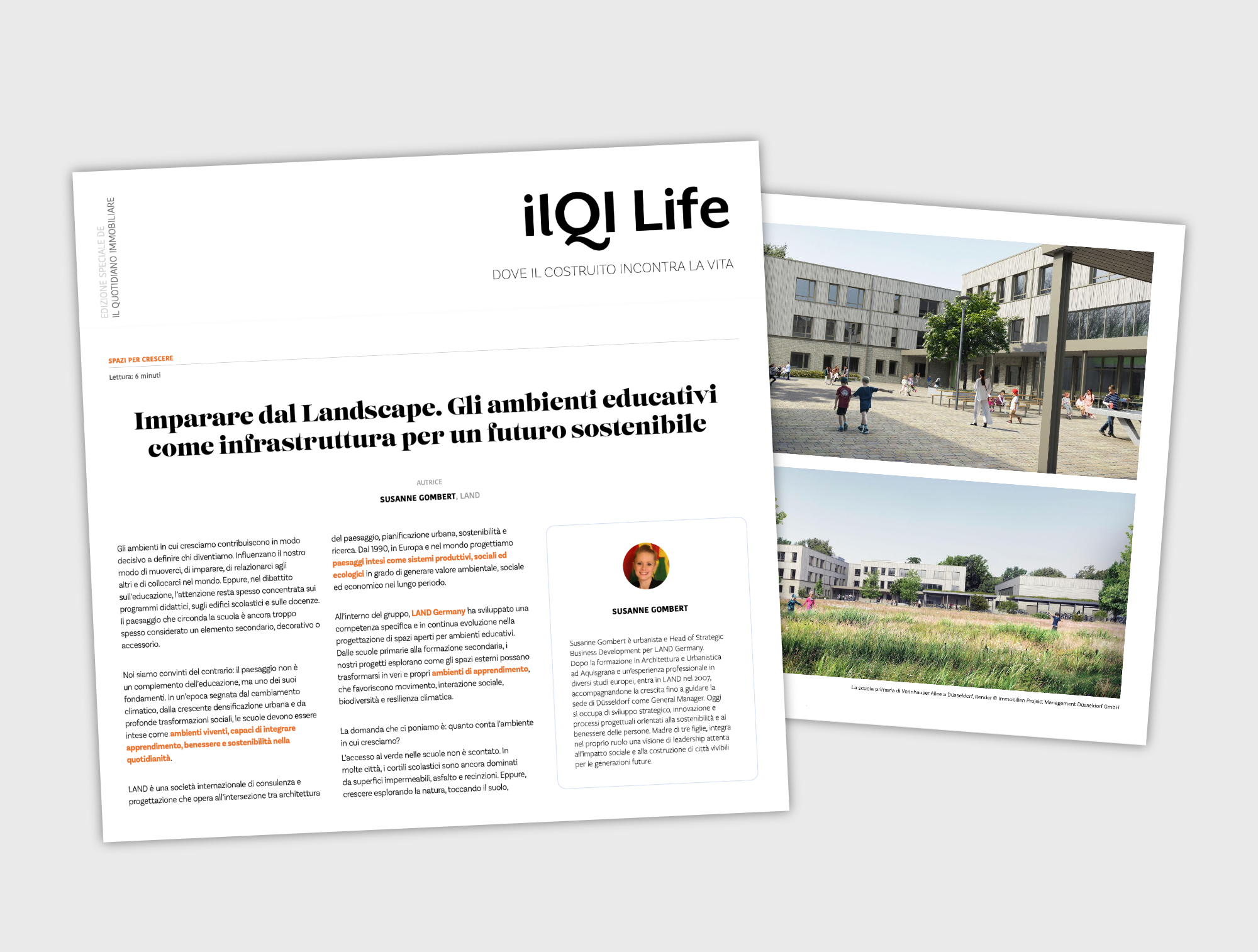
View other publications
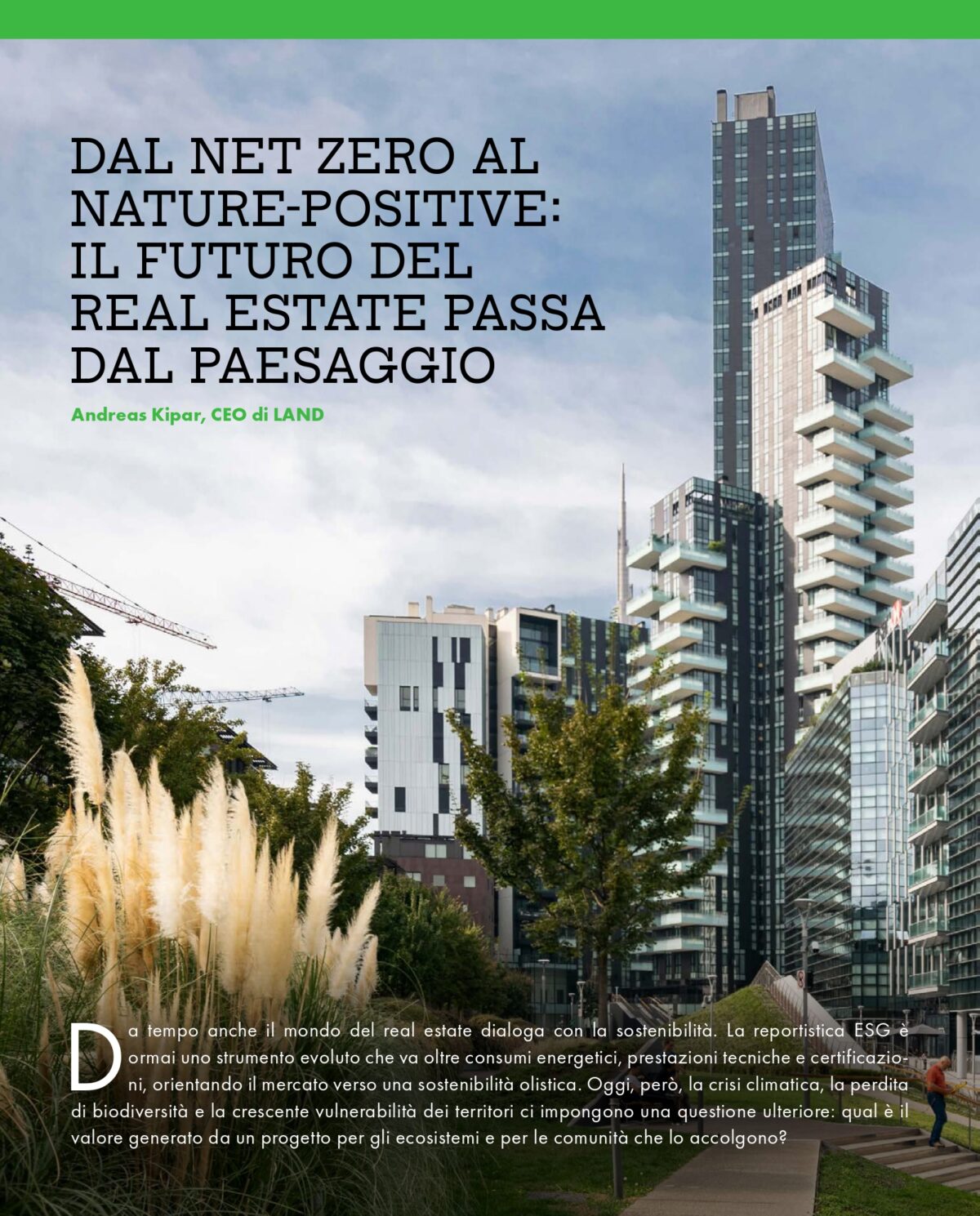
From Net Zero to Nature-Positive: The Future of Real Estate lies in Landscape
On IlQi Life, Susanne Gombert highlights the crucial role of landscape in educational environments. Integrating Nature in these spaces supports learning, climate resilience, and social cohesion while creating long-term value for our cities and communities.
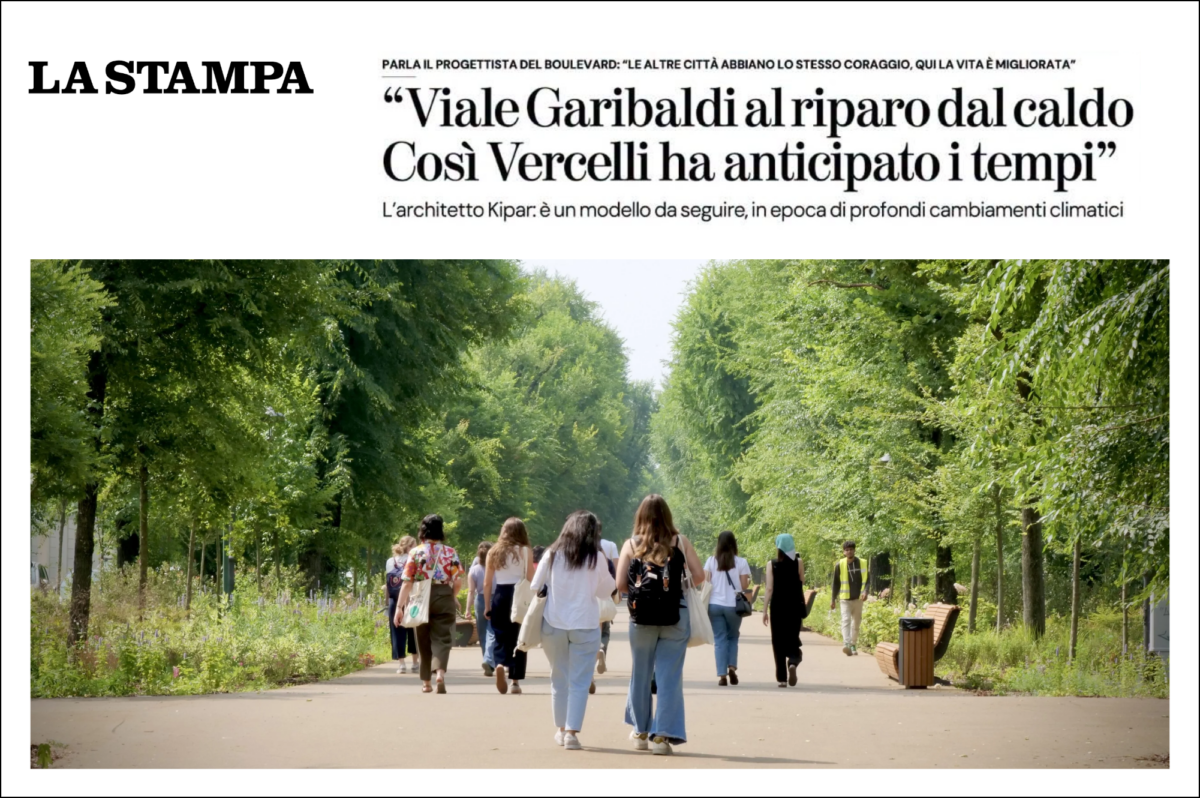
Vercelli anticipated the future: Garden Boulevard as a model for climate adaptation
On IlQi Life, Susanne Gombert highlights the crucial role of landscape in educational environments. Integrating Nature in these spaces supports learning, climate resilience, and social cohesion while creating long-term value for our cities and communities.
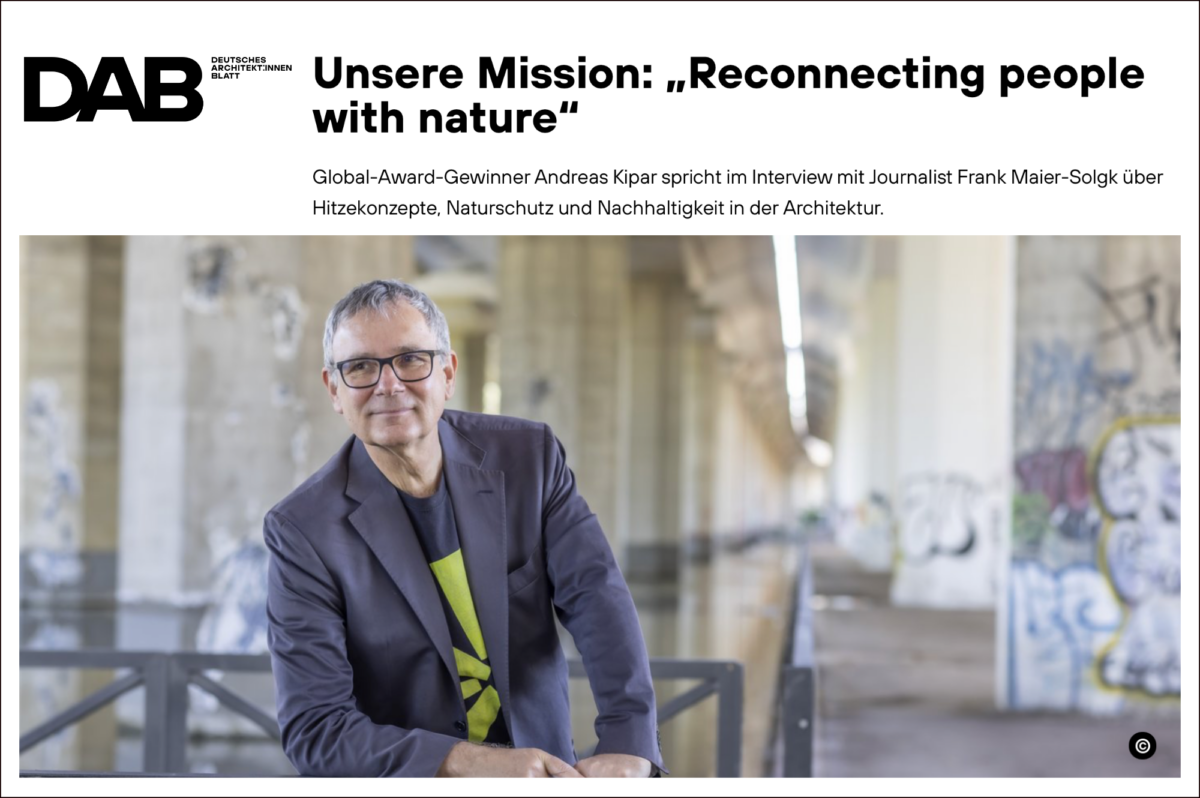
Reconnecting People with Nature: Andreas Kipar in DAB
On IlQi Life, Susanne Gombert highlights the crucial role of landscape in educational environments. Integrating Nature in these spaces supports learning, climate resilience, and social cohesion while creating long-term value for our cities and communities.